


Which 2 HP motor will outwork your old one—and still laugh about it?
Bold statement: The right 2 HP motor can make your whole shop run smoother and cost less in surprise downtime. I look for reliability, proper mounting options, and how well a motor handles variable speed—because those things save time and headaches.
I picked ten strong 2 HP three-phase motors for 2025–2026 and called out where each shines. Expect clear winners if you use a VFD, need a larger frame fit, or want a budget high-speed option.
Top 10 Picks


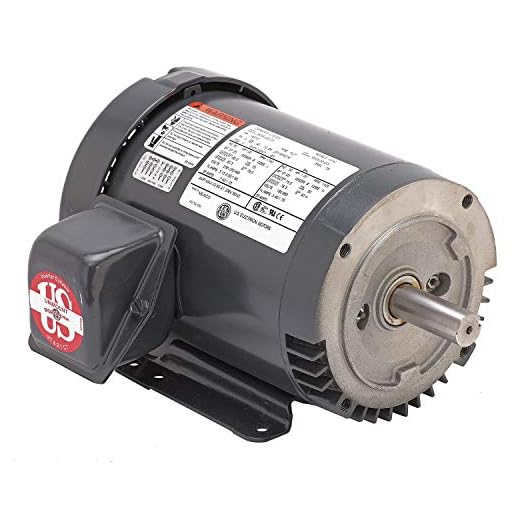


U.S. Motors 2HP Inverter Duty Motor
I recommend this for anyone running motors from a VFD — the inverter-duty design handles wide speed ranges cleanly and resists harmonics that can damage ordinary motors. It’s a go-to when you need precise speed control and reliability.
Why I pick inverter-duty motors
When you control speed with a VFD, an inverter-duty motor like this U.S. Motors model saves headaches. It’s wound and built to tolerate the high-frequency switching and thermal stresses that VFDs introduce — which translates to less premature bearing or insulation wear.
Key benefits
I’ve noticed that when shops migrate legacy equipment to VFDs, choosing an inverter-rated motor removes a common source of early failures. The motor runs cooler and responds more predictably to acceleration and deceleration ramps.
Considerations before buying
Expect to pay more up front, but factor in the longer life and fewer service calls — that often pays back quickly in production settings. Also, be sure your motor grounding and cable routing are VFD-friendly to minimize reflected-wave effects and bearing currents.
2NKY2-A 2HP 1745 RPM Precision Motor
I view this motor as a premium option when you need exacting fitment and consistent nameplate RPM for larger machines. It’s built to OEM standards and suits heavy-duty or precision equipment.
Fit and finish for precision work
This 2NKY2-A motor is aimed at users who need a reliable, accurately rated motor that slots into larger or pre-engineered equipment. The 143-5T/56HZ frame and 1745 RPM rating make it suitable for machines where RPM consistency and mechanical fit are important.
Highlights and installation notes
I’d pick this motor when matching an OEM footprint or doing a meticulous machine rebuild. The detailed length and mounting info in the listing helps avoid surprises during installation.
Limitations and practical advice
Because this is a premium and larger-frame option, you’ll want to verify base, pulley sizes, and shaft keying before purchase. For small-scale hobby builds the extra cost and weight may not be justified, but for production equipment or faithful restorations it’s a strong choice.
Leeson Washdown 2 HP TEFC Motor
I appreciate how well this motor stands up to wet and corrosive shop conditions while still providing reliable performance. It’s clearly built for longevity in harsh environments.
Purpose and first impression
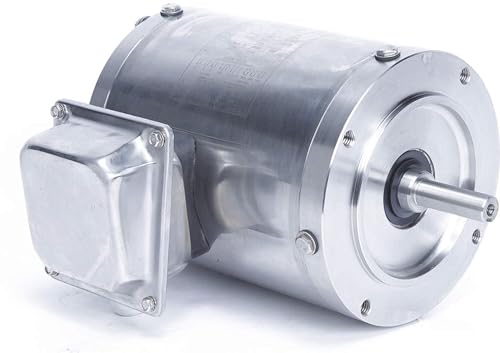
I picked this Leeson/Regal Beloit washdown motor because it’s clearly engineered for wet, humid, or washdown environments where ordinary motors fail. The white epoxy coating and stainless-steel hardware give it a professional, corrosion-resistant finish that’s useful in food-processing, washdown lines, or outdoor setups.
Key features and benefits
I like that the motor is set up for practical, real-world wet applications — the drains and seals aren’t just marketing; they matter when you’re repeatedly cleaning equipment. If you run a pump or conveyor exposed to spray, this motor removes one big failure mode.
Limitations and practical notes
The trade-off is efficiency — the motor runs at about 84% Epact efficiency, so you won’t get the energy savings of premium high-efficiency equivalents. Also, the shipped model lacks internal thermal protection, so I recommend adding external overload protection or verifying your motor starter includes adequate protection. For many shops I’ve worked with, the durability wins outweigh the slightly higher running cost when motors get regularly exposed to moisture.
Worldwide 2HP Premium Efficiency Motor
I like this motor for shops that care about efficiency and operating cost — the premium-efficiency design reduces energy use over time. It’s a solid option for continuous-duty systems where running hours add up.
Energy-conscious design
This Worldwide Electric premium-efficiency motor is built for shops that run equipment for many hours each week. The improved efficiency reduces energy consumption and can make a measurable difference on your utility bill over a year of operation.
Key specifications and benefits
I’d specify this motor for pump stations, HVAC drives, or production lines that don’t easily power down — the efficiency premium often justifies the initial cost in those scenarios. The 1.15 service factor also gives a margin for occasional overloads.
Practical notes
If your shop only runs tools intermittently, the payback period on the energy savings will be longer. Also check weight and base mounting dimensions before ordering to ensure your stands and pulleys are compatible.
Cuilvu 2HP 3450 RPM General Purpose
From what I’ve seen, this motor is a dependable workhorse for grinders, sanders, and other shop tools—quiet and smooth under load. Users report long-term reliability in typical shop environments.
Why I picked this one
This Cuilvu 2HP 3450 RPM motor shows up again and again in shop builds and DIY projects, especially belt grinders and small machine conversions. The user feedback is practical — people use it for years with no drama.
Features and on-the-bench benefits
I’ve installed similar motors and appreciate their combination of size and performance: they’re light enough to mount easily and strong enough to handle routine machine-shop tasks. One user note I liked: "runs smooth, plenty of power, and holds up under daily use. Easy to wire, mounts clean, quiet and doesn’t overheat."
Limitations and advice
If you need manufacturer-backed support or extended warranties, buy through a reputable distributor. For makers and hobbyists this motor is a solid choice — if you plan long continuous duty at full load, confirm cooling and service factor for your specific application.
Worldwide 3600 RPM C-Face 56C Motor
I value the C-face and removable base for flexible mounting and coupling directly to pumps, gearboxes, or reducers. The 3600 RPM rating is great for lightweight, high-speed applications.
What stands out
This Worldwide Electric 56C frame motor is compact, high-speed, and designed for coupling ease — the C-face and removable base make it especially handy for pumps, gear reducers, or direct-drive machinery where space and alignment matter.
Important features
I’ve used similar motors when converting pump systems: the C-face lets you bolt a pump or reducer directly without machining extra adaptors. It’s a practical choice for shops that need flexibility.
Practical limitations
If your tool relies on low-speed torque (compressors, heavy conveyors), this motor’s RPM may require gearbox or pulley reduction. Expect slightly higher noise and potential vibration at full speed — good balancing and proper mounting help a lot.
Cuilvu 2HP 1750 RPM Low-Speed Motor
I find this 4-pole motor well-suited to applications where torque matters more than top speed, such as compressors and conveyors. It’s a sensible balance of price, torque, and mounting footprint.
Intended applications
This 2 HP, 1750 RPM motor is ideal where you need torque at lower speeds—air compressors, belt-driven saws, pumps, and small conveyors. The lower RPM increases mechanical advantage in many shop tools.
Notable features
I’ve used similar low-speed motors when swapping into older machines that demand steady torque rather than speed. They’re typically quieter under heavy load and easier on belts and gear reductions.
Practical considerations
Some buyers note installation quirks (knockouts, base plates) or QC variance. Take time to verify knockouts and mounting holes before committing — a quick test-fit can save a headache when retrofitting older equipment.
Usem 2HP 1800 RPM 145TC Motor
I see this as a step up when you need a larger 145TC frame for better belt alignment or heavier pulleys. It’s robust and built for continuous industrial duty.
Who should consider this motor
If your application needs a bigger frame — for larger sheaves, better belt wrap, or more robust mounting — the 145TC Usem motor is a good match. It’s a common swap-in for machines that originally used larger industrial motors.
Key details and utility
In my experience larger-frame motors like this reduce belt slippage and improve longevity in heavy-shop setups. The 145TC footprint also simplifies alignment when retrofitting older equipment.
Limitations and real-world notes
Expect to pay a premium for the physical advantages; a smaller 56C motor may be more cost-effective if you don’t actually need the larger frame. Also, confirm shaft keying and length before buying to avoid surprises during installation.
Air Compressor 2HP 1750 RPM Motor
I find this to be a practical, budget-friendly motor for upgrading old compressors and saws. Installation is usually straightforward, though some fit-and-finish issues can come up.
Where I’d use it
This motor is targeted at the budget-conscious DIYer or small-shop owner who needs a straightforward replacement for an air compressor, table saw, or similarly loaded machine. The 1750 RPM rating gives decent torque for starting and running such equipment.
Highlights and real-world feedback
One buyer reported swapping it into a 1964 Powermatic and said the mount holes lined up well — that kind of compatibility is a big plus for restorations and retrofits. However, several users noted the cable knockouts were poorly stamped and needed extra work to accept conduit.
Caveats and practical tips
Bring basic hand tools and a step drill when you install this motor. Expect to do a bit of prep work on the conduit box or base in some cases. If you want plug-and-play quality with robust manufacturer support, consider stepping up to a more established industrial brand.
Industrial 2HP 3450 RPM Motor
I see this as a budget-friendly, high-speed option for straightforward shop tasks where cost matters. It delivers good RPM and basic heavy-duty construction for the price.
Who this is for
If you need a high-speed 2 HP motor without a big budget hit, this model targets small shops and DIY fabricators who want a straightforward motor for grinders, light pumps, or speed-intensive setups.
Key attributes
The motor’s construction looks solid on paper: steel shell with copper components tends to handle heat better than cheaper stamped designs. I’d use this in a direct-drive jig or a high-speed pulley setup where the extra RPM is an advantage.
Practical tips and limitations
Because the manufacturer and datasheet are sparse, I recommend confirming terminal wiring and checking mounting details before installation. For critical or continuous-duty applications I’d opt for a motor with a clearer spec sheet and local support, but as a budget replacement or backup the unit is hard to beat.
Final Thoughts
My top pick for most modern shops is the U.S. Motors 2HP Inverter Duty Motor (9.2/10). If you run motors from a VFD or need tight speed control, this is the one to buy. It resists harmonics, tolerates wide speed ranges, and gives reliable precision for variable-speed conveyors, CNC feeds, or retrofitted pulley systems.
If you need a premium replacement for larger-frame or precision installs, go with the 2NKY2-A 2HP 1745 RPM Precision Motor (9.0/10). It’s ideal for OEM-style re‑fits, machines that expect nameplate RPM, and heavier-duty equipment where fitment and consistent speed matter.
Quick actionable checklist before you order: confirm frame/foot or C-face, mounting bolt pattern, shaft diameter, required RPM (1750 vs 3450), and voltage. If you need washdown protection or top energy savings instead, consider the Leeson Washdown TEFC or the Worldwide Premium Efficiency models respectively.







Quick question for those who used both inverter-duty and general-purpose motors: how big is the difference in real-world harmonic damage risk when using VFDs? I want to use a VFD on a cheap general-purpose motor to save cash — crazy idea or ok with filters?
You can run a general-purpose motor on a VFD for light-duty and limited speed ranges, but long-term exposure to high-frequency PWM can increase heating and bearing currents. Line reactors, dv/dt filters, or an inverter-duty motor are safer if you run wide speed ranges or heavy loads.
Thanks — I guess I’ll budget for at least a filter then.
I ran a general motor on a VFD for a while with a dv/dt filter and it held up, but I wouldn’t call it worry-free. The inverter-duty motor lasted longer.
I’m considering the NATE2-36-56CB with the C-face and removable base for a pump direct-drive. Anyone used that setup for a transfer pump? Concerned about coupling choices and misalignment tolerance.
I used that same model on a water pump — a spacer coupling made maintenance simpler since you can separate without moving the motor. Works well.
C-face and removable base make alignment easier. For pumps, a flexible jaw or elastomeric coupling is usually sufficient unless you have large axial movement. Use a dial indicator for initial alignment and check after a few hours run-in.
3450 RPM? Sure, if you want your grinder to sing and launch tiny metal shrapnel across the shop 😂
Seriously though, high-speed 3450 motors look great on paper for grinders and bench tools, but anyone else find them more finicky with alignment and shaft vibration? I worry about bearings when pushing them hard.
Funny but true — also watch pulley diameters. Small pulleys increase RPM even more; stay conservative unless you know the limits.
High-speed motors can be less forgiving on misalignment — good couplings and balanced tools help. For grinders, use quality bearings and check shaft runout often. Soft-starts can also reduce mechanical shock.
Agreed on the bearings — I once ran a 3450 on a DIY polisher and swapped bearings every 6 months until I fixed alignment.
Thanks — I’ll stick with a 1750 for the heavy grinder and reserve 3450 for lighter quick-sand jobs. Less drama that way 😉
Really helpful article overall. I’m torn between the washdown Leeson and the TEFC general purpose 1750 for a small food-processing setup.
A few questions:
1) How often should seals be checked on TEFC motors in wet environments?
2) Is it worth moving to stainless hardware for everything or just key points?
3) Any recommended lubrication schedules?
Sorry for the laundry list — want to avoid premature failures. 🙂
Also keep spare gaskets and a small seal kit on hand — downtime costs more than the parts.
Good questions. 1) Check seals and gaskets quarterly in wet environments, and after any heavy washdown. 2) Stainless for fasteners near the wash area and for shaft collars is a good compromise. 3) Grease bearings per the nameplate interval — typically every 3–6 months for continuous duty; less for intermittent.
We run weekly washdowns. I inspect seals monthly and replace gaskets yearly. Stainless for joints and hose clamps only saved me headaches.
Great roundup — thanks for putting this together. I’m leaning toward the U.S. Motors inverter-duty (D2V2B) for a new CNC retrofit because of the VFD compatibility. Has anyone here tuned a VFD with that motor specifically? Curious about starting torque and any weird humming issues at low speeds.
No humming here, but be sure your encoder/feedback (if any) is properly grounded. Ground loops caused me a few headaches initially.
I used the D2V2B on a retrofit last year. It handles low-speed torque nicely when you enable the V/Hz curve and add a little flux boost. Humming can occur if the VFD carrier frequency is low — bump it up to ~8–12 kHz and it quiets down.
I ran one with a Delta VFD — same experience as admin. Set carrier higher, and enable motor thermal protection in the drive. Worth the extra programming time.
I’ve been hunting for a motor that won’t crap out in a humid shop. The Leeson/Regal Beloit washdown motor looks perfect.
Couple things:
– Is TEFC enough for pressure-wash situations or do I need special seals?
– Anyone used the 84 frame in a small mill? Fitment worries me.
Appreciate any install tips — I’m not an electrician by trade but I do my own shop work.
TEFC does help keep direct spray off the windings, but for frequent pressure washing you want good shaft seals and stainless hardware. Use low-pressure cleaning when possible and cover junction boxes. For the 84 frame, measure your mount points carefully — adapters exist if needed.
One more tip: after heavy washdowns, run the motor briefly to spin out any trapped water in seals — helps prevent corrosion.
I mounted a 84 frame on a small mill last year — had to make a small bracket, but otherwise fit fine. Definitely use stainless fasteners in washdown areas.
I use a similar washdown motor on a conveyor. Make sure the conduit entries are sealed and use silicone gaskets. I also added a drip pan under the junction box as an extra precaution.
I’m on a tight budget and that black 3450 RPM industrial motor (7.2/10) looks like a decent value. Anyone worried about longevity with the cheaper ones? How noisy are they compared to the premium models?
Budget motors can last a long time if they’re not run at constant heavy loads and you maintain them. They may be a bit louder and have simpler bearings. Expect trade-offs in finish and perhaps tighter tolerances.
I bought a similar budget high-speed motor for a hobby lathe — noisy under heavy loads but acceptable for occasional use. If it’s a primary production motor, invest in something higher-rated.
Nice list. The Worldwide Electric premium-efficiency (NATE2-18-56) caught my eye — we’re trying to cut energy use in our small fabrication shop. Anyone tracked kW savings after swapping from a standard-efficiency motor? Is the premium model worth the higher upfront cost?
I swapped a pump motor to premium and saw about a 10% drop in power draw at the same load. Payback was around 2.5 years given our run hours.
If your motor runs many hours, premium-efficiency pays back faster. I typically see 8–15% reduction in energy draw at full load; savings vary by duty cycle. Do the math for your hours and electricity rate.
Love the C-face option on the NATE2-36-56CB. Makes swapping pumps so much easier. Quick question: what’s your go-to coupling for a short shaft direct drive — jaw, diaphragm, or grid?
For short shafts with minor misalignment, a jaw (elastomeric) coupling is simple and forgiving. Diaphragm is great for precision alignment with no backlash. Grid couplings handle torque shocks but need maintenance.
I use a spacer jaw coupling — easy service without moving the motor.
This list is pure gold for someone with a tiny shop and a questionable DIY wiring skills 😅
I always overbuy motors because ‘bigger is better’ — then I have zero space and a very heavy regret. If anyone’s got tips on balancing shop floor space vs motor performance (and not pretending a 145TC will fit in a 56C spot), please roast my past mistakes and advise me. Also, premium-efficiency vs cheap — real-world cash difference?
Cardboard mockups — brilliant. Also gonna stop pretending I can lift a 145TC alone 😂
If you’re short on floor space, consider a vertical mount or rethink tool placement. Efficiency? Do the math: hours × kW reduction × electricity price = payoff.
Space is often the most underrated constraint. Measure twice, mock up with cardboard cutouts, and consider remote mounting if belts allow. For efficiency, premium pays off when motors run many hours — otherwise go with a reliable general-purpose unit.
Been there — used a 145TC on a small bench and had to build a new mount. Cardboard mockups saved me a headache next time.
Thinking about the Usem 145TC frame for a belt drive on a jointer. The review calls it ‘best for heavier-frame applications’ — does that mean it’s overkill sometimes? How much does the 145TC help with belt alignment vs a 56C frame?
Also remember motor mounts and base rigidity matter. A larger frame without a stiff base won’t fix alignment problems.
Good to know — thanks! Helps me justify the extra footprint.
I upgraded from a 56C to a 145TC on a belt-driven planer — the belt tracks better and vibration reduced. If you plan to run bigger pulleys, go 145TC.
145TC gives you more shaft center distance options and better bearing spacing for larger pulleys, so it’s beneficial when you run bigger diameters or heavier belts. If your pulleys are small, a 56C may be perfectly adequate and lighter/cheaper.
Picked up a 1750RPM 2HP for my air compressor last month (cheaper than the shop rebuilt one) and so far it’s been solid. Starts easy and the pressure stays steady. A few notes:
– install was straightforward
– watch your wiring colors — I made a dumb swap at first lol
– seems quieter than the old motor 😀
Thanks — yep checked the nameplate afterwards. Also used a soft-start I had lying around, cut the inrush a lot.
Glad it’s working well. For compressors, make sure thermal overloads are set appropriately and use anti-vibration mounts to reduce noise transfer.
Wiring colors can be different on imported motors — always double-check the nameplate diagram, saved me once.