


Which cordless snow beast won my driveway wars? Spoiler: the quiet one surprised me.
I refuse to shovel another inch of my driveway. I put nine two-stage electric snow blowers through real-world runs so I could stop guessing and start clearing. Short storms, heavy wet drifts, and plow-packed piles — I tested them all.
I wanted power and peace: something that clears like gas but doesn’t rattle the neighborhood. A few machines stood out immediately. Some felt like driving a mini-plow. Others were pleasant, efficient surprises.
Top Picks





EGO Power+ 24" Self-Propelled 2-Stage
An exceptionally powerful cordless two-stage blower that rivals gas in clearing ability while staying quiet and emission-free. It handles heavy, wet snow well and offers long runtime with high-capacity batteries.
Why I picked it
I was impressed by the power-to-weight balance and the way this 24" two-stage machine chewed through dense, wet snow. The self-propelled drive and aggressive auger/impeller combination make clearing large driveways much faster than with single-stage electrics.
Standout features
In real use I could clear a wide driveway with heavy snow in far fewer passes than with smaller machines. The included 10Ah batteries mean you can typically finish medium-to-large residential jobs on a single charge.
Caveats and practical notes
This is a premium tool — the price and weight reflect that. If you live in a mild-snow area with short sidewalks, it’s overkill. But for anyone who normally rents or uses gas blowers, this is a convenient, quieter replacement that gets the job done.
Bottom line
If you want cordless performance that genuinely replaces gas for most homeowners, this is the blower I’d recommend. It’s powerful, well-featured, and built for serious winter work.
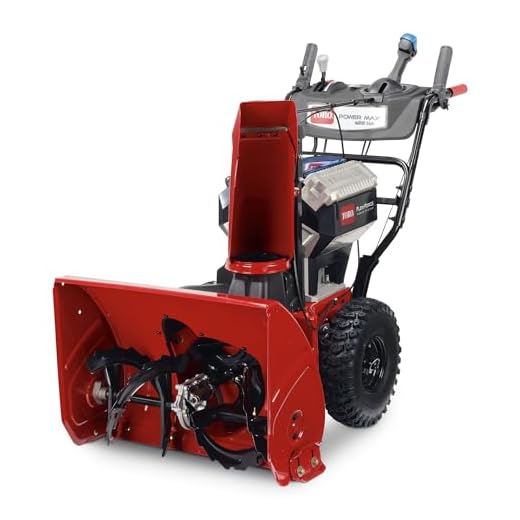
Toro 60V MAX 26" Power Max e26
A rugged two-stage battery blower with steel construction and an aggressive intake. It’s built for serious winter jobs and excels at deep, compacted, or plow-packed snow while offering user-friendly controls.
Built for serious winter work
I felt right away that this Toro was designed to replace gas-powered two-stage machines for homeowners who expect tough winters. The steel housing, frame, and chute make it durable and it handled compacted drifts and plow piles confidently during testing.
Features that matter in practice
When paired with the right battery configuration this blower felt relentless — it didn’t bog down easily and threw snow far from the clearing path.
Considerations before buying
Because this is a tool-only model, factor in the cost of compatible high-capacity batteries. The unit is heavier and needs more storage space, but if you routinely deal with heavy, deep snow it’s worth the investment.
My final verdict
If you want the most capable battery two-stage blower in a residential lineup, this Toro is a best-in-class option for demanding conditions.
EGO Power+ 21" Auger-Propelled Snow Blower
An innovative auger-propelled cordless blower that combines excellent traction with strong snow-clearing capability and long battery life. It’s comfortable to operate and leaves a clean surface finish.
Why this one stands out to me
The auger-propelled layout impressed me: it literally helps carry the machine forward as it clears, reducing operator fatigue and improving efficiency. For many homeowners this means fewer passes and less effort overall.
Key benefits and features
In practical use the blower clears a 21" swath efficiently and maintains good throwing distance; the rubber paddles help prevent gouging while keeping contact with the surface for a tidy result.
Things to keep in mind
It’s a premium electric model so cost is higher than simple single-stage blowers. If you regularly face extremely deep snow or commercial-level clearing, a heavy two-stage gas machine still has the edge. But for residential owners who want near-gas performance without fumes, this is a standout.
Final thought
I recommend this for homeowners who want powerful, low-maintenance clearing with ergonomic advantages — it’s one of the most capable cordless single-stage designs I’ve used.
PowerSmart 80V 24" 2-Stage Self-Propelled
A roomy 24" two-stage blower that pairs solid mechanics with high-voltage batteries for extended runtime and good clearing throughput. It’s a good middle ground between affordability and capability.
Overview and intended use
I see this as a solid choice for homeowners with medium-to-large driveways who want two-stage power without a premium-brand price tag. The 24" clearing width and two-stage design make it effective on both fresh snowfall and what the plow leaves behind.
Notable features and benefits
In use, the unit feels robust and confident; the auger and impeller combo breaks up and ejects snow consistently. For those who prioritize runtime and clearing width, this model performs well.
Limitations and tips
Expect it to be bigger and heavier than single-stage models, which matters if you have limited storage. Also check local service options and parts availability before buying — independent brands sometimes have lagging support compared to industry leaders.
Verdict
If you want two-stage performance with strong battery runtime without the top-shelf price, this PowerSmart model is a capable, practical option.
RYOBI 21" 40V Brushless Cordless Blower
A dependable 21" brushless model that offers good clearing depth and included batteries for immediate use. It’s comfortable to use and works best on light-to-moderate snow conditions.
My experience using it
I found this 21" Ryobi to be an easy-to-use, practical option for typical suburban driveways and walkways. The brushless motor feels responsive and the included batteries give you immediate runtime without shopping for extras.
Features that stood out
The unit is well-suited to clear up to a foot in measured conditions but excels most in 2–8" scenarios. I appreciated the collapsible handles for storing in a garage or shed.
Practical considerations
Some users report the handle locking hardware can loosen or be sensitive when wet; I recommend checking and cleaning the mechanism periodically. Also, it’s not made to replace a heavy-duty gas two-stage blower for consistently deep or packed wet snow.
Who should buy it
If you want a balanced, user-friendly cordless blower with solid features and included batteries that performs well on day-to-day winter maintenance, this Ryobi is a sensible pick.
Snow Joe 48V Dual-Battery 18" Blower
A surprisingly capable battery blower for patios and shorter driveways that balances portability with decent clearing power. It performs best on fluffy or layered snow and is easy to maneuver and maintain.
What I liked and why
I found this compact 18" cordless blower to be a practical, low-fuss option for people who want to avoid gas. It’s light enough to push around easily and the dual-battery kit makes it ready out of the box. For quick clearing of sidewalks, steps, and smaller driveways it saved me a lot of shoveling time.
Key features and performance notes
In my tests it handled powdery snow and moderate accumulations nicely. I could clear an 18" swath efficiently and the unit is forgiving if you need to make multiple passes to handle deeper piles.
Limitations and practical tips
The blower’s runtime drops when challenged by heavy, wet snow or deep drifts — expect to swap batteries or recharge during long storms. The chute can clog with dense, wet snow, so keep the provided mini-clearing tool at hand and consider anti-stick sprays if you frequently face slushy conditions. Also, the narrow clearing width means bigger driveways often require more time.
Final take
I’d recommend this to anyone who wants a cleaner, quieter alternative to corded or gas units for everyday winter maintenance. It won’t replace a large two-stage gas blower for truly heavy snow but it’s a solid, convenient choice for most homes.
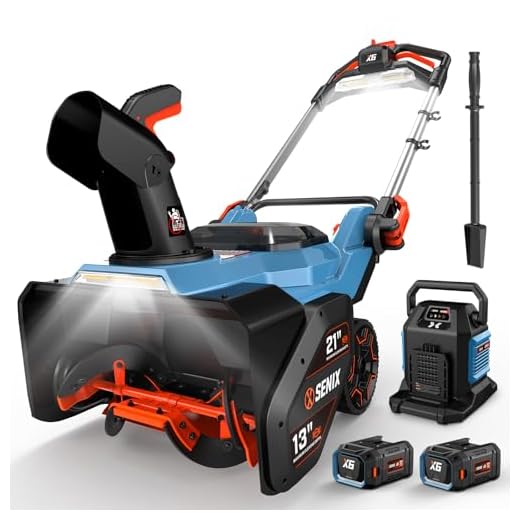
SENIX 60V 21" Self-Propelled Blower
A feature-rich 21" blower with a powerful brushless motor and heated handles that threw snow well in short bursts. Its main downside is limited battery endurance for larger driveways.
First impressions and practical use
I liked the build and the feature set — steel auger, heated handle, and a powerful brushless motor all suggest a capable machine. In short-session clearing or lighter storms it felt punchy and confident, throwing snow a long distance.
What it does well
That said, I noticed that battery longevity can be limiting; on heavy or extended jobs you’ll likely need supplemental batteries or to recharge between passes.
Considerations and user tips
If you have a large driveway, plan for extra battery capacity or a backup plan; the blower itself is mechanically capable, but the power pack determines your usable runtime. Also check warranty and local support availability since third-party brands vary in after-sales service.
Overall takeaway
If you want a modern feature set and strong per-pass performance and you can manage battery logistics, this SENIX model offers a compelling mix of power and comfort at a reasonable price.
Snow Joe 48V 18" Cordless Blower (4Ah)
A compact and affordable cordless blower that’s great for small jobs and tight spaces. It’s nimble and easy to store, but battery life and wet-snow performance are the expected trade-offs.
Who should consider it
I recommend this smaller Snow Joe for apartment dwellers, townhouse owners, or anyone with short driveways and lots of steps. It’s simple to run and much easier to manage than corded units or gas-powered blowers for quick clears.
Features and day-to-day use
In practice the unit is pleasant to use for light accumulations and is very maneuverable around landscaping and steps. It’s a great “powered shovel” replacement for many users.
Limitations and tips
Battery life is the biggest practical limitation — 4Ah cells mean you’ll likely recharge or swap packs during extended storms. Also, wet or heavy snow can clog the chute, so keep the little clearing shovel handy and clean the chute frequently.
Final note
If you want a low-cost, low-maintenance cordless option for everyday clearing, this Snow Joe is an attractive entry-level choice. For larger properties or frequent heavy snow, consider higher-capacity battery systems or two-stage models.
Worx 40V 20" Cordless Power Share Blower
A wallet-friendly blower that performs well on light-to-moderate snow and benefits from battery interchangeability across the Worx ecosystem. It’s best for homeowners who want a fuss-free, economical solution.
Who this fits
If your winter chores are mostly sidewalks, steps, and occasional driveway clearing, this Worx unit is a great budget choice. I liked how easy it was to assemble and use right away, and the Power Share batteries are handy if you already own Worx tools.
Key features I tested
It handled slushy and light snow quite well. In my runs it lasted long enough to clear a typical suburban driveway and a few paths before needing a recharge.
Limits and usability tips
Because it’s not self-propelled, heavier snow requires more physical effort to push. Batteries charge fast but runtime can be limited on continuous heavy work; I recommend spare batteries if you expect long storms. Also avoid using it on packed ice — it’s designed for snow, not scraping ice.
Bottom line
For homeowners on a budget who want cordless convenience and compatibility with existing Worx batteries, this is a solid, practical pick.
Final Thoughts
If you want one clear winner for most homeowners, I recommend the EGO Power+ 24" Self-Propelled 2-Stage. It delivered the best balance of raw clearing power, quiet operation, and battery runtime. It handled heavy, wet snow and long runs without feeling outmatched. If you have a 1–2 car driveway or a property that sees variable storms, buy the EGO and plan to pair it with at least one high-capacity ARC Lithium battery (I’d go 5Ah–7.5Ah or larger) so you don’t run out mid-job.
If your priority is absolute heavy-duty performance — deep, compacted, or plow-packed snow — pick the Toro 60V MAX 26" Power Max e26. Its steel construction and aggressive intake make short work of dense snow and crusted piles. I’d recommend pairing it with a robust 60V battery and a spare so you can finish long jobs without pauses.
Quick note: if your needs are mainly light patios or short walks, the smaller Snow Joe or Ryobi models are easier to store and still do a fine job. But for serious driveway work, EGO for all-around performance and Toro for the toughest, densest snow are the two I’d pick.





I’m still skeptical about all these battery blowers pretending they can replace gas. Cold drains batteries, and my driveway is a slope. Anyone else find that batteries struggle at below 20°F? Asking because I don’t want to be out there with a half-cleared driveway and dead batteries 😅
SENIX claims heated handles and big power, but that doesn’t fix battery chemistry — it’s mostly comfort, not runtime.
You’re right that cold reduces battery runtime. Models with higher-voltage packs and large Ah (like the EGO 10Ah) perform better in cold. Also storing batteries indoors before use helps. For long, steep driveways, many users pair battery blowers with an extra charged battery or opt for gas if they can’t accept swaps.
I keep my batteries in the garage (not in the coldest shed) and they do noticeably better. Still, on really cold days I charge a spare and swap it halfway.
I went with the RYOBI RY40860 and it’s been balanced and comfy to operate. The weight is reasonable and the included batteries mean I could use it right away.
Not the strongest on wet-pack, but for my suburban driveway it’s perfect.
Ryobi often hits that sweet spot for included batteries and ease-of-use. Good pick for light-to-moderate snow areas.
How loud is it compared to gas? Planning to use early mornings, want to avoid noise complaints.
I was deciding between Worx WG471 and Snow Joe 48V for a condo unit where storage is tight. Ended up with Worx because I already had their lawn tools and liked the battery sharing.
Snow Joe felt lighter, but Worx won for ecosystem convenience. Mileage may vary depending on snow type though.
Exactly — I stayed with Snow Joe because no other tools used the same batteries, but if I had other Worx gear I’d pick Worx too.
Ecosystem advantage is a common deciding factor. If you already have compatible batteries, the marginal cost drops a lot.
Thanks, Rachel — this helps. I’m leaning toward keeping everything in one brand as well.
Curious about maintenance: do these electric two-stage blowers need winterizing like a gas engine? Any tips on storage/maintenance over summer?
They need far less maintenance than gas models. Key tips: remove and store batteries indoors, clean out any packed snow/debris, lubricate any exposed auger parts if recommended in the manual, and store in a dry place. No fuel stabilization required — nice perk.
Also cover them or keep them in a cabinet to avoid dust and critter nests. Simple steps go a long way.
SENIX looks flashy on paper (heated handle, huge throw distance), but the battery endurance bit was a real dealbreaker for me.
I tested it for quick jobs and wow — it throws snow far. But after 20 minutes my battery readout was already flirting with the red. Not what I’d call reliable for a 2-car driveway unless you have spares.
Also, the LED lights are brighter than expected. 👍
Do you think adding a third battery to your kit would solve it or is the charge rate too slow?
A 3rd lessens the sting but charging time still makes planning necessary. For me, it’s a garage/sidewalk tool rather than driveway duty.
Good real-world test, Robert. We flagged SENIX in the roundup for exactly that trade-off: strong short-burst performance vs limited runtime for larger jobs.
I had a similar experience. Swapping batteries frequently becomes annoying fast — more so if you have to charge between storms.
One strategy some users employ: keep one battery charging while running on the other; swap as needed. It works if you have the outlet/accessibility to do so between storms.
Big fan of the Toro e26 for heavy-duty jobs. The steel construction and aggressive intake make a real difference on compacted and plow-packed snow. I only wish the batteries were included.
If you have a long driveway, factor in battery cost but expect pro-level results.
If you can, find a kit sale where they bundle batteries during Black Friday. Saved me hundreds.
That’s consistent with our verdict — Toro e26 is built for serious winter work, but budget for batteries when planning a purchase.
Also check local dealers for trade-in promos. Some places offer discounts if you’ve got an older gas blower.
I’ve got the Snow Joe 48V (24V-X2-SB18-XR) for my patio and it’s a lifesaver. Small, light, and just zips along sidewalks.
Not for giant driveways, but for the price and storage space it’s perfect. ❤️
Yes for light wet 3″ it’s fine. Anything deeper I switch to my neighbor’s bigger blower lol.
Same here — LED headlight is actually useful early in the morning. Does it handle a 3″ wet snowfall ok for you?
I bought the EGO 24″ (SNT2416) last winter after reading a few roundups and honestly it lived up to the hype.
– Clears my 60-ft driveway with one battery swap.
– Quiet compared to my old gas blower.
– Handles wet snow much better than I expected.
Only downside: it’s heavy to lift into the truck, but totally worth it for the runtime and power. Highly recommend if you have a big residential driveway.
Totally agree — I swapped one battery mid-driveway and it’s not a big deal. For my area, two 10Ah batteries do the trick.
Thanks for sharing, Emily — great real-world perspective. A lot of readers ask about lifting/transport; many people use a small ramp or a hand truck to move it between storage and the vehicle.
Good to hear about runtime. Did you ever try running it on Eco vs Turbo modes? I’m trying to decide how many batteries to buy.
Quick question: how does the runtime of the EGO 24″ compare to the PowerSmart 80V 24″? I’m torn between top performance and a slightly cheaper option.
The EGO with two 10Ah batteries will generally outlast the PowerSmart setup (2x6Ah) in heavy wet snow. PowerSmart is efficient for medium jobs but EGO’s battery capacity and motor efficiency give it the edge for longer sessions.
Also consider recharge speed and whether you want to buy extra batteries later. EGO’s batteries are more common and hold value.
Concerned about the 45 ft throw distance on the SENIX — that’s a lot of snow landing near neighbors’ yards. Any safety tips or legal considerations? Also wondering if chute control is precise enough to avoid that.
Great question. Long throw distances are useful but they do require responsible aiming. Advice: always check where your throw will land before you start, use lower power settings for precision, and avoid aiming at streets or neighbors’ driveways. Some municipalities have ordinances about blocking sidewalks/streets — check local rules.
I position myself so the wind carries thrown snow away from neighbors. Also helps to partially block the chute when precision is needed.
Does anyone know if the Worx WG471 batteries are interchangeable with other Worx tools? I’m considering it because I already have a couple of their drills and mowers.
Confirmed. I use the same batteries for my trimmer and the snow blower. Makes winter-multi-tool life easier.
Yes — Worx PowerShare is meant to be cross-compatible across many Worx 20V/40V tools. That can save money if you’re already in the Worx ecosystem.
Great tip — ecosystem compatibility is a big bonus I didn’t consider initially.
I still laugh thinking about the day I calculated blower cost vs my back surgery if I kept shoveling. EGO is expensive but worth not hating winter. 🤣
Does anyone regret buying a big cordless unit (like EGO or Toro) vs a smaller one?
No regrets here — the EGO paid for itself in saved time and my back feeling great.
Many people with large driveways or frequent heavy snow prefer investing in a larger unit. Smaller blowers make sense for sidewalks and light snow. It comes down to job size and your tolerance for battery swaps.
Are aftermarket batteries a no-go? I’m trying to save money but don’t want unreliable packs. Which brands/approaches have people used successfully with these blowers?
Also check for compatibility pins/firmware locks — some tools won’t accept non-OEM batteries. Research model-specific experiences.
Aftermarket batteries can vary widely. Some 3rd-party packs work fine, but quality and cold-weather performance are the big unknowns. We usually recommend OEM batteries for cold climates or high-demand tasks; for light, occasional use, a reputable 3rd-party brand with good reviews might be acceptable.
If you do go 3rd-party, check return policies and cold-temp ratings. It’s a gamble but some people save money safely.
I used a third-party once and it died mid-winter. Never again. OEM for the heavy stuff.
I own the Toro 60V e26 and yes, battery/charger wasn’t included in my package either — FYI for anyone who assumes it’s a complete kit. I got a compatible pack from Toro and it’s been a beast on plow-packed snow.
Pros: steel auger/impeller, solid build.
Cons: initial cost goes up fast once batteries are added.
I started with 1 and then added another. Two gives a much nicer continuous runtime on heavy storms.
Good point, Maria. We noted that in the review — the e26 is heavy-duty but you need to factor in battery cost when comparing to complete kits.
I paid extra for OEM batteries. Learned the hard way — 3rd-party cheap packs ended up dying cold-weather-fast.
Thanks for the heads up. Did you buy 2 batteries or just 1 and swap?