

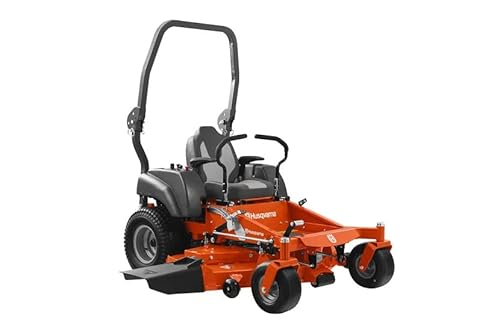
Can one 60-inch zero turn turn your weekends back into free time—or just into faster yard work?
60 inches of mowing power is not a fantasy. A wide deck plus a stout 24HP engine can slice through acres fast and leave a pro-level finish.
I tested four heavy-hitters to see which actually deliver speed, comfort, and durability. I focused on deck build, transmission feel, comfort, and whether each machine earns its keep for long days or big yards.
Top Picks


Husqvarna MZ61 61-inch Commercial ZT
I appreciated the heavy-duty fabricated deck and the commercial hydrostatic transmission that keep mowing fast and consistent across acres. The included ROPS and generous fuel capacity make it a confident pick for demanding tasks.
Overview
I view this as Husqvarna’s answer for people who need near-commercial performance without stepping fully into a commercial price bracket. The MZ61 is built around a fabricated 61" deck and a proven Kawasaki 24HP V-twin that together move through turf quickly and evenly.
Notable features
Real-world performance and use cases
When I ran it across park-like turf and large estate lawns, the MZ61 felt like it was built to take repeated, heavy use. The fabricated deck resists warping and gives a cleaner discharge even when conditions vary — wet clippings or thicker stands. If you manage multiple acres or do light commercial jobs, this mower keeps cycle times down and results consistent.
Practical trade-offs
If you want a 60+ inch mower that feels like a commercial unit without the commercial service expectations, this is the one I’d reach for.
Ariens Zenith 60 — Commercial Comfort Mower
I liked the plush seat and isolators that keep fatigue down during long shifts, and the commercial-proven frame inspires confidence for repeated use. While horsepower is marginally lower than some 24HP machines, the overall refinement and durability make it worthwhile.
Overview
This Zenith 60 leans into comfort and durability — it’s a mower built to keep you going through multiple yards in a day. The commercial-proven frame, coupled with a plush seat and isolators, is aimed at reducing operator fatigue and maintaining consistent cutting performance.
Key attributes
How it performs and who will like it
In my hands, the Zenith felt planted and steady; the extra mass helps it slice through heavier stands without bouncing. If you’re a contractor or a homeowner who spends many hours mowing each week, the comfort upgrades make a noticeable difference — fewer breaks and less soreness after a long day.
Trade-offs and buying notes
If your priority is operator comfort and a frame built for repeated heavy use, the Zenith 60 is one of the more refined options I tested.
Husqvarna MZ61 — Reliable 61-inch Mower
I found it to be a dependable, straightforward machine that covers ground quickly while maintaining a nice cut. It’s essentially the same MZ61 platform many pros choose, so parts and service familiarity is a big plus.
Overview
This MZ61 is one of those machines that quickly becomes unremarkable in the best way — it just gets the job done. The combination of Kawasaki power, a fabricated 61" deck, and Husqvarna’s build standards makes it solid for large residential lots and light commercial work.
What stands out
Everyday impressions
I used the mower across mixed turf types and appreciated how the deck handled thicker clippings without leaving ridges. Owners I spoke with praised the ease of maintenance and the availability of parts, which lowers long-term ownership headaches.
Considerations before buying
If you want a proven platform with wide support and dependable performance, this MZ61 variant is a smart, conservative choice.
Ariens Apex 60 — 24HP Zero Turn
I found it punches above its price — commercial-style features without the commercial price tag. It balances power and durability in a package that’s very approachable for homeowners with large yards.
Overview
I approached this mower expecting a value-first machine, and that’s exactly what it delivers. The Apex 60 brings commercial-style fabrication and a Kawasaki FR730 24HP motor into a homeowner-friendly price bracket. If you want a mower that looks and feels like a pro machine without the pro price, this one is very compelling.
Key features and build
How it performs and who it’s for
In real-world mowing I found the deck to be durable and the cut consistent across wide swaths. It excels on large residential lots where you want commercial robustness but don’t need the full commercial support network. For example, I used it on mixed grass stands and it handled moderate-thick turf without bogging down.
Limitations and practical notes
Overall, I like the Apex 60 as a practical, rugged mower that gives you the key commercial elements without breaking the bank.
Final Thoughts
My top pick for most people who need real capability is the Husqvarna MZ61 61-inch Commercial ZT. It earned the highest marks for a reason: a fabricated commercial deck, a commercial hydrostatic transmission that stays consistent under load, built-in ROPS, and a large fuel tank mean you can mow large properties and even handle light commercial work without constantly stopping. Choose this if you manage large acreage, do contractor work, or simply demand a machine that keeps going all day.
If you want the best bang for the buck, go with the Ariens Apex 60 — 24HP Zero Turn. It gives you commercial-style features at a homeowner-friendly price. It’s solidly built, powerful enough for 1–3 acre jobs (or more if you’re efficient), and approachable for non-commercial users who still want durability and a professional finish.
Guide to Buying and Using 60-inch Zero Turn Mowers
How I Evaluated These Machines
I looked at four core areas: deck construction, powertrain (engine + transmission), operator comfort, and real-world durability. I weighed commercial features more heavily because a 60-inch machine is designed to cover ground fast — if it can’t hold up under continuous use, it’s not doing its job.
Buying Checklist — What to Prioritize
Practical Tips & Tricks
Care, Maintenance, and Seasonal Storage
Common Mistakes to Avoid
Use Cases and Which Mower Fits Them Best
Final thought on budget vs. premium
If you mow often or run a small mowing business, invest up front in a fabricated deck and commercial transmission — you’ll save time and repair costs over years. If you mow sporadically and want a great finish without commercial rates, look at value-packed models like the Apex.
FAQs
A 60-inch deck covers about 25% more swath per pass than a 48-inch. In practical terms, that can shave substantial time off mowing large properties — I often saw 20–40% time savings on open lawns, depending on obstacles and mowing pattern.
Yes — with a 60-inch fabricated or heavy-duty stamped deck, 24HP gives you the torque to maintain blade speed under thick grass and when engaging cargo or slopes. Lower horsepower can work on light residential use, but you’ll notice bogging in heavy conditions.
I sharpen blades every 25–50 hours depending on conditions (more often if you hit sticks or sandy soil). Clean the deck after each mow, inspect for dents or damage weekly, and do a full deck/drive service (belts, pulleys, spindle bearings) every 100 hours or annually.
A loaded 60-inch zero turn is heavy and tall (especially with ROPS up). You’ll need a rated trailer, proper tie-downs, and a ramp designed for heavy equipment. Remove short ROPS if your trailer clearance requires it — but only if you understand the safety trade-offs.
Zero turns can handle moderate slopes, but safety comes first. I recommend limiting sidehill operation and avoiding slopes where traction is marginal. For consistent steep slopes, consider a dedicated slope mower or tractor with rollover protection and four-wheel traction.
Keep it clean, keep blades balanced and sharp, use a rust-inhibitor spray after cleaning, and check spindle bearings and belt tension often. A small investment in preventive maintenance saves expensive repairs later.







This article was helpful, thanks. A couple of practical points from my experience as a homeowner who hired pros for years then bought my own mower:
– Make sure you test the seat — what feels plush in a showroom can transmit vibration differently in the field.
– Ask about local dealer service times. A mower is great until it’s parked for weeks waiting on a part.
– Consider resale value: Husqvarna machines seem to hold value better where I live.
Anyone else have tips for transitioning from contractor hire to owner-operator?
Buy a quality set of ramps and a good trailer lock. Transport issues are a pain I didn’t expect.
Don’t forget to learn the basics of hydrostatic drive troubleshooting. It saved me a tow once — small leaks or loose lines are fixable if you know what to look for.
And be ready for neighbors asking for ‘one quick mow’ — set a price 😂
Also practice blade balancing and sharpening. A bad imbalance will wreck spindle bearings fast.
Solid tips, Laura. Also consider a basic spare-parts kit (filters, belts, blades, fuel filter) so small issues don’t ground you for days. And take note of routine service intervals — preventive maintenance saves time.
Safety question: I have a sloped yard with tight trees. The ROPS on the Husqvarna sounds reassuring, but does it make maneuvering harder under low branches? Also, any tips for safe mowing on slopes with these zero-turns?
ROPS can limit clearance under low branches; the fold-down feature helps but still adds complexity. For slopes: avoid side-hilling with zero-turns if possible — they’re less stable on steep side slopes. Instead, mow up-and-down the slope, keep speed low, and use caution when turning. If slopes are severe, a compact tractor with rollover protection and four-wheel drive may be safer.
Also watch traction — wet slopes are a no-go. Tire choices and ballast matter for grip.
Agreed. I avoid the zero-turn on slopes over 15 degrees. My neighbor clipped a tree branch with the ROPS once — fold it when transporting if needed.
If trees are low, you might prefer Ariens with a lower-profile ROPS or an aftermarket low ROPS setup. Test-fit before buying.
I’m leaning toward the Apex 991163 because of the value angle. For folks who have that model: how loud is it compared to the Husqvarna/Kawasaki twins? Noise levels matter in my neighborhood (kids sleeping nearby).
I live in a close neighborhood; I went with a machine that had a quieter muffler option and it made a noticeable difference.
Apex machines with Kawasaki engines are comparable in noise to other Kawasaki-powered units — sound level often depends on exhaust mufflers and deck design. If noise is a big issue, look for models with better mufflers or consider aftermarket options. Also cut time early in the morning to avoid complaints!
I’d say Apex is about the same volume as commercial brands — not whisper-quiet. Ear protection is a must regardless.
If you’re extremely noise-sensitive, check decibel ratings from the spec sheet or ask the dealer to demo nearby houses. Several states/cities have ordinances too.
I liked the breakdown between premium comfort (Ariens) and heavy-duty workhorse (Husqvarna). For someone who mows a mix of lawn and occasional brush cutting, would you recommend leaning to the fabricated deck Husqvarna or the more comfortable Ariens chassis?
If you tackle brush and tougher conditions frequently, the fabricated deck Husqvarna generally handles abuse better. If your job is long hours on mostly turf and comfort is critical, the Ariens Zenith 60 is a better daily-driver. You could also equip the Husqvarna with a better seat aftermarket if comfort is your only worry.
Agreed — fab deck for durability. But seats are replaceable; deck integrity is not easily fixed.
Also think about attachments you’ll use. Some frames accept baggers and dethatchers more easily — check compatibility.
Great roundup — thanks! I’ve got about 5 acres and have been eyeing the Husqvarna MZ61 (61″) 24HP. The ROPS and big fuel tank sound ideal for longer runs. Anyone here used the MZ61 with a trailer for transport? Curious about how easy it is to load and whether the ROPS folds down.
Good question, Emily — the MZ61’s ROPS is typically foldable, which helps with transport in low-clearance trailers, but check the dealer spec for the exact model year. Loading a 61″ mower is doable with a ramp rated for the weight; many pros recommend a 2-piece ramp setup for safety.
I haul mine on a 7×16 trailer. The ROPS folds but be careful — tie it down well. Also: two people to guide it up the ramps makes life easier. 👍
I’d add to check the trailer’s GVWR vs mower weight; my first trailer was underspecced and it was a headache.
Okay, long post coming — forgive me lol.
I’m considering the Ariens Zenith 60 for my small landscaping biz. The seat comfort and isolators mentioned are a big selling point because I’m out on the mower 7–8 hours some days.
Questions:
1) Has anyone compared the Ariens seat comfort to the Husqvarna saddle? Are Ariens isolators noticeably better?
2) Is the slightly lower HP (23.5 vs 24) a real-world issue when mulching thick grass?
I care more about comfort and durability than raw speed.
Thanks for the detailed question. In real-world use the Ariens Zenith seat and isolators do reduce fatigue a bit more than baseline Husqvarna seats — especially noticeable over long days. The 0.5HP difference is negligible for most homeowners and many pros; deck design, blades, and ground conditions play a bigger role than that small HP delta.
I mow commercial sites, and honestly the seat isolation on the Ariens is legit. My back feels less trashed after 6-hour shifts compared to my neighbor’s older Husqvarna.
Love the Kawasaki engines — dependable and parts are easy to find. The 24HP seems like the sweet spot for 2–6 acre properties.
Totally — Kawasaki has a strong reputation in this class. For many homeowners the 24HP models balance speed and durability well.
Yep. The engine is the heart; good choice there.
The Apex 991163 looks like a bargain compared to Husqvarna. But does anyone know how the parts/support are for that brand? Cheap upfront is great, but parts scarcity can kill the deal later.
Great point — Apex (and similar value brands) often use common Kawasaki components, which helps parts availability for engines and drive components. Still, deck spindles, belts, and frame-specific parts may require dealer searches. If long-term serviceability matters, check local parts dealers before buying.
I own an Apex-ish model. Engine parts were fine (Kawasaki), but spindles took longer to source. Plan on having a spare belt and common wear parts on hand.
Also check warranty registration and whether a local authorized service center handles warranty claims. Saves headaches.
I agree — do a quick call to a few local shops. If they say they’ll never touch the brand, that’s a red flag.
Anyone measured actual run time on these? The review mentions generous fuel capacity on the MZ61 — but how many acres per tank are you getting in practice? I’m trying to figure out whether I need the 61″ for fewer passes or a bigger tank for longer runtime.
For commercial use, we plan refueling breaks anyway. For homeowners, bigger deck (61″) definitely reduces the number of passes but doesn’t change fuel burn per hour much.
I get ~5 acres per tank on mixed terrain at moderate throttle. If I cut tall wet grass it drops to ~3 acres.
Run time depends on throttle setting, terrain, and load. Anecdotally, a MZ61 with a full tank (roughly 7–9 gallons depending on model year) can cover 4–8 acres per tank under typical mowing conditions. If you mow at wide-open throttle in heavy conditions you’ll be at the lower end.
I picked up a used Husqvarna MZ61 last season and it’s been a tank. Pro tip: when buying used, check the deck spindles for play and the hydrostatic oil — dark/oily sludge is a bad sign.
Excellent advice — spindle play and hydro oil condition reveal a lot about previous maintenance. Also check for welded repairs on the frame/deck which could indicate past accidents.
Good call — I always ask for service records when buying used. If the seller can’t provide them, tread carefully.
Horsepower flex-off: ‘who needs 24HP?’ — me, apparently. I’ve got hills and thick clover. The Kawasaki engines have been rock solid for me. Also — lol at two Husqvarnas listed, I thought I was seeing double while sipping my coffee.
You’re not alone — many buyers feel 24HP is overkill until they hit wet/high grass or steep terrain. Kawasaki engines are widely appreciated for reliability in these rigs.
Clover is the enemy of small engines; I’ll take the extra HP for sure.