
I Picked The Best 44-Inch Commercial Rough Cut Mowers


Which 44-inch rough-cut mower survives a jungle and still comes home with a cold beer? My picks—and why they won’t quit on you.
I love a mower that laughs at waist-high weeds. When the grass looks like it could hide a small animal, you want something that eats saplings and keeps going.
I tested these 44-inch commercial rough cutters in real, messy places. I’ll tell you which one I’d hitch up first, which one I’d buy on a budget, and exactly why each one belongs (or doesn’t) in your shed.
Top Picks

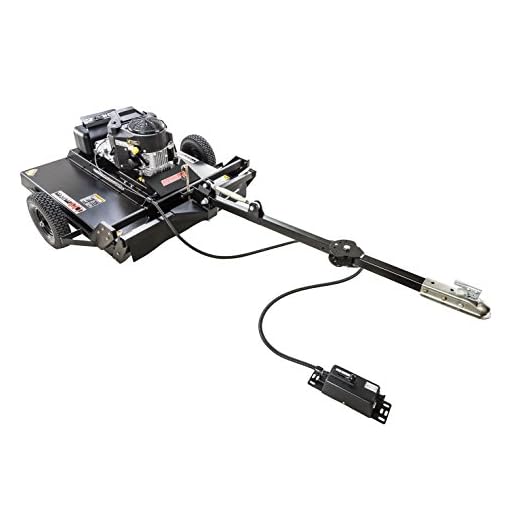

Swisher 15.5HP 44-inch Tow-Behind Cutter
I appreciate the extra horsepower and electric start for getting through heavy, overgrown areas with less hassle. The universal articulating pin hitch gives better coverage left or right, which helps when tackling irregular terrain and fence rows.
Overview
This 15.5 HP Swisher brings the highest power in the trio and an electric‑start Briggs & Stratton engine that’s easy to fire up in the morning. It’s targeted at people who need one machine that can push through thick grass, brush and saplings repeatedly without bogging down.
Standout features and real-world benefits
In the field, I noticed the extra horsepower matters when you hit wet, tall grass or denser woody growth — the deck keeps momentum and you spend less time trying to recover rpm. The articulating hitch also makes it easier to get close to uneven obstacles without constantly repositioning the towing vehicle.
Who should pick this model
If you’ve got larger parcels, frequent heavy growth, or mixed terrain with lots of small saplings, this mower is a strong choice. Keep in mind it’s still a rough‑cut tool — expect functional results instead of lawn‑grade finish. Also plan to provide a suitable battery (not included) and a capable tow vehicle to get the most from this unit.
For me, the RC15544BS strikes the best balance of power and usability when the priority is aggressive cutting performance and coverage rather than lawn finesse.
Swisher 14.5HP 44-inch Commercial Rough Cutter
I appreciate the Kawasaki V‑Twin's reliable power and the remote operator control — it makes towing and engaging the deck easy from the vehicle. It’s clearly built for hard work on fields, fence lines, and overgrown lots rather than manicured lawns.
Overview
I see this model as the workhorse in the 44‑inch class: it pairs a 14.5 HP Kawasaki V‑Twin with a commercial‑grade Trailcutter deck designed to chew through tall grass, brush and light saplings. The mower is explicitly intended for rough‑cut jobs — think pastures, fence lines, roadside cleanup, and overgrown fields rather than tidy residential lawns.
Key features and benefits
Those features translate to dependable cutting and real convenience: I can adjust the deck offset to avoid obstacles, start cutting right from the tow vehicle, and expect predictable performance across uneven ground.
Practical insights and limitations
I found the Swisher RC14544CPKA best when used for its intended purpose — clearing fields, mowing meadows, and trimming overgrown property. A few things to consider:
If you regularly need to clear dense growth and want a machine that starts and keeps going under load, this model is excellent. For property owners needing a neat, striped lawn, look elsewhere, but for aggressive mowing and brush clearing I’d reach for this Swisher first.
Swisher 11.5HP 44-inch Rough Cutter
I like this model for buyers on a budget who still need serious rough‑cut capability. It compromises a bit on engine size but keeps important features like a stump jumper and swinging blades that handle saplings and thick grass.
Overview
This 11.5 HP Swisher is the pragmatic choice if you want effective rough‑cutting without paying a premium. It’s aimed at landowners who need to clear fields, trails, and fence rows — especially where saplings and thicker stalks appear — and who are comfortable accepting a lower engine displacement for a lower price.
What it does well
In practice, I found that the stump jumper and twin swinging blades make a real difference when you hit patches of small saplings and heavy weeds. For sporadic rough‑cutting tasks across a few acres, the mower feels efficient and practical.
Considerations before buying
There are tradeoffs: the 11.5 HP engine will struggle more than higher‑displacement models when you push through dense woody sections or very tall, wet grass. If you’re maintaining big acreage with heavy brush year‑round, a more powerful unit may save time. Also, the unit is not intended to produce a finish lawn — keep your expectations aligned with a rough‑cut tool.
Overall, I view this as the best value in the lineup: it balances cost, capability, and useful features for most property owners who need a robust rough‑cut mower without splurging.
Final Thoughts
If you want one clear winner for raw power and coverage, I recommend the Swisher 15.5HP 44-inch Tow-Behind Cutter. It delivers the most cutting muscle (15.5 HP), an electric start for fewer headaches, and an articulating pin hitch that helps you cover fence rows and uneven ground more efficiently. Choose this when you’re dealing with heavy brush, thick grass, and irregular terrain.
If you’re trimming your budget but still need serious capability, go with the Swisher 11.5HP 44-inch Rough Cutter. It loses a bit of engine muscle but keeps the key rough-cut features—stump jumper and swinging blades—so it’s great for occasional heavy jobs and for smaller properties where you don’t want to overspend.
Buying & Using Guide: How I Approach 44-inch Commercial Rough Cut Mowers
When I shop for a 44-inch rough cut mower I look at four things first: engine power, hitch/design, blade system, and durability. Engine power tells me whether the mower will chew through heavy grass and light saplings. Hitch or articulation options tell me how well the cutter will follow my tow vehicle through fence rows and dips. Swinging blades plus a stump jumper are non-negotiable for rough work. Finally, a solid deck and gearbox matter — cheap sheet metal will cost you time and money.
Tips I Use in the Field
Maintenance & Care
Choosing Between Budget and Premium
Common Mistakes to Avoid
If you want a quick checklist before you buy: confirm towing capacity, check for stump-jumper and swinging blades, ask about electric start and the hitch type, and compare gearbox warranties. I follow that checklist every time and it saves me from buyer’s remorse.
FAQ
Most small trucks, ATVs, UTVs, and lawn tractors with a proper hitch and sufficient towing capacity can tow these mowers. Check your vehicle’s towing rating and the mower’s tongue weight. I always make sure the tow vehicle has a sturdy hitch and brakes that match the load before I hook up.
A stump jumper protects the deck and blades from sudden hits with stumps or rocks by allowing the deck to move or the blades to swing. If you mow over fields, fence rows, or brushy lots, a stump jumper can save you costly repairs. I wouldn’t go into overgrown territory without one.
With rough-cut work, check blades every 10–20 hours of use. Swinging blades dull faster than rigid blades because they hit woody material. I sharpen if the edge is nicked but replace if the blade is bent or has significant chunking.
Yes. For heavy-duty work, an electric start saves you time and frustration—especially in cold or after sitting for a while. I value it for reliability; pulling a recoil starter while covered in burrs is no fun.
They handle uneven ground better than a lawn mower thanks to heavier frames and articulating hitch options, but stay cautious. Slow down, use a hitch that allows articulation (like the Swisher 15.5HP’s pin hitch), and avoid steep slopes where stability is a concern.
Grease fittings, change oil on schedule, keep blades sharp, and clear debris after each job. I also inspect belts and gearbox oil regularly. A little routine maintenance prevents big failures.





Great roundup — thanks for doing the legwork! I’m leaning toward the RC15544BS (that extra 15.5 HP sounds nice) for my 2-acre overgrown lot. Quick question: does the universal articulating pin hitch play nicely with older trucks? I’ve got an older 2″ receiver and I’m not sure if any adapters are needed. Also, anyone else find the electric start a lifesaver on damp mornings? 🙂
Most owners report the articulating pin hitch works with standard 2″ receivers; the key is the pin/hitch plate on the tow-behind. I’d still check the exact pin diameter on your truck — some older mounts need a simple shim or different pin. Electric start is especially handy when it’s wet and the engine needs a couple of tries.
I hooked mine to a 2004 F-150 with a 2″ receiver, no mods. The articulating hitch really helps along fence lines. Only thing: check the safety chain angles so they don’t drag.
I had to buy a cheap adapter once but it was straightforward. Pro tip: grease the hitch pivot monthly if you’re using it on rough terrain.
I appreciate the roundup, but tow-behind rough mowers make me nervous. Chain break? Deck swinging? I’ve seen a few sketchy videos of things coming loose. Does Swisher have decent warranty/support via Amazon purchases? Also, are there recommended safety add-ons (breakaway chain, extra chains, etc)? Anyone had a warranty claim through Amazon and it went smooth? 😬
Safety first — good questions. Swisher decks are built sturdy but you should always use rated safety chains, inspect hitch pins and chains before each use, and consider a breakaway chain or secondary safety strap for added peace of mind. Warranty: Swisher offers manufacturer warranty; when buying on Amazon, save your Amazon and manufacturer docs and contact Swisher directly for warranty work (Amazon can help with returns if the unit arrives damaged). Many buyers have handled warranty claims with Swisher after an Amazon purchase without issue — just document everything.
I strap a second safety chain and keep spare hitch pins in the cab. Also, get a magnetic blade bolt holder or a small tool kit with you — saves a lotta headaches out in the field.
I went with the budget RC11544BS to try out a tow-behind before committing to a bigger setup.
Pros: handled thick grass and small saplings better than I expected. The stump jumper saved the blades a couple times.
Cons: it feels a bit underpowered on hills and the deck bounces a little over clumps.
Question: anyone know the exact blade length/part number for replacements? Also, how often do you folks sharpen/swap blades when doing rough-cut work? I’m trying to plan spare parts. Thanks! (and yes, I’m that guy who cuts a field at dawn and wonders where all the rocks came from 😅)
Also check the spindle bearings after a busy season — they take a beating when you’re hitting hidden stumps and stones.
I keep one spare set of blades for every 50 acres I mow. If you hit saplings and small brush a lot, I’d sharpen or replace more often. Also check blade bolts frequently — they loosen with vibration.
FYI the Amazon sellers sometimes bundle blades cheaper than the dealer. Just double-check you’re buying OEM or reputable aftermarket parts.
Nice field-warrior report — glad it held up. The RC11544BS uses the standard 44″ rough-cut blade set for Swisher models; Amazon listings usually list the OEM part number in the accessories section. For rough cutting, many users sharpen every 8–12 hours of heavy use or swap to fresh blades every 20–30 hours depending on conditions.