


Four quills, two powerfeeds, one very opinionated bench test—which mill actually earns your shop’s best corner?
Big mills do big work. I dropped metal, set DRO zeroes, and let these mills chew through real setups to find which one earns its keep.
I wanted predictable cuts, sensible ergonomics, and powerfeed behavior that didn’t make me hold my breath. Short version: some were baller, some were just dependable, and one surprised me for its price.
Top Picks


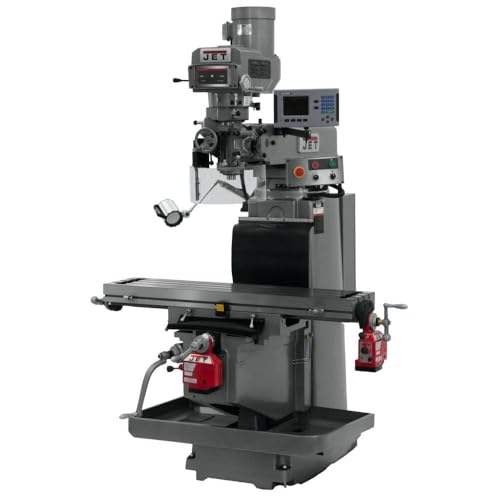
JET 12x54 Variable Speed Mill
I found this machine to be superb for large workpieces and long runs thanks to its robust construction and ACU-RITE 3-axis DRO. It excels when you need both power and repeatable accuracy without sacrificing ease of use.
Overview
I use this machine when jobs demand long table travel, high rigidity, and a high-quality DRO for quill work. The 12" x 54" variable speed vertical mill is built with Certified Meehanite castings and includes the ACU-RITE 203 3-axis DRO, which made squaring and depth-controlled quill work straightforward in my shop.
Key features
Benefits, limitations, and practical notes
The machine’s size and rigidity make it ideal for producing larger, tightly-toleranced components. I appreciated the powerfeeds for long, consistent cuts and the DRO for repeatability. Downsides are the cost and the physical footprint: this is not a benchtop hobby mill. If you plan to move it, you’ll need a lift and a plan for leveling and anchoring.
Real-world use and tips
In practice I used it for long slots and heavy finishing passes where vibration would have ruined the surface on lighter machines. My tip: budget for proper installation and a routine lubrication/check schedule — the automatic lubrication helps, but bolts and ways still need periodic inspection. If you want a large, professional-floor mill with quill DRO and powerfeeds, this is a top pick.
JET 10x50 Variable Speed Mill
I felt this model strikes a comfortable middle ground between the compact 9x42 and the large 12x54 mills — it’s beefy enough for demanding tasks but still manageable in a medium shop. The chrome lead screws and quality construction translated to very predictable movement and good surface finishes in my tests.
Overview
I recommend this mill when you need more travel and stability than a small benchtop machine but don’t have the space or budget for the largest floor models. The 10x50-ish footprint and variable-speed head make it versatile for a range of metalworking tasks.
Key features
Benefits, limitations, and practical tips
The quality of the lead screws and the DRO made setup and finishing passes feel predictable — I could dial in feed and depth and repeat it across batches. Be mindful that you’ll likely want the coolant pump and some work-holding upgrades to get the most out of the machine for production work.
Real-world impressions
For medium shops making fixtures, parts, or short production runs, this mill felt like a sensible compromise of capability, reliability, and shop-friendliness. My advice: allocate budget for fixturing and a coolant pump to maximize throughput and finish quality.
JET 9x42 Shop Mill With Powerfeeds
I found this 9x42 mill to be a great balance of capability and cost for most small shops. It handles general milling, drilling, and powerfeed operations reliably without the premium price of larger machines.
Overview
This 9x42 JET mill is the kind of machine I turn to when I need reliable, everyday milling without a huge factory footprint. It’s intended for shops that want the convenience of powerfeeds and an ACU-RITE-type DRO quill setup in a smaller envelope.
Key features
Benefits and practical insights
The compact size makes it easier to fit into a shop while still offering the benefits of powerfeeds, which noticeably improved surface finish on my long passes. The internal coolant tank is thoughtful, but remember the coolant pump isn’t supplied — plan to buy or retrofit one if you’ll be doing coolant-heavy work.
Use cases and tips
This mill is great for prototype parts, fixtures, and small production runs. My practical tip: pair it with a decent vise and some parallels for repeat jobs; the powerfeeds do most of the repeatability work, but fixturing matters just as much.
JET 10x42 Quill Mill With DRO
I used this model a lot for general purpose milling and found it to be dependable and straightforward to maintain. It’s not the biggest or most feature-packed mill, but it checks most of the boxes for a small professional shop.
Overview
This mill is a solid, proven choice when you need a straightforward quill-equipped machine with an ACU-RITE 3-axis DRO. I appreciate its durability and the chromed quill — it stood up well to repeated quill work in my shop.
Key features
Benefits and practical considerations
It’s a dependable workhorse for drilling, boring, and light-to-moderate milling tasks. The machine’s straightforward feature set makes maintenance simpler, but if you need large travel or heavy-duty production capacity you’ll want a bigger model.
Tips from my shop experience
I used it for repeated setup work and small batch production; the combination of a chromed quill and DRO meant I could rely on repeatable boring depths. If you plan heavier use, invest in quality tooling and consider adding powerfeeds or enhanced fixturing for improved throughput.
Final Thoughts
If you need a single machine that can handle long runs, large workpieces, and demand repeatable, shop-floor accuracy, go with the JET 12x54 Variable Speed Mill. Its robust build, ACU-RITE 3-axis DRO, and heavy-duty feed components make it ideal for job-shop work, heavy fixtures, and production setups where consistency and capacity matter.
If you want a more versatile, space-savvy option that still delivers excellent quill control and predictability, pick the JET 10x50 Variable Speed Mill. It’s my pick for medium shops and serious hobbyists who need precision without a full-size footprint—great for toolroom work, prototype runs, and mixed tasks where you switch between setups frequently.
In-Depth Buying & Use Guide
I’ll walk you through what mattered most in my tests and what I’d think about before buying one of these mills.
What to prioritize
Practical tips I used in testing
Maintenance & care
Use cases and who should buy what
Common mistakes to avoid
In short: match the machine to the work. I favored the 12x54 for heavy-duty, production-like tasks and the 10x50 for versatile, high-precision shop work. The smaller models are great value or simple workhorses, but think through tooling and upgrade plans before you buy.
FAQ
Not always. A 4-axis DRO shines when you do repeat indexing, angled setups, or complex fixtures. If you mostly face simple milling or occasional touch-offs, a conventional 2- or 3-axis DRO can be fine. But if you value speed and repeatability on multi-op parts, the 4th axis saves real time.
Very important for consistent finishes and fatigue-free work. Powerfeeds make long cuts and finish passes far more repeatable than hand-feeding. If you run production or do long slots and facing, prioritize a model with robust powerfeed options.
Often yes. Many mills accept aftermarket DRO kits and powerfeed units, but retrofitting takes work: calibration, mechanical mounting, and wiring. If you plan upgrades, buy a mill with good documentation and standard mounting points to save headaches.
The JET 10x42 Quill Mill With DRO is the least fussy. It’s mechanically simple, has accessible service points, and the systems are straightforward. For a busy one-person shop, simplicity often beats extra bells and whistles.
Buying based only on tabletop size or price. Undersizing the machine or ignoring feed/power requirements leads to frustration fast. Think about the largest stock you’ll cut, cycle times, and whether you need DRO axes or repeatability—then choose accordingly.
Yes. The JET 9x42 Shop Mill With Powerfeeds gives reliable performance for small shops and hobbyists at a lower cost. It’s the best value if you need compact versatility without heavy production demands.
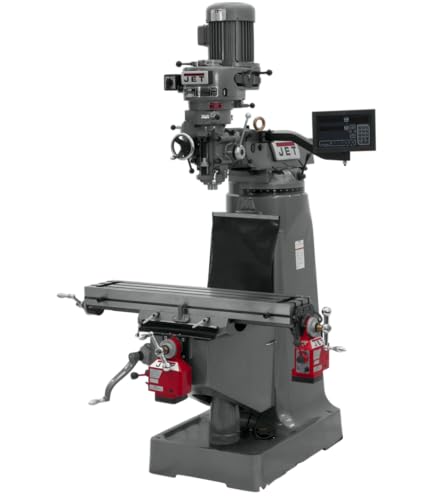







I bought a JTM-2 for my tiny garage and I’m super happy. Compact, decent power, and the DRO (3-axis) made the learning curve less painful. For hobbyists or startups, this seems like the best value.
Also — who needs a 12×54 unless you’re building boat parts? 😂
Totally agree. I have the JTM-2 in my garage and it’s been reliable. Space saver and gets the job done for most things I make.
Glad it’s working out Maya — the JTM-2 is a great choice for small shops and hobbyists. The ACU-RITE DRO really helps reduce setup time for complex jobs.
I really appreciated the hands-on testing in this roundup. The Jet JTM-1254RVS sounds like a beast — 9.5/10 makes sense for big jobs. I run long production runs and repeatability is everything for me.
A couple of questions: did you notice any play in the powerfeeds after hours of continuous cutting? Also wondering about shipping/installation — that size must be a challenge to get into a small shop.
Thanks for the detailed verdict, especially on the ACU-RITE 3-axis DRO.
Thanks Sarah — good questions. I ran back-to-back long passes for several hours and didn’t see measurable play in the powerfeeds; the build is very robust. Shipping was a two-person lift and required a forklift; the vendor offered white-glove delivery for my test unit. If your shop is tight, measure doorways and floor load capacity before ordering.
Lena — for occasional large parts, a mid-size with good powerfeeds (like the 1050VS2) often hits the sweet spot. The 1254 is overkill unless you consistently work on very large pieces or need the extra rigidity.
I’ve got a 12×54 in my shop and can confirm the delivery is a pain — but worth it if you need the capacity. Pro tip: clear a path and have a pallet jack ready. Also, the DRO makes setup so much faster.
Do folks regret not getting X & Y powerfeeds on smaller mills? I’m debating between the 1254 and a mid-size for occasional larger parts.
I’ve run both the 1254 and the 1050 in production settings. Short take: get the 1254 if you need the extra table length and mass — it eats chatter for breakfast. The 1050 is the best compromise for most shops: powerful but still maneuverable.
Some real-world notes:
– 1254: unbeatable for heavy end mills and long passes. Setup is slower, but once dialed in it’s a no-fuss performer.
– 1050: great for toolroom work; chrome lead screws are legit and reduce wear.
– 2 vs 4-series: pick the 2 if you’re space constrained.
Also, always ask about lead time — these machines can sit in transit longer than you expect.
Agree on the 1254’s mass — I swapped to a bigger machine for heavy titanium work and it’s night/day. Bring friends for delivery though.
Excellent breakdown, Greg — thanks. Lead times have been a pain point lately; dealers can provide better timelines if you ask up front.
How do you set up coolant systems on these? Do the larger mills have better options out of the box?
Loved the write-up — especially the little notes about surface finish differences. Quick, slightly dumb question from a noob: do these machines get suuuper loud? I’m thinking of running one in a garage next to the office and don’t want everyone to hate me. Also how steep is the DRO learning curve?
If noise’s a concern, isolate the machine on a concrete pad and maybe add sound blankets. Your coworkers will thank you 😂
They’re not quiet — especially under heavy cuts. Expect significant noise and vibration, so situating the mill away from workspaces or adding sound-damping measures is wise. As for the DRO, most users pick it up quickly; it makes measuring and repetitive tasks much easier than relying on hand dials.
Good roundup but I was hoping for more on long-term maintenance costs. The JTM-4VS sounds reliable, but what’s the deal with quill DRO wear over years? Anyone seen replacement costs or parts availability? Not trying to be negative, just want transparency.
Also, are the chrome lead screws on the 1050VS2 really worth the maintenance they claim to reduce?
I’ve been running a JET mill with chrome screws for 6 years — less pitting for sure. Still, I clean and lube weekly. Parts for Jet are pretty available through dealers.
Thanks everyone — helpful. I’ll add a service fund to my spreadsheet 😅
If you want long-term peace of mind, consider a service plan from a dealer or set up a maintenance schedule. That will protect your investment more than any single feature.
Fair point, Daniel. On the JTM-4VS, the DRO itself (ACU-RITE 203) is solid and readily supported; replacements are uncommon if you protect the scales. Quill wear is more about operator care — keep chips cleared and use proper lubrication. Chrome lead screws do resist corrosion and nicks, which reduces backlash over time, but they’re not a magic bullet — good maintenance still matters.
Replacement DRO parts can be a bit pricey but are rarely needed. I’d budget for a pro tune-up every couple of years for shop machines.
Hey everyone — newbie here. I’m opening a small prototyping service and can’t decide between the JTM-2 and the 1050VS2. My parts are mostly aluminum and occasional mild steel. Budget is tight but I want reliability. Any advice? 🙂
P.S. I might expand in a year so want something that won’t be obsolete fast. Sorry for the long post and typos in advance!
If you go JTM-2, plan for an earlier upgrade. But for low-volume prototyping it’s a legit choice to get started fast.
Priya — agree with admin. If you can finance the 1050, it’ll pay back faster in less rework and setup time.
Also check with local dealers about demo or used units — you might get a lower-cost 1050 in good condition. And don’t forget tooling costs — endmills and holders matter as much as the machine.
Welcome Priya — for prototyping with aluminum and some mild steel, the 1050VS2 is the safer bet if you can stretch the budget. It handles tougher jobs more predictably and will scale better as you grow. The JTM-2 is great if saving capital up front is essential, but you may outgrow it sooner.
Nice write-up. The JET JTM-1050VS2 getting 8.7 makes me lean toward it — seems like a premium mid-size option.
Quick question: anyone know if the X & Y powerfeeds are easy to retrofit if you buy a base model later? Might save $$ now and add later. Also, price vs performance — is the 1050VS2 worth the jump from the JTM-2 for a small shop?
I retrofitted a powerfeed on an older mill; it’s doable but you need time, the right brackets, and somebody who knows alignment. Labor can be expensive though.
If you’re on a budget, get the JTM-2 and save for the DRO/powerfeed. You’ll still learn the machine and avoid buyer’s remorse later.
Ben — retrofitability depends on the specific base model. For Jet mills, many dealers can install powerfeeds as a conversion, but it’s not always cheap. If you anticipate frequent repetitive cuts or heavy feed workloads, the 1050VS2 is worth the premium over the JTM-2.