


Can a mill be both a tank and a scalpel? I picked the ones that survived my shop.
Shop gear gets battered — and the survivors tell the truth. I’ve run cutters, drilled awkward parts, and accidentally dropped a wrench on the table. Machines that keep cutting with the same precision win my vote.
I tested mills and the electronics that make them variable-speed. I’m focused on rigidity, serviceability, and honest performance — not marketing fluff. Expect practical picks for real shops, not garage fantasies.
Top Picks






JET JTM-1050VS2 Variable-Speed Vertical Mill
I appreciate the build quality and long-term reliability this machine brings to a busy shop. It excels where precision, rigidity, and serviceability matter most.
Purpose and overview
I see this mill as a shop-grade vertical milling solution built for repeated, accurate cuts on steel, aluminum, and tough alloys. The JET JTM-1050VS2 is aimed at professional or serious hobbyist shops that need a durable, serviceable machine that will hold geometry over years of use.
Key features and what they mean to me
The machine ships with hardened and ground vertical knee ways, a 10" x 50" table, and precision spindle support using Class 7 bearings. Those features translate into less chatter, better surface finishes, and longevity in demanding uses.
These parts make setup and repeatability straightforward, and I find that the table size gives good clearance for larger fixtures and setups.
Benefits, limitations, and practical insights
In practical shop use I found the three-stage power downfeed particularly useful for drilling and boring operations because it gives a predictable feed force and an automatic stop for repetitive tasks. The built-in coolant tank is handy for extended cutting sessions, but note that a coolant pump is not always included and may be an extra cost.
I would mention two limitations: first, the machine weight (over a ton) demands a well-prepared floor and a plan for movement and placement. Second, its price puts it in the professional category — less suitable if you only need occasional light milling. Overall, for anyone seeking a robust, long-lived mill, this is one of the most sensible choices I’ve seen in this class.
JET JTM-4VS 3HP Variable-Speed Vertical Mill
I find this model to be a very capable and dependable shop mill that balances capability with footprint and cost. It’s a great choice for shops that need a versatile vertical mill with proven engineering.
Overview and shop fit
For many small to medium shops, this JET JTM-4VS represents a great balance of rigidity, precision, and user-friendly features. I see it as a versatile mill for general machining, prototyping, and small production runs.
Notable attributes and what they deliver
Constructed using Certified Meehanite castings and precision-honed heads, the machine is designed to minimize wear and maintain accuracy over years of use. The quill and table geometry make it straightforward to perform drilling, tapping, and heavier milling operations with confidence.
Practical observations and limitations
In my experience, the three-stage downfeed with automatic stop helps reduce operator fatigue and improves consistency when doing repetitive depth-of-cut operations. The main caveats are size and electrical needs — this mill is heavy and typically requires 230/460V 3-phase service, so plan shop layout and wiring accordingly. For many users, the long-term reliability and reduced setup time make those trade-offs worthwhile.
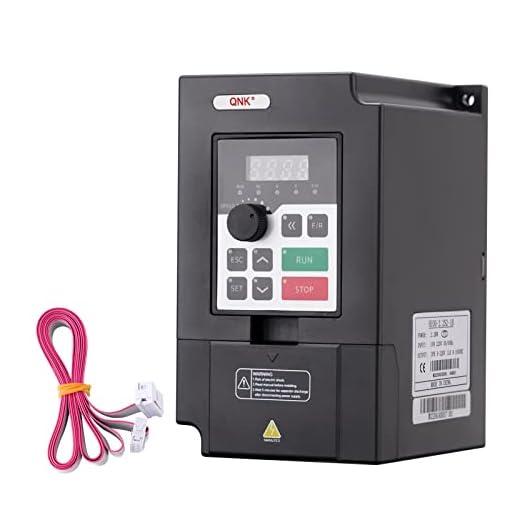
QNK 2.2kW 220V 3HP CNC VFD Inverter
I find this inverter to be a reliable, well-rounded option for upgrading small mills and spindles. Once configured, it offers smooth speed control and sensible features for shop use.
Why I picked it for the roundup
This QNK 2.2kW inverter balances price, capability, and real-world usability. I recommend it when you need dependable speed control for 3 HP spindles or small milling machines without stepping up to full industrial drives.
Features and installation notes
The VFD supports both single-phase and three-phase 220 VAC input and outputs three-phase 220 VAC up to 11A. Users report smooth motor operation, and I appreciate the lower noise and EMI characteristics for a cleaner shop environment.
Practical usage and tips
From my experience, initial setup requires careful parameter checks like maximum frequency (set to 60 Hz for U.S. mains) and ramp times to avoid motor stress. The unit performs very well once configured; plan to remote-mount or enclose it to protect from shop dust and to add an external cooling path if you’ll run it near its limits.
MOLLOM 2.2kW 220V Single/Three Phase VFD
I consider this a solid mid-range VFD that balances functionality and cost. It’s powerful enough for many 3 HP spindles and offers both single- and three-phase input support.
Where I’d use it
I’d pick this VFD for a 3 HP spindle or a small milling machine where you want good performance without stepping up to industrial brand prices. It works well for retrofit projects and standalone spindles with an appropriate mechanical setup.
Key specs and observed behavior
With a 2.2 kW rating and up to 9.6A output, this drive supports a wide frequency range and both single- and three-phase inputs. Users report that it performs well out of the box and that the manufacturer is responsive when questions arise.
Benefits and caveats from practical use
I’ve found that this unit gives a noticeable performance bump compared to lower-end VFDs: smoother torque and reliable speed control. The manual and parameter interactions can be confusing, so budget some setup time or get help from someone familiar with VFD programming. Also, ensure proper cooling and avoid continuous operation at the maximum rating until you validate thermal behavior in your installation.
XCFDP 2.2kW 220V Single-Phase to 3-Phase VFD
I regard this VFD as a sensible converter for bringing 1-phase power to older three-phase mill motors. It’s straightforward to install for someone comfortable with motor wiring.
Intended applications
I use this kind of VFD when converting barn or garage machines from single-phase to three-phase power, especially older mills whose original motors are otherwise hard to power. It’s particularly useful when a replacement three-phase service is not available.
Feature highlights and experiences
With a 2.2 kW rating and up to 12 A, the drive handles 3 HP motors comfortably in many installations. Users frequently report successful installs powering Bridgeport and Enco mills, and the VFD’s control features allow simple speed adjustment and basic protection.
Installation advice and caveats
I recommend setting the minimum Hz high enough for older motors to avoid overheating at low speeds, and to test each parameter change in a controlled manner. Wiring can be cramped — using WAGO or similar compact connectors helps. Overall, this is a pragmatic solution for shop retrofits when you accept a brief setup and learning period.
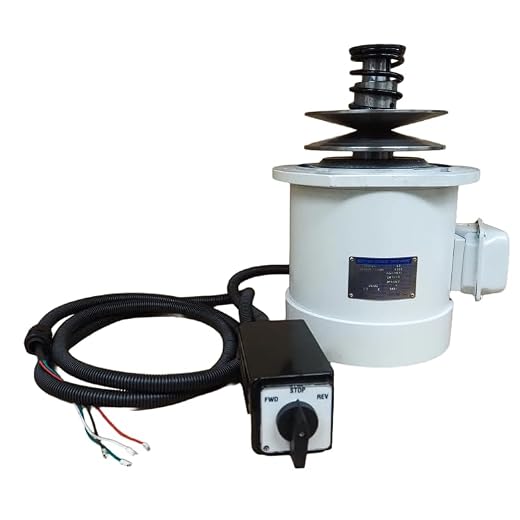
3HP Replacement Motor for Bridgeport Mills
I find this motor to be a solid option when a mill motor fails and you want a ready-to-install replacement. It includes pulleys and drum switch hardware to simplify the swap.
What it replaces and why it matters
When a variable-speed mill head loses its motor or the original motor becomes unreliable, I prefer replacing with a direct-fit assembly rather than attempting complex repairs. This 3 HP replacement motor is designed for Bridgeport-style import mills and is intended for users who want a practical repair option that gets the machine back to service quickly.
What's included and installation notes
The product typically includes the motor, pulleys, and a drum switch; the shaft length and bolt patterns are detailed so you can verify fit before purchase. It ships wired for 220V 3-phase but includes wiring details on the nameplate which you or your electrician can adapt.
Benefits, limitations, and tips from use
I like that this motor keeps downtime minimal since replacing an entire motor/pulley assembly is quicker than sourcing parts separately. The caveat: measure twice. I recommend verifying bolt-hole centers and shaft dimensions against your existing unit. If you’re not comfortable with electrical wiring, have a qualified technician perform or verify the installation to ensure safety and correct rotation direction.
Generic 750W Single-to-Three Phase VFD
I view this as a budget-friendly way to get variable-speed control on small motors and experiments. It isn’t feature-rich, but it delivers fundamental VFD functions at a very low price.
Who this is for
I recommend this unit if you want a cost-effective way to convert single-phase power to three-phase for small spindle motors, hobby lathes, or experimental setups. It’s ideal for someone who understands basic VFD wiring and wants to tinker without a large investment.
Notable features and real-world behavior
The unit supports 750W (roughly 1 HP) and provides three-phase output from single-phase input. Users consistently report that the potentiometer control and basic button interface perform adequately for speed control and that it runs small motors smoothly when correctly sized.
Practical considerations and caveats
From my experience and user reports, the biggest trade-offs are documentation and long-term durability. The housing and manual reflect the price point, so I recommend planning for careful installation, proper cooling, and conservative load sizing (motor power should be kept significantly below the VFD rating). If you need reliability for production use, stepping up to a recognized-brand VFD is wiser; for experimentation and light-duty hobby use, this is a decent value.
Bridgeport Variable Speed Dial Replacement
I consider this a practical, low-cost spare part for older Bridgeport machines. It restores the front speed dial function without a full head rebuild.
Who should buy this
If you own an older Bridgeport with a worn or missing speed dial, this replacement gives you the original control look and function at low cost. I see it as a sensible spare part to have on hand if you maintain older Bridgeports.
Fitment and practical notes
It’s sold as a variable speed dial for the front of the head above the speed changer housing. Verify your part number (M1455A or the head’s specification) before ordering to avoid a mismatch. Installation is typically straightforward for those who have removed head covers and access panels before.
Limitations and tips
This is a cosmetic and functional replacement part for the dial control only — it will not resolve worn gears, belts, or internal head problems. If you suspect internal mechanical wear, treat the dial replacement as one step in a broader maintenance plan. For routine wear and tear, though, this part is a helpful and inexpensive fix.
Rotary Forward/Reverse Changeover Switch Selector
I view this switch as a convenient compact option for simple forward/off/reverse control in a small control box. It’s practical for retrofits when space is limited.
Intended use and fit
This rotary selector is ideal when you need a neat, compact solution to add direction control to a mill or motor circuit. I’d recommend it for hobbyists and light-duty shops where a space-saving control is useful.
Construction and features
The switch combines metal and quality plastic components and uses silver-alloy contacts for durability. Its through-hole mounting and small dimensions make it easy to mount in custom panels or retrofit enclosures.
Practical considerations
When I install these, I always pair them with a proper motor starter or contactor and thermal overload to protect the motor and wiring. The switch itself is only a control element and should not be the only means of motor protection in a shop environment.
3-Stage Forward/Reverse Mill Speed Switch
I see this as a no-frills mechanical switch for mills that need a compact forward-off-reverse selector. It does the job for basic motor direction control but lacks advanced features.
Purpose and design
This three-stage forward/reverse toggle switch is intended for users who want a straightforward, mechanical control for reversing and stopping three-phase milling motors. I’ve found similar switches useful when retrofitting older mills or building simple control panels.
Construction and use notes
The device uses silver-alloy contacts to help resist oxidation and provide solid conductivity. The construction is a mixture of plastic and metal, which helps keep costs down while providing acceptable performance for intermittent use.
Practical tips and limitations
If you’re running heavy-duty or continuous production work, I’d recommend a more robust industrial reversing contactor and overload protection. For light shop use or hobby machines, this switch is fine. When installing, ensure you include proper fusing and thermal overload protection because the switch itself does not provide motor protection.
Final Thoughts
I recommend the JET JTM-1050VS2 Variable-Speed Vertical Mill as my top pick. It earns that spot because of its heavy-duty build, excellent rigidity, and long-term serviceability — exactly what a busy professional shop needs. If your work is often demanding (big cuts, long runs, tight tolerances) this is the mill that will shoulder the load and keep returning precise results.
If you want a smaller-footprint, highly capable alternative that still delivers proven engineering and strong versatility, go with the JET JTM-4VS 3HP Variable-Speed Vertical Mill. I prefer this one for mixed-use shops and hobbyists who need a dependable, cost-conscious machine that handles most vertical milling tasks without the bulk of the larger model.






Quick question about the small forward/reverse rotary switches listed — are they worth using in a retrofit control box? I need a compact solution for a 3-phase motor and limited panel space.
Concerned about safety and whether they’ll stand up to frequent switching.
Anyone used the 64*64*61mm switch or the 3-stage version from the list?
Those compact rotary switches work fine for light-duty use and tight spaces. For frequent switching under load, though, I’d recommend a contactor-based solution with an interlock — the mechanical switch will limit how often you can safely switch under load.
Used the compact one in a hobby CNC control box. It’s fine for occasional manual reversing, but I wired a contactor for regular direction changes.
Also check the switch’s current rating. If you’re close to the limit, it’ll wear out fast.
Short question: between the JTM-1050VS2 and the JTM-4VS, is it mostly about capacity and how heavy the work is?
I run a two-person shop and I don’t want to overspend on the 1050 if the 4VS will handle most jobs.
Anyone running the 4VS for medium-duty production?
If you’re doing a lot of heavy interrupted cuts choose the 1050. Otherwise go 4VS and save the cash for tooling.
Good question. The 1050VS2 is aimed at heavier shop workloads — more rigidity, longer belt life, and heavier spindle bearings. The JTM-4VS is a very capable all-around mill and is often the better value for smaller shops that don’t need extreme rigidity.
I have the 4VS in a small prototyping shop. Handles aluminum and mild steel fine. I only wish it had a bit more spindle stiffness for deep slotting, but otherwise excellent for the $$.
Nice roundup overall. I do think it could’ve mentioned spindle encoders and better feedback options for digital speed readout on VFDs. A couple of the VFDs listed can accept encoder inputs or have analog feedback kits — that’s a helpful upgrade for precision work.
Small critique: wish there was a chart comparing input voltage ranges and recommended motor sizes next to each VFD — would make picking between QNK/MOLLOM/XCFDP easier.
Good points, Samuel. We tried to keep the list focused on general fit-for-purpose items but adding an encoder/upgradability section and a simple voltage/current comparison table is great feedback — I’ll add that in an update.
Also agree on the voltage chart — people confuse single/three-phase inputs all the time and end up with cross-compatible issues.
+1 on encoder mention. For some milling jobs I want closed-loop spindle control; cheap VFDs don’t do that well.
I bought the Generic Replacement Motor for an import Bridgeport knock-off last year. It dropped right in and included the pulleys and drum switch hardware like the listing said. No drama.
Pros: cheap, saved the mill from landfill.
Cons: it’s not a Rolls-Royce — vibration is a tad higher than the original, and pulley tolerances are looser.
If you want a cheap, fast swap it’s great. If you’re picky about NVH, look OEM.
Thanks for the hands-on note. Cheap replacement motors are a practical repair path; just good to know about the vibration trade-offs.
Same here — fit was excellent, but I balanced the pulleys afterward which helped a lot.
I installed the QNK VFD last month on an older spindle and wow — once you get the parameters right it runs smooth as butter. Took me a couple nights to figure out accel/decel and current limits though 😂
Note: I’m not an electrician, so if you’re new to VFDs, get someone to double-check wiring. I fried a fuse on my first test (facepalm). But recovery was easy.
Overall: for the price, solid pick.
Thanks for sharing, Maya. Good reminder about checking current limits and motor parameters — wrong settings can be rough on both VFD and motor.
Which parameter set did you change the most? I always tweak torque boost and carrier freq on cheap units to cut noise.
Carrier freq and accel were the big ones for me. Also set motor rated amps — that stopped the nuisance trips.
Great roundup — I almost bought the JTM-1050VS2 last month and this review confirms why I hesitated in the good way.
The build quality on that JET is absolutely next-level for a small production shop. I’ve used a similar-sized knee mill for 10+ years and paying extra for rigidity and DRO compatibility has saved me time and headaches.
If anyone’s on the fence about the ACU-RITE 203 DRO option, it’s worth it IMO for repeatability. Worth every penny if you do a lot of setup-heavy work.
Thanks Emily — glad that matches your experience. The DRO saves a lot on setup time, especially with heavy cuts where small errors compound fast.
How do you like the serviceability on the JET compared to older Bridgeports? Do parts/tech support make it easy?
Totally agree — DRO plus powerfeed is a game changer. I retrofitted one on an older mill and it paid for itself in reduced scrap.
JET tends to have good parts availability and a solid dealer network. Bridgeport parts are common too but can be pricier if you need OEM; for most shops JET’s easier access to spares is a plus.
Anyone tried the MOLLOM vs the XCFDP for single-phase to 3-phase conversions? I have a 3HP spindle but only 1-phase in the garage. Looking for something that won’t cook on startup.
Read the verdicts — MOLLOM seemed more robust but curious about real-world differences.
Good follow-ups — and if you plan long runs at low RPM, keep cooling in mind. Some of these smaller VFDs don’t ventilate well at low ambient airflows.
Also check the cooling — some inexpensive VFDs overheat under continuous heavy duty. Fan maintenance and ventilation are key.
Pro tip: set motor LRA (locked rotor amps) protection properly or the VFD will pop on heavy starts. MOLLOM had nicer factory presets imo.
I used the XCFDP on a 2.2 kW spindle — start-up was fine but I added a soft-start routine in the VFD settings. If you’re worried, size the VFD a touch up from motor rating.
MOLLOM generally gets marks for being mid-range and reliable for 3HP spindles; XCFDP is often chosen for straightforward retrofits and budget. For a 3HP spindle I’d lean MOLLOM if you can afford the small premium since it handles sustained loads a bit better.
I picked up one of the 750W 1HP VFDs to experiment with spindle control on small lathes.
Pro: insanely cheap, worked out of the box.
Con: limited protection features and a confusing menu on mine. Also not ideal for sustained high-load milling — it gets warm quick.
If you’re tinkering or driving a 1HP motor for light milling/engraving, they’re fantastic value. Don’t expect industrial reliability though.
Exactly — great for experiments and small machines, but not a production-grade VFD.
I used a 1HP converter on a hobby router — plenty of power and saved me from buying a 3-phase service. Just keep an eye on temp.
Do these 1HP converters usually have a rated RMS current spec? I worry about continuous loads.
One more warning: some of these cheap units ship with poor EMI filtering. If you have sensitive electronics nearby, add a ferrite or RFI filter.
They do, but it’s often close to the motor rating. I derate for continuous milling to be safe.