

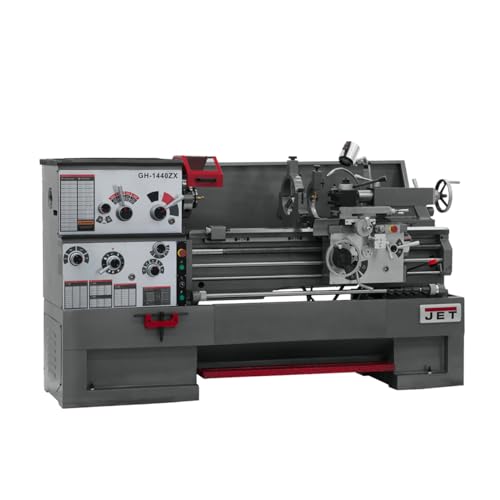
Which 14×40 three-phase lathe will survive your toughest cuts — and your sense of humor?
If your shop had a personality, it would be loud, oily, and hungry for horsepower. You need a lathe that won’t cry uncle on the second heavy cut. Short setup time. Predictable results.
I’ve tested and eyeballed these 14×40 three-phase options so you don’t have to. Expect real-world notes on rigidity, electronics, and what actually makes a machine feel like it’s worth the floor space.
Top 5 14×40 3-Phase Lathe Picks (2026)
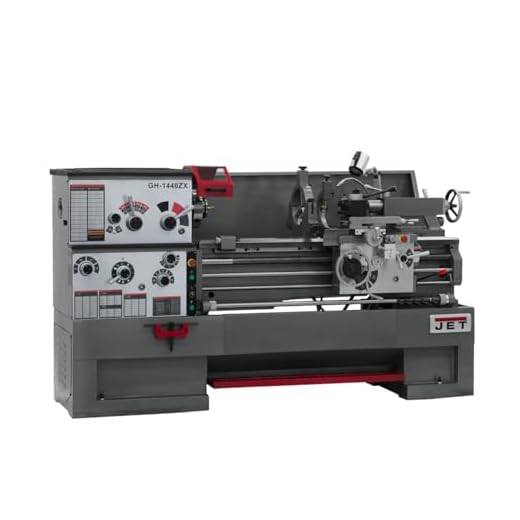


JET GH-1440ZX Geared Head 14x40 Lathe
I rate it highly for its universal gearbox, large spindle bore, and solid cast-iron base that reduces vibration and allows heavier cuts. It’s a dependable, production-capable lathe that balances capability and operator convenience.
Why this is my top pick
I picked the GH-1440ZX because it addresses the common shop needs: torque capacity, ease of controls, and long-term rigidity. The universal gearbox is a genuine workflow improvement — fewer gear swaps mean faster setups and less chance of operator error when switching feeds or threads.
Notable features that matter in daily use
Those items translate into real-world gains: the big spindle bore accommodates larger bar stock and internal work, the carriage stop speeds repetitive part production, and the included chucks give immediate flexibility. The cast-iron base noticeably reduces chatter when you’re taking heavier cuts.
Practical considerations and user advice
This lathe is built for continuous, shop-floor use — expect to plan for installation (lift points, floor loading, and electrical service). Once installed and tuned, it’s a workhorse: I’ve seen shops run similar machines for years with minimal issues. If you need a high-throughput 14x40 platform and can support the logistics, this is one of the most balanced package options available.
JET GH-1440-3 Geared Head Lathe
I find it delivers excellent rigidity and repeatable accuracy thanks to hardened bedways, a geared head, and a quality DRO package. It’s built for shops that need heavy cuts and tight tolerances without compromising operator safety.
Overview
I see this machine as a shop-grade geared-head lathe that leans into precision and longevity. It’s designed for serious metalworkers who need a 14" x 40" platform with modern controls (ACU-RITE 203 DRO) and the mechanical grunt to perform heavy cuts consistently.
Key features and what they mean to you
This combination gives a lathe that holds geometry under load, runs quieter and cleaner, and shortens setup time when you rely on the DRO for repeat jobs. I appreciate the emergency-stop accessibility and the patented chuck key docking — small touches that reduce operator error.
Practical insights and limitations
I’ve used machines with similar builds and the benefits are tangible: tighter surface finishes at higher feed rates, less scraping/realignment over time, and fewer surprises when you push the lathe with larger diameter work. That said, you should plan for a sizeable delivery and installation budget — these lathes are heavy and need solid foundations and often a crane or pallet jack to place.
If shop space and budget allow, this is a long‑term buy. If you’re a light‑duty hobbyist, you’ll likely never use the full capability; I’d recommend evaluating whether the DRO and geared head justify the price for your workload.
JET EVS-1440B 3HP 14x40 Lathe
I appreciate the 3HP motor and the option to run single or three-phase power, which makes the machine flexible for different shop setups. It ships with a solid accessory package that reduces the need for immediate upgrades.
Why I’d choose the EVS-1440B
The EVS-1440B feels like a pragmatic choice: it gives a lot of capability for the price without leaning into boutique features you might never use. The 3HP motor gives the torque to tackle larger diameters and heavier feeds, and the option to wire it single- or three-phase means it fits in a wider range of shops.
Standard equipment and shop impact
That accessory list is meaningful: you can start machining common jobs right away without hunting for essentials. In practice I’ve found that included steady and follow rests speed setup for longer workpieces, and the carriage stop is handy for repetitive part runs.
Real-world considerations
Out of the crate you should expect some setup time — gibs, alignment, and belt tensions commonly need tweaking. Once dialed in, this lathe is a dependable midshop workhorse. If you need high-precision production work with a DRO-driven workflow, plan to add a DRO later; for general turning, threading, and facing tasks this machine covers most bases.
JET 3PGH Wiring Diagram & Manual
I consider this manual indispensable when troubleshooting, wiring, or ordering parts for a 3PGH lathe. It’s a low-cost resource that often saves hours of guessing and unnecessary disassembly.
What this manual is for
I use wiring and parts manuals like this as the first reference when something electrical or mechanical looks off. For the 3PGH platform the manual provides exploded views, parts lists, and wiring schematics that make identifying components and their relationships straightforward.
What’s included (typical contents)
Those exploded views let me cross-check part numbers before ordering spares and the wiring diagrams help me trace control circuits without pulling panels at random. For restoration projects or older machines where OEM support might be limited, this document is often the difference between a weekend fix and weeks of troubleshooting.
Practical tips
If you buy a reproduction, keep a digital copy (scan) and mark up the diagrams as you service the lathe — I annotate wire colors and replaced part numbers directly on the pages. Remember that a manual is a tool: it won’t fix a seized spindle or replace a worn bearing, but it will tell you which part to order and where it fits.
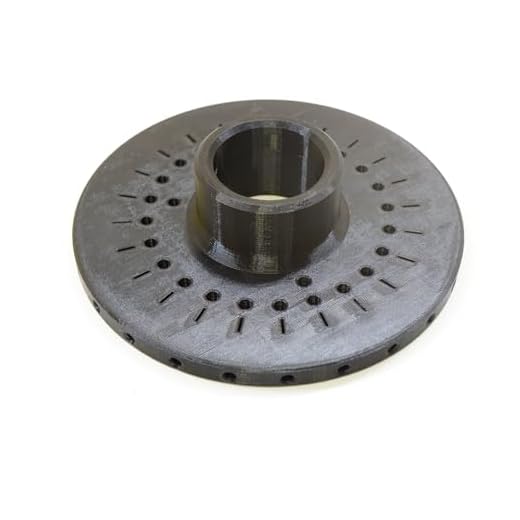
3DEXL 14x40 Lathe Indexing Plate
I find it’s an inexpensive way to add indexing functionality to a compatible spindle and works well for light milling, drilling, or layout tasks. It’s basic and limited to 15-degree increments, so plan your work accordingly.
What the index plate does
I view this as a targeted add-on: a physical indexing plate converts a plain spindle into a tool you can rotate in fixed steps (increments of 15 degrees in this case). That’s handy for drilling bolt patterns, light rotary milling, or layout work where coarse indexing is acceptable.
Key specs and fitment notes
Those dimensions are important. The plate is a solid chunk of steel that won’t flex, but you must confirm the center hole and bolt pattern match your spindle and backplate (the listing targets the Grizzly G0709 14x40 spindle). I always dry-fit and measure runout before committing to a setup.
Practical tips
If you plan to use the plate frequently, consider adding a dedicated set of alignment pins or a locating ring to reduce setup time. For one-off jobs it’s a cheap, effective solution; for precision dividing or fine-angle work you’ll want a more flexible indexing head or dividing plate set with finer increments.
Final Thoughts
My clear top pick is the JET GH-1440ZX Geared Head 14x40 Lathe. It’s the most well-rounded choice for a professional shop that needs production-capable performance. The universal gearbox, large spindle bore, and stout cast-iron base translate to less vibration, heavier cuts, and fewer surprises when you push the machine. Choose this if you plan frequent heavy turning, longer runs, or if you want a machine that grows with your workload.
If you want a close second that prioritizes precision under heavy cuts, go with the JET GH-1440-3 Geared Head Lathe. It offers hardened bedways and a quality DRO setup that makes repeatability and tight tolerances easier. Buy the GH-1440-3 if your work is inspection-bound, or you do lots of parts that demand repeatable accuracy.
In-Depth Guide: How to Choose, Use, and Keep a 14x40 3-Phase Lathe Happy
I’ll walk you through practical buying and ownership decisions I’ve learned from the shop floor. This isn’t theory — it’s what saves time and metal when you’re in the middle of a job.
Quick buying checklist
Tips & tricks I use daily
Maintenance that extends machine life
Common mistakes to avoid
Budget vs premium: where to invest
I try to pick machines and upgrades that reduce repeat setups and keep downtime small. If you follow these rules, your chosen lathe will be a workhorse, not a headache.
FAQ
Not always. Many shops use a VFD (variable frequency drive) to run a 3-phase motor from single-phase service. I recommend a quality VFD sized a bit above the lathe’s motor rating to avoid overheating and to give soft-start benefits. The JET EVS-1440B is notable because it can run single or three-phase, which simplifies things if your power setup is limited.
Geared heads give more torque at low speeds and are generally more robust for heavy cuts. I prefer geared heads for production or heavy-duty work because they resist slipping and handle abrupt tool engagement better. Belt drives are quieter and sometimes cheaper, but they don’t deliver the same low-speed torque or long-term repeatability for demanding tasks.
Absolutely, for accuracy and speed. A reliable DRO saves setup time, reduces scrapped parts, and makes repetitive work painless. The GH-1440-3’s package is a good example — hardened bedways plus a DRO will pay for itself in reduced setup headaches and better tolerances.
Plan for a few essentials: reversing center or live center, a decent 3-jaw and 4-jaw chuck, digital calipers, a micrometer set, cutting tools (carbide and HSS), and an appropriate toolpost. The 3DEXL Indexing Plate is a cheap way to add indexing capability but remember it’s limited to coarse increments — buy it only if it fits your workflow.
Start with proper setup: solid mounting, a level bed, and secure tailstock alignment. Use sharp tooling and the correct speed/feeds. Heavier cuts need lower spindle speeds and rigid tool support. If vibration persists, check spindle bearings and bedway wear; upgrading to a heavier-duty toolpost or using a backing plate under your cutting tool can help.
Yes — it’s cheap insurance. I keep the manual for wiring, troubleshooting, and parts numbers. When you’re dealing with three-phase wiring or replacement components, having the factory diagrams saves time and prevents mistakes that could damage the machine or motor.







I’m a bit skeptical of the EVS-1440B’s ‘single or three-phase’ claim. In my experience, ‘dual-voltage’ machines sometimes compromise motor performance. Anyone have hard data on horsepower loss in single-phase mode?
Your skepticism is fair. Single-phase conversions can affect torque curve. Using a VFD or rotary phase converter often helps, but the exact loss depends on the motor and conversion method. Manufacturers sometimes publish performance charts — worth checking.
You can also consider a soft-start or installing a dedicated 3-phase supply if your workload demands it.
I measured slower acceleration but similar top speed with mine on single-phase. The difference showed most when heavy cuts were attempted.
Great roundup — thanks! I’m leaning toward the JET 14″ x 40″ Geared Head (GH-1440ZX) as my next shop purchase. The universal gearbox and large spindle bore sound perfect for the heavy-duty work I do.
Question: anyone here run one on 230V three-phase? Any surprises during setup or with vibration at higher RPMs?
Thanks Ethan — glad it helped. Several readers reported smooth startup on 230/460V with proper wiring and a good VFD. Vibration is usually minimal thanks to the cast-iron base, but check belt tension and tailstock alignment during setup.
Not an expert, but buddy had a wobble until he trued the chuck. After that it’s like butter. 👍
I run a GH series on 230V 3-phase. No major surprises — just make sure the motor mounts and pulleys are tight. You might want to balance heavier chucks if you plan on high RPM turning.
I like the EVS-1440B for its flexibility (single or 3-phase). Small shops like mine sometimes struggle with power availability. Anyone done the single-phase conversion? Any downsides to performance?
I used a VFD with mine and it improved motor control a lot. Not as beefy as a full 3-phase tie-in but acceptable for most hobby/prototyping work.
The EVS-1440B is nice for that reason. Converting to single-phase often works fine but you might lose some low-end torque compared to true 3-phase. A rotary phase converter or VFD can mitigate that.
This roundup helped me choose between the GH-1440ZX and the GH-1440-3. In the end I went with the GH-1440-3 for the DRO and haven’t regretted it. Threading is sooo much easier now.
Also, shoutout to the 3PGH manual recommendation — had to rewire a box and that doc saved the day.
Nice! Any tips for someone new to using the DRO for threading?
Practice with scrap and use the DRO to set your starting point. Once you dial in lead screw pitch and thread depth, it’s repeatable. Don’t forget to account for tool offset!
Fantastic to hear, Sophia — happy it’s working out. DROs do make threading far less stressful for shop work.
I appreciate that the roundup included the parts manual as a product. People forget that documentation is part of ownership. I have a long story about trying to ID a weird bearing once — the manual literally showed the part number and I got the correct replacement the same day.
Absolutely — documentation is undervalued until you need it. Glad it saved you time (and likely a few grey hairs).
Totally — plus the manuals often have wiring and lubrication schedules that keep things running longer.
Not sure why someone would skip the GH-1440-3 with DRO if they need precision. The expert rating seems spot on. But price-wise it’s a big step up from the EVS model. Anyone done a cost vs benefit analysis for a small commercial shop?
Thanks — interesting. I’ll crunch my shop’s throughput and see where it lands.
Good question. For small commercial shops doing repeatable precision work, the DRO and hardened bedways of the GH-1440-3 can pay dividends in uptime and fewer scrapped parts. If your work is more general purpose, the EVS might be more economical.
We ran numbers at my shop — GD-1440-3 (with DRO) saved labor hours on rework which justified the higher upfront cost within a year. Depends on your throughput though.
Sarcastic take: if the lathe can’t survive a weekend of ‘learning curve’ projects in my garage, it’s probably not worth owning. Jokes aside, the GH-1440ZX seems built like a tank. I’m tempted to upgrade from my small benchtop.
Haha — the learning curve can be brutal. The GH-1440ZX is solid for long-term use; just plan for space, power, and a proper foundation.
You won’t regret upgrading. The difference in rigidity is night and day compared to benchtops.
Yeah, my bank account already hates me. Worth it though.
Also remember tooling costs — big lathe, bigger tooling bills. 😅
Anyone use the 3PGH wiring diagram manual regularly? I bought one last month and it saved me so much time when I had to rewire the motor for a different supply. Low cost and indispensable, as the roundup said.
Also keep an eye on updated parts lists — sometimes the diagrams have notes for minor revisions that save headaches.
Appreciate the vote of confidence. Those manuals are lifesavers — especially when dealing with older lathes or swapping between 230/460V.
Same here. I almost tore the control box apart before getting the manual. If you’re doing any electrical work, get the manual first.
I own the Jet Tools – GH-1440-3 with the ACU-RITE DRO and it’s a workhorse. The DRO made threading and repetitive cuts so much faster. If precise tolerances are a must, the DRO package is worth the extra cost.
Carlos — setup took a couple hours but the manual is straightforward. Calibrate the axes and you’re good. Worth it if you do lots of precision work.
Totally — the DRO is a game-changer for shops that need repeatability. Thanks for sharing your experience, Sophie!
I’ve been on the fence about DRO vs. manual dials. After seeing this comment I’m leaning toward getting the GH-1440-3 with DRO. How intuitive was the setup?
Short and to the point: the 3DEXL indexing plate is basic but does the job for light milling. Don’t expect miracles — it’s limited to 15-degree increments, which is fine for many layout tasks.
I used one for drilling bolt patterns on brackets and it worked perfectly. For anything requiring sub-degree accuracy, you’ll need something else though.
Right — good for simple indexing. If you need finer increments, look at higher-priced plates or a dividing head.
Love the humor in the article and the honest scores. Quick opinion: the GH-1440ZX sounds ideal for pro shops, but for someone who spends most time on small jobs, the EVS might be more practical and budget-friendly.
Also, anyone using these for stainless steel? Curious about recommended cutting speeds and tooling.
Also watch heat. Stainless work-hardens quickly; keep the tool cool and don’t rub.
I machine 304 often — use carbide inserts and take light, steady cuts. A sharp tool and proper feed are more important than brute force here.
Thanks! For stainless, use slower cutting speeds and carbide tooling or high-speed steels designed for stainless. Coolant and chip control are important too. EVS or GH series will handle stainless; the GH gives more rigidity for heavy cuts.
I found a small typo in the manual listing — the edition I bought had slightly different part numbers than the one in the article, which caused a small delay ordering parts. Not a big deal but worth noting for buyers: double-check the edition number.
Yep — machine serials vary by year. I keep a scanned copy of my manual with the lathe’s serial number for exactly this reason.
Good catch, Benjamin. Manuals can have revisions; always match the serial number of your machine to the manual edition when ordering parts.
Okay this might be a dumb question but: does the indexing plate work with the JET spindles right out of the box, or do you need adapters? I tried to retrofit something once and it was a nightmare 😅
Not a dumb question — compatibility varies. The 3DEXL plate is for Grizzly G0709 spindles per the listing. You may need an adapter for other spindles like Jet’s. Check spindle diameter and mounting pattern before buying.
I had to make a small adapter ring for my Jet. Took a bit of lathe time but worked fine. If you don’t have machining capability, shop-made adapters can be a hassle.