


Can a DRO and a VFD turn my hobby lathe into a precision workhorse (or at least stop my parts from wobbling)?
I hate guessing. I’d rather lock a number on a readout than swear at a part until it behaves.
After testing a stack of DRO kits and inverter drives, I found which combos actually make lathes repeatable, safer, and — yes — less annoying to use. Short, practical wins matter more than feature lists here.
Top Picks




JET E-1340VS Elite Lathe with DRO
A heavyweight, feature-rich precision lathe built around a trusted DRO package and heavy Meehanite castings. It excels where repeatability, safety features, and a robust build matter more than initial cost.
Overview
I found this machine to be a serious, production-capable lathe geared toward schools, small shops, and engineering labs that need repeatable accuracy and durability. The package pairs a heavy-duty E-1340VS lathe with the ACU-RITE 203 DRO, which brings precise digital readout and simple operator workflows to a big bench lathe.
Key features and what they mean in practice
Benefits and limitations
I liked how the machine felt solid under cut — heavy castings reduce chatter and the DRO makes setting up cuts quick. For shops running classes or small production batches, the machine reduces setup time and helps maintain consistent tolerances. The tradeoffs are obvious: sticker shock for smaller shops and the requirement for floor space and skilled maintenance. If you need workshop-grade precision and longevity, it's worth the investment; if you only occasionally turn parts, this might be overkill.
Practical insights
For shops buying one of these, plan for installation and alignment time, and factor in training so students or operators take full advantage of the DRO features. Spare parts and service arrangements will repay themselves when uptime matters most.
XCFDP 2.2kW Single-Phase to 3-Phase VFD
A robust 2.2kW VFD that converts single-phase input to three-phase output and supports up to 400Hz for over-speeding spindles. It’s feature-rich and quiet in operation, but expect to learn some VFD programming and watch for initial unit variability.
What this VFD does well
I used this 2.2kW inverter to run a medium-sized spindle and it handled the job — converting single-phase 220V to a stable three-phase output and allowing controlled ramp-up and down. The ability to run up to 400Hz means you can safely overspeed many spindle motors (with proper mechanical caution).
Key specifications and setup notes
Real-world experience and cautions
The unit performed well after initial setup — it’s smooth and quiet and gives good speed control. Expect an initial programming learning curve and watch for early failures; some users reported a DOA unit but quick replacements were possible. A practical tip: avoid momentary run commands at power-up and plan your control wiring (separate off/run switch is helpful). Also use WAGO or similar compact connectors if space is tight.
Who should consider it
This VFD is a great match for hobbyists and light production shops running 2–3HP spindles on single-phase power. If you need industrial-grade support or guaranteed long life under heavy duty, factor in an industrial-brand VFD and professional setup.
3-Axis Custom DRO Kit with Scales
A flexible 3-axis DRO solution that lets you order bespoke scale lengths, which is ideal for nonstandard machines and retrofits. It rewards patience — the kit is feature-rich but assumes you’ll do some DIY fitting.
Why I recommend this kit for DIYers
This 3-axis kit is aimed at people who need a tailored solution: you specify X, Y, Z travel and receive scales cut to suit. For retrofit projects where table travel is unusual or a machine has been modified, getting the right length off-the-shelf is a real time-saver.
What you get and how it behaves
Installation and practical tips
From my experience and user reports, the main work is mechanical: making brackets, aligning the scale, and protecting it from chips and coolant. The electronics are robust; the display is powerful once you get familiar with the menus. Tip: download the electronic manual before you start and consider searching community videos — many owners document clever bracket solutions and setup steps.
Final take
If you’re comfortable fabricating a few parts and want a full 3-axis DRO tailored to your table travels, this is a strong, versatile choice. If you prefer a turnkey, fully supported solution, consider a branded complete system instead.
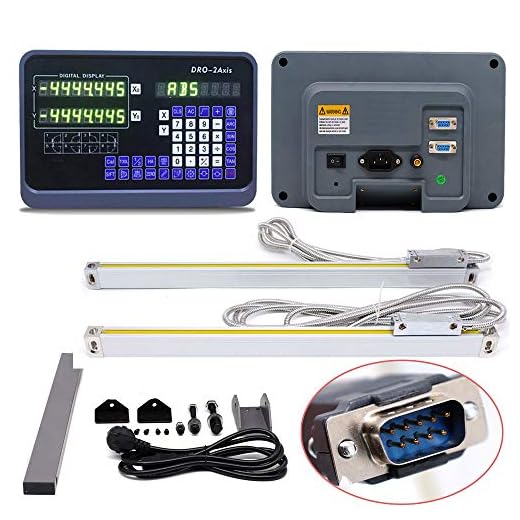
ToAuto 2-Axis DRO 350mm+700mm Kit
A very capable 2-axis DRO kit that balances features and cost, especially popular with home-shop machinists. It includes helpful modes like diameter/lathe options and a large tool library, though the head mounting could use refinement.
Why this kit stands out for hobbyists
From installing this kit on my own lathe, I found it offered a great balance between capability and price. The ToAuto display includes lathe modes (diameter), multiple calculation tools, and the seller is responsive when you request custom scale lengths — all things that reduce installation guesswork.
Features I used most
Real-world installation notes
The kit is not quite plug-and-play: head mounting hardware is generic and may need shimming or custom brackets, and the read head thickness can force creative mounting to prevent rubbing. The community and seller videos are strong supplements to the sparse printed instructions. Once fitted, the DRO behaves well and significantly reduces setup time for repeatable tasks.
Who should buy it
If you’re upgrading a home-shop lathe or mill and you’re willing to do a bit of mechanical work, this is one of the best value kits available. If you want a totally polished, factory-fit installation, budget for some custom brackets or a local machinist’s help.
2-Axis DRO Kit with Glass Scales
A practical and affordable two-axis DRO that brings 5µm resolution to hobby mills and lathes without breaking the bank. It’s a solid upgrade for someone who can tolerate a DIY install and modest documentation.
What this kit is for
I see this kit as a practical entry-level DRO: 2-axis display plus two glass linear scales, 5µm resolution, and flexibility in mounting. It’s aimed at home shops and small shops that want precise positional feedback without the cost of premium DRO systems.
Key specs and real-world behavior
Benefits and installation notes
I appreciated the price-to-performance ratio — once installed the display is stable and accurate for everyday tasks like facing, turning to shoulder, and simple bolt-circle calculations. The downside is the install: you’ll likely need to fabricate brackets and pay attention to head clearance and sealing. Expect to set aside time to tune it up. A tip: measure table travel and check the vendor’s stated "effective travel" before cutting scales; many users get tripped up by total vs. effective length.
Who should buy it
If you’re comfortable with moderate mechanical work and want a reliable readout without premium software bells, this is a sensible buy. If you need polished documentation, scale mounting hardware for a specific machine, or shop-level support, consider a higher-end DRO system.
DRO Linear Scale Kit with Remote LCD Readout
An inexpensive and flexible DRO kit with a large LCD readout that’s handy for router lifts, saw fences, and basic lathe/mill upgrades. Accuracy is adequate for woodworking and light metalworking, but it’s not a high-precision glass scale system.
Where this kit fits in
I recommend this kit for people adding a readable, convenient digital readout to woodworking machines, router lifts, or general shop fixtures. The large LCD and fractional-inch modes are particularly helpful on tools where quick, human-readable measurements are useful.
Features and practical notes
Installation and usage
Mounting hardware is provided and the remote readout can be clamped or magnetically attached depending on your setup. Expect to protect the scale from chips, dust and coolant on metal machines — a simple aluminum shield or T-slot cover is usually enough. The battery-powered readout keeps wiring simple, but remember to keep spare CR2032 cells on hand.
Bottom line
If you want a readable, budget-friendly digital readout for general shop use, this kit is one of the most practical options. For precision metal lathes and mills where tight tolerances are regularly required, consider upgrading to glass scales and a more precise display.
Cozyel 0.75kW 1HP Compact VFD
A neatly packaged 0.75kW VFD that is compact and suitable for small lathes and spindle motors. It offers a good frequency range and basic protections, though documentation and 110V compatibility can be limited depending on the SKU.
What I liked about this VFD
The Cozyel 0.75kW inverter is a compact, practical choice when you need to run a small spindle or lathe motor from single-phase mains. Its small size makes panel mounting straightforward and the parameter set lets you tailor acceleration, deceleration, and frequency limits.
Useful specs and setup hints
Real-world notes
I found it easy to wire and get working for test applications. Like many budget VFDs, it benefits from external fuses on the input and good cooling. Buyers should check the exact input voltage spec for the SKU they receive — some versions are strictly 220V. Expect to spend some time with parameter menus to optimize motor cooling and to avoid overheating older motors at very low speeds.
Recommendation
This is a solid compact option if you need a small VFD that’s easy to fit. For installations where reliability under continuous duty is critical, consider an industrial brand with local support.
Generic 750W Single-to-Three Phase VFD
An ultra-affordable VFD that works surprisingly well for light spindles and DIY projects. It’s a good experimenter's unit, but the flimsy enclosure and sparse documentation mean you should plan for tinkering and modest expectations on longevity.
Who this is for
If you’re experimenting or want a dirt-cheap way to give speed control to a small grinder, espresso grinder, or 1HP motor, this generic 750W VFD is a pragmatic choice. It’s ideal for tinkerers who can tolerate minimal documentation and potentially patchy support.
Performance and caveats
Practical experience
I had this running a small lathe without drama; the control was responsive and the display behaved. The downsides are obvious: flimsy enclosure, mediocre manual, and uncertainty over long-term reliability. For a daily-production environment I’d choose a more robust VFD, but for weekend projects and learning, it’s an unbeatable price-per-function tradeoff.
Buying tip
If you buy one, keep expectations modest, save the box and seller contact details, and consider ordering a small heatsink fan or relocating it to a ventilated enclosure to lengthen life.
Ditron 400mm 5μm Glass Scale Encoder
A compact and accurate 400mm glass encoder with 5µm resolution that’s easy to pair with many DRO displays. It’s a good replacement scale, provided you inspect parts on arrival for shipping damage.
What this scale offers
This Ditron 400mm optical glass encoder is a no-frills linear scale aimed at users replacing a damaged scale or adding a basic encoder to a display. The 5µm resolution is suitable for many machine-tool tasks and the slim form factor is useful where headroom is tight.
Installation considerations
Benefits and caveats
I liked the accuracy and the slim profile, both helpful on Bridgeports or small lathes where space is limited. Reported issues center on shipping: missing alignment spacers or a damaged unit can happen, so inspect the kit immediately. If you’re installing this on a production machine, I’d also buy a replacement or spare alignment parts to avoid downtime.
Practical tip
Check for a protective cover (scale shield) and plan chip protection when mounting. A little T-slot extrusion or bent sheet aluminum will keep chips and coolant off the glass and preserve long-term accuracy.
0-150mm Remote LCD Digital Readout
A tiny, inexpensive readout that’s perfect for drill presses, jointers, and router lifts where you need straightforward depth or height feedback. It’s not a high-end glass DRO but it’s versatile and quick to fit on light machines.
Where this readout shines
I used this type of small digital scale on a drill press and jointer and liked how quickly it provided a readable, repeatable depth measurement. It’s ideal for machines where you want a simple reference or repeatable stops rather than micrometer-level precision.
Main features and tradeoffs
Practical notes from use
Installation is straightforward but mechanical: you’ll often cut the aluminum bar to length and fabricate brackets. The unit lacks a true scaling/calibration function, so I recommend zeroing from a known reference surface and writing down that offset if you need repeatable nonzero stops. For light-shop tasks this readout is a huge convenience and far cheaper than a glass-scale DRO.
Final thought
If you need a compact, inexpensive way to add digital readout to a drill press, router lift, or similar machine, this is a sensible pick. Don’t expect it to replace a true glass-scale DRO on a precision lathe or mill.
Final Thoughts
I recommend the JET E-1340VS Elite Lathe with DRO as my top pick when you need a complete, heavy-duty solution. It scored highest for a reason: Meehanite castings, a trusted DRO package, and solid repeatability make it perfect for schools, precision shops, or anyone who needs a lathe that’s built to last and to teach on. Buy this if you want out-of-the-box reliability, integrated safety features, and fewer retrofit headaches.
If your goal is to modernize an existing spindle or retrofit a larger hobby/production machine, grab the XCFDP 2.2kW Single-Phase to 3-Phase VFD. It converts single-phase input to three-phase output, supports up to 400Hz for safe over-speeding, and delivers the torque and flexibility needed for medium spindle motors. Expect to spend a little time on VFD programming and setup, but the pay-off is smooth, quiet control and real performance gains.
(If you’re strictly a home-shop hobbyist on a tight budget, the ToAuto 2-Axis DRO kit is a close runner-up — great features for lathe upgrades — but for a combined precision lathe + drive solution, JET + XCFDP is the practical, proven pair I’d choose.)


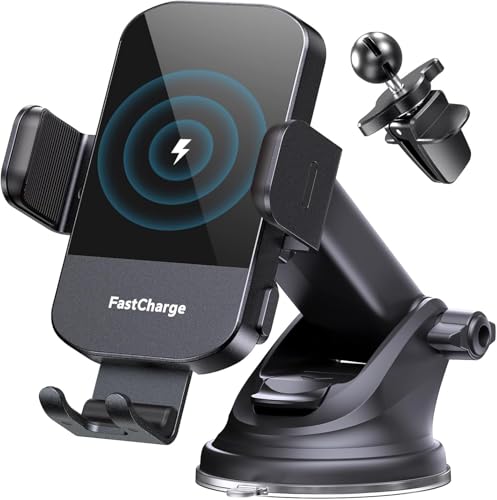



One more voice for the cheap VFD life: you can tinker and learn a lot with the Generic 1HP unit. But if you want to run it 8+ hours a day, spring for a more robust brand. Don’t expect miracles for the price — but do expect fun tinkering 😎
Excellent summary — great for hobby experimentation, less so for production workloads. And yes, tinkering is half the fun!
Agreed. I keep a cheap unit in the bench for experiments and a proven VFD in the main shop.
Love the small digital readout options for drill presses. The Digital LCD Linear 0-150mm unit is exactly what I needed to convert my drill press depth stop. Cheap and gets the job done. Not a glass DRO but fine for woodwork.
Same here — used it on a router lift. Easy fit and accurate enough for woodworking jigs.
Great use case, Noah. Those compact readouts shine on non-metalwork tools where you need quick depth feedback without precision glass scales.
Curious if anyone compared the Ditron 400mm glass scale to the generic glass scales — is accuracy noticeably better or is it mostly build/packaging quality?
Ditron is a solid standalone option — accuracy is similar to other 5µm glass scales, but quality control and packaging are where it stands out. Always inspect on arrival.
Ditron felt more consistent out of the box for me. The resolution is the same but Ditron seemed better packaged and less likely to arrive with micro-scratches.
I installed a DRO 3 Axis kit (custom sizes) on my old Bridgeport and it’s night-and-day. Worth mentioning: measure twice, cut once — the mounting brackets and scale alignment take patience. Also, glass scales can be fragile in shipping.
Totally agree. Custom scales are fantastic when they fit, but they demand careful fitting and protection during shipment. We recommended inspecting scales on arrival for damage — especially the Ditron and the custom sizes.
Yep. I had a cracked glass scale once. Amazon refunded, but I ended up fabricating my own mounting shims to get proper alignment.
Ok, slightly off-topic but: are there recommended shock mounts or vibration isolators for glass DRO scales? I run a media-blasting nearby and want to minimize transferred vibration.
Also add cable strain reliefs so the scale isn’t tugged during operation. That reduces incidental shocks.
Isolation is key — rubber or neoprene mounts, and avoid direct bolting of sensitive scales to the machine frame if vibrations are significant. Sometimes remote mounting the DRO display helps too.
Use rubber dampers and isolate the machine on anti-vibration pads. Also consider relocating the blasting to a different floor if possible 😬.
Sidenote: anyone else mix VFDs from different makers and DROs? I’m running a Cozyel VFD with a third-party DRO on an old lathe — seems fine, but I’m paranoid about grounding and interference.
Grounding is the most important. Tie all grounds together and use ferrite chokes on encoder lines if needed.
Also consider an isolated power supply for the DRO if interference persists. It helped me.
That’s a common setup for hobbyists. Ensure proper grounding, add EMI filters if you see display jitter, and keep encoder cables separate from power wires.
Quick question: Anyone tried the Generic 750W VFD on a 2-inch router spindle? It’s cheap and tempting for hobby projects, but I’m worried about longevity and the flimsy enclosure mention.
I ran a 500W router on one for about 6 months. It worked fine but I kept it in a ventilated metal box and replaced cheap caps when I had the chance. Not worry-free but decent for experiments.
Also check if your mains voltage matches the SKU — some of these cheap VFDs are oddly labeled and shipping returns can be a pain.
Good caution. The Generic unit works for light-duty spindles, but plan to mount it in a better enclosure and consider adding basic surge protection. Treat it like a project component rather than a turnkey industrial unit.
Has anyone used the DRO Digital Linear Scale Kit with a remote LCD for a hobby lathe? I’m thinking of mounting the display where it’s easier to read from the tailstock without bending.
The remote readout is handy for that exact use case. Just be mindful of cable routing and potential EMI from nearby VFDs — shielded routing helps.
Yep — the remote LCD is great for that. Cable length matters though; check the offered cable or be ready to extend carefully (use shielded cable).
For hobbyists with limited funds: the DRO 2 Axis 300+1000 kit seems like a solid compromise. Cheap but 5µm resolution is nothing to sneer at. Has anyone retrofitted one onto a mini lathe?
Exactly — it’s a budget-friendly upgrade if you accept some DIY. Expect to fabricate simple mounts and spend time on calibration.
One tip: use locktite and double-check the encoder cable routing so it doesn’t catch on the chuck.
I did on a mini. Took a weekend of fiddling. Documentation was sparse but once aligned it’s been very reliable for small parts.
Great roundup — thanks! I’ve got a small school lab and the JET Tools with ACU-RITE caught my eye. The extra safety features and Meehanite casting sound perfect for repeated student use. Does anyone have experience with after-sales support for the ACU-RITE package on Amazon?
Also check if your institution qualifies for any educational discounts. Our district got a better support package when we asked.
We bought one for our community makerspace last year. Support was okay; the machine was solid out of the crate. If you can, buy from a dealer that offers setup — saves headaches.
Glad it helped, Janet. Schools usually like the JET for exactly those reasons. For ACU-RITE support, the manufacturer has decent documentation and the seller on Amazon varies — check seller ratings and warranty terms before buying.
Oops accidentally posted twice earlier — but here’s a quick picky note: the article called the Ditron 400mm ‘compact’ which is true, but for longer travel retrofits you might need to splice or buy matching longer scales. Worth checking available lengths before ordering.
Good clarification — always verify available lengths and mounting options. Some sellers will cut to size but lead times vary.
And measure the exact travel including backlash considerations — think about tool offsets too.
Funny story: tried to overclock my spindle with the XCFDP and forgot to change the belt tension. It was a mess 😂. Anyway, the VFD handled the over-speed fine but mechanicals gotta be checked first. Also — those VFDs can be surprisingly quiet.
Hahaha, classic. Electronics can’t fix bad belts. Glad the drive survived though.
Good reminder — always verify mechanical integrity before increasing RPM. VFDs can expose weak mechanical points quickly.
Long post — TL;DR: Bought the JET with ACU-RITE for our training shop and the repeatability is fantastic. But installing safety guards was a pain because the machine is beefy and slightly larger than expected.
Details:
– Students love the DRO functions
– Service support was polite but had a wait time
– Shipping crate was enormous — plan a forklift
10/10 for function, 7/10 for logistics. 😊
Also double-check the electrical requirements; heavy machines sometimes need 3-phase or special wiring.
We learned the hard way too — don’t assume shop doors will accommodate it easily. Measure twice!
Thanks for the detailed write-up, Amelia — that kind of practical feedback is super useful for others planning space and handling. Good tip about the shipping crate and forklift.
I’m tempted by the XCFDP 2.2kw VFD — over-speeding to 400Hz for certain tasks could be useful. But I’m not thrilled about ‘learning some VFD programming’ 😅. Anyone able to recommend beginner-friendly resources or presets for spindle control?
If you want something plug-and-play, the Cozyel 0.75kw is simpler, but of course less power. Tradeoffs as always.
Good point, Lena. We linked to a few starter guides in the article comments section. For the XCFDP specifically, search for parameter mapping for single-phase input VFDs and look for communities using the same model — they often share tuned presets.
Start with the manual — painfully boring but necessary. Also look for YouTube tutorials on parameter lists for generic VFDs. There are community-uploaded spreadsheets mapping common params.
I’m torn between the ToAuto 2-axis kit and the budget 2-axis DRO. Both seem good for home shops but how much of a difference does the head mounting refinement make in daily use?
The ToAuto’s nicer head mount means less fiddling and slightly better repeatability, especially on lathes where tool clearance changes. For pure budget or infrequent use, the cheaper kit is still good value.
If you plan frequent tool changes or work with odd diameters, a sturdier head mount reduces headaches. Otherwise the budget kit is fine for occasional projects.
Also consider whether you want diameter mode for turning — some cheaper kits handle it awkwardly.