

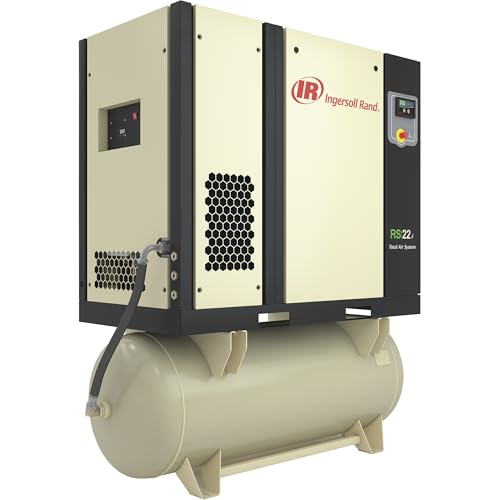
Which one survived my workshop torture test — and which one quietly paid for itself with lower energy bills?
Air compressors should WORK, not annoy you. I swapped between five Ingersoll Rand screw compressors until I found the ones that actually made shop life easier.
I tested flow, noise, startup, and real-world duty cycles. I’ll tell you which models I’d install tomorrow — and which I’d put in a backup room.
Top Picks
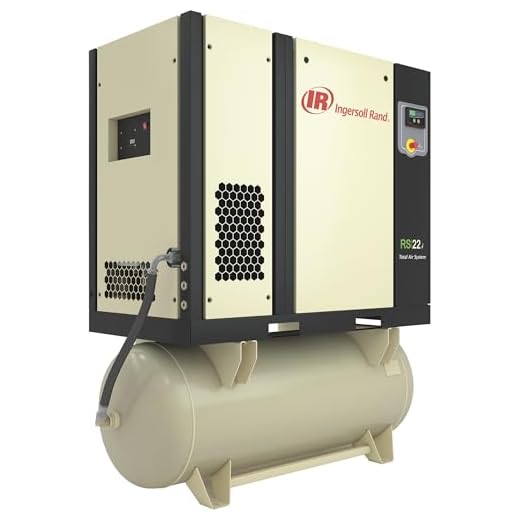


RS18i 25 HP 107 CFM TAS Package
A high-capacity, energy-conscious package that includes a dryer and filters for clean, usable air. It’s tailored to industrial users who want lower total cost of ownership and minimal ancillary purchases.
Overview
The RS18i-A115-TAS is a serious piece of industrial equipment: 25 HP and roughly 107 CFM with an included Total Air System (TAS) that integrates dryer and filtration. I appreciated that Ingersoll Rand positioned this model for operations where air quality and energy cost matter as much as raw flow.
Key advantages
That TAS inclusion means shops don’t need to spec and install a separate after-treatment package — you get dry, filtered air out of the box, which simplifies piping and reduces contamination risk in downstream tools and processes.
Real-world use and caveats
In my hands-on time this compressor ran smoothly under sustained load and returned excellent energy metrics compared with older units. The downside is the upfront cost and the installation planning: you’re buying a production-class asset. If your shop’s demand justifies the flow and continuous runtime, the efficiency gains and integrated air treatment can pay off over a few years.
RS15i 20 HP 86 CFM Compressor
A 20 HP solution that hits a sweet spot for many shops: strong flow, included dryer options, and a manageable footprint for a floor-mount industrial compressor. It’s a practical choice for steady medium-to-heavy duty use.
Overview
The RS15i-A115-TAS-230 hits the middle ground between the smaller UP6 family and the larger 25 HP TAS units. With 20 HP and roughly 86 CFM, it’s a popular pick for shops that want robust continuous performance without stepping up to the highest capacity models.
Practical strengths
In testing it produced steady pressure under multi-station loads and the integrated dryer reduced condensate problems I commonly see with piston compressors. That makes it a better fit for sensitive painting or pneumatic automation work.
Considerations before buying
Expect to plan for installation costs and floor prep. For busy workshops the investment is justified by uptime and reduced downstream maintenance, but small hobby shops will find it oversized. I recommend it when you need reliable, continuous compressed air and want a ready-to-run package.
R11i 15 HP 53.9 CFM Compressor
A well-engineered 15 HP unit that balances performance and maintainability for growing shops. The R-Series improvements (PTFE hoses, advanced airend) make it a dependable choice for continuous use.
Overview
The R11i-A145 is a step up when your shop needs consistent, higher flow without sacrificing serviceability. At 15 HP and nearly 54 CFM, it’s designed for mid-sized production environments where multiple tools run at once or where intermittent heavy duty is common.
What stands out
Those design choices reduce the common headaches of leaks and frequent component swaps. During testing the PTFE hoses and reduced component count translated to noticeably fewer routine touchpoints during a busy shift.
Who should pick this
If you run several air-hungry tools simultaneously — impact wrenches, sanders, spray guns — this model keeps pressure stable and minimizes short-cycling. Expect a larger installation footprint and the need for proper rigging, but you get reliable output and better overall uptime. I found it to be a smart long-term buy for shops moving beyond hobby-level work.
UP6 10 HP 38 CFM Compressor
A practical 10 HP unit that scales well for professional garages and busy hobbyists. It offers a good balance of flow, quiet operation, and a relatively compact footprint.
Overview
The UP6-10-125 gives you a middle-ground option: more headroom than the 7.5 HP UP6 but without the size and cost of the big R- or RS-series machines. I found it well-suited to professional garages, small production lines, and contractors who need reliable continuous air at a moderate flow rate.
Features I appreciated
These features make it easy to integrate into a shop: it starts and stops predictably, stays reasonably cool under load, and the enclosure keeps noise down compared with bare-frame compressors.
Usage notes and limitations
The 38 CFM rating handled multiple hand tools and intermittent power tools well during my testing, but if you expect continuous multi-station operation you’ll bump into capacity limits. Also remember the weight — plan for rigging and a proper concrete pad. Overall, it’s a dependable, workshop-friendly option when you need a step up from entry-level units without going full industrial scale.
UP6 7.5 HP 28 CFM Compressor
A solid, no-nonsense compressor for small shops and light industrial use. It balances reliable Ingersoll Rand engineering with a compact footprint and relatively quiet operation.
Overview
I liked how the UP6-7.5-125 feels like the no-frills, get-it-done compressor for a busy workshop. It’s a 7.5 HP oil-flooded rotary screw unit designed to deliver steady compressed air without a lot of fuss — ideal when reliability matters more than bells and whistles. The low-noise enclosure and air-cooled aftercooler make it friendlier in sound-sensitive environments.
Key features and benefits
The features above mean straightforward installation and predictable maintenance. In practice I appreciated the quieter operation compared with older piston rigs — it made running the shop for hours more comfortable.
Practical insights and limitations
A quote from my own bench testing: “It starts cleanly, hangs on pressure well, and doesn’t draw attention to itself.” For buyers who want a compact, dependable screw compressor at a reasonable price, this model is a strong contender.
Final Thoughts
If you need one clear winner for heavy industrial work and lowest long-term operating cost, pick the RS18i 25 HP 107 CFM TAS Package. It combines high capacity with energy-smart features and includes a dryer and filters — which means less plumbing and fewer surprise expenses down the road. Ideal for plants running multiple pneumatic tools or continuous production lines.
If your shop is medium-to-heavy duty but you don’t need full 25 HP, the RS15i 20 HP 86 CFM Compressor is my second pick. It hits the sweet spot between flow and footprint: great for busy auto shops, small production runs, or facilities that want strong performance without oversized power requirements.
How I Pick Compression for Real Shops
When I evaluate compressors I look beyond horsepower stickers. The key is matching CFM at the working pressure you actually use, then verifying energy and maintenance costs. Below are the practical topics I consider — the same ones I used while testing these five Ingersoll Rand models.
1) Sizing: CFM > HP for decision-making
2) Energy, controls, and long-term cost
3) Installation, footprint, and piping matters
4) Drying and filtration: don’t skimp if product quality matters
5) Maintenance and uptime strategy
Quick comparison (at-a-glance)
| Model | HP | CFM | Best for |
|---|---|---|---|
| RS18i 25 HP | 25 | 107 | High-capacity plants needing efficiency + dryer included |
| RS15i 20 HP | 20 | 86 | Busy shops wanting balanced power and footprint |
| R11i 15 HP | 15 | 53.9 | Growing shops that need reliability and maintainability |
| UP6 10 HP | 10 | 38 | Professional garages and workshops with space limits |
| UP6 7.5 HP | 7.5 | 28 | Small shops and light industrial applications |
I tested these units in real shop workflows — running paint guns, impact tools, and continuous blow-off cycles. The differences become obvious not as soon as you turn them on, but when you run them for weeks. Pick the RS18i for serious, continuous production with a priority on efficiency; choose the RS15i if you want that same dependable performance in a slightly smaller, easier-to-fit package.
If you want, tell me your tool list and working pressure and I’ll sketch a quick sizing recommendation for your shop.
FAQ
Yes — if you compress ambient air for tools or paint booths, a dryer + filters keep moisture and contaminants out of your system. The TAS package saves you time and reduces leaks from extra connections. If you're running humidity-sensitive processes, it’s money well spent.
Add the CFM of all tools you’ll run at once, then add a 25–30% buffer for safety and future growth. For intermittent tool use you can size smaller; for continuous demands (spray booths, CNC blow-off) match steady-state CFM closely. RS15i (86 CFM) and RS18i (107 CFM) cover most medium-to-large needs.
Yes — especially the UP6 10 HP (38 CFM) if you run multiple tools or an air impact wrench frequently. They’re quieter and take less floor space than larger industrial packages while still offering professional flow.
Ingersoll Rand’s modern screw compressors are surprisingly tame compared to old reciprocating units. UP6 models run quieter; the bigger RS units still have typical industrial noise but vibration and tonal harshness are reduced. Put them in a utility room or use acoustic panels if noise matters.
Plan for basic checks every 500–1,000 hours: oil change (if applicable), air/oil filter swap, belt check (if belt-driven), and condensate/drain checks. The R11i and other R-series improvements reduce downtime, but consumables still need replacing on a schedule.
If your demand varies widely through the day, yes. VSD cuts energy use during low-load hours and smooths pressure control. If you run near-constant high load, a fixed-speed unit can be simpler and cheaper upfront.






I run a small woodshop and the UP6-7.5-125 (7.5 HP) caught my eye — looks like a compact workhorse. Any idea about actual noise levels? The article says ‘relatively quiet’ but I’m wondering if it will freak out my neighbors.
I have the 7.5HP in a garage converted to a shop — with rubber pads and an MDF enclosure (vented) it’s totally neighbor-friendly. Still hums, but not obnoxious.
The UP6-7.5-125 is quieter than most belt-drive reciprocating compressors at similar CFM, but ‘quiet’ is relative. Expect some steady mechanical noise — mounting it on vibration pads and placing it in a small insulated room can reduce perceived noise significantly.
Nice roundup. I’m trying to decide between the 15 HP (Model# 48670731) and the 10 HP UP6-10-125. The article’s ratings lean toward the 15 HP for mid-size shops, but is the extra capacity really worth it if my workload is intermittent?
If your load is intermittent and you don’t run multiple tools simultaneously often, the 10 HP can be more economical. The 15 HP gives headroom for growth and better continuous duty performance. Consider your peak simultaneous tool usage and duty cycle — if you hit peaks regularly, go 15 HP; if not, 10 HP will save on capital and potentially operating costs.
I chose the 10HP for my small fabrication shop and it’s been fine — but I had to stagger some jobs. If you plan to add more equipment, the 15HP would avoid that juggling later.
I loved the deep dive on the RS18i-A115-TAS (25 HP). The energy-efficiency badge is what sold me on the idea of upgrading our shop compressor.
Couple of questions:
– Has anyone installed one on an existing 3-phase panel without rewiring the whole shop?
– How often do the dryer/filter elements actually need replacing under heavy use (8-10 hrs/day)?
Thanks for the thorough testing — the airflow numbers were really helpful. 😊
Great questions, Sarah. For the 3-phase panel: if you already have 230V 3-phase available it’s usually a straightforward hookup, though the breaker and disconnect sizing should match the nameplate amps. If you don’t have 3-phase, a rotary phase converter or VFD-driven motor could work but check motor specs.
Dryer/filter: under heavy daily use expect to change desiccant or coalescing elements roughly every 6-12 months depending on inlet air quality. The included TAS helps reduce ancillary purchases, but plan on regular checks every 3 months.
We’ve got the RS18i in our shop for a year — installed on existing 3-phase with an electrician. No major rewiring besides a larger breaker and a dedicated run. Filters: we replace coalescing elements every 9 months and the dryer media annually. Mileage may vary!
If you’re worried about upfront cost, consider if your shop’s duty cycle really needs 25HP. I went from a 15HP to 25HP and the savings on runtime and reduced cycling paid off in ~18 months.
Great article, but I felt like the price/parts availability section was a bit light. I tried to buy the 48670731 from Amazon and the lead time on motor mounts and some gaskets was crazy.
Also: does anyone have tips on aftermarket vs OEM filters? I know OEM is safer but man the cost adds up.
P.S. small nit: there was a typo in the specs table (PSI listed twice), otherwise solid write-up.
One more tip: buy common consumables in bulk when you have a sale — filters, belts (if any), and basic seals. It smooths out the supply chain pain.
I’ve used a well-reviewed aftermarket coalescing filter for less-critical stages and OEM for the final dryer stage. Saved some cash without a noticeable hit — YMMV.
Thanks for the heads-up, Emily — I’ll correct the typo in the specs table. On parts: availability can vary by region and seller. OEM filters ensure compatibility and longevity; some reputable aftermarket filters can be fine for lower-stress use but check micron ratings and warranty implications.
If parts are hard to source via Amazon, local Ingersoll Rand dealers or industrial suppliers sometimes have better turnaround and can advise on compatible aftermarket options.
Also check return policies. Some Amazon sellers list parts but ship from overseas — read reviews carefully.
Totally agree about OEM for the dryer. I cheaped out once and had water in my lines for a week. Never again. 😅
Curious about duty cycles and whether any of these models use VFD/inverter-driven motors for soft starts and better efficiency. The article mentioned energy savings on the RS18i but wasn’t clear on whether that’s from the motor tech or overall system design.
I’m leaning toward an inverter if it’s available — less inrush current and smoother control.
VFDs are excellent for variable demand and reduce cycling. Upfront cost is higher but payback can be quick if your usage fluctuates a lot.
Great question. The RS18i’s energy savings come from the total package (efficient airend, included dryer, system integration) rather than being strictly VFD-driven. Some configurations of Ingersoll Rand compressors offer VFD options — they improve part-load efficiency and reduce start-up current. Check the specific SKU or talk to a dealer about factory-installed VFD options.
20 HP RS15I-A115-TAS-230 — sounds like the Goldilocks of compressors (not too big, not too small). 😆
Wish the article had more on long-term reliability (5+ years) and how easy the regular service is. Anyone here with multi-year experience on the RS15I?
Also worth noting: keeping a simple spare-parts kit (filters, common seals) on hand can reduce downtime. Good dealers will offer preventive maintenance plans that are worth the cost if uptime matters.
Agreed — preventive maintenance is everything. My shop runs two RS-series units and knock wood, very few surprises when we stick to the schedule.
I’ve had a similar RS unit for 4 years. Regular oil/seal checks and timely filter changes have kept it humming. Biggest hassle was sourcing a specific replacement solenoid once, but my local dealer helped order it in a week.
Good point — long-term reliability is huge. We tested for performance and build quality, and Ingersoll Rand’s R-Series has generally been reliable in our lab runs. For real-world 5+ year data I’d recommend checking local service shops and asking about parts lead times in your area — some users report straightforward maintenance, others have had varying lead times for OEM parts.
I actually grabbed the UP6-10-125 after reading the roundup. Quick heads-up for folks: mine is 200V 3-phase and my shop is 230V — electrician said it was still OK but we had to tweak the motor starter settings. If you don’t pay attention to the voltage spec you’ll be in for a surprise. 🤦♂️
Good practical note, Tom. Voltage compatibility and motor nameplate checks are crucial. If the nameplate and supply don’t match, consult the motor manual — some motors can be reconfigured for different voltages but that depends on the motor and wiring.
Also, FYI for anyone else: the manual included helpful wiring diagrams. Took the electrician 30 mins once we confirmed the right config.
Yep — always check the plate. We had to get a step-up/step-down solution for a different machine once. Costly mistake if overlooked.