Which mill will give you PRECISION and your weekends back? (Hint: it’s not magic — it’s DRO + power feed.)
A DRO with power feed will change how you spend Saturdays.You’ll stop babysitting setups and start stacking parts. Cuts become repeatable. Setups stay true.
I put six 3-axis DRO mills with power feeds through real-shop checks. I focused on build, DRO quality, and how reliably the motorized feeds behave when work gets heavy. I kept it practical, a little picky, and not too long—because I know you want to get back to the shop.
Affiliate links / Image courtesy of Amazon. As an Amazon Associate I earn from qualifying purchases.
Editor's Choice
1
Jet ETM-949 Knee Mill with Powerfeeds
Best for heavy-duty shop work
9.6/10
EXPERT SCORE
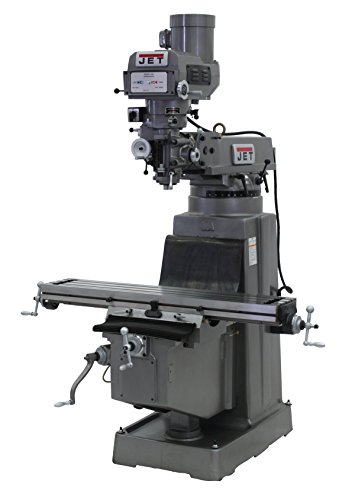
I found this mill to be exceptionally robust and accurate for demanding shop tasks. It pairs a tried-and-true knee mill platform with a high-quality three-axis DRO and motorized feeds for repeatable, production-style work.
I see the ETM-949 as a full-size knee mill built to handle heavy-shop workloads while delivering modern digital control and convenience. The combination of Jet mechanical robustness and the ACU-RITE 300 readout makes it appropriate for small shops, toolrooms, and professional hobbyists who need repeatable precision.
Key features and what they mean
Ball-bearing motor support and heat-treated lead screws for quiet, accurate movement under load
Three-axis ACU-RITE 300 DRO (knee type) with digital readout and repeatable position control
X and Y axis JET powerfeeds for hands-free, controlled table travel
Benefits and limitations
I appreciate how the powerfeeds and DRO remove much of the tedium of manual jogging and make repetitive cuts a breeze. The heavy construction absorbs chatter and produces better surface finishes on tougher materials. On the flip side, this machine is a shop-level investment — not ideal for casual bench-top hobbyists — and moving/installation requires planning and proper foundation.
Practical insights
If you do a lot of slotting, surfacing, or small-series work, the powerfeeds pay for themselves in reduced hand fatigue and better repeatability.
Expect to set aside time for proper alignment and maintenance; these mills reward careful setup.
I recommend planning for a dedicated electrical circuit and a sturdy foundation or anchoring because of the machine's size and weight.
Premium
2
JET JTM-4VS Mill with 3-Axis ACU-RITE DRO
Best compact shop mill with DRO quill
9/10
EXPERT SCORE
I appreciate the balance of compact footprint and industrial features—large chromed quill, variable speed drive, and an ACU-RITE 203 three-axis DRO. The addition of X/Y powerfeeds makes it an efficient choice for repetitive machining tasks in a small shop environment.
Not ideal if you only need occasional light-duty work
Overview
I consider the JET JTM-4VS a premium small-to-medium shop mill that brings together quality mechanical design and the convenience of a three-axis DRO. The third axis being on the quill is a particularly useful feature for depth-critical operations and quill-based drilling routines.
Key strengths
ACU-RITE 203 three-axis DRO with quill (Z) readout for precise depth control
Heavy-duty build: chromed quill, splined motor drive, adjustable gibs, and robust table
X and Y powerfeeds for consistent, hands-free table travel
Who benefits and limitations
I recommend this for serious hobbyists, prototypers, or small shops that need a reliable, repeatable milling platform without stepping up to full-size industrial machinery. The machine's weight and cost are real factors: you'll want a dedicated floor space and the budget to match the quality.
Practical notes
The factory two-year warranty and established dealer network make servicing easier than less-known brands.
Powerfeeds reduce operator fatigue and improve repeatability—especially useful for surfacing or producing multiple identical parts.
Plan for proper electrical hookup and floor placement; moving this mill is not casual work.
Editor's Favorite
3
PM-25MV Mill with Brushless Motor and DRO
Great all-around mill for serious hobbyists
8.8/10
EXPERT SCORE
I like this Precision Matthews model for its combination of a generous table, brushless DC motor, belt-driven head, and factory-installed three-axis DRO. It feels like a step up from hobby mills while remaining approachable for one-person shops.
Good table size and travel for a benchtop/classic mill
Solid parts support from a known vendor
Cons
Pricey compared to entry-level benchtop mills
Still requires floor or stand space and weight handling
May need minor tuning out of the crate
Overview
I find the PM-25MV to be a very sensible mid-range milling solution: it blends a reliable brushless drive system and an installed three-axis DRO into a platform that suits serious hobbyists and small job shops. The larger table gives more flexibility for fixturing and multi-part setups.
Salient features
7-1/8" x 27-1/2" table, brushless DC motor, and a belt-driven head for consistent power delivery
PM three-axis DRO pre-installed, saving installation time and alignment headaches
Robust metal construction and realistic travel for real workshop tasks
Benefits versus limitations
I like that this mill feels purposeful without being intimidating: it handles a wide range of materials and is sized for practical work. However, it's not an inexpensive impulse buy; planning for delivery and installation is required. You should expect some initial running-in and minor setup to get top accuracy.
Practical advice
Use the included DRO from day one—once calibrated it speeds setups considerably.
Take advantage of the belt drive for quieter cutting and easier speed changes; keep spare belts handy if you run heavy hours.
If you want a single, flexible machine for small production runs and serious hobby projects, this model is a strong contender.
Best Value
4
EQCOTWEA 1300W Benchtop Mill & Drill
Best value for hobbyists
7.8/10
EXPERT SCORE
I found this machine offers a lot of capability for the money: a 3-axis grating-scale DRO, X-axis power feed, and a stout 1300W motor. It's a great step up from tiny hobby mills if you need more power and a proper DRO without breaking the bank.
Affiliate links / Image courtesy of Amazon. As an Amazon Associate I earn from qualifying purchases.
Pros
Three-axis grating scale DRO with many smart functions
X-axis power feed for repeatable passes
Robust 1300W motor and metal construction
Good feature set for the price
Cons
Stand rigidity can be a weak point
Large and heavy for some home shops
Some assembly and fitment work required
Overview
I view the EQCOTWEA 1300W benchtop mill as a well-rounded, budget-conscious choice for serious hobbyists and light production users. It brings features—like three-axis grating scale DRO and a power feed on X—that you usually see only on higher-priced machines.
Notable features
Three-axis grating rulers with zero clear, presets, dual inch/metric display, power-failure recall, and Rapid Inspection (RI)
X-axis power feed with stepless control for smooth, repeatable work
1300W motor (approximately 1.7 HP) and an R8 spindle with included chuck options
Benefits and real-world use
I like this for projects that need repeatable depth or multiple identical cuts—jobs where a powerfeed and DRO reduce setup time and scrap. Users report the DRO and auto-feed work well out of the box; the main caveat is that the supplied stand can be a bit flexy, so beefing it up improves results. Assembly and alignment are part of the process, but once dialed in it becomes a solid shop tool.
Practical tips
Reinforce or replace the stand if you plan on heavy cuts; the mill itself is the strong part.
Use the DRO's preset and memory features to speed repetitive jobs: I often store center positions and common offsets for quick workups.
Expect to spend some time on initial tramming and belt/gear adjustments for the best accuracy.
5
INTBUYING 1100W R8 Benchtop Mill Drill
Compact mill with reliable DRO features
7.6/10
EXPERT SCORE
I find this machine to be a compact and capable option that blends a 3-axis grating DRO with an X-axis power feed and a brushless motor. It's aimed at hobbyists and light machining shops that want the convenience of DRO and motorized feeds in a benchtop footprint.
I consider this INTBUYING model an attractive compromise between capability and size. The 1100W brushless motor and R8 spindle deliver respectable cutting power while the 3-axis grating DRO and X-axis power feed add a level of control often missing from small mills.
Key features I value
Grating rulers on X/Y/Z with zero clear, dual units, sub-center auto functions, and power-loss recall
X-axis power feed with stepless speed and reversible operation for steady passes
Brushless 1100W motor with overload and overheating protection for longer life
Use cases and limitations
I typically reach for a machine like this for precision model work, small part prototyping, and home-shop fabrication. It handles aluminum, mild steel, and plastics well but won't replace a full-sized industrial mill for heavy removal or large castings. Setup—tramming, endplay adjustments, and DRO calibration—makes a big difference in results.
Practical tips
Take time to properly tram the head and verify the DRO zero at a known reference; that investment in setup pays dividends in accuracy.
Use the ER32 chucks for better toolhold and concentricity compared to basic collets that sometimes come with small machines.
Expect a quieter experience thanks to the brushless motor, and keep an eye on belt tension for consistent spindle speeds.
Best Seller
6
TECHTONGDA 1300W Benchtop Mill Drill
Solid budget-friendly mill with DRO
7.4/10
EXPERT SCORE
I found this to be a solid and feature-rich benchtop mill for the price, offering a three-axis grating DRO, X-axis power feed, and a 1300W brushless motor. It’s a popular pick for builders who want capability without a very large investment, though a few durability caveats appear in user reports.
Affiliate links / Image courtesy of Amazon. As an Amazon Associate I earn from qualifying purchases.
Pros
Comprehensive feature set for a benchtop mill (DRO + power feed)
1300W brushless motor with variable speed to 2250 RPM
Included accessories and R8 spindle compatibility
Strong value for hobby shops and makers
Cons
Some users report electrical/fuse issues out of the box
Drawbar thread and some parts may require attention
Heavier than true tabletop hobby mills
Overview
I treat the TECHTONGDA 1300W as a hardworking and accessible mill for hobbyists who want a real-featured machine. The three-axis grating rule DRO and X-axis power feed give it a professional feel, and the R8 spindle makes tooling choices more flexible.
What stands out
X-axis power feed and three-axis grating rule DRO with common DRO conveniences
Brushless 1300W motor, max speed around 2250 RPM, and R8 taper for tooling
Good accessory package included for immediate setup
Practical trade-offs
I appreciate the value proposition: a lot of capability for the price. There are occasional reports of an inline fuse or drawbar oddities; those are generally fixable but worth checking during first use. The machine is heavier and larger than toy-style benchtop mills, so plan for a strong support or stand.
User tips
Inspect the electrical fuse and replace with a quality inline solution if you encounter trips; many users report this as an early tweak.
Verify the drawbar thread pitch before buying replacement tooling to avoid surprises—some users needed special tooling for the supplied pitch.
Use the DRO and power feed together for consistent finishes on repetitive work: I often set a depth and let the power feed deliver steady passes for improved surface quality.
Perfect Retrofit
7
Bridgeport 3-Axis DRO Kit with Sealed Scales
Best for retrofitting older mills
6.8/10
EXPERT SCORE
I see this as a pragmatic upgrade for older Bridgeport-style machines or custom setups needing IP67-sealed magnetic scales and 1µm resolution. The kit brings modern digital readout accuracy to legacy tables, but installation often requires alignment work and patience.
Affiliate links / Image courtesy of Amazon. As an Amazon Associate I earn from qualifying purchases.
Pros
High resolution (1µm) grating scales with IP67 sealing
Three-axis capability for full readout coverage
Good option to modernize older mills without replacing machinery
Cons
Installation can be fiddly and time-consuming
May require custom brackets or fitting work
Limited support details depending on vendor
Overview
I view this Bridgeport-compatible 3-axis DRO kit as a practical way to bring modern readout accuracy to an older knee or turret mill. The 1µm resolution and IP67-sealed magnetic scales make it suitable for dirty shop environments where exposure to coolant and dust is a concern.
What the kit provides
1µm resolution grating scales and a sealed magnetic scale design that resists chips and coolant
Three-axis readout capability (X, Y, Z) to monitor full travel envelopes
Components sized for typical 12x16x30 inch travel tables
Practical considerations
I recommend this if you want to keep a well-loved machine but need digital position feedback. Be prepared to fabricate or source mounting brackets, and invest time to align and install the scales properly. One user noted they had to do a bit of work to make it fit, especially for the Z-axis.
Installation tips
Carefully measure and mock up brackets before drilling—fitment is the most common challenge.
Use the DRO’s power-failure recall during test cuts to validate installation repeatability.
If you're not comfortable with mechanical fitment, consider professional installation; the readout itself is worth the effort once installed correctly.
Final Thoughts
I recommend two clear winners based on how and where you work.
Jet ETM-949 Knee Mill with Powerfeeds — Best for heavy-duty shop work
Why I picked it: rock-solid knee-mill platform, high-quality three-axis DRO, and dependable motorized X/Y/Z feeds. It handles long runs, tough cuts, and production-style repetition without complaining.
Ideal use case: small to medium production shops or serious fabricators who need repeatable accuracy and a machine that won’t flex under aggressive work.
Quick tip: if you run long toolpaths or make multiple identical parts, this is the mill that will save you the most time and scrap.
JET JTM-4VS Mill with 3-Axis ACU-RITE DRO — Best compact shop mill with DRO quill
Why I picked it: slim footprint with industrial features — ACU-RITE 203 three-axis DRO, a large chromed quill, and X/Y powerfeeds. It’s efficient without being a floor-gobbler.
Ideal use case: home shops, prototyping, and small job runs where space is tight but DRO accuracy and convenient quill control matter.
Quick tip: choose this if you want ACU-RITE-level readout and variable-speed control in a machine that fits through a typical garage door.
If you need one strong, practical decision: get the ETM-949 for robust, repeatable production. If shop space or footprint is your main constraint, go with the JTM-4VS.
As an Amazon associate I earn from qualifying purchases. Product prices and availability are accurate as of the date/time indicated and are subject to change. Any price and availability information displayed on Amazon at the time of purchase will apply to the purchase of this product.
Eky Barradas lives in Sioux Falls, South Dakota. He is an experienced industrial tools expert and DIY enthusiast with over 15 years in the industry. As a contributor to EngiMarket, he provides detailed and honest reviews to assist both professionals and hobbyists in selecting the best equipment. His goal is to foster a community of informed tool users through his insightful content on EngiMarket.
Great roundup — I own a Jet Tools ETM-949 and it’s an absolute workhorse. The ACU-RITE 300 DRO plus the X/Y powerfeeds made my shop work so much more repeatable. If you’re doing long production runs, it’s worth the price.
The JET JTM-4VS was surprisingly nimble in a crowded garage setup I tried last month. Love the variable speed and quill. If you have limited space but want real DRO features, this is a strong pick.
Quick question about tooling: for the Jet ETM-949, is there a recommended powerfeed controller or aftermarket clutch upgrade? I want smoother indexing for long runs.
There are a few powerfeed controllers compatible with Jet’s powerfeeds; check torque specs to match the feed motor. Some users add an adjustable torque limiter/clutch to avoid table snags — worth considering.
New to milling — can anyone recommend a beginner-friendly option from the list? I’m leaning toward EQCOTWEA for value or INTBUYING for compactness. I mostly want to learn DRO basics and make small aluminum enclosures.
For learning, EQCOTWEA gives good value and features. INTBUYING is more compact but still capable. Either will teach you DRO fundamentals; go for whichever fits your workspace and budget.
On a tight budget? INTBUYING or TECHTONGDA look tempting. For a hobbyist like me who mostly does brackets and occasional aluminum parts, does anyone think the INTBUYING’s brushless motor is actually better than the 1300W options? I’m half tempted to get the cheaper one and blow a weekend learning DRO.
I have a TECHTONGDA — it’s been fine for aluminum and plastics, but if you try hardened steel, you’ll feel the limits. For brackets, go for the cheaper one and use sharp carbide.
Brushless motors often give better longevity and less maintenance, but peak torque curves matter. If you’re cutting lots of aluminum, either should work; for heavier steel work, look at the 1300W class.
Retrofit notes for Bridgeport folks (long!):
Installing the Bridgeport 3-axis DRO with 1µm resolution is super rewarding — the readout clarity is night-and-day. But expect to spend several hours aligning the scales, tramming the head, and shimming mounts. If you’re not used to mechanical alignments, budget a day or two and maybe a machinist square or dial test indicator.
Pro tip: don’t rush the mounting step; once aligned, the system is rock-solid — especially with the IP67 sealing on the scales.
PM-25MV owner here — short notes from the floor:
1) Table is roomy compared to other hobby mills.
2) Brushless motor = quieter and feels more durable.
3) Factory DRO saved me a ton of setup time.
4) If you’re solo in a one-person shop, this is a very sensible middle ground between toy mills and full-size knee mills.
5) Minor gripe: the feed handles are a bit underwhelming but replaceable.
I’m torn between grating scales (like on the EQCOTWEA/INTBUYING) and magnetic scales (Bridgeport retrofit). Anyone have thoughts on long-term reliability and accuracy? Gratings worry me in dusty shops, but magnetic scales can be fussy to align.
Good point — grating scales are typically more accurate but more sensitive to contamination; magnetic/linear encoder with IP67 sealing (like the Bridgeport kit) is better in dirty environments.
Long post — TL;DR: I bought the Jet Tools ETM-949 last year and paired it with a PM-25MV for lighter tasks. The ETM-949 does the heavy lifting (puns intended) and the PM-25MV is my go-to for prototype runs.
Details:
– ETM-949: rock-solid, DRO is crisp, powerfeeds make repetitive ops painless.
– PM-25MV: nimble, good table size, great for single-person shops.
– EQCOTWEA/TECHTONGDA: saved as backup options when the budget is tight.
Emoji because why not: 🤓🔩
Also: watch out for shipping scratches on big crates — inspect immediately and file claims fast. typos and all, hope this helps!
Anyone had warranty experiences with TECHTONGDA? I like the price but read a few durability caveats in the roundup. If an imported benchtop mill dies after a year, is it usually a pain to get parts or is Amazon helpful?
Amazon’s return process can be smooth, but for spare parts it’s hit-or-miss. Some users source parts locally (bearings, belts), others work with third-party shops.
Reading this made me wonder: how many of us still eyeball measurements and call it “close enough”? 😂
Seriously though, DROs are the best invention since sliced bread for small shops. My only regret is not getting one sooner.
Accuracy question: the Bridgeport 1µm resolution looks tempting for tight-tolerance work, but how much of that is real-world vs marketing? For parts that need ±0.01mm, is the retrofit a practical path or overkill?
1µm readout is very high resolution, but achievable real-world accuracy depends on machine rigidity, thermal stability, and fixturing. For ±0.01mm, a well-trammed older mill with an IP67 magnetic scale can meet that in practice.
I like the JET JTM-4VS for a small shop. The quill DRO seems useful for certain ops, but does the quill DRO limit head travel or tooling choices? Thinking about whether it’s worth upgrading over a quill-less model.
I had one with a quill DRO: it’s awesome for drilling and reaming where you need depth control, but for large endmills you may hit the quill travel limit more often.
Good question — the quill DRO tracks Z travel of the quill rather than the head, so you’ll need to be mindful of tooling protrusion and quill lock when doing heavier cuts. For most small-shop cycle work it’s handy.
Does anyone know how stock availability is these days on the PM-25MV? I keep wanting to pull the trigger but Amazon shows “limited” a lot. Also, any shipping horror stories for large benchtop mills?
Stock fluctuates seasonally. Best bet is to add to cart and check seller lead times, or sign up for back-in-stock alerts. For shipping, insure and photograph the crate before signing — I’ve seen a couple of minor transit dents.









Great roundup — I own a Jet Tools ETM-949 and it’s an absolute workhorse. The ACU-RITE 300 DRO plus the X/Y powerfeeds made my shop work so much more repeatable. If you’re doing long production runs, it’s worth the price.
Curious — did you install any aftermarket lubrication mods? My older knee mill chews through bronze bushings if left dry.
Thanks for sharing your hands-on experience, Daniel. Any tips on break-in or setup for the powerfeeds that other readers should know?
Also, if anyone wants, I can share torque/settings I used for the powerfeed trims — might help avoid backlash issues.
The JET JTM-4VS was surprisingly nimble in a crowded garage setup I tried last month. Love the variable speed and quill. If you have limited space but want real DRO features, this is a strong pick.
Mount on a solid bench or add a vibration-damping layer. It helps keep surface finish consistent when using long endmills.
Space-saving is a big selling point. Any tips for mounting it on a bench versus a stand?
Quick question about tooling: for the Jet ETM-949, is there a recommended powerfeed controller or aftermarket clutch upgrade? I want smoother indexing for long runs.
There are a few powerfeed controllers compatible with Jet’s powerfeeds; check torque specs to match the feed motor. Some users add an adjustable torque limiter/clutch to avoid table snags — worth considering.
I installed an adjustable clutch on my knee mill — made a big difference for finishing passes and prevented table drift on lighter cuts.
New to milling — can anyone recommend a beginner-friendly option from the list? I’m leaning toward EQCOTWEA for value or INTBUYING for compactness. I mostly want to learn DRO basics and make small aluminum enclosures.
If you’d like, I can add a short ‘beginner checklist’ covering tooling, collets, and initial DRO setup tips.
Also look for local classes or makerspaces — a few hours on a proper Bridgeport can accelerate learning a lot.
Start with the cheapest that meets your needs — you won’t regret learning how to set up and use DRO on a lower-risk machine.
For learning, EQCOTWEA gives good value and features. INTBUYING is more compact but still capable. Either will teach you DRO fundamentals; go for whichever fits your workspace and budget.
On a tight budget? INTBUYING or TECHTONGDA look tempting. For a hobbyist like me who mostly does brackets and occasional aluminum parts, does anyone think the INTBUYING’s brushless motor is actually better than the 1300W options? I’m half tempted to get the cheaper one and blow a weekend learning DRO.
I have a TECHTONGDA — it’s been fine for aluminum and plastics, but if you try hardened steel, you’ll feel the limits. For brackets, go for the cheaper one and use sharp carbide.
Buy cheap, learn fast, cry once, upgrade later. 😅 That’s my philosophy.
Samir, if you want I can highlight which models in the list have brushless motors vs brushed — that might help decide.
Also check local return policy — cheaper import mills sometimes need a warranty trip and Amazon’s return window saved me once.
Brushless motors often give better longevity and less maintenance, but peak torque curves matter. If you’re cutting lots of aluminum, either should work; for heavier steel work, look at the 1300W class.
Retrofit notes for Bridgeport folks (long!):
Installing the Bridgeport 3-axis DRO with 1µm resolution is super rewarding — the readout clarity is night-and-day. But expect to spend several hours aligning the scales, tramming the head, and shimming mounts. If you’re not used to mechanical alignments, budget a day or two and maybe a machinist square or dial test indicator.
Pro tip: don’t rush the mounting step; once aligned, the system is rock-solid — especially with the IP67 sealing on the scales.
Totally worth it for me. The initial install was a pain, but the repeatability gains paid off within a few jobs.
Excellent practical advice, Hannah. Would you say the benefit is worth the hassle for someone using the machine for light prototyping?
If anyone wants a checklist for aligning the Bridgeport scales, I can draft one and drop it here.
PM-25MV owner here — short notes from the floor:
1) Table is roomy compared to other hobby mills.
2) Brushless motor = quieter and feels more durable.
3) Factory DRO saved me a ton of setup time.
4) If you’re solo in a one-person shop, this is a very sensible middle ground between toy mills and full-size knee mills.
5) Minor gripe: the feed handles are a bit underwhelming but replaceable.
Thanks for the detailed rundown, Owen. Which handle replacements did you go with?
This is super helpful — I’m deciding between the PM-25MV and the JTM-4VS. Sounds like PM-25MV wins on table size and head stability.
Nice — happy to hear the PM-25MV lives up to the hype. Did you ever try pairing it with a powerfeed controller from a different brand?
Owen, if you can post a photo of your setup later that’d be great for folks comparing footprints.
I’m torn between grating scales (like on the EQCOTWEA/INTBUYING) and magnetic scales (Bridgeport retrofit). Anyone have thoughts on long-term reliability and accuracy? Gratings worry me in dusty shops, but magnetic scales can be fussy to align.
I swapped to magnetic with IP67 on a vintage mill last year — dust doesn’t bother it, but installation took a full weekend and careful fixturing.
Good point — grating scales are typically more accurate but more sensitive to contamination; magnetic/linear encoder with IP67 sealing (like the Bridgeport kit) is better in dirty environments.
Long post — TL;DR: I bought the Jet Tools ETM-949 last year and paired it with a PM-25MV for lighter tasks. The ETM-949 does the heavy lifting (puns intended) and the PM-25MV is my go-to for prototype runs.
Details:
– ETM-949: rock-solid, DRO is crisp, powerfeeds make repetitive ops painless.
– PM-25MV: nimble, good table size, great for single-person shops.
– EQCOTWEA/TECHTONGDA: saved as backup options when the budget is tight.
Emoji because why not: 🤓🔩
Also: watch out for shipping scratches on big crates — inspect immediately and file claims fast. typos and all, hope this helps!
Thanks for the practical comparison, Ava. The dual-machine setup idea is smart — heavy work vs prototypes.
I did something similar and it saved me time swapping tooling constantly. Two machines = fewer interruptions.
Two machines? Fancy. I’m still on one and a prayer 😂
Anyone had warranty experiences with TECHTONGDA? I like the price but read a few durability caveats in the roundup. If an imported benchtop mill dies after a year, is it usually a pain to get parts or is Amazon helpful?
Amazon’s return process can be smooth, but for spare parts it’s hit-or-miss. Some users source parts locally (bearings, belts), others work with third-party shops.
I had to replace a broken belt on a different brand — local machine shop had the part in stock and it was an easy fix.
Check online forums for common failure points; if it’s a known weak spot, you can preemptively buy spare parts.
Reading this made me wonder: how many of us still eyeball measurements and call it “close enough”? 😂
Seriously though, DROs are the best invention since sliced bread for small shops. My only regret is not getting one sooner.
If it makes you feel better, ‘close enough’ taught me troubleshooting I wouldn’t have learned otherwise.
Ha — many of us started that way. Glad the article nudged you toward DROs!
Same 😂 I still make rookie mistakes, but DRO saves me from catastrophic mistakes more often than not.
Accuracy question: the Bridgeport 1µm resolution looks tempting for tight-tolerance work, but how much of that is real-world vs marketing? For parts that need ±0.01mm, is the retrofit a practical path or overkill?
I’ve held ±0.01mm on retrofitted mills for small runs — but it requires careful setup each day. Not overkill if you need consistent precision.
1µm readout is very high resolution, but achievable real-world accuracy depends on machine rigidity, thermal stability, and fixturing. For ±0.01mm, a well-trammed older mill with an IP67 magnetic scale can meet that in practice.
I like the JET JTM-4VS for a small shop. The quill DRO seems useful for certain ops, but does the quill DRO limit head travel or tooling choices? Thinking about whether it’s worth upgrading over a quill-less model.
I had one with a quill DRO: it’s awesome for drilling and reaming where you need depth control, but for large endmills you may hit the quill travel limit more often.
Good question — the quill DRO tracks Z travel of the quill rather than the head, so you’ll need to be mindful of tooling protrusion and quill lock when doing heavier cuts. For most small-shop cycle work it’s handy.
Does anyone know how stock availability is these days on the PM-25MV? I keep wanting to pull the trigger but Amazon shows “limited” a lot. Also, any shipping horror stories for large benchtop mills?
I had a slab cracked crate once; Amazon replaced it after I sent pictures. Definitely open and inspect at delivery.
Stock fluctuates seasonally. Best bet is to add to cart and check seller lead times, or sign up for back-in-stock alerts. For shipping, insure and photograph the crate before signing — I’ve seen a couple of minor transit dents.