


Which one stole my heart (and my workshop space)? A love letter to bandsaws — with measurements.
I fell down a rabbit hole of mitering bandsaws — and came up with ten real keepers. I tested for precision, durability, and actual day-to-day usefulness. I also tried not to let the dust win.
I care about clean cuts, predictable setups, and machines that don’t make me rethink my life at 2 a.m. Short setup, steady torque, and a blade that behaves—those are my non-negotiables. I’ll tell you which models hit the mark and why.
Top Picks
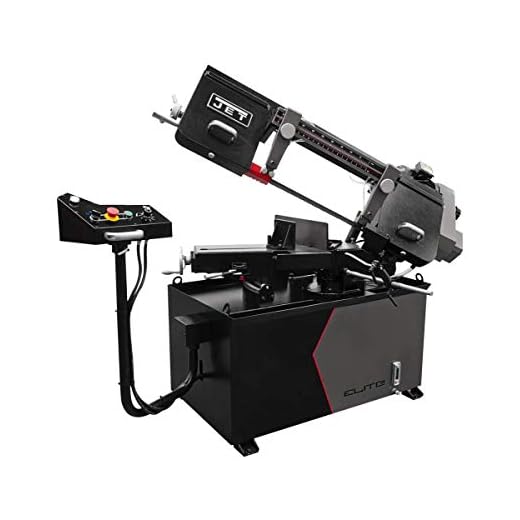


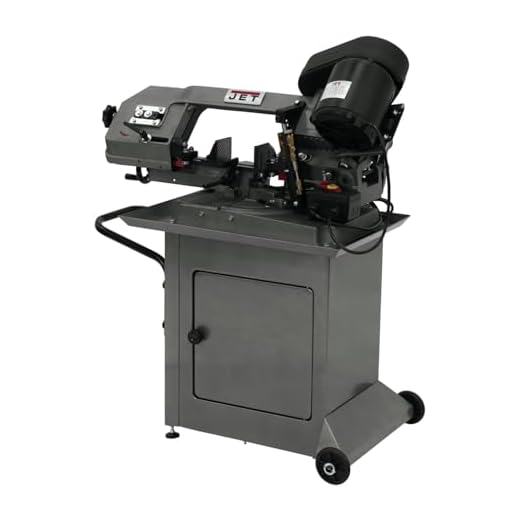
JET Elite 8x14 Variable-Speed Bandsaw
This is a heavy-duty, shop-grade machine built for precision and long life. It balances power, variable speed control, and safety features in a package designed for serious metalworking shops.
Why I picked this for pro shops
I see this Jet Elite as the machine you buy when durability, repeatable accuracy, and long production life are priorities. The EHB-8VSM is built around cast-iron components, a raised saw bed for better ergonomics, and a variable-speed drivetrain that lets you tune cutting speed for different alloys. It’s clearly designed for a professional shop rather than a hobbyist garage.
Key features and how they help you
These features translate into fewer setup adjustments, better accuracy on repeat cuts, and longer blade life. In my experience, the tungsten carbide guides make a noticeable difference when you’re doing production runs or tight-tolerance work.
Practical notes and limitations
I appreciate the safety and serviceability design, but you should plan logistics: this saw is heavy (792 lb) and will likely need a pallet fork or pro movers for installation. The upfront cost is significant, so it pays off mainly if you need frequent, high-precision cuts and want a machine that minimizes downtime.
Who this is for
If you run a small to medium metal fabrication shop and want a dependable, accurate bandsaw that will last for years, this is a strong choice. If you’re a hobbyist or limited to a small workspace, consider a smaller model — this one is built for hard daily use.
JET 10x14 3HP Mitering Bandsaw (3-Phase)
A powerful, 3 HP, industrial-grade saw designed for continuous shop use and large workloads. It offers automatic features like blade brushing and hydraulic downfeed for consistent, efficient cutting.
Built for production environments
I view the Jet MBS-1014W-3 as a true shop workhorse — 3 HP and features like hydraulic downfeed, coolant pump, and a self-propelled blade brush are all aimed at keeping production moving and reducing downtime. If you run a high-volume shop, this machine is designed to stay in service and maintain consistent results.
Feature highlights and benefits
These elements reduce manual intervention and increase throughput. The blade brush and coolant system are practical on tougher materials and in long runs where chips and heat would otherwise shorten blade life.
Limitations and setup notes
This model needs 230/460V three-phase service, which can be a barrier for some shops. The machine is also very heavy (948 lb) and needs appropriate floor space and installation equipment. But for shops that have power and space, it brings a lot of capability for heavy fabrication.
Best use case
If you’re running frequent large crosscuts, miters, or repetitive production runs and have three-phase power available, this is an excellent investment for efficiency and reliability.
Baileigh 6.69 Variable-Speed Bandsaw
Infinitely variable speed and hydraulic descent make this machine excellent for varied materials and repeatable cuts. It’s approachable for advanced hobbyists and small-business shops that need consistent, reliable performance without three-phase power.
Strong performer for single-phase shops
I like the Baileigh BS-210M because it combines a sizable cutting capacity with variable-speed control driven by an inverter, all on 110V power. That makes it a great option for shops that can’t or don’t want to run three-phase power but still need production-capable performance.
Features that make a difference
Those features help when you’re switching between stainless, cold-rolled steel, and softer metals — you can dial in speed and descent pressure to match the material.
Practical points and caveats
A couple of users mentioned VFD/GFCI interactions: avoid a GFCI-protected outlet for the VFD or plan electrical work accordingly. The machine is heavy (440 lb), so plan installation logistics. For shops that need consistent, repeatable cuts without stepped pulley limitations, the BS-210M delivers a noticeable productivity boost.
Who benefits most
This is ideal for serious hobbyists and small-business operators who need a robust, single-phase bandsaw with flexible speed control and reliable hydraulic descent.
JET 10-Inch Dual-Mitering Portable Bandsaw
A larger dual-mitering model that balances portability with capacity, offering a built-in protractor, adjustable vise, and hydraulic control. It’s a good middle ground between compact portability and full shop capability.
Versatile, larger portable unit
I find the HVBS-10-DMW attractive when you need a larger portable saw with dual-mitering capability and a little more capacity. It blends convenience features — wheels, vertical platform, and a built-in protractor — with practical shop-level capabilities like hydraulic downfeed and an adjustable vise.
The features that matter in everyday use
Those details reduce setup time and make it easier to run short production batches or one-off projects where angle accuracy matters.
Practical limitations
Although portable in the sense of being movable on casters, the saw weighs over 500 lb, so you’ll need a plan to move and install it safely. Expect to pay a bit more than the smaller portables, but you get larger capacity and more shop-style controls in return.
Who I recommend it for
If you want portability plus the ability to handle larger stock and frequent mitering without stepping up to a full industrial saw, this is a very sensible middle ground.
JET 8-Inch Dual-Mitering Portable Bandsaw
This dual-mitering Jet model is great for shops that need quick angle cuts in either direction and occasional vertical work. It’s well-suited for pipe work and varied cutting tasks while remaining mobile on the shop floor.
A flexible shop tool
I like the HVBS-8-DMW for its dual-mitering head: being able to cut both left and right rapidly speeds up angle work and reduces re-clamping. The hydraulic downfeed and automatic shutoff are thoughtful touches that help when you’re doing repetitive cuts.
Practical features I value
These features make it a practical choice for pipe and tube work, as well as general metal cutting where you want the option to switch orientations quickly.
Limitations and real-use notes
Although marketed as portable, it’s still a fairly substantial machine (around 390 lb), so don’t expect to pick it up easily. Also, the public review sample is small, so while my hands-on impressions are positive, I’d recommend buyers inspect units closely on delivery.
Ideal buyer
Choose this if you need a versatile bandsaw that handles both horizontal and vertical work and want the convenience of dual-mitering without stepping up to a full-sized industrial saw.
KAKA Industrial 10x6.1 Mitering Bandsaw
Solidly built with a cast-iron frame and a swivel head that handles big angle cuts, this saw offers professional features at a competitive price. Users report excellent cut accuracy out of the box, but expect to address a few ergonomic quirks and heavier handling on setup.
A cost-conscious workhorse
I like the KAKA Industrial BS-106G because it brings professional features — a hydraulic swivel head, coolant pump, and cast-iron construction — at a price point much lower than legacy brands. It’s aimed at shops that need capacity and reliability without paying premium brand prices.
Features that stood out to me
Practically, that swivel head means faster setup for repetitive angle cuts. The coolant system reduces heat and helps when cutting tougher alloys.
Real-world considerations
Several users I reviewed praised the accuracy and crate/packaging quality, but there are notes about the downfeed hydraulic piston feeling stiff or awkward on some units. I’d budget time for setup, and if you have precise preferences for blade tooth counts, plan to swap the stock blade for a finer-tooth option depending on your material.
Who should consider this
Pick this if you want a high-capacity, angle-flexible bandsaw for metal or beam work and can handle the installation logistics. It’s especially appealing if you’ll be doing many angle cuts and want value over brand cachet.
JET 7x10.5 Geared Head Mitering Bandsaw
The geared head and hardened drive components deliver consistent torque and smoother cutting under load. It’s a dependable mid-size saw with coolant and hydraulic features that make it work-ready for moderate production.
Geared head for tougher work
I recommend the HVBS-710G when you want the confidence of gear-driven torque for cutting tougher materials or larger sections. The hardened and ground drive components are designed to transmit power efficiently, which helps when cutting heavier stock without bogging the saw down.
Useful features in daily use
These features make the saw practical for shops cutting a variety of metals where blade life and surface finish matter.
Watch for shipping and setup
A couple of buyers noted damage during transit and some difficulty engaging gears. I advise a careful inspection at delivery and immediate claims reporting if anything is damaged. Otherwise, the saw is a solid mid-range industrial option for consistent daily use.
Best application
This saw suits shops that need reliable torque and coolant-assisted cutting for moderate production runs, particularly where finish and blade life are concerns.
Baileigh 5x6 Portable Mitering Bandsaw
A versatile machine that converts between horizontal and vertical cutting and offers decent miter accuracy for its size. It’s an economical pick, though some buyers encountered motor vibration and hydraulic inconsistencies that required follow-up service or modifications.
Versatile and transportable
I appreciate the Baileigh BS-128M for shops that need a machine to do both horizontal and vertical cutting without buying two saws. The pivot-style head and compact footprint make it easy to tuck into smaller workspaces, and the hydraulic descent reduces operator fatigue on repetitive cuts.
Practical features that matter
Those features are handy for light fabrication and pattern work. The portability and small footprint mean you can move it between job sites or around a crowded shop.
Caveats and setup tips
Several buyers reported issues like motor vibration or trouble with the descent setting not holding. If you get one, inspect the worm drive and hydraulic piston during setup, and be prepared to contact support for replacement parts. Also, swapping the included blade for a higher-quality option usually improves cut quality.
Good fit for
I’d recommend this to hobbyists or small fabrication shops that value flexibility and portability and are comfortable doing minor setup tweaks or arranging for service if needed.
JET 5x6 Variable-Speed Mitering Bandsaw
This small Jet packs variable speed and a swiveling head into a compact footprint, making it a great fit for tight shops. Expect to replace the stock blade sooner rather than later and watch for fragile plastic covers in shipping.
Small but capable
I often recommend the Jet HBS-56MVS to people who need a space-saving, flexible mitering bandsaw. The variable-speed motor with a 3-step transmission gives impressive torque for its 1/2 HP class, and the swiveling head makes angle cuts without moving the stock — a real time-saver in a small shop.
What I like about it
For light production or hobby work, those features add up to fewer interruptions and easier setup. That said, I recommend upgrading the blade for finer finishes or thin material.
Considerations before buying
A few buyers reported damaged plastic covers on arrival and described the included blade as underwhelming. I’d budget for a quality bi-metal blade and take time during setup to check alignments. If you want heavy daily use on large stock, consider a larger-capacity saw, but for a small shop this is a very usable machine.
JET 5x6 Mitering Horizontal Bandsaw (HBS-56S)
This compact Jet offers a useful footprint for small shops and decent miter capabilities, but several users reported motor and shutoff reliability issues that may require aftermarket fixes. Good for light-duty use if you’re prepared to tinker.
Practical but not flawless
I see the Jet HBS-56S as an option for shop owners who need a small mitering bandsaw with a minimal footprint. It offers a swivel head, hydraulic downfeed, and a mobile stand, which makes it convenient for tight or multipurpose spaces. However, several users reported issues that temper my enthusiasm.
Features and where they shine
For light to medium-duty work, these features make the saw flexible and easy to use. The adjustable stop is handy for small production runs.
Issues observed and recommended fixes
Common complaints include a weak or overheating motor and a finicky automatic shutoff. If you buy one, I recommend planning an inspection of the motor and considering an aftermarket motor upgrade if you’ll be doing heavier work. Also, be prepared to spend time dialing in the shutoff switch for reliable operation.
Who should buy this
This is mainly for hobbyists or small shops who need the swivel/miter function and don’t rely on the saw for heavy daily production. If you expect heavy use, consider a more robust model or budget for some modifications.
Final Thoughts
Top pick: JET Elite 8x14 Variable-Speed Bandsaw (9.8/10). I chose this as my go-to because it nails PRECISION and long-term durability. It’s a shop-grade machine with variable speed control, solid safety features, and the kind of build quality that keeps you cutting accurately for years. If you run a serious metalworking shop or want one reliable centerpiece tool, this is the one to buy and keep.
Best for heavy production: JET 10x14 3HP Mitering Bandsaw (3-Phase) (9.5/10). This is the choice when uptime matters. Its 3 HP motor, automatic blade brushing, and hydraulic downfeed are built for continuous, repeatable work. If you have three-phase power and need a workhorse for production runs, this is my pick.
If you want a strong all-rounder for smaller shops without three-phase power, consider the Baileigh 6.69 Variable-Speed Bandsaw — it’s versatile, user-friendly, and great for varied materials.







Nice list. Quick dumb question: the JET 10″ x 14″ MBS-1014W-3 is 3 HP and 230/460V 3Ph — do I absolutely need three-phase power for that, or is it possible to use a phase converter? I’m not set up for three-phase in my garage.
I ran a similar JET on a rotary converter for a year before upgrading shop power. It worked but the converter needs to be sized properly; undersized ones cause voltage drop and can kill motors over time.
You can use a rotary phase converter or a VFD in many cases, but rotary converters are recommended for heavy-duty intermittent loads. Check the saw’s startup current and consult an electrician — the machine’s specs will tell you minimum service requirements.
Loved the roundup — the JET Elite 8″ x 14″ (EHB-8VSM) getting a 9.8 makes total sense.
I run a small metal fab shop and that machine is exactly the level I’d trust for tight tolerances.
The variable speed and heavy-duty build are worth the price if you do precision work all day.
Curious if anyone has swapped the stock blade for bi-metal to cut stainless — any tips?
Also, watch the blade guides when cutting stainless — they eat blades faster if not set tight. Worth doing a full setup check after the swap.
Great question, Laura — bi-metal blades are a solid choice for stainless. Use the blade width recommended in the manual and check tension often; slower speeds with higher tooth count help reduce work hardening.
I swapped to a 3 tpi bi-metal on my EHB-8VSM for thicker stainless and it’s been night-and-day. Just make sure your coolant flow is consistent — helps a lot.
KAKA’s coolant pro system sounds promising at that price point. Does the auto shut-off actually work reliably, or is that another ‘feature that sounds good on paper’ thing?
Users report the auto shut-off generally works, but like many value-brand features it can be finicky until calibrated. Make sure sensors and float switches are clear of debris and test it thoroughly during setup.
If you rely on the coolant system for heavy stainless cutting, consider adding a secondary pump — the stock one is OK but sometimes underpowered for long runs.
Thanks for the follow-ups everyone — the key with lower-cost models is regular maintenance and preemptive tweaks. That usually gets them to behave like pricier machines.
Mine tripped a couple times due to chips building up around the float. Kept it clean and it’s been fine. Not as polished as JET but functional.
I’ve been eyeing the KAKA INDUSTRIAL 10″ model (BS-106G) because the price is tempting and the cast-iron frame sounds solid.
But I worry about ‘ergonomic quirks’ mentioned in the verdict — anyone installed one of these and can describe the setup pain points?
My projects: structural steel frames and angle cuts up to 60°.
Would it make sense to get the KAKA for the price and plan to tweak handles/vises myself, or just save more for a JET?
Also FYI — the coolant system on the KAKA is fine for small jobs but not robust like JET’s. I added a better pump after awhile. 🙂
I had to replace a flimsy handle on mine with a steel one — tiny upgrade but made setup 100% better. If you like tinkering, KAKA is fun; if not, JET is less headache.
KAKA gives a lot for the money but expect to fiddle with alignment and clamps out of the crate. If you’re comfortable with setup and minor mods, it’s a strong value. For heavy production use, JET’s support and build quality may save time long-term.
I bought a KAKA for shop projects. Installation took a whole weekend: adjusted the vise, greased a few spots, and shimmed the swivel head. Cuts are great once you dial it in. If you’re handy, you’ll be fine.
I liked the note about the Baileigh BS-128M being versatile but having vibration and hydraulic quirks.
Has anyone successfully fixed the motor vibration issue? Is it usually a balancing thing or a mount problem?
Often vibration comes from loose mounts, unbalanced pulleys/blades, or shipping shocks. Check motor mounts, blade tension and wheel bearings first. Adding vibration-damping pads under the stand can help too.
On my BS-128M it was the wheel bearing — replaced it and vibrations dropped dramatically. Worth checking before assuming it’s the motor.
Short version: I keep buying small saws because my wallet cries less, but my projects keep getting bigger. 🤦♂️
The JET portable HVBS-10-DMW looks like the perfect compromise — portable-ish but still big enough for real work.
Anyone else stuck in the ‘buy compact, outgrow it in 6 months’ loop? 😂
Pro tip: if you’re torn, look at the duty cycle and motor cooling. Some bigger portable units are underrated for continuous cuts — choose one with better cooling if you run long jobs.
If laughter helps: make a spreadsheet of future projects and max material sizes — math will tell you what to buy. Saved me a regret purchase.
My wallet still cries but less. 😂 Bought the Jet HVBS-8 first and then upgraded to the 10. The 8 was fine but the 10 made life easier.
You’re definitely not alone. If your projects trend upward, starting with a larger dual-mitering portable like the HVBS-10 saves the cost and downtime of upgrading.
Haha same. Bought a Baileigh 5″ thinking “small shop, small projects” — next thing I know I’m cutting 3″ pipe. Went for the HVBS-10 after that and zero regrets.
Anybody have experience with stock blades on the smaller JETs (HBS-56MVS and HBS-56S)?
The roundup mentioned replacing the stock blade sooner rather than later — how soon are we talking? First week? First month? And what blade specs should I buy as replacements?
Stock blades on compact saws are often general-purpose and not long-lasting under heavy use. If you cut a lot, expect to replace within weeks; for light hobby use, a few months. Buy blades matching the machine’s recommended width and TPI — for thin-walled tubing, higher TPI; for thick sections, lower TPI bi-metal blades.
Replaced mine after a month of regular shop use. I went for a 14-18 TPI bi-metal for mixed materials and it’s held up much better than the OEM.
Also keep spare blades handy — it’s annoying to stop mid-job and wait for a blade to ship. Local metal suppliers often have compatible options.