
I Compared DeWalt vs Simpson Pressure Washers: Best 3400 vs 4200 PSI


I put DeWalt’s 3400 and Simpson’s 4200 head-to-head—which one blew my mind (and cleaned my driveway in half the time)?
Surprising fact: I pit DeWalt’s 3400 PSI against Simpson’s 4200 PSI because similar missions hide big differences in power, flow and components. I’ll quickly explain those differences and keep it practical so you pick the right machine for your jobs.
Home Projects

I appreciate how effortless this unit is to start and move around — the Quick Start and PressuReady controls make small-to-medium home jobs painless. It’s a solid, well-equipped residential washer, but I’d choose something more robust for heavy commercial work.
Pro Contractor

I respect how much power and durable hardware this unit packs — it’s built for contractors and heavy-duty cleaning. That strength comes at the expense of ease of use and portability, so it’s best for professionals rather than casual weekend use.
DeWalt 3400 Washer
Simpson 4200 Washer
DeWalt 3400 Washer
Simpson 4200 Washer
DeWalt 3400 Washer
Simpson 4200 Washer
Head-to-Head at a Glance: Specs, Features & What’s in the Box
Quick summary
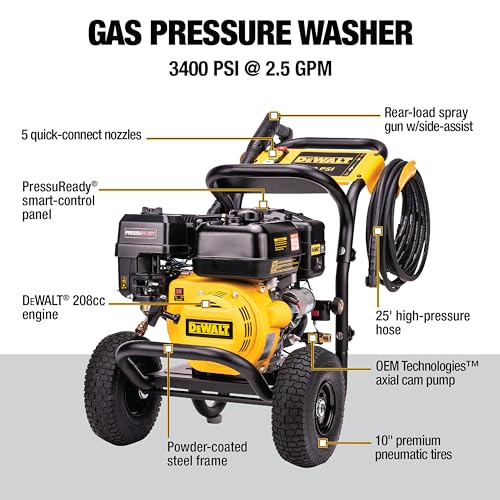
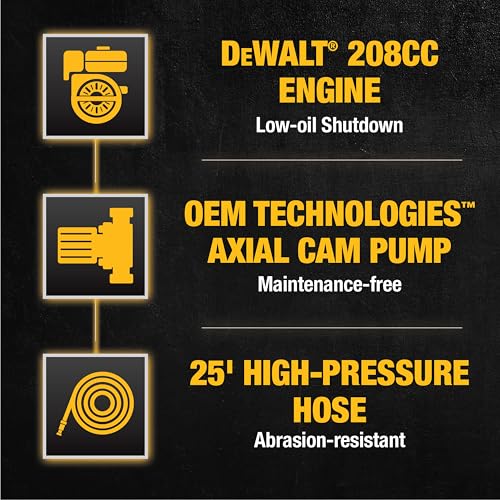
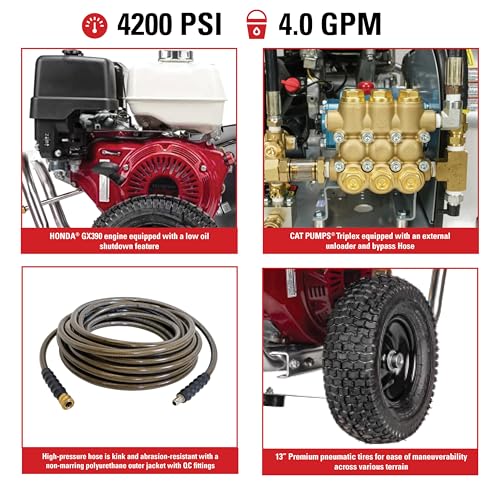
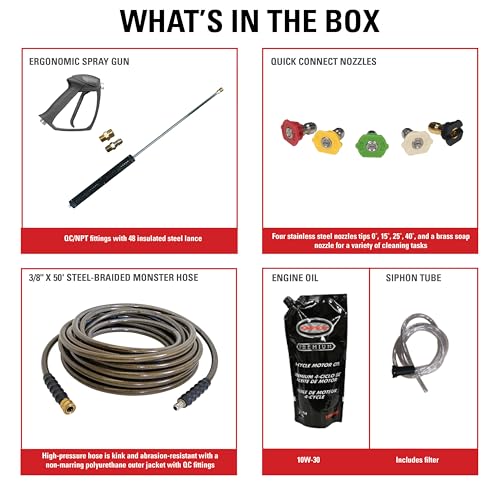
I’ll lay out the key specs so you can see differences at a glance: PSI and GPM (3400/2.5 vs 4200/4.0), engine type and displacement (DeWalt’s 208cc vs Simpson’s Honda), pump style (DeWalt axial cam vs Simpson CAT triplex), hose lengths (25′ vs 50′), included nozzles, spray gun, wand, and warranty/49-state notes. I’ll also call out weight, footprint and portability features so you know which one is easier to move and store.
DeWalt DXPW3400 — what’s included & core specs
Simpson ALWB60828 — what’s included & core specs
Comparison Chart
Performance: Power, Flow & Real-World Cleaning
I’ll compare real cleaning performance, not just numbers. Expect a discussion of cleaning units (PSI × GPM), how each machine handles driveways, decks, siding, and stubborn stains, plus the role of nozzle choice. I’ll talk startup reliability, throttle response, pressure consistency under load, and how the lower‑flow DeWalt stacks up against the higher‑flow Simpson for rinsing and heavy‑duty degreasing.
Cleaning units: PSI × GPM
Cleaning units = PSI × GPM. DeWalt: 3400 PSI × 2.5 GPM = 8,500 CU. Simpson: 4200 PSI × 4.0 GPM = 16,800 CU. In plain terms, Simpson delivers roughly twice the overall cleaning capability — more force plus much more water to flush away grime.
Real-world: driveways, decks, siding, stubborn stains
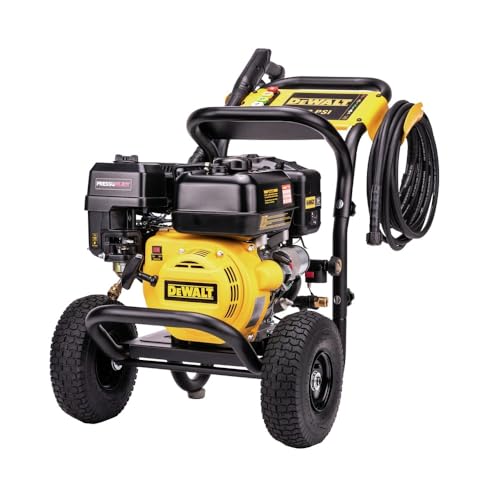
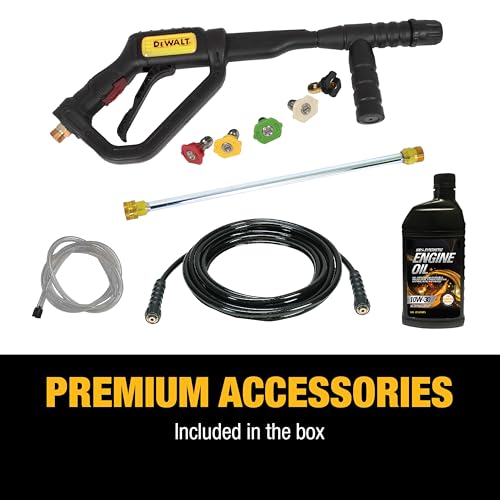
Simpson’s extra flow makes rinsing and heavy degreasing far faster — less back‑and‑forth with detergent — while DeWalt’s concentrated power is efficient for detail work and homeowner jobs.


Startup, throttle & pressure under load
DeWalt’s Quick Start is a huge practical win: starts reliably, no choke/pull drama. Throttle response is immediate for short bursts. Simpson’s Honda is rock‑steady for long runs; the CAT triplex pump holds pressure under continuous heavy load better than the axial cam.
Practical tips I use when switching machines
Durability, Build & Maintenance: What You’ll Live With
I’ll cover build quality and day‑to‑day upkeep. Expect a look at frame strength, engine mounts, pump longevity and common wear items, plus how easy each unit is to service.
Frame, mounts & overall build
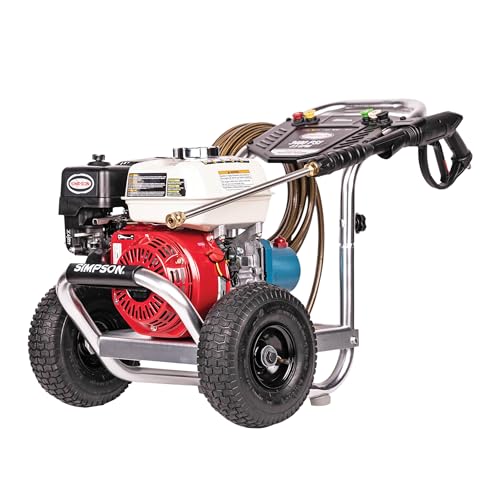
The Simpson uses an aircraft‑grade aluminum frame that resists rust and stands up to jobsite abuse; the chassis feels industrial and is built for long hauls. The DeWalt’s welded steel frame is lighter and more compact, great for homeowners who move it around the yard, but steel will show chips and surface rust over years if not cared for.
Pump, engine & vibration
Simpson’s Honda GX390 + CAT triplex pump + belt drive is a commercial combo: lower vibration, less heat transfer, and far better suited to continuous runs. DeWalt’s 208cc engine with an axial cam pump is fine for residential use and starts easily thanks to Quick Start, but the axial pump isn’t made for daily, eight‑hour shifts.
Common wear items
Serviceability & routine maintenance
Lifespan, warranty & parts support
For occasional homeowner jobs the DeWalt will last many years. For contractor work, Simpson’s commercial components will outlive and outperform the DeWalt. Simpson also backs its gear with commercial warranties (engine/pump/frame) and wide parts availability; DeWalt has good support too, but expect more frequent pump service or replacement with heavy use.
Buying Guide: Which One Should You Choose?
If you’re an occasional homeowner
I’d pick the DeWalt. It’s lighter (about 76 lbs), easier to start (Quick Start), and includes a 25′ hose and five nozzles—perfect for decks, patios, cars, and siding without wasting money on overkill.
If you’re a weekend warrior / serious DIYer
Lean Simpson if you regularly tackle big weekend projects (large driveways, heavy grime, paint prep). The Simpson’s 4200 PSI / 4.0 GPM cuts faster and the Honda + CAT pump is built for longer runs. If you want a balance of power and portability, factor in help loading/unloading the heavier unit.
If you run commercial or frequent heavy-duty jobs
Choose the Simpson. The belt drive, industrial triplex pump, Honda GX engine and aluminum frame are designed for daily contractor use and lower long‑term downtime—even if it costs more up front.
Weighing price, accessories & fuel use
Quick buying tips
What to inspect at pickup
Optional accessories worth buying
Mistakes I see buyers make
Final Verdict — Which One I’d Pick
I’d choose the DeWalt for typical homeowner jobs because it’s lighter, easier to maneuver, and still delivers solid 3400 PSI performance with better portability and simpler startup. For driveways, decks, and occasional heavy dirt, the DeWalt gets the job done without the bulk, fatigue, or extra setup overhead of a commercial unit.
If I were finishing contractor work where throughput and speed matter, I’d lean to the Simpson’s 4200 PSI and 4.0 GPM Honda power—faster completion and tougher tackling of stubborn grime. My pick: DeWalt for most homeowners; Simpson only if you regularly need commercial-level power or longer continuous run times. Which matters more: portability or raw throughput for your routine? Tell me soon.







Nice write-up — helped me decide between the two. I own the DeWalt 3400 and it’s been great for driveway/house siding jobs.
Pros I noticed: quick-start tech actually cuts down on fumbling, and the smaller 208cc engine means it’s easier to move around. The 2.5 GPM is slower than the Simpson but still did the job for my home tasks.
Cons: the 25-ft hose feels limiting sometimes; wish it came with 50′. Overall, great for homeowners who want something easy to store.
Good question — the Simpson with a Honda engine tends to run a bit smoother and can sound a touch quieter under load, but actual noise depends on exhaust/muffler. The DeWalt’s smaller engine can rev higher, so it may sound sharper during full throttle.
How noisy is it compared to the Simpson? I’m wondering if neighbors will complain.
Thanks for sharing your hands-on experience, Sarah. The axial cam pump on the DeWalt is tuned for lighter-duty residential work, so that GPM trade-off is expected. For longer reach you can often swap to a 50′ hose as long as it matches the fittings and pump specs.
I had to laugh — bought the DeWalt because I thought “3400 is plenty”. Then I pressure-washed mom’s driveway and yep, the Simpson would’ve finished twice as fast.
Longer story shorter:
– Simpson: more grunt, bigger water flow, real workhorse. Good if you plan to do big surfaces or run it commercially.
– DeWalt: lighter, simpler to handle, better for occasional homeowner tasks.
Also, the Simpson’s aluminum frame is a nice touch for rust resistance but it still weighs a LOT. If you’re moving it up/down stairs frequently, consider wheels and a cart setup.
As someone who hauls units around, get a good lifting strap and maybe a small ramp. Saved my back so many times.
Pro tip: keep the hose coiled properly and don’t store it in direct sun. UV breaks down the rubber over time. Learned that the hard way 😅
Longer hose can cause a slight drop in pressure at the nozzle, but with a 4.0 GPM/4200 PSI machine like the Simpson it’s usually negligible for typical cleaning. Just avoid kinks and use the correct diameter hose.
Does anyone know if the Simpson’s 50′ hose affects pressure noticeably at the wand? I’m worried about losing PSI with that extra length.
Nice comparison, Ethan. On the maintenance point: commercial pumps generally handle higher duty cycles, but they also need proper oil changes and care. For both units, winterizing (using pump saver and draining lines) is crucial to avoid freeze damage.
Also check nozzle selection — a 25° or 15° pattern on the Simpson can speed things up without damaging wood if used correctly.
If you’re doing decks, concrete, or rental work, go Simpson.
It’s raw power: 4200 PSI and 4.0 GPM — that combo will blast stains and moss off like nobody’s business.
Honda engines are rock solid too, which matters if this is a daily tool. The 50′ hose is a huge QoL upgrade over 25′.
That said, it’s heavier and more of a proper machine — not something you toss in the trunk for an hour of weekend cleanup.
Price and portability are the tradeoffs. Choose based on how often and how heavy-duty your jobs are.
Exactly — Simpson is aimed at commercial/light-professional use. The ALWB (aluminum frame) helps reduce weight vs a steel cart, but it’s still a beefier unit than the DeWalt.
Agree 100%. I rented a Simpson once for a whole weekend and it saved me so much time. Worth the rental fee if you don’t need it regularly.
Quick question: how big of a difference does the pump type make long-term? The DeWalt lists an axial cam pump and the Simpson looks like a commercial pump — should I expect way more maintenance on one vs the other? Also, any tips for cold-weather storage since both are cold-water units?
I’m a little meh about the DeWalt’s “Quick Start” marketing. It’s fine, but not magic. Took me a few tries to get it going the first weekend (operator error maybe lol). The 25-ft hose tho… come on. 😒
Also, if you’re tight on budget, compare warranties and local service. Honda engines have better parts/support where I live, so that nudged me to the Simpson even if it’s pricier.