

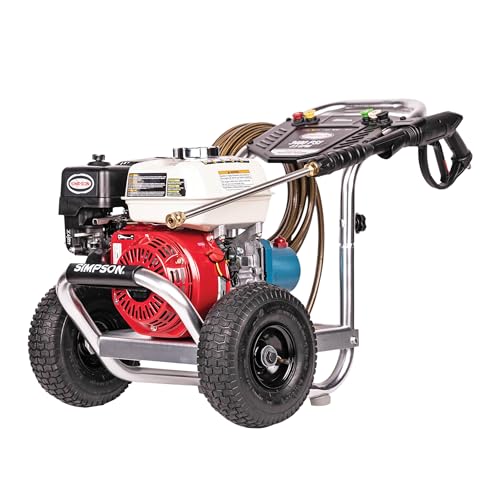
Commercial-grade power and durability—built for pros, not weekend dabblers.
I’ve been on jobs where the pressure washer dies halfway through the cleanup, leaving me to scrub by hand or limp back to the shop. When you need consistent, heavy-duty cleaning power for contractors, fleets, or serious DIY projects, flaky consumer units just don’t cut it.
That’s why I checked out the Simpson Cleaning 3400 PSI Gas Pressure Washer with the Honda GX200 engine. It’s built around commercial-grade components—CAT triplex pump and an aircraft-grade aluminum frame—so it’s rugged and serviceable. It’s not a quiet, lightweight weekend toy (expect weight, noise, and regular maintenance), but if you want dependable, pro-level performance, this one delivers.
Simpson 3400 PSI Commercial Pressure Washer
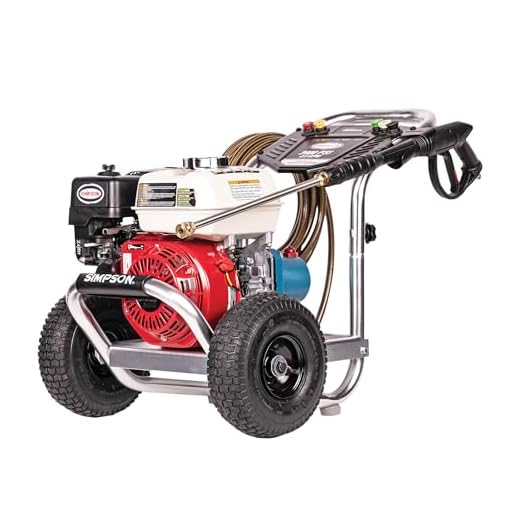
I found this unit to be a workhorse that balances raw cleaning power with thoughtful portability—great for contractors and fleet use. It’s not a light home weekend toy: expect regular maintenance, noise, and some upfront investment, but you get commercial reliability in return.
Overview
I’m pretty picky about pressure washers because I’ve run them on jobsites where downtime costs money. This Simpson 3400 PSI unit is clearly aimed at professionals and serious DIYers who want reliable, repeatable cleaning performance. It combines a tried-and-true Honda GX200 commercial engine with a CAT triplex pump and a corrosion-resistant aluminum chassis to give you a machine that can survive rigors of daily use while still being maneuverable enough to move around a jobsite.
What I Like About the Design
The construction focuses on two things: power delivery and portability. The aluminum frame keeps the chassis light for its power class, and the 10″ pneumatic tires make it surprisingly easy to wheel over rough terrain. Controls are laid out for serviceability—tank and pump access are straightforward, and replacement parts are common thanks to the GX200 and CAT pump platform.
Performance and Cleaning Capability
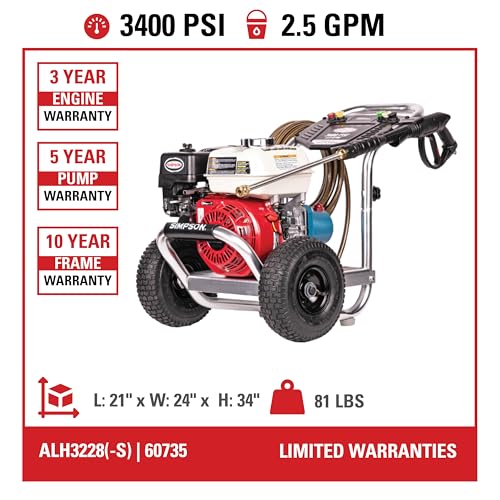
On paper, 3400 PSI at 2.5 GPM tells you this machine is meant to remove heavy dirt, caked grime, and paint prep work. In practice, the Honda GX200 maintains steady RPM under load and the CAT triplex pump delivers a consistent stream that makes short work of decks, construction equipment, concrete, and graffiti removal. The included five quick-connect nozzle tips let you tune the spray pattern and detergent application without hunting for extras.
| Metric | How It Performs |
|---|---|
| Maximum Pressure | Solid, stable 3400 PSI for heavy-duty cleaning |
| Flow Rate | 2.5 GPM — good balance for rinsing large surfaces |
| Nozzle Options | 0°, 15°, 25°, 40°, Soap — covers most cleaning needs |
| Hose | 25′ high-pressure, kink and abrasion resistant |
Engine, Pump and Reliability
The GX200 is a workhorse. It starts reliably once fueled and maintained, and the triplex CAT pump with thermal relief is built for repeated heavy work. I appreciate the thermal relief protection that helps prevent pump damage during long periods of use. If you service it following recommended intervals (oil, spark plug, air filter), this combo will run for years.


Portability and Jobsite Use
This isn’t a handheld electric unit. Think of it as a trailer-able, wheeled machine you bring to each job. Even with the aluminum frame, the unit weighs multiple tens of pounds and will require a lift into a truck bed. Once on the ground, however, it’s relatively nimble and the hose length plus wand reach reduce the need for frequent repositioning.

Accessories and What’s Included
The unit ships with a sensible set of items you’ll actually use on day one. The five quick-connect nozzle tips let you adapt spray angle and pressure intensity for different surfaces, and the soap tip simplifies detergent application. The lance and professional gun feel sturdy—no flimsy plastic here.
Maintenance, Warranty and Service Considerations
I’m pragmatic about maintenance: commercial machines need routine attention. Expect to run through spark plugs, oil changes, and occasional filter cleaning. The engine and pump are common parts so service is widely available. Warranty information can be a little confusing depending on where you read it—always confirm the exact warranty terms with the seller before purchase.
Who Should Buy This
If you’re a contractor, restoration specialist, or a facilities manager who needs repeatable, heavy-duty cleaning performance, I’d recommend this unit. It’s overkill for casual weekend car washing but an excellent choice for anyone who needs dependable power and the convenience of a portable platform.
Final Thoughts
I like machines that do their job with minimal fuss, and this Simpson hits that bar for me. It’s built on proven components, includes the accessories you need to start working right away, and balances durability with mobility. Expect to invest a bit more time in maintenance than you would with an electric model, but that’s the trade-off for the commercial-level cleaning performance you get back.
FAQs
No special fuel is required — regular unleaded gasoline will work. I recommend the following precautions and practices:
This is a gas commercial unit, so it is noticeably louder than electric models. I treat it like a lawn mower or small generator in terms of noise and follow these simple rules:
Yes. The unit includes a soap nozzle for detergent application. I follow these tips when using chemicals or a surface cleaner:
Yes, aircraft-grade aluminum resists corrosion and keeps the unit lighter than a steel frame. I still treat it like jobsite gear and do the following:
Regular simple checks keep both running longer. I stick to a short checklist:
A 25-foot hose is a practical middle ground. I find it useful for most tasks without big pressure loss. A few notes:
It depends on how you use it. I weigh these factors when deciding:





Good write-up. Curious: how portable is it actually? The specs say 73 lbs, but with a cart/frame and 25′ hose, is it manageable solo?
I work alone sometimes and don’t want something that’s a pain to move between sites.
Also consider a small folding ramp for your truck bed. Saved me a lot of hassle.
Another tip: secure the hose and wand to avoid damage during transport; the QC nozzles can be easy to lose if tossed loose in the truck.
I load/unload solo with a ramp and some straps — not ideal but doable. If your sites involve stairs, get help.
It’s on the heavier side for one person, Marcus. The aluminum series and wheels help, but I’d recommend two people for lifting into a truck. Rolling it around on a flat surface is fine solo.
Saw this review while procrastinating on my weekend to-do list. Tempted to buy, but does anyone have advice on maintenance schedules? 😬
And one more — winterize if you store it where temps drop below freezing. Antifreeze pump treatment or proper draining avoids costly pump damage.
Basic schedule: check oil before each use, pump oil per manufacturer’s interval, inspect hoses/fittings weekly with regular use, and flush detergent lines after each detergent job. Annual professional check is a good idea for heavy use.
Agreed. Also change engine oil after first 5 hours and then every 50 hours or per Honda’s manual. Filters too — small thing that keeps it alive.
Bought one last summer for my small contracting crew and it’s been a beast.
Pros: solid Honda GX200, consistent 3400 PSI, pump feels very durable.
Cons: it’s loud and you WILL need ear protection — and I learned the hard way about regular pump maintenance.
If you’re expecting a weekend-gardener toy, nope. But for daily jobsite use it’s worth the upfront cost.
Would recommend checking the frame bolts every month.
Do you use detergent with it or mostly bare water? Trying to figure out if the pump handles frequent soap use.
Yep, bolted mine down and added a small vibration pad under the frame — reduced rattles a lot. Nice tip on ear protection too, I almost forgot the first day.
Thanks for the field report, Laura — glad it’s holding up for you. We noted the noise and maintenance in the review; the 3-year engine / 5-year pump warranty helps if something crops up.
I love the cleaning power but the noise level made my neighbor think I was starting a lawnmower war at 7am 😂
Short and sweet: it cleans everything I throw at it, but plan the timing so you don’t ruin neighborly relations.
Tell them it’s for community beautification. Works 50% of the time 😅
Ha — timing is everything. We mentioned noise in the verdict; maybe start slightly later or give neighbors a heads-up for big jobs.
I was torn between this Simpson and another brand with similar specs. After using the Simpson for a few months here’s my take:
– Power: Absolutely there. 3400 PSI at ~2.5 GPM blasts off mildew and old paint pretty quick.
– Build: Aluminum frame is lighter than steel, but I still treat it like a commercial tool — check fittings often.
– Fuel/run time: You’ll want to carry spare fuel for long days; it sips, but not that much.
– Service: The 5-year pump warranty is comforting, though finding local service techs for triplex pumps can be annoying.
Constructive note: hose length is fine but I wish the storage for the wand/nozzles was a little more secure — lost a nozzle or two on site.
Thanks for the detailed comparison, Tom. The nozzle storage is a fair complaint — we suggested a small magnetic or clip system as an aftermarket fix in the comments.
I run a 50-foot hose sometimes for big driveways; it works if you compensate with a slightly stronger nozzle, but it’s not ideal for precision work.
Anyone tried longer hoses? Want to avoid moving the unit as much.
I zip-tied a small plastic case to the frame and put the nozzles in there. Not pretty but works.
Longer hoses increase pressure drop, Diego. You can extend a bit but you’ll lose some effective PSI/GPM at the tip — check pump performance curves if you need >25-foot runs.