

Ever felt like your DIY projects are missing that professional touch?
Maybe you’ve been eyeing those sleek custom parts in high-end products, thinking, “I wish I could make that.”
Well, guess what? You can.
Enter the world of benchtop milling machines – your ticket to precision craftsmanship right from your garage or workshop.
But here’s the thing: picking the right one can be as tricky as threading a needle in the dark.
That’s why I’ve put together this no-nonsense guide to the top 6 benchtop milling machines that’ll take your projects from “meh” to “wow!”
Let’s dive in and find the perfect match for your machining dreams.


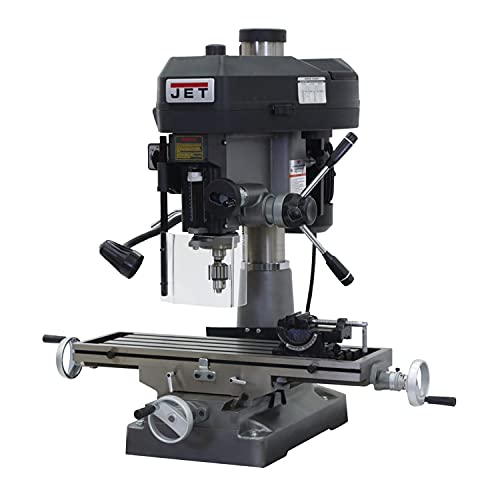
JET JMD-18 Mill/Drill Machine: The Workhorse
Who it’s for: This machine is ideal for those who need a powerful, versatile mill for a wide range of projects. It’s particularly well-suited for metalworking enthusiasts and small businesses that require consistent, high-quality results.
Look, if you want a machine that’ll handle anything you throw at it, the JET JMD-18 is your guy.
This bad boy comes with a beefy 2 HP motor that’ll chew through metal like it’s butter.
The 360-degree swiveling head? It’s a game-changer for those tricky angle cuts.
Plus, that extra-large work table means you can tackle bigger projects without breaking a sweat.
- Real talk: It’s not the cheapest option out there, but you get what you pay for.
This machine is built like a tank and will likely outlast your grandkids’ grandkids.
PROXXON MF 70 Micro Mill: The Precision Master
Who it’s for: This machine is perfect for jewelers, watchmakers, model enthusiasts, and anyone working on small-scale precision projects. It’s also an excellent choice for educational settings where space is at a premium.
Need to work on tiny parts with insane precision? The PROXXON MF 70 has got your back.
This little powerhouse is perfect for jewelry makers, model builders, or anyone working on miniature projects.
The high-speed capability means you can use super fine cutters for intricate work.
WEN 33075T 16-Inch Milling Machine: The Versatile Performer
Who it’s for: This machine is perfect for DIY enthusiasts and small workshop owners who need a versatile mill capable of handling a wide range of projects without breaking the bank.
The WEN 33075T is like the Swiss Army knife of benchtop milling machines.
It’s got enough power for serious work, but it’s not so big that it’ll take over your entire workshop.
The variable speed control is clutch for working with different materials.
INTBUYING Mini Milling Drilling Machine: The Budget-Friendly Option
Who it’s for: This machine is ideal for beginners, hobbyists on a budget, or as a secondary machine in larger workshops. It’s particularly well-suited for those working on smaller projects or in limited spaces.
Don’t let the “mini” in the name fool you. This machine packs a punch.
The INTBUYING Mini Mill is perfect for hobbyists or small workshops looking to dip their toes into precision machining without emptying their wallets.
That tilting head? It’s a lifesaver for angled drilling and milling.
Keeping it real: You might need to do some tweaking to get it dialed in perfectly, but at this price point, it’s a steal.
WEN 33013 Compact Benchtop Milling Machine: The Space-Saver
Who it’s for: This machine is perfect for urban dwellers, students, or anyone with severe space constraints who still wants to explore the world of precision machining.
Living in a shoebox apartment but still want to get your mill on? The WEN 33013 might be your jam.
It’s small enough to fit on a desk but still capable of handling most hobbyist projects.
The digital depth gauge is a nice touch for precise depth control.
Eastwood Mini Metal Milling Machine: The Metalworker’s Friend
Who it’s for: This machine is ideal for metalworking enthusiasts, small fabrication shops, and automotive customizers who need a versatile mill primarily for metal projects.
If working with metal is your thing, give the Eastwood Mini Mill a look.
It’s designed specifically for metalwork, with a powerful motor and a wide speed range to handle various metals.
The tilting column is great for those complex angled cuts that’ll make your projects stand out.
Keeping it 100: Some users report quality control issues, so inspect yours carefully when it arrives.
Top Benchtop Milling Machine Brands
What is a Benchtop Milling Machine?
Before we jump into the reviews, let’s break down what a benchtop milling machine actually is.
A benchtop milling machine is a compact version of its larger industrial counterparts. It’s designed to fit on a workbench or table, making it perfect for home workshops, small businesses, and educational settings.
These machines use rotating cutting tools to remove material from a workpiece, allowing you to create precise shapes, slots, holes, and even 3D contours.
Key components of a benchtop milling machine include:
- The base: Provides stability and support for the entire machine.
- The column: Supports the head and allows for vertical movement.
- The head: Houses the motor and spindle.
- The spindle: Holds and rotates the cutting tool.
- The table: Where you secure your workpiece. It can move in multiple axes for precise positioning.
Choosing Your Perfect Match
Alright, now that we’ve broken down the top contenders, how do you pick the right one for you?
Here’s a quick checklist:
Additional Factors to Consider:
- Spindle Speed Range: Different materials and cutting tools require different speeds. A wider range gives you more flexibility.
- Table Size and Travel: Larger tables and greater travel distances allow you to work on bigger projects.
- Quill Travel: This determines how deep you can drill or mill in a single pass.
- Tooling Compatibility: Look for machines that use standard tapers (like R8) for easier tool sourcing.
- Build Quality: A rigid, well-built machine will produce better results and last longer.
- Safety Features: Emergency stop buttons, protective shields, and electrical safety features are important.
- Noise Level: If you’re working in a residential area, consider machines with quieter operation.
- Warranty and Support: A good warranty and responsive customer support can save you headaches down the line.
Essential Accessories for Your Benchtop Milling Machine
To get the most out of your new milling machine, you’ll want to invest in some key accessories:
- Vise: A good milling vise is crucial for holding your workpiece securely.
- Clamping Kit: For larger or irregularly shaped workpieces.
- End Mills: A variety of end mills in different sizes and types will cover most jobs.
- Collet Set: For securely holding your cutting tools.
- Dial Indicator: Essential for precision alignment and measurement.
- Edge Finder: Helps you accurately locate the edges of your workpiece.
- Cutting Fluid: Keeps your tools cool and extends their life.
- Parallels: For accurately supporting and leveling your workpiece in the vise.
- Digital Readout (DRO): While not essential, a DRO can significantly improve accuracy and ease of use.
- Tooling Tray: Keeps your tools organized and within reach.
Safety First: Operating Your Benchtop Milling Machine
Milling machines are powerful tools that demand respect. Here are some essential safety tips:
- Wear Personal Protective Equipment (PPE): Always use safety glasses, hearing protection, and closed-toe shoes. Avoid loose clothing that could get caught in the machine.
- Secure Your Workpiece: Ensure your workpiece is firmly clamped before starting the machine.
- Keep Your Work Area Clean: A cluttered workspace increases the risk of accidents.
- Use Proper Cutting Speeds: Incorrect speeds can lead to tool breakage and flying debris.
- Never Leave the Machine Running Unattended: Always turn off the machine when you’re not actively using it.
- Understand Your Machine: Read the manual thoroughly and understand all controls before operating.
- Avoid Distractions: Stay focused on your work. Milling requires your full attention.
- Regular Maintenance: Keep your machine clean and well-maintained for safe operation.
- Emergency Stop: Know where your emergency stop button is and don’t hesitate to use it if needed.
- No Alcohol or Drugs: Never operate machinery under the influence.
Remember, safety isn’t just about protecting yourself. It’s about ensuring the longevity of your machine and the quality of your work.
Maintenance Tips for Long-Lasting Performance
Proper maintenance is key to keeping your benchtop milling machine running smoothly for years to come. Here are some tips:
- Regular Cleaning: Remove chips and debris after each use. Use a brush or vacuum, not compressed air, which can force debris into sensitive areas.
- Lubrication: Keep all moving parts well-lubricated according to the manufacturer’s recommendations.
- Check for Wear: Regularly inspect belts, gears, and bearings for signs of wear. Replace as needed.
- Tighten Loose Parts: Vibration can cause bolts and screws to loosen over time. Check and tighten regularly.
- Alignment Checks: Periodically check and adjust the alignment of your machine to maintain accuracy.
- Tool Care: Keep your cutting tools sharp and clean. Dull tools put unnecessary strain on the machine.
- Coolant Management: If your machine uses coolant, change it regularly and keep the system clean.
- Electrical Maintenance: Check wiring and connections for any signs of wear or damage.
- Calibration: Regularly calibrate your machine to ensure continued accuracy.
- Storage: If you’re not using the machine for an extended period, cover it to protect from dust and moisture.
FAQs
While you don’t need a degree, some basic training is crucial for safety and good results. Many community colleges offer short courses, or you can find great tutorials online. Just don’t skip the safety bits!
Most of these machines are designed primarily for metalwork. While you can use them for wood, you’ll need different cutting tools and speeds. Plus, wood dust can be a pain to clean out of the machine.
Regular maintenance is key. Clean it after every use, lubricate moving parts weekly, and do a thorough check-up monthly. It’s like flossing – do it regularly, and you’ll avoid big problems down the road.
While they may look similar, milling machines are designed for lateral cutting motions as well as vertical drilling. They’re generally more robust and precise than drill presses, with features like adjustable tables that can move in multiple axes.
Some benchtop mills can be converted to CNC operation with additional hardware and software. However, if CNC is your primary goal, it’s often better to invest in a purpose-built CNC mill.
The basic operations can be learned in a few days, but mastering the art of milling takes time and practice. Expect to spend a few weeks getting comfortable with your machine and a few months to a year to become proficient. Patience and persistence are key!
Absolutely! All the machines we’ve listed can handle aluminum with ease. In fact, aluminum is often a great material for beginners to start with as it’s softer than steel but still provides good practice for metalworking skills.
Noise levels can vary, but most benchtop mills operate at around 70-80 decibels. That’s about as loud as a vacuum cleaner. If noise is a concern, consider investing in hearing protection and maybe some soundproofing for your workshop.
The main difference is the orientation of the spindle. Vertical mills, which are more common in benchtop models, have a vertically oriented spindle. Horizontal mills have a horizontal spindle. Vertical mills are generally more versatile for small-scale work, while horizontal mills excel at heavy material removal and long, straight cuts.
Wrapping It Up
There you have it – the ultimate guide to the top 6 benchtop milling machines that’ll take your projects to the next level.
Whether you’re a hobbyist looking to up your game or a pro needing a reliable machine for precision work, there’s something here for everyone.
Remember, the best machine is the one that fits your needs, space, and budget.
Don’t get caught up in the specs race – focus on what you’ll actually use.
Investing in a benchtop milling machine is more than just buying a tool. It’s opening up a world of possibilities for your projects. From creating custom parts for your latest invention to repairing that “irreplaceable” antique, a good mill will quickly become the cornerstone of your workshop.
So, take your time, do your research, and choose the machine that speaks to you. Then, roll up your sleeves and start making some chips fly!
Your next masterpiece is waiting to be milled into existence.
And who knows? Maybe a year from now, you’ll be the one giving advice to the next generation of makers and machinists. After all, that’s what this community is all about – learning, creating, and passing on the knowledge.
Now, get out there and start milling! Your workshop is calling, and those precision parts aren’t going to make themselves.
Happy milling, and may your cuts always be true! ✌🏻😍







I’ve used one of the machines listed here and it’s been a game-changer in my projects.
Very informative list. I appreciate the detail provided about each milling machine. Thanks!
I like that the article focuses on precision machining, a crucial aspect in milling.
I wish the article included a comparison chart to easily compare features of each machine.
It would be helpful to know the price range of each machine to budget accordingly.
The article could benefit from including testimonials from users of these machines.
Adding information about warranty and customer support for these machines would be valuable.
Are there any upcoming models or new releases in the market that didn’t make it to this list?
Great suggestions for benchtop milling machines. I’ll be looking into these further.