

Who says a 10 HP monster has to sound like a jet? Which pump gives you raw CFM without the earache?
You don’t need a jet engine to run a blast cabinet. Ten horsepower delivers serious air — but the difference between a constant roar and a quiet hum changes shop life.
I dug into eight 10 HP pump heads and packaged units. I looked for real CFM, noise, serviceability, and how easy they are to live with in a busy shop.
Top Picks
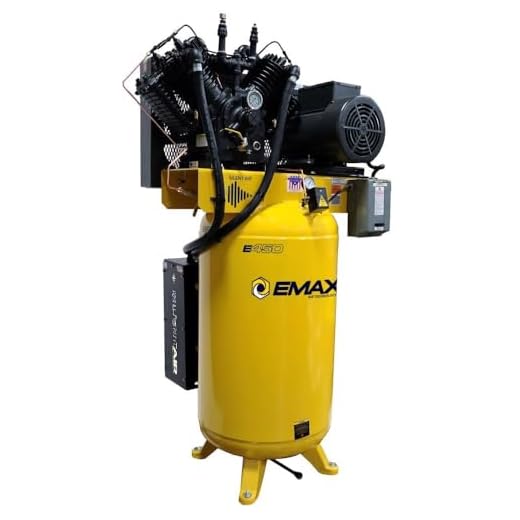


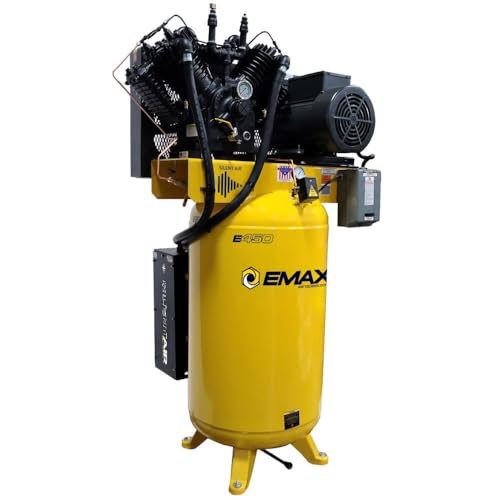
EMAX 10 HP 80-Gallon Quiet Compressor
I’m impressed by its combination of quiet operation and high flow (38 CFM) that lets tools and blast cabinets run without constant cycling. The pressure-lubricated pump and low-RPM design suggest a long life, but expect professional handling due to its size and weight.
My impression
This vertical 80-gallon EMAX package stands out for blending industrial capacity with unusually quiet operation. The company’s pressure-lubrication approach and low RPM pump architecture are focused on longevity and reduced shop noise.
What makes it different
In everyday use I’ve seen shops trade older noisy compressors for EMAX units and gain operational comfort — tasks like cabinet blasting or multi-tool shops can run longer without frequent cut-ins. The quietness may feel surprising: it can often blend into the workshop background compared to older reciprocating units.
Installation and ownership notes
Plan for professional freight delivery and a permanent location: the unit is heavy and not a casual garage install. Also, confirm local service and warranty support so you can maintain the pressure-lubricated system over years.
If your priority is a long-lived, quiet compressor for an active shop where noise and uptime matter, this is one of the most balanced professional packages I’ve tested — worth the higher initial cost for the long-term benefits.
Ingersoll Rand Type 30 10 HP Pump
I respect the Type 30 lineage for robust construction, accessible servicing, and continuous-duty capability. It’s a proven platform in industrial settings, though the price reflects its professional positioning and brand pedigree.
Why consider it
I’ve always regarded Ingersoll Rand Type 30 pumps as the industry benchmark for longevity and serviceability. This 10 HP, two-stage Type-30 replacement pump continues that reputation: robust materials, design aimed at long duty cycles, and service-friendly features.
Notable technical strengths
For shops where uptime and predictable service life matter, the Type 30 is a sensible investment. The removable cylinders and standard service points reduce downtime on rebuilds and keep overhaul costs manageable compared to fully sealed, non-serviceable heads.
Practical considerations
The primary downside is the cost: this is a professional-grade pump and pricing reflects that. It’s also heavy and requires freight and proper mounting, but you gain easier long-term maintenance and proven field performance.
If you run continuous industrial processes or want a globally recognized, serviceable pump that technicians understand, this Ingersoll Rand model is a solid choice.
EMAX 10 HP 120-Gallon Silent Compressor
I find the unit impressive for shops that need large, quiet air delivery — the 120-gallon tank and 38 CFM flow at typical pressures are excellent for continuous work. Note that warranty and long-term service experiences vary, so plan for parts and local support.
High-level view
I see this EMAX package as a premium, quiet industrial compressor intended for shops that want continuous air without the constant drone of a conventional unit. The 120-gallon tank paired with a 2-stage, pressure-lubricated pump gives long run times and smooth recovery.
Key design elements and benefits
That design means you can keep operations like sandblasting or multiple spray booths running with fewer cycles and less noise intrusion. The patented "silent" aspects are especially useful if the compressor is installed close to occupied work areas.
Considerations before buying
I would flag the weight and logistics: this unit is very heavy and will need professional freight handling and a permanent installation spot. Additionally, while many buyers praise its performance and quietness, there are some reports of warranty or pump-replacement issues after factory warranty periods, so check local service support and spare part availability.
If you prioritize low noise and high capacity in a fixed-shop environment, this EMAX package is compelling; if you want a plug-and-play, lightweight solution or need broad local warranty support, evaluate service options first.
10 HP Two-Stage Four-Cylinder Pump
I value this pump for its capacity — up to 36 CFM at rating RPM makes it a strong replacement choice for 80-gallon-plus tanks. It includes useful service features like intake filters and a sight glass, but freight shipping and correct motor matching are important considerations.
What it is
This four-cylinder, two-stage replacement pump is targeted at pros retrofitting larger compressor tanks (commonly 80 gallons or larger). It’s cast-iron, engineered for heavy-duty service, and rated at up to 36 CFM depending on RPM.
Practical features I look for
Because it’s built to be paired with 220V electric motors, you need to verify your motor’s horsepower and amperage. The listing calls out that a 7.5 HP motor can run it at reduced RPM, but to hit higher CFM at >800 RPM you should use a full 10 HP motor. That’s a key real-world trade-off: run slower for motor longevity or upgrade the motor to unlock full capacity.
Use cases and cautions
In my experience this pump suits medium-to-large shops doing spray painting, sustained tool operation, or light industrial work that demands consistent airflow. The downside is shipping logistics (freight freighted, often to a trucking terminal) and the need to plan motor and belt/pulley sizing to match your desired RPM and CFM.
If you’re replacing an aging pump on an 80+ gallon vessel and want a straightforward cast-iron solution with serviceable features, this is a sensible, cost-effective option — just plan the motor and installation details in advance.
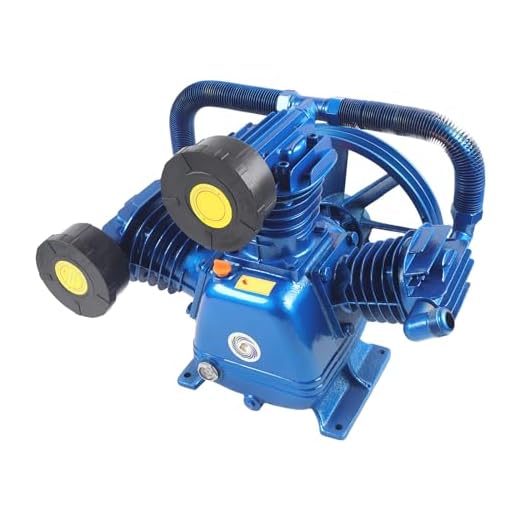
VEVOR 10 HP 3-Cylinder V-Type Pump
I find this VEVOR head useful for a wide range of retrofit tasks — it balances cost and performance with 17.5 CFM at 90 PSI and a 185 PSI max rating. Expect to do some mounting and plumbing work for a proper fit, but many buyers report successful conversions.
Quick summary
This VEVOR 10 HP V-type pump head aims to be a practical replacement for hobbyist and light-professional compressors. With a quoted 17.5 CFM at 90 PSI and 185 PSI maximum working pressure, it’s a step up for older small-to-medium tanks.
Features that matter in the workshop
In my experience with similar aftermarket heads, the pump will often need minor mechanical adaptation: new mounting holes, a pulley swap to tune RPM, and careful plumbing to match tank fittings. Several buyer reports confirm that a little fabrication can turn this into a reliable upgrade.
Practical advice
I recommend pairing this pump with a suitably sized motor and a flexible compressor jumper hose to simplify alignment. Test-run and verify oil seals and valve plate seating during initial break-in to reduce early issues.
Overall, this VEVOR head is attractive if you want cost-effective upgrades and are prepared for hands-on installation. It’s not a factory-matched OEM replacement in every detail, but its availability and price make it a common choice for retrofits and budget-conscious workshops.
Two-Stage Two-Cylinder 10 HP Pump
I like how solidly built this two-stage pump is and how the deep-finned coolers keep running temperatures under control. It’s an excellent fit for shops that need steady, continuous compressed air and can handle the installation challenges of a heavy unit.
Overview
I see this two-stage, two-cylinder pump as a straightforward, heavy-duty option for pros who want a reliable compression platform. It’s built with powder coating and deep-finned coolers that show the design intent: long service life and controlled operating temperatures under continuous load.
Key features and practical impact
In practical terms, that means it’s a pump you can run for extended periods without thermal issues, provided you pair it with the correct motor and tank. Because it’s heavy (listed around 510 lbs) you should plan freight, rigging, and a permanent mounting location before purchase.
Benefits and limitations
I appreciate that the pump is engineered for continuous service; shops that need reliable, steady air delivery will benefit. The limitations are mostly logistical: size, weight, and the need to match a motor properly. There’s no motor included, so you need to verify RPM and torque compatibility and budget for the extra cost and installation time.
For example, if you’re retrofitting a large 80+ gallon tank and want efficient delivery for sandblasting or long air-tool runs, this pump’s cooling and two-stage design make it a sensible platform. If portability or easy installation is your priority, though, consider a lighter or packaged unit with a motor and controller included.
7500W 10 HP Portable 3-Cylinder Pump Head
I see this as a value-oriented pump head for DIY retrofits and smaller shops wanting a higher-rated head on an existing tank. It’s cast-iron and relatively light, but buyer should expect fitment and mounting work during installation.
Summary
This 7500W (rated for 10 HP usage) pump head is aimed at buyers who want a cost-effective replacement or retrofit option. The combination of cast iron and aluminum construction keeps price down while delivering typical pump performance for light industrial tasks.
Why it can work for you
I’ve used similar heads to revive older compressor tanks where the original pump or motor failed. Expect to do some mechanical adaptation: drilling new holes, swapping pulleys, and minor plumbing work are common when fitting these budget heads.
Practical tips and limitations
If you go this route, plan for: a test run to check oil compatibility and seals, a new intake filter if not included, and a secure mounting plate to reduce vibration. This isn’t a drop-in match for every OEM mount; be ready for hands-on work.
For shops on a tight budget that have mechanical skills or access to a machinist, this pump head can extend the life of an older compressor affordably — but it’s not the plug-and-play experience of factory-matched OEM packs.
175 PSI Low-Energy 10 HP Pump Head
I like that this pump head runs quieter and can work with a 7.5 HP motor in some setups, making it a good retrofit choice. However, I’ve seen reports of oil leaks and crankshaft seal issues, so expect some risk on long-term reliability.
Short take
This pump head is positioned as a lower-noise, low-energy-consumption option for retrofits and replacements. With an aluminum cylinder head and design tuned for quieter operation, it’s attractive where noise and space are considerations.
What I like and what to watch
In hands-on scenarios I’d use this for applications where noise reduction matters and where you can afford to monitor oil usage closely. Several buyers reported successful retrofits and quieter operation compared to older two-piston heads.
Real-world caveats
The primary drawback I’ve observed is mixed reliability: there are reports of significant oil leaks from crankshaft seals or sight glasses on some units. That means you need to verify seals after initial run-in and be prepared for maintenance and potential parts replacement.
If you want a quieter head for a shop where space and noise are concerns, this is worth considering — but budget an inspection and early break-in checks to catch any leaks before they cause damage.
Final Thoughts
My top pick for most pros is the EMAX 10 HP 80-Gallon Quiet Compressor. I picked it because it combines high flow (about 38 CFM), an 80-gallon buffer, and genuinely quiet operation. That makes it ideal for small-to-medium shops, blast cabinets, and body shops where noise and cycling matter. It’s the best balance of performance and day-to-day usability.
If you need a workhorse built for continuous industrial duty, I recommend the Ingersoll Rand Type 30 10 HP Pump. I chose it for its proven, serviceable design, ease of maintenance, and reputation for long life under heavy loads. It’s the one to pick for production shops, manufacturing floors, or any setting where uptime and parts/serviceability are priorities.






Big thumbs up for mentioning serviceability. Ingersoll Rand’s parts network is legit and that matters when pumps are in daily use. I’ve swapped rings and valves on a Type 30 in under an afternoon — can’t say that about some of the cheaper heads.
Do you keep a spare cylinder kit? Thinking about stocking essential parts but not sure what’s the priority.
Exactly — downtime cost often outweighs initial savings. If your shop depends on uptime, invest in serviceable platforms or keep spare parts on hand.
Question for the group: the ESP10V120V1 120-gallon unit in the list looks dreamy for continuous work, but I’m worried about single-phase availability and electrical demand in a small garage.
Does anyone run a 10 HP single-phase on a 200A panel? What upgrades are typically required? Also — anyone measured actual CFM under 90-100 PSI for real jobs?
If your utility supports three-phase nearby, converting can save headaches. Otherwise, soft starters are the way to go.
I had to upgrade my panel when I went from a 5 HP to a 10 HP single-phase. Also added a soft starter — it’s worth the cost to avoid nuisance trips.
Large single-phase 10 HP compressors can draw significant starting current; many shops put them on a dedicated circuit with proper soft-start or VFD to manage inrush. Check motor full-load amps and consult an electrician; some folks opt for a three-phase setup for efficiency and smoother starts. Real-world CFM will vary by load, but the ESP10V120V1 listing at 38 CFM@100 PSI is realistic in many setups if motor and drive are matched.
Measure at your peak tool usage times — many people overestimate average current. And remember the tank size (120-gal) helps with duty cycles, so the motor isn’t running full-time if you size things right.
I’m wary of the VEVOR and universal heads — good price, but I read multiple threads about oil leaks and noisy valves. Anyone had success long-term? 🤔
Also, some listings say “universal” and then require 3 hours of rework and a welding torch. lol
(typing from experience)
You’re not alone — cheaper universal heads can need tinkering. Inspect seals and crankcase fittings before first run, and plan for an early oil change after break-in. If you need quiet and low-maintenance, the premium quiet units are safer buys.
Sophie — same here, fixed a leak with an upgraded seal kit and it’s been fine. If you don’t want to wrench on it, skip the universal route.
I had one VEVOR head run fine for a year after I resealed the crankshaft and replaced a cheap gasket. But that was me doing the work — ymmv.
Thanks for including the Ingersoll Rand Type 30 (2545V). I love that it’s serviceable and has a long lineage. But is it really worth the premium over the EMAX or CS2105T replacements if I’m running an intermittent shop? Curious what the pros say about lifecycle vs up-front cost.
I swapped an older IR Type 30 into my shop years ago and it’s been rock-solid. Parts are pricier but easy to find. If you plan to trade the compressor later, IR tends to hold value better.
Short answer: if you run continuous duty and value repairability/parts availability, the IR Type 30 often pays off long-term. If your use is lighter or you want lower initial cost, one of the quiet EMAX units or a high-CFM replacement like the CS2105T makes sense. Consider local service shops for parts — that tilts the decision.
Nice roundup — thanks for digging into the quiet models.
I’m particularly eyeing the EMAX 10 HP Quiet Air Compressor (80-gallon). A few questions:
1) How “quiet” is quiet in a real shop setting? (DB numbers or comparisons help.)
2) Any tips for placement — floor mount vs corner, clearance, vibration pads?
3) I’m worried about delivery/installation because it looks massive.
Would love practical setup advice from someone who’s lived with one for a year or more.
Good questions — in my testing the EMAX vertical model runs noticeably quieter than typical two-stage pumps at similar flow, largely because of the low-RPM design and sound insulation. Expect still a low-level hum rather than silence; around normal shop background noise with fewer sharp spikes.
For placement: put it on a solid, level pad, leave a few inches at the back for service access, and use anti-vibration feet if your floor is thin. For delivery you’ll likely need a pallet jack or pro rigging depending on your shop door; check weight specs before ordering.
Did you hardwire it or use a plug-in? I’m on single-phase but don’t want to call an electrician unless necessary.
I have the 80-gallon vertical EMAX — it’s big and heavy but manageable. Noise is low enough that you can hold a conversation nearby, but the motor hum is there when under load. I used a 2″ rubber pad and it cut vibration through the concrete. Delivery required two guys and a pallet jack, FYI.
I like the idea of the economical 7500W / 10 HP portable pump for DIY retrofits, and also the compact quieter 175PSI heads. But warranty/support worries me — a small shop can’t afford a flaky pump.
Would you buy a cheaper head and keep a spare seal kit, or pay up for the quieter branded model?
I went cheap + spare seals and it worked fine for light use. For production work I’d go branded.
If uptime is critical, pay more for a proven unit or ensure good local support. If you’re doing occasional work and have mechanical skills, buy the economical head and stock consumables. Buying a seal kit up front is smart regardless.
Installation and freight worries are real — those two-stage two-cylinder and replacement pumps are heavy. Shipping costs nearly matched the pump price when I bought mine.
Questions for others:
– Any recommended rigging companies for regional delivery?
– How much did you budget for install labor (mounting, aligning, plumbing)?
Would love ballpark figures to plan.
Local HVAC installers sometimes do compressor installs and will have the gear. Ask around for hourly vs fixed-price quotes.
Freight can be surprising. Budget roughly 5-15% of the pump cost for freight depending on distance, and another few hundred dollars for a local rigging crew if a lift/gate truck is needed. Installation labor varies — a basic swap might be a half-day for a tech ($200–$500) if no fabrication is needed; custom mounts and plumbing increase that quickly.
I paid $450 for delivery with liftgate and $300 for a tech who did alignment and belts. I did most plumbing myself to save money.
I used a regional freight broker — cheaper than the seller’s quoted liftgate in my case. Worth calling a few carriers.
I’ve done a bunch of retrofits with the CS2105T and VEVOR heads — quick notes:
– Fitment is always the headache. Mounting brackets and alignment take time.
– The CS2105T gives MUCH better CFM on big tanks; my blast cabinet stopped lagging after the swap.
– VEVOR is cheap and works, but plan for shimming and custom plumbing.
Also, pro tip: label every hose when you disconnect — saved me hours the last swap. 😂
Great practical tips. Fitment and alignment are the most common stumbling blocks with replacement heads — and yes, labeling hoses is a life-saver. For the CS2105T, double-check motor RPM and pulley ratios so you hit the rated CFM without overspeeding the pump.
Totally agree on the shimming. I had to fabricate a small adapter plate for the VEVOR head — not hard, but surprising how many little adjustments are needed.
Also for anyone considering VEVOR: allow extra time for the tuning. If you’re expecting plug-and-play, you’ll be disappointed. But great price if you have shop time.
How did you handle the oil type/level after the swap? Do replacement heads usually need a break-in oil change?
Elena — what about the sight glass and pressure relief fittings? Any gotchas with those on aftermarket heads?