


Which mag drill will actually punch through your to‑do list — and not your patience?
Big holes, no drama. I’ve been on jobs where a mag drill either saves the day or makes me hunt for workarounds. I want tools that are predictable, tough, and easy to use.
I tested and used these ten machines and picked the ones I reach for most. I’ll tell you which ones work best for heavy plate, tight setups, and mobile jobs — without the fluff.
Top Picks
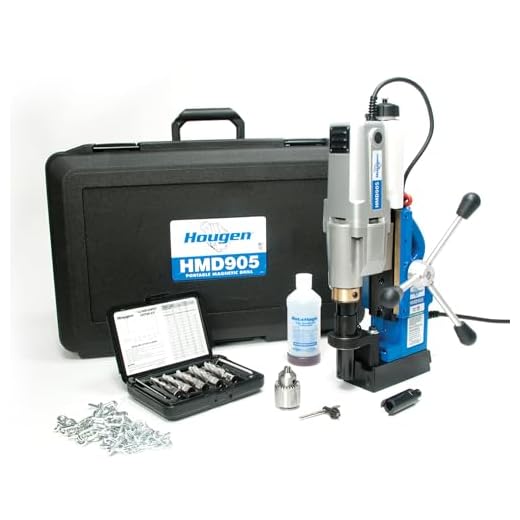

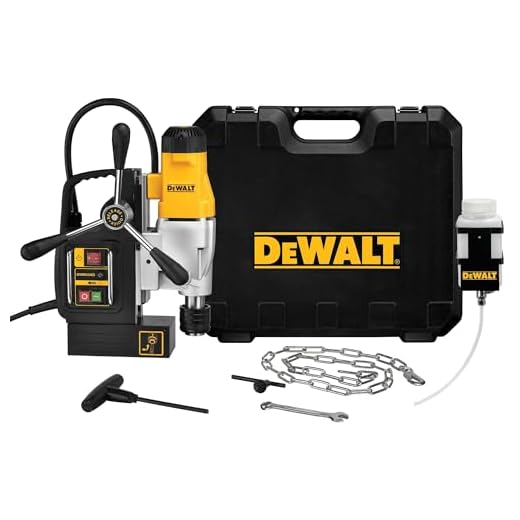


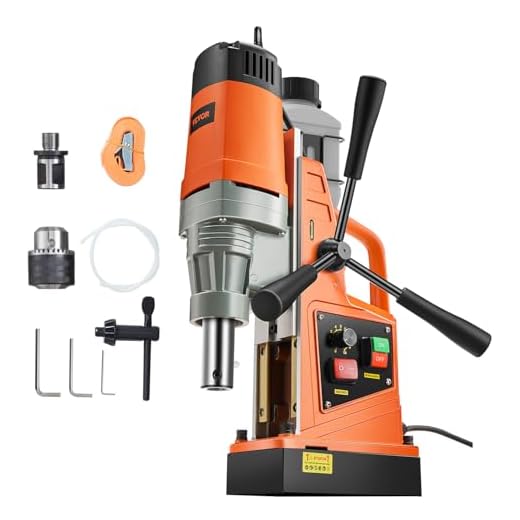

Hougen HMD905 Two-Speed Mag Drill
I reach for this when I need reliable, high-torque performance for thick steel. The two-speed gearbox and robust magnet make repetitive heavy drilling predictable and efficient.
Overview
I use this Hougen when a job calls for industrial-strength drilling and repeatable accuracy. The HMD905 is built around a high-torque motor and a two-speed gearbox (roughly 250 & 450 RPM) which helps me match speed to cutter size and material thickness. It's the kind of mag drill you lug out when the work is demanding and downtime isn’t an option.
Key features I rely on
Benefits and practical use
I like that the HMD905 balances power with usability: the pilot light helps in dim environments and the long travel gives me room for larger cutters. On everything from thick flanges to heavy plate, the feed feels smooth and the motor doesn’t bog easily. The included accessories let me get to work faster — I’ve used it with both annular cutters and standard twist drills via the chuck adapter.
Limitations and tips
This is a heavy, professional unit (about 56 lbs) so it’s not ideal for extended overhead work unless you rig a support. Also, the price reflects its industrial pedigree — excellent for frequent users, overkill for occasional hobbyists. My tip: keep a small set of replacement carbon brushes and carry the coolant to extend cutter life and performance.
Milwaukee 14-Inch Magnetic Drill Press
I pick this when I need a compact machine that still packs punch for daily fabrication work. Its magnet and travel offer confidence when drilling thicker material in tight setups.
Overview
Milwaukee’s mag drill in this size is one I bring out when I need speed and portability together. It punches holes up to roughly 1-5/8" through plate and runs at higher RPMs than many competitors, which accelerates cutter life on thinner materials.
Notable specs I use daily
Real-world performance and benefits
I’ve used it to punch holes through stacked angle and plate; the magnet locks solid and the motor cuts cleanly without excessive chatter. Its size makes it easier to fit into a cramped jig or lift for overhead work compared to some heavier professional units. When speed matters — like repetitive, small-diameter holes — that higher RPM is a real advantage.
Limitations to consider
The model uses a permanent magnet in some versions, so you won’t get the on/off flexibility of an electromagnet in certain setups. Also, accessory bundles vary — if you want coolant or a full cutter kit, double-check the package contents before buying.
DEWALT DWE1622K 2-Inch Mag Drill
I recommend this for tradespeople who want power and convenience without the industrial price tag. The quick-change features and robust magnet make it easy to use across varied applications.
Overview
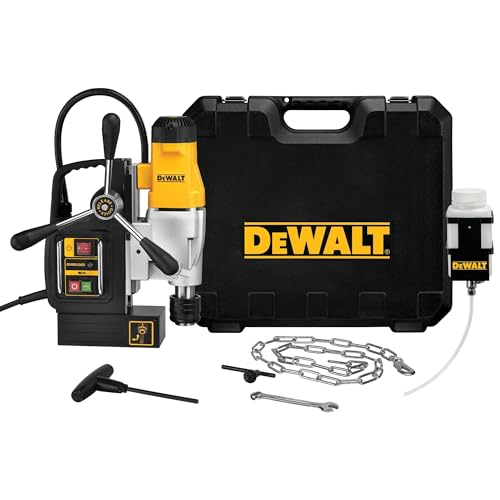
This DEWALT is my go-to when I need a reliable, jobsite-friendly mag drill that balances features and price. The 10-amp motor and two-speed setup let me switch between cutter sizes and materials without fuss. Overload protection gives an extra layer of confidence during heavy-use periods.
What stands out
How I use it and why it works
I appreciate the quick-change chuck because it lets me use normal twist drills or Weldon-shank annular cutters without specialized tooling. The magnet holds well even when I need to work at angles, and the motor height adjustment broadens accessory compatibility. For a sub-$1,000 unit, it gives professional results on structural steel, flanges, and field repairs.
Practical caveats
It’s not a heavy industrial machine — you’ll get a few thousandths of runout, which is normal in portable mag drills. The coolant bottle design can be awkward when empty, so I often mount it on a small bracket or use an auxiliary pump for consistent lubrication. Overall, a solid, versatile choice for busy shops and site work.
Makita HB350 High-Speed Mag Drill
I reach for this when I need high-speed cutting in constrained spaces or for overhead tasks. The high RPM and refined build make it feel like a pro tool in a lighter package.
Overview
The Makita HB350 is the compact, high-speed mag drill I pick when portability matters. It combines a 10A motor that runs up to 850 RPM with a lighter chassis so I can comfortably maneuver in elevated or constrained spaces. The design feels mature — built for pros who need speed and portability.
Key attributes I value
Usage scenarios and benefits
I use this for jobs where access is tight — ductwork, small structural brackets, and overhead weld prep. The higher RPM reduces time per hole and often yields cleaner chip evacuation with the right coolant. The included guard and strap are thoughtful for safety on scaffolds or lifts.
Considerations
If you need to bore large 2" holes regularly, a larger mag drill would be a better match. But for electricians, HVAC techs, or fabricators doing lots of smaller holes in awkward positions, this is an excellent, reliable choice.
DEWALT 20V MAX Cordless Mag Drill (Bare)
I like this for jobs where cord access or generators aren’t convenient; battery power adds flexibility on site. Battery runtime and torque are the trade-offs versus corded machines.
Overview
This 20V MAX cordless mag drill is for people who value mobility over nonstop duty cycles. When I need to drill on scaffolding, in remote locations, or inside tight assemblies where power cords are a nuisance, a battery-powered mag drill makes sense. It trades sustained continuous torque for freedom of movement.
Where it shines
Practical advice from use
I use a cordless mag drill for site repairs and quick retrofit holes where bringing a generator would be overkill. To make it work well, I keep spare high-capacity batteries hot, and plan for slower cycle times on large-diameter holes. For lighter structural work or limited runs it’s fantastic.
Trade-offs to weigh
If you’re doing long production runs of large annular cutters, the cordless option can become a bottleneck unless you have multiple batteries and a charging rotation. Also check whether the package includes the chuck or arbor you need — many listings are bare-tool only.
Evolution EVOMAG42 Magnetic Drilling System
I view this as a sensible compromise between price and capability — it drills reliably for light to moderate professional use. Customer service and warranty support add to its appeal.
Overview
This EVOMAG42 is the tool I suggest to someone who wants functional mag-drill capability without paying for an industrial-grade machine. It’s designed to handle up to 1-5/8" diameter through 2" thick steel — sufficient for many truck frame, fabrication, and repair tasks.
Key practical features
How I use it and what to expect
It makes repetitive drilling tolerable, and the integrated coolant is a welcome convenience. For someone drilling a few dozen holes per project (like truck frames or brackets) it’s a sensible choice. Evolution’s customer service also stands out — they handled a warranty repair quickly when I needed help.
Limitations and user tips
If you plan heavy daily production, this unit will likely show wear sooner than pro-grade drills. I recommend protecting exposed cords and keeping a maintenance kit (spare brushes, set screws) on hand. For occasional to moderate use, it’s a cost-effective and practical machine.
VEVOR 1300W 1.57-Inch Mag Drill Set
I rely on this when I need affordable, straightforward drilling for medium-duty projects. The included bit set and coolant features make setup quick for a wide range of hole sizes.
Overview
This VEVOR 1300W kit is one of those packages I recommend to people who want a complete, budget-friendly drilling setup out of the box. The unit’s 1300W motor and 810 RPM give respectable cutting speed for small to medium holes, and the 11 coring bits cover common sizes you’d need for fabrications or shop repairs.
What’s included and why it matters
Real-world usage notes
I used a similar unit to drill dozens of holes in stair stringers and light structural components; with coolant it moved quickly and saved my wrists compared to handheld drilling. The magnet held well on narrow flanges when I clamped carefully, and the included bits are a convenient starter set.
Practical limitations and tips
It’s not an industrial workhorse — the drive is simpler and you’ll want to pay attention to coolant flow (some users bypass the stock tubing for a pump gun). For hobbyists and semi-professional fabricators it’s a cost-effective way to add mag drilling capability. My tip: always test cutters and coolant on scrap before a production run to dial in feed and speed.
ZELCAN 1550W Stepless Speed Mag Drill
I appreciate its strong magnetic hold and the stepless speed control for dialing in cuts. It’s a solid low-cost workhorse, though some safety and ergonomic details could be improved.
Overview
ZELCAN’s 1550W mag drill is a heavy-hitting option for workshops that need reliable drilling without a premium price. The unit handles 2" diameter coring and offers stepless speed control, which I find helpful when fine-tuning cutting speed for different materials.
Features I use most
Real-world impressions
I’ve used it in a steel shop where it handled back-to-back holes in 5/8" plate without blinking. The magnet is reassuringly strong and the coolant delivery is functional. For bridge-offs, field repairs, and flange work it’s more than capable.
Safety and usability notes
A recurring practical note: in some examples the motor keeps spinning briefly after the magnet releases — that’s something to watch for around sparks or in tight spaces. Also, keep an eye on set screws and do periodic torque checks to prevent loosening during repeated use.
VEVOR 1550W 2-Inch Mag Drill
I find this drill surprising for its price — plenty of torque and a strong magnet. It’s a good option for occasional heavy work, though finish and long-term reliability can vary.
Overview
This VEVOR model is the pick when budget and raw power are priorities. Its 1550W copper motor and a 13000N-class electromagnet give you the brute force needed to handle 2" coring tasks without breaking the bank. For the money, it packs a generous feature set.
What I like about it
Who this is best for
I use it for weekend fabrication, small shop jobs, or when I need a backup mag drill on a site. It handles most typical annular cutters and twist drills well, and the coolant system helps prolong cutter life. If you’re not running it eight hours a day, it’s an attractive option.
Caveats and real-world advice
Expect some variability in fit-and-finish compared with premium brands. I recommend keeping spare brushes, checking electrical connections, and using cutting fluid liberally to keep cutters sharp. If you need an industrial-duty machine for continuous daily use, consider stepping up to a branded pro unit.
VEVOR 1450W Portable Mag Drill Bundle
I like this for its included bits and variable speed control — great value for someone getting started. Expect to do minor tweaks and checks before heavy use.
Overview
This VEVOR bundle is aimed at hobbyists or small shops that want a ready-to-go mag drill at a low cost. With a 1450W motor, variable speeds up to 800 RPM, and a set of coring bits included, it gets you cutting without hunting for accessories.
Package highlights
Practical usage and benefits
I’ve used similar packages for retrofit jobs and occasional fabrication, and the convenience of included bits is a real time-saver. The variable speed control helps when switching between cutter sizes, and the reversing function can free a stuck cutter.
Known limitations and tips
Some buyers report initial electrical connection issues or oversized adapters; expect to verify fit and secure connections before the first job. I recommend setting aside time for a bench test and keeping a small toolbox for quick on-site fixes.
Final Thoughts
My top pick for heavy steel and repetitive drilling is the Hougen HMD905 Two-Speed Mag Drill. I trust it when I need high torque and a robust magnet for thick plate work. The two-speed gearbox and rock-solid hold make it the go-to in the shop for structural steel, welding prep, and long runs of holes.
If I need a compact, jobsite-friendly powerhouse, I reach for the Milwaukee 14-Inch Magnetic Drill Press. It gives surprising bite in tight setups and travels well between sites. Choose the Milwaukee when you’re mobile, working in confined spaces, or tackling varied field fabrication tasks.





Thanks for the roundup — great list.
I’ve used the Hougen HMD905 for a few months in our shop and can confirm it’s a torquey beast. Two-speed gearbox really helps when moving from thin plate to a 1/2″ core.
A couple of tips from my experience:
– Use the coolant bottle religiously for big cuts.
– Keep the magnet faces clean; even small scale ruins the hold.
Saved me on a couple of awkward jobs where a handheld just wouldn’t cut it.
Thanks for sharing those practical tips, Paul — especially the magnet-face reminder. A lot of users underestimate how much debris can affect hold.
Totally agree on the coolant — makes a huge difference on cutter life. Did you end up swapping the chuck adapter for anything else?
Lena — I kept the adapter that came with it. For larger core bits I use a Rotabroach arbor and it’s been fine so far.
Curious about the 20V MAX FVA battery option — anyone tried it on a real site with limited access? I like the idea of cordless but worried about runtime and torque drop when pushing through thicker plate. 🤔
Good question. My take: the 20V MAX is great for portability and light-to-medium work (maintenance, small fabrications). For continuous heavy plate drilling you’ll want a corded unit — battery packs struggle with sustained high torque and may throttle.
I used the 20V on a couple of scaffold jobs — saved setup time but had to bring spare batteries. Not ideal for back-to-back large holes, but perfect for quick on-site fixes.
I bought the Evolution EVOMAG42 as a budget-minded option for our garage shop. So far it’s fine but I did need to contact customer service about a defective switch — they were responsive and replaced it. Warranty/service made the buy less stressful.
Good to know they stood behind it. Did you have to pay shipping or any fees for the replacement?
Thanks for the service report, Carlos — that’s an important data point. Value models often hinge on decent support.
I’m mostly doing overhead structural work and the Makita HB350 caught my eye for high RPM and portability. A few questions:
1) How is the balance when used overhead for long periods?
2) Any issues with vibration transmitting to your arms?
3) Does the high RPM make chip evacuation worse on thicker steel?
Appreciate any real-world feedback — I’m trying to avoid a heavy clunky mag drill.
Also consider a hoist or a simple support strap for really long sessions — it reduces fatigue and improves control.
Used the Makita for a weekend job in an overhead position. Balance was fine for ~30–45 min stretches, but I wore vibration-damping gloves for comfort. Chip evacuation depends a lot on the cutter and coolant — use a good coolant flow.
One more tip: use smaller cutters when possible and step up cutter sizes. Less load = less vibration.
Thanks — the strap idea is smart. I’ll try to demo one first to see how it handles the weight vs a full corded unit.
Good questions, Sophie. The Makita HB350 is lighter and better balanced for overhead than full-size units, but you will feel vibration over extended use. High RPM helps finish but be cautious on thicker material — slower RPM with more torque can sometimes be better for large core bits.
VEVOR kits: the price makes me suspicious, but hey, sometimes you just want to buy a tool and not cry later. 😂
Has anyone forced one to do real production work? My gut says buy DeWALT for reliability, VEVOR for hobby projects.
Exactly — and keep an eye on safety features. Budget units sometimes skimp on guards or switches that are standard on premium models.
Good to hear the reality — sounds like if you know basics you can get away with it. Less crying, more tuning. 👍
I ran a VEVOR on small fabrication runs for a startup shop. It held up for months but needed some tuning (belt tension, greasing). Not a DeWALT-level out-of-the-box feel, but solid for the price.
You’re not wrong — VEVOR and similar budget brands are often great for hobbyists or occasional use. For daily, high-reliability work I’d recommend the DEWALT or Hougen from the list.
Short and sweet: if you want something jobsite-proof, the DEWALT DWE1622K is my pick. Quick-change features and robust magnet — zero drama.
DEWALT does strike a balance between portability and industrial features. Thanks for the vote of confidence, Rachel.
I’ve used that DeWALT too — impressive for the size. Only gripe is the weight for long ladder work, but otherwise great.
Great roundup. Quick comparison question: for tight setups where travel is limited, would you go with the compact “Magnetic Drill Press Kit, 14 in. H” or the Hougen HMD905? I need something that can reach through an awkward jig and still pull reliably.
Also — any tricks to improve magnet adhesion on painted surfaces? I usually scrape, but wondering if there’s a better hack. ty!
For tight travel I’d pick the 14 in. compact kit if it’s got enough magnet strength for your plate thickness — its travel and compact footprint help in constrained jigs. For magnet adhesion on painted surfaces, scraping to bare metal is best. Some users use thin sacrificial steel plates with a tapped hole to improve hold; magnets bite much better on raw steel.
Jonah — I keep a small scraper and a wire brush in my kit. If paint is thin, a light grind works faster. Sacrificial plates are a good call for repeat setups.
One caution: never rely solely on the magnet for overhead work — always use mechanical backups (safety chains/clamps) when drilling above you.