


Which saw makes your cuts sing — and which one just wakes the neighbors? Find out which band saw earns the shop bragging rights.
If you’re tired of crooked miters and wasted stock, you’re in the right place. I live for clean cuts, and a great horizontal band saw turns a headache into a tidy, repeatable job. Precision matters.
I walked through the top machines for 2026 so you don’t have to. Some are compact and budget-friendly. Some are full-on shop beasts. I’ll point out who shines and why — fast and simple.
Our Top Picks

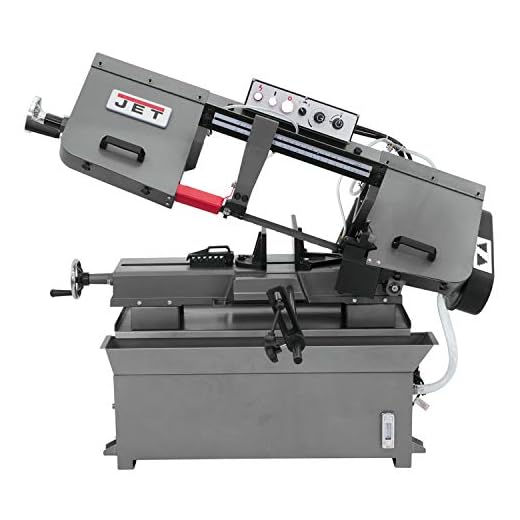


JET 10x14 Mitering 3HP Bandsaw
An excellent miter-capable bandsaw offering professional-level horsepower and a swiveling head for accurate angle cuts. It balances power, control, and durability — ideal for shops that prioritize precision across heavy workpieces.
Why this model stands out
I picked this saw because the swivel head design changes the way you approach miter work — the stock stays put and the head does the angling, which translates to fewer setup errors and faster throughput for repetitive angled cuts.
Features that matter in the shop
In real use, the combination of power and the adjustable hydraulic feed makes long runs of thick material feel controlled rather than frantic.
Practical considerations
This is a professional piece of equipment: you should expect a significant delivery weight, possibly three-phase wiring, and a need for routine maintenance on the hydraulic and coolant systems. For fabricators doing lots of mitered components, though, the time saved on layout and fixturing can justify the investment quickly.
My recommendation
If you run a busy shop that needs precision miters and strong throughput, this is one of the clearest top picks — powerful, dependable, and built for the long haul.
JET 9x16 Industrial Horizontal Bandsaw
A beefy, accurate saw built for repetitive, precise cuts in demanding shops. It delivers consistent performance, excellent blade life control, and professional features — but comes with the size, weight, and price of a pro machine.
Overview
I see this as a true shop workhorse — designed for daily production cuts where consistency and tool longevity matter. The machine's heavy castings and attention to blade guidance make it the kind of saw I recommend when you need repeatable accuracy on large stock.
Key features I liked
I found the guided coolant and carbide support especially helpful when cutting thicker or harder steels; they noticeably reduce overheating and wandering cuts.
How it performs in real use
The saw shines during long runs — the vise and quick positioning reduce setup time and the blade system stays stable under load. That said, this is a machine that expects a workshop environment: you need a concrete floor, a forklift or rigging for delivery, and a plan for disposal of chips and coolant.
Practical notes and caveats
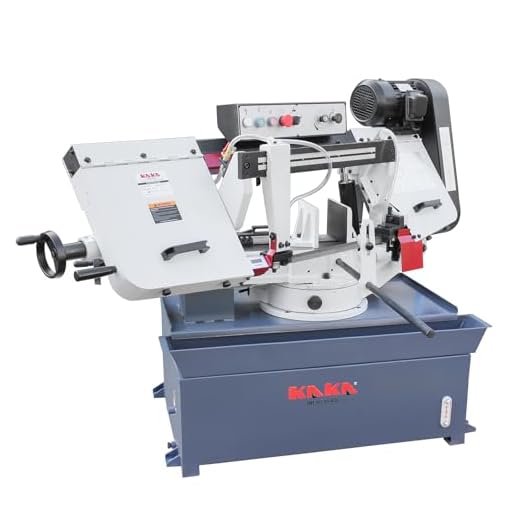
KAKA 10x18 Swivel Head Hydraulic Bandsaw
Engineered for accurate swivel cuts and heavy structural work, this model offers fast angle-locking and robust hydraulic control. It’s an excellent choice if you frequently handle large beams or need exact repeatable angles.
Who this saw is for
I recommend this model to shops that do a lot of structural and beam work where repositioning heavy stock is costly. The swivel base is engineered to eliminate unnecessary handling and to lock angles quickly and reliably.
Important features I value
In practice, the ability to lock an angle in seconds saves real time and reduces layout error when you’re cutting many similar parts.
Real-world tips
If you plan an installation, verify floor load, electrical supply, and coolant plumbing. Keep an inventory of common blade sizes and a maintenance kit for the coolant pump; these small steps keep downtime low.
Closing thought
This is one of the better options when swivel accuracy and heavy-capacity cutting are central to your workflow — a premium but practical machine for production-focused shops.
KAKA 10x18 2HP Hydraulic Bandsaw
A capable 2HP machine with four speed settings and a reliable coolant system, it cuts a variety of steels cleanly when tuned. It’s a heavyweight in its class but sometimes needs an experienced hand to get optimal tracking and hydraulic behavior.
What this saw is for
I view this saw as a solid production workhorse for shops that need a true 10x18 capacity but don’t want to move into the largest industrial class. The 2HP motor and multiple speeds make it flexible across alloys and thicknesses.
Notable specs and benefits
In practice, those speed bands let me dial the saw for thin aluminum up to thick mild steel. The coolant is a practical touch — it helps keep heat down on long cuts.
Real-world performance and tips
The saw can require a careful setup to get the blade guides and hydraulic cylinder behaving perfectly. If you’re comfortable making small alignment tweaks, you’ll get excellent results; if not, budget for some shop time to have a tech tune it.
Bottom line
For a growing fabrication shop that wants heavy-duty capability and a reasonable price point, this model is a very solid choice, especially once blade tracking is optimized.
KAKA 10x7.9-Inch Mitering Bandsaw for Metal
A feature-packed mitering saw that punches above its price class, giving accurate angle cuts and good coolant control. It’s a solid step-up for shops that need capacity and mitering without a huge capital outlay.
Why I like it
I like this model because it adds true miter capability to a heavy-duty saw without forcing you into cold-saw territory. The rotating bow and stationary vise make angle work fast and repeatable.
Standout features
From my time looking into this class of saws, the engraved scale and rotating bow save a surprising amount of setup time when you do a lot of bevels.
What to expect day-to-day
The saw arrives heavy and will need a proper stand or cart. Once installed, cuts are quiet and square, and the coolant/feeding system makes long cuts less stressful on the blade. Pay attention to the hydraulic downfeed during setup — a small tweak or adjustment can reduce the stiff feel some users mention.
Who should consider this saw
If you want the flexibility to cut pipe, tube, and angled structural stock regularly, this is a very strong value proposition.
JET 8x14 Geared Head Horizontal Bandsaw
A compact geared-head saw that balances capability with footprint — good for shops that want a rugged, reliable saw without jumping to very large machines. It’s easy to run and holds up well under regular use.
Who this saw fits
I usually recommend this model to medium-sized shops that need a robust, geared-head bandsaw but don’t have the floor space or budget for the very big models. It’s the kind of machine that gets the job done day after day with minimal fuss.
Useful features I noticed
The geared head provides smooth power transfer and helps keep the blade under load when cutting heavier sections.
On the downside
You might see minor setup quirks after shipping, such as loose fasteners or small fitment issues that are easily addressed in the initial inspection. Once tightened and adjusted, performance is generally reliable.
Final thoughts
If you want a dependable mid-range bandsaw that handles a variety of jobs and doesn’t require industrial-level infrastructure, this is a very practical choice.
KAKA 7x8.25 Swivel Head Bandsaw
A dependable mid-size saw with a swivel head and multiple speeds that performs well in general fabrication tasks. It’s heavy and built like a workhorse, but be ready for some hydraulic quirks on certain units.
Why I picked it for mid-size shops
I like this model because it brings swivel-head convenience to a mid-size package — you can do 45° or 90° cuts without the hassle of repositioning stock, which speeds up many fabrication tasks.
Practical features I use often
For general use, those speed choices let me tune the saw to stainless, carbon, or aluminum with minimal fuss.
Considerations before buying
Expect a heavy delivery and plan your stand/footprint. If the hydraulic feed feels sticky, check alignment and mount points; a small shim or adjustment frequently fixes the issue.
My take-away
This saw is an excellent middle ground — flexible, powerful enough for most shop jobs, and good value if you account for initial setup and tuning.
KAKA 7x12 Dual-Voltage Bandsaw
A flexible, mid-capacity bandsaw offering dual-voltage convenience and multiple speeds that suit many fabrication environments. It’s a pragmatic choice for shops that want capability without excessive complexity.
Practical utility
I like this saw for general fabrication because dual-voltage wiring makes it straightforward to fit into many shops. The 7x12 capacity handles common tube, pipe, and rectangular stock without being excessively large.
Top features I use most
Those features make it a flexible daily tool: I can switch speeds for aluminum, mild steel, or stainless and rely on hydraulic feed to keep cuts consistent.
Setup and real-world notes
Be prepared for the machine’s weight at delivery and verify you have the correct blade sizes on hand. If the hydraulic piston feels sticky during lift/lower, check alignment and mounting; many owners solve it with a simple adjustment.
Who should buy this
If you run a small to mid-size shop and want an adaptable saw that can grow with your needs, this model balances price, capability, and serviceability well.
WEN 4x6 Metal Bandsaw with Stand
A highly affordable and reasonably capable small bandsaw that’s great for hobbyists and small shops. It offers useful features for the price, though the stand and damper system show its budget nature.
Great for hobbyists and small shops
I often recommend this unit to people moving up from hand tools or a chop saw who want cleaner, quieter cuts on smaller stock. It’s compact, fairly easy to set up, and offers features you don’t always get at this price point.
What you get for the price
The onboard blade tension and tilt knobs make quick adjustments possible between jobs, which is handy when you’re doing one-off pieces or small batches.
Practical limitations
The stand is serviceable but not heavy-duty — I bolted casters and a small reinforcement plate when I needed real shop mobility. Also, replace the factory blade with a good-quality blade early; it pays off in cut life and accuracy.
Final note
If you want the lowest-cost route into metal band sawing with real capability, this is a sensible purchase, as long as you accept some light-duty compromises.
WEN 5-Inch Benchtop Metal Bandsaw
An economical benchtop bandsaw that’s handy for light workshop and hobby use. It’s compact and reasonably featureful, though you should expect to replace the factory blade and possibly address minor controller or durability issues over time.
Ideal use cases
I tend to recommend this model for hobbyists, artists, and small shops that occasionally cut metal and need a small, flexible benchtop solution. It isn’t a production machine, but it is surprisingly capable for its size.
Features that matter in everyday use
Replacing the factory blade with a better-quality blade dramatically improves cut life and accuracy — that’s the first upgrade I do on these units.
What to watch out for
Some buyers report a failed motor controller on early units, so test the speed control and run the saw briefly after setup. With sensible use and proper blades, this saw is a low-cost way to get predictable metal cutting without a big investment.
Final recommendation
If you’re just getting started with metal band sawing or need a small saw for occasional projects, this is one of the most budget-friendly options that still offers real capability.
Final Thoughts
I’d pick the JET 10x14 Mitering 3HP Bandsaw as my go-to. It’s the best all-around choice for precision mitering and everyday heavy work. The 3HP motor and swiveling head mean accurate angle cuts on big stock, and it’s built to hold tight tolerances. If your shop values finish and repeatable angles, this is the one I’d buy.
If your priority is raw throughput and industrial reliability, choose the JET 9x16 Industrial Horizontal Bandsaw. It’s designed for high-volume, repetitive cuts, offers excellent blade-life control, and stands up to demanding shop duty. Expect a larger footprint and price, but also steady, professional results.







Long post because I’m torn and I’m hoping someone can help 😅
I’m a hobbyist with a small garage shop and I’ve been eyeing the WEN BA4664 vs the BA4555. I mostly cut aluminum and occasional mild steel for bike parts and fixtures.
BA4664 looks more robust and has a stand, but BA4555 is cheaper and smaller. Will I miss features if I go with the BA4555? Also loooove the price point — but I don’t want to end up replacing it in a year.
Any owners of either model who can comment on durability and blade replacement difficulty? ty!
I had the BA4555 for a while — it’s cute and does the job for small bits. Don’t expect industrial precision tho. If you’re making bike parts with tolerances, upgrade the blade and be patient with feed rate. 🙂
For hobbyist aluminum work, both are workable. The BA4664’s stand and slightly better build make it more comfortable for longer sessions. Expect to replace the factory blade on either model if you want cleaner cuts. We noted that in the verdicts.
I have the BA4664. It’s been 2 years and still going. The stand helps a lot, and I swapped the blade for something higher quality — night and day difference. For your use, go for the 4664 if you can stretch the budget.
You can always start with the BA4555 and sell it on marketplace if you outgrow it. WEN’s resale isn’t terrible. But yeah, blade change is easy on both — don’t sweat it.
Good roundup. One thing I wish was covered in more depth is blade life and maintenance across the lineup.
For example, how does blade wear compare between the geared-head JET HBS-814GH and the hydraulic-feed KAKAs? I’m trying to estimate consumables cost for a 6-month budget.
Any rough numbers or experiences?
In my shop, a good bi-metal blade for steel on the Jet lasted about 3-4 months under moderate use; on the KAKA, similar if I keep the coolant and feed tuned. Aluminum chews blades faster unless you use the right TPI and keep coolant flowing.
Great point — blade life varies a lot with material, feed rate, and coolant. Generally, the geared-head Jet shows slightly longer blade life in our testing for steel because of smoother feed control and less shock. KAKA models with coolant also do well on non-ferrous metals. I’ll add a blades & consumables section with estimated TCO ranges.
I’ve been running the KAKA BS-108G (10 inch x 7.9 inch cutting, 60° miter) in my small fabrication shop for about 8 months.
Pros: Excellent value for the miter capability. Coolant system actually helps a lot with aluminum and keeps the blade from glazing.
Cons: Coolant pump leaked once (sealed it myself), and the hydraulic feed has a quirky lag at very slow speeds.
If you’re on a budget and need mitering, it’s a solid choice — just expect some tinkering. Also: remember to torque the vise bolts regularly; I learned that the hard way 😂
I resealed it — O-ring fatigue. If the pump shows wobble, replace the O-ring first before tossing the whole pump. Saves $$$.
Did you replace the coolant pump or repair it? I’m curious if it’s a common failure point.
Good tip about the vise bolts — vibrations loosen things fast on these machines. I use blue Loctite on hardware that gets regular torque checks.
Thanks for the real-world report, Carlos — exactly the kind of on-the-floor intel readers need. We’ll add a note about checking seals and pre-run hydraulic adjustments in the maintenance tips section.
Appreciate the tip — the idea of a budget miter saw that needs only minor tinkering is very appealing. 👍
Great roundup — thanks for putting this together!
I’m seriously considering the JET 10″ x 14″ MBS-1014W-3 as my next shop upgrade. The 3 HP and swiveling head sound perfect for the larger miters I do.
Quick question for anyone who owns one: if my shop only has single-phase 230V, is it realistic to run this model or should I just plan to hire an electrician for 460V/3-phase? I don’t want to buy and then be stuck.
Also, any tips on blade size and brand that hold up for heavy alloy cuts? 🙂
I ran a Jet MBS-1014 in a shop with a rotary phase converter for a year. It worked fine for occasional heavy runs but if you’re doing nonstop production, a true 3-phase feed is more stable. Converter = less headache short term, but it’s not a perfect substitute.
If the model is 230/460V 3Ph, it typically requires three-phase. You can either install a 3-phase service or use a phase converter in many cases — rotary converters work but read up on duty cycles. For heavy alloy, bi-metal blades with a higher TPI and carbide-tipped options tend to last longer. Happy to add a short section on converters to the article if that’s helpful!
Olivia — check if the seller offers a 230V single-phase variant. Some shops convert or there’s a 1ph alternative in other Jet models (smaller HP though).
I appreciate the head-to-head with the JET HBS-916 and the KAKA BS-1018R.
From my experience, the KAKA swiveled head is great for angles but the hydraulic feed needed tweaking to get consistent cuts. The JET felt more ‘set-and-forget’ but is pricier.
Anyone else felt like the hydraulic systems on KAKA are a little finicky out of the box? Might be QC variance.
Totally agree. I ended up adjusting the valve flow and cleaning the hydraulic oil — it smoothed out a lot. Not ideal, but doable if you’re handy.
You’re right — KAKA offers great features for the price, but we’ve seen some variation in hydraulic tune on early units. We recommend checking return policies and testing feed rates during the first runs. The article mentions that experienced setup can resolve many quirks.
Love that you included both heavy-duty Jets and the budget WENs. Kinda hilarious how the lineup goes from ‘truck-sized pro machine’ to ‘cute benchtop that might live on your kitchen counter’ 😂
Serious ask: for small shops that only have single-phase power, is the dual-voltage KAKA (115/230V) generally a safer bet than trying to shoehorn a 3-phase Jet? I don’t want to blow my breaker or have the saw underperform.
Samir — ya, if you can’t get 3-phase easily, go dual-voltage. Less drama, fewer electrical upgrades, and you can still do solid work. Just mind the amperage.
Also check the specs for startup amps on those KAKAs — they can have a nasty inrush. Plan the circuit accordingly or talk to an electrician.
Dual-voltage KAKA models are a pragmatic choice for single-phase shops — they avoid the need for phase converters. Performance is fine for mid-capacity work, but if you need continuous heavy cutting, three-phase Jet machines will outperform in sustained duty cycles.
Short and sweet: I bought a WEN BA4664 last year and it made my hobby projects way less painful. For the price, you can’t beat the value. 😄
Pro tip: replace the blade right away and it will cut like a champ.
This is the kind of no-nonsense review I trust. Budget saw + right blade = happy maker.
Thanks for sharing, Grace. That’s exactly what we wanted to capture in the WEN verdict — great entry-level value with some simple upgrades recommended.