


Which one hums, which one roars—and which one I’d actually bring into my quiet paint booth?
Noise is the shop’s invisible boss. An air compressor that screams will steal focus, damage ears, and make every job take longer.
Top Picks




NorthStar Quiet Armor 7.5HP 80-Gallon Compressor
I rate this highly for shops that need industrial durability but also care about noise — Quiet Armor tech drops perceived noise significantly. It pairs a long-life motor and a heavy-duty pump with an 80-gallon ASME tank for dependable, continuous use.
Why I trust the Quiet Armor design
Noise is a real workplace issue, and NorthStar’s Quiet Armor brings meaningful reduction in intake sound without compromising pump life or performance. I recommend it for shops that need both the durability of a cast iron two-stage pump and a quieter environment.
Performance and reliability notes
This unit offers 26 CFM at 90 PSI, a 7.5 HP single-phase industrial motor, and a robust two-stage pump with solid steel rods and removable disc valves. The ASME 80-gallon tank and powder coat finish complete a package built for long service life.
Fit, installation, and final thoughts
Expect a heavy unit that requires rigging, hardwiring, and a dedicated foundation or platform. For many shops, the reduced noise and industrial reliability are worth the higher purchase and installation cost — I’ve found it significantly improves shop comfort during long runs and heavy-duty cycles.
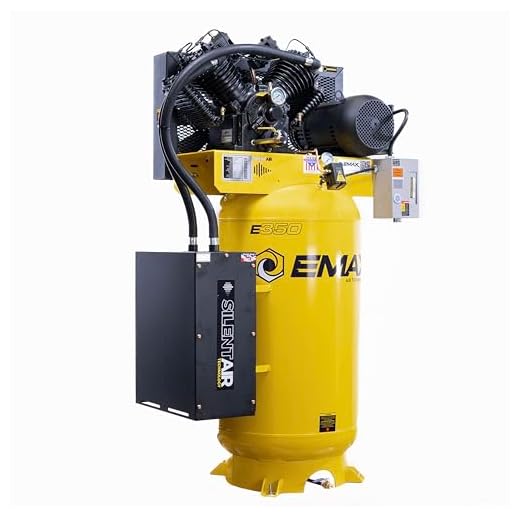
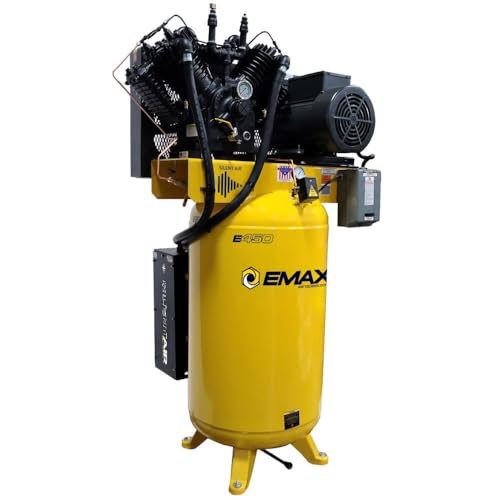
EMAX E350 7.5HP 80 Gal Two-Stage Compressor
I like this EMAX for serious shop environments where low noise and large tank capacity matter. It pairs a 7.5 HP motor with 31 CFM and a whisper-quiet system, making it suitable for both industrial and noise-sensitive applications.
Built for big shops that care about noise
I picked the EMAX E350 as a top performer for shops that need both capacity and a quieter workspace. The two-stage design gives efficient compression across loads, and the noise-reduction tech makes it stand out in production floors.
Performance highlights I rely on
This model delivers around 31 CFM with a 7.5 HP motor and an 80-gallon tank — that combination gives long run times and faster recovery between heavy tool cycles. The whisper-quiet claims translate into noticeably lower sound compared to many other 7.5 HP units.
Installation and value considerations
Because it’s large (and heavy), you’ll need the right floor space and a professional for electrical hookup and placement. If your shop values lower noise without sacrificing capacity, the higher upfront cost often pays back in improved working conditions and lower long-term wear on components.
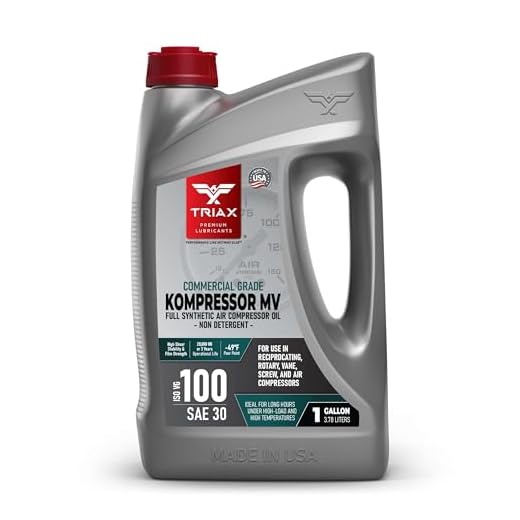
TRIAX Kompressor Full Synthetic Air Oil
I found this oil to be an excellent, cost-effective synthetic option for rotary, vane, screw, and reciprocating compressors. It balances durability and price, delivering long service intervals and stable viscosity under heavy loads.
What this is and who it's for
I use this as my go-to full synthetic compressor oil when I want OEM-level protection without the top-tier price. It's designed for rotary, vane, screw, and reciprocating compressors and suits shop environments where thermal stability and long oil life matter.
Key features and benefits
I appreciate how the formula focuses on high-temperature load bearing and film strength — that translates to less metal-to-metal contact during hard-duty runs and longer intervals between oil changes.
Real-world use and limitations
In daily use, I’ve seen reliable lubrication and fewer oil-change intervals compared with conventional mineral oils. That said, if you expect an across-the-board measurable drop in operating temperature, the data doesn’t always support that claim — the primary win is longevity and stability, not guaranteed lower temperatures.
Practical tips and takeaway
If you run compressors hard or in hotter environments, this oil will likely extend maintenance intervals and protect components. I recommend checking your compressor manufacturer’s compatibility and monitoring for any shipping damage — some buyers reported occasional missing oil or cracked sight glasses in shipments.
5–7.5 HP Single Stage 3-Cylinder Pump
This cast-iron replacement pump breathes new life into older compressor frames and motors, delivering close to 17 CFM at 900 RPM. It’s a practical, cost-effective way to rebuild tank-mounted compressors without buying a whole new unit.
Rebuild-focused pump for practical restorations
I’ve used pumps like this when a motor dies but the rest of the compressor tank and controls are still sound. It’s a three-cylinder single-stage unit built in cast iron, designed to fit 60–80 gallon tanks and work with a 220V motor.
What it brings to the table
This pump gives you near-new pumping capability and avoids the big expense of a new compressor. Its rated 16.94 CFM at 900 RPM is appropriate for many garage and light-industrial setups.
Installation notes and real-world caveats
Plan for mechanical alignment and ensure the replacement motor provides adequate amperage (minimum ~20A at 220V for 5–7.5 HP). Inspect the sight glass and oil levels immediately; a few buyers reported shipping damage or missing oil, so top up and verify before run-in.
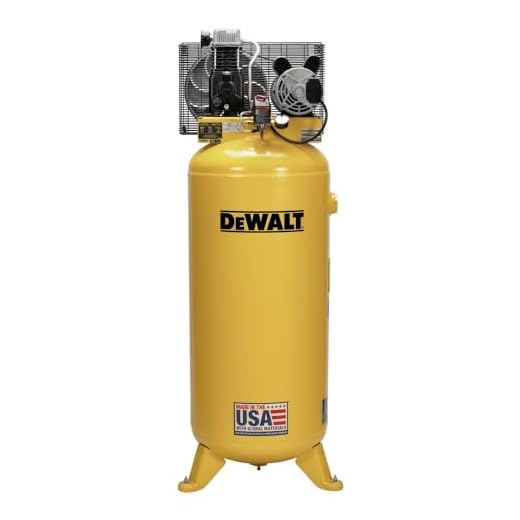
DEWALT 60 Gallon Vertical Stationary Compressor
This vertical 60-gallon DEWALT is built for workshops needing higher PSI and respectable CFM at 90 PSI. It’s robust and ASME-certified, though noticeably loud during start and run cycles.
Solid station compressor for busy shops
I recommend this DEWALT when you need reliable, industrial-grade air in a stationary footprint. The vertical ASME tank saves floor space while giving plenty of reserve air for intermittent heavy tool use.
Capabilities and shop advantages
With a 3.7 HP motor, 175 PSI max, and 11.5 CFM at 90 PSI, it covers a wide range of pneumatic tools from spray guns to framing nailers and grinders. The oil-lubricated pump is one reason this unit is often chosen for longevity in professional settings.
What to expect installing and running it
Be ready for a loud machine — several users noted it’s noticeably noisy even with a muffler. You’ll need 208–230V power and likely a hardwired or appropriately sized plug. Once installed, it’s a dependable backbone for a busy workshop, but consider noise mitigation if sound is a concern.
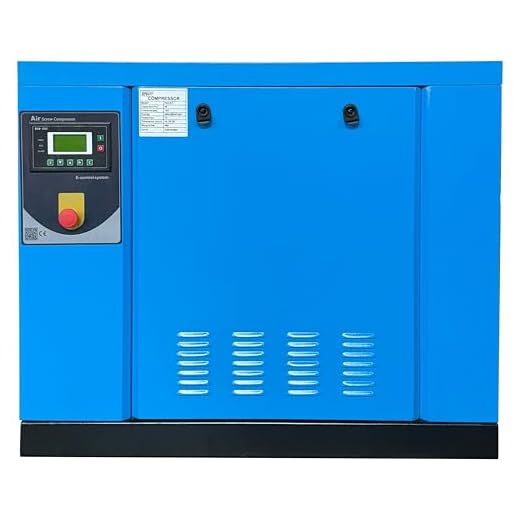
HPDAVV 10HP 3-Phase Rotary Screw Compressor
This 10HP rotary screw unit delivers 33 CFM and is built for continuous commercial use where steady flow and reliability matter. It’s heavier and more complex than reciprocating units, but it gives smoother, quieter delivery and better duty cycles.
When to choose a rotary screw
I recommend a rotary screw compressor like this when you need continuous, high-volume air for production environments. Unlike piston pumps, screws are designed for steady duty and typically deliver lower pulsation and more efficient operation at high duty cycles.
Key specs and benefits I noticed
This model is rated at 10 HP (7.5 kW) with a 33 CFM max flow and 125 PSI working pressure. The three-phase 230V motor and 3600 RPM rating make it a real commercial workhorse when properly installed.
Practical considerations and deployment
Because of weight (around 600 lbs listed) and electrical requirements, plan for professional delivery and a certified electrician for hookup. For shops transitioning from a piston compressor, expect quieter, smoother air delivery and lower long-term maintenance when the unit is properly serviced.
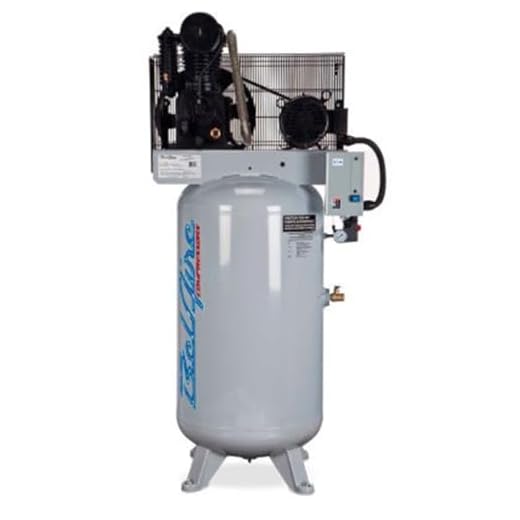
BelAire 7.5 HP 80-Gallon 3-Phase Compressor
This BelAire simplex 3-phase compressor is a basic, no-frills option for shops that need an 80-gallon tank and a reliable 7.5 HP motor. It’s a practical buy when you want capacity without premium extras.
A straightforward industrial workhorse
I see the BelAire unit as a basic, dependable compressor for shops that want standard capacity and 3-phase efficiency without spending for noise reduction packages or premium controls. It’s a simplex style built around practical performance.
Typical use cases and benefits
With a 7.5 HP motor and an 80-gallon tank, this compressor fits small manufacturing, body shops, and any setting where long tool runs and stable pressure are required. The simpler design also makes maintenance straightforward for in-house techs.
What to watch for before buying
Because listings are often sparse on exact CFM or pump design, I always confirm airflow (CFM at 90 PSI), pump type, and RPM with the seller. If you need quieter operation or integrated filtration/drying, you may need aftermarket options or a different model.
7.5 HP 3-Phase Magnetic Starter Switch
I find this starter reliable for motors up to 7.5 HP with adjustable 17–24A overload protection and flexible reset options. It’s a practical choice for retrofits and replacements where professional installation is available.
Why I keep one of these on the shelf
When a compressor motor starter fails, having a robust replacement saves serious downtime. This 7.5 HP three-phase magnetic starter provides adjustable overload protection and a solid steel housing for shop use.
Features that matter in the field
I value the adjustable overload range (17–24A) — it gives me confidence when matching the starter to slightly different motor specifications. The option to switch between manual and auto reset is handy depending on safety protocols and site preferences.
Installation and practical advice
This is not a plug-and-play part for hobbyists — I always recommend a certified electrician install and wire it. The starter includes wiring instructions, but correct wiring and correctly sized fusing are essential for safe, reliable operation.
HOLDWELL Replacement Drive Belt for Ingersoll
This drive belt is a straightforward, budget-friendly replacement for specific Ingersoll Rand UP6 compressor models. It’s best used when you need a direct part swap without sourcing OEM stock.
Simple part, clear purpose
I keep replacement drive belts like this on hand because a worn or broken belt is a quick way to stop shop work. This HOLDWELL belt targets the UP6 series and similar Ingersoll Rand units so you can get a compressor back online fast.
What I like about it
The price and availability are the main draws — when a belt snaps, downtime costs more than the part. The listing ties the belt to the 89296560 part number, which simplifies ordering for known machines.
Caveats and usage notes
Because manufacturers vary slightly in belt dimensions and compound, I always verify part numbers and confirm belt width, length, and rib profile before installing. If you rely on high-temperature or heavy-duty duty cycles, consider sourcing a higher-grade or OEM belt to maximize life.
Final Thoughts
I pick the NorthStar Quiet Armor 7.5HP 80-Gallon Compressor as my top choice. I trust it for heavy, continuous shop work where durability and low noise matter most. Strengths: Quiet Armor noise reduction, long-life motor, heavy-duty pump, and an 80-gallon ASME tank that holds steady under long runs. Ideal use case: busy automotive or fabrication shops and paint booths where you need industrial power without the constant roar.
My runner-up is the EMAX E350 7.5HP 80 Gal Two-Stage Compressor. I recommend it when you want a slightly higher steady flow and whisper-quiet operation. Strengths: true two-stage performance, about 31 CFM, and a whisper-quiet design that fits noise-sensitive commercial environments. Ideal use case: professional shops that run multiple tools at once and need a smooth, quieter output over long shifts.







Really liked the reviewer calling TRIAX “great high-temp lubricant” — I run rotary vane compressors occasionally for production testing and heat is the enemy.
Question: is TRIAX compatible with the HPDAVV rotary screw unit (spin-on oil separator)? Or do manufacturers sometimes require their own branded oils? I don’t want to void warranties.
Short and sweet: does anyone run TRIAX in a screw compressor and have it perform well long-term?
TRIAX is formulated for rotary, vane, screw, and reciprocating compressors and should work fine technically. Warranty terms vary — always check HPDAVV’s warranty language; some manufacturers require their specified oils for full warranty coverage.
I’ve used TRIAX in a rotary screw test bench for about a year with no issues. Better thermal stability than basic mineral oils. But yep — double-check warranty clauses before running anything non-specified.
HOLDWELL drive belt — cheap and probably fine, but man, I once bought a “budget” belt and it shredded after a month 😂
If anyone’s used the HOLDWELL on a 7.5 HP Ingersoll-style unit, does it hold up under startup torque? Thinking of keeping OEM spec vs aftermarket.
Also — shoutout to the 3-phase simplex on the list: sometimes simple is best.
Budget belts can be hit-or-miss. HOLDWELL is usually decent for basic swaps; check reviews for your exact model and ensure proper tension at install. If you see glazing or uneven wear early, return it.
Also inspect pulleys — a corroded/worn pulley will shred any belt fast. Clean and true the pulleys before installing new belt.
I used HOLDWELL on a UP6 replacement — lasted about a season under moderate loads. Tighten correctly and avoid over-tensioning; that’s what kills belts.
If you plan heavy cyclical starts, consider OEM or higher-grade belts. Startup torque is the killer, not steady running.
I own a DEWALT 60 gal vertical (mentioned in the article) and yep — it’s loud. Works great for tire work and impact guns but I tried using it for HVLP spray painting and ran into pressure/consistency issues.
Anyone tried pairing DEWALT with a secondary receiver or tank to stabilize psi for painting? 🤔
Also, is the rotary screw HPDAVV overkill for a small woodshop?
For painting, adding a secondary receiver and larger or an inline surge tank can help smooth pressure drops. The HPDAVV is likely overkill (and costly) for a small shop unless you need continuous duty and near-silent operation.
I used a 30-gal buffer tank with my DEWALT for a short period — improved stability, but if you’re serious about HVLP, a dedicated quieter compressor or a screw unit is worth considering.
Great roundup — thanks for doing the legwork. I’ve been eyeing the NorthStar with Quiet Armor for a small metal fab shop I’m setting up.
Pros that jumped out to me: 80-gal tank and quieter operation (huge plus when customers are around).
Question: how does the NorthStar compare to the EMAX E350 in terms of long-term reliability? The EMAX lists 31 CFM which sounds tempting for running multiple tools.
Also curious about maintenance schedules — any of these need oil changes more often (TRIAX oil aside)?
Appreciate any hands-on experience folks can share!
I run an EMAX at my garage — the 31 CFM is legit for two grinders + a spray gun if you stagger use. Noise is very manageable. NorthStar would be my pick if I wanted slightly quieter and more industrial build quality.
Good questions — short answer: both are solid. NorthStar leans commercial with Quiet Armor for noise control; EMAX gives a bit more CFM for heavier simultaneous loads. For maintenance, both are pressure-lubricated pumps, so oil changes are typical (check manufacturer interval, but TRIAX synthetic is a solid choice for longer intervals).
If noise is top priority, go NorthStar. If you need raw airflow for simultaneous tools, EMAX. Also budget for filters and an oil like TRIAX — saves headaches later.
Nice list. Quick practical question from someone with an older tank-mounted unit:
I found a 5-7.5 HP replacement pump (3-cylinder) in the roundup. Is it generally easier/cheaper to replace a worn pump and keep the motor/tank, or should I just buy a newer packaged compressor? I’m handy but not an electrician.
Also — what about the starter switch? The 7.5 HP magnetic starter looks useful but does rewiring scare anyone else? 😅
Would love a step-by-step from someone who’s done a rebuild.
Did a pump swap last year — bought the 3-cylinder 17.5 CFM pump. Cost me about a third of a new unit. Took a weekend, needed a friend to help lift. The starter switch I had replaced by an electrician; no regrets.
If the motor and tank are in good shape, replacing the pump is often much cheaper and extends service life. But consider labor (mounting, alignment, belt sizing). For the starter switch, unless you’re comfortable with 3-phase wiring, get a pro — safety first.
Also check belt condition and pulley alignment when swapping pumps — HOLDWELL belts are affordable but make sure you get the right size (and torque specs).
If your shop already has 3-phase, swapping a starter is straightforward for a licensed tech. If not, converting or installing a VFD can add complexity/cost.
One pro tip: mark the belt routing with chalk before removing so you don’t forget. And keep the old pump for parts if possible.