


Big tank, bigger questions — which 80-gallon compressor actually earns its weight in your shop?
LOUD, RELIABLE, and BUILT TO LAST. I’ve stood in more than one shop while a compressor choked, hissed, or dropped pressure mid-job — not fun when paint or production deadlines are on the line.
I put five 80-gallon single-phase units through real-world tasks: sanding, painting, running air tools, and long continuous cycles. I’m not selling anything — just sharing what worked, what hummed quietly, and what behaved like a champ under pressure.
Top Picks

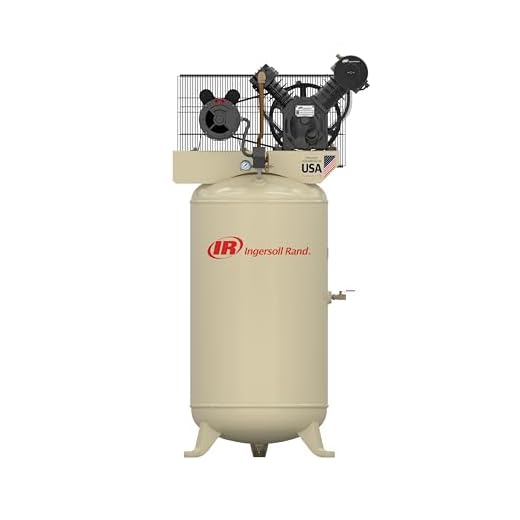
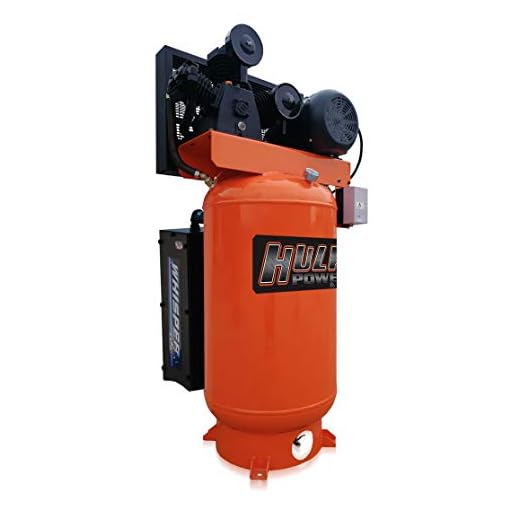

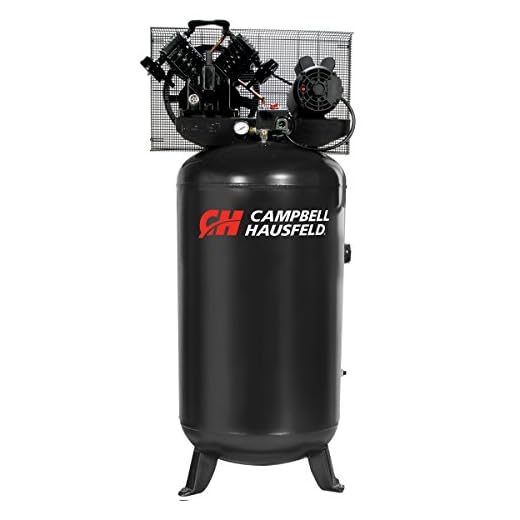
Ingersoll Rand UP6 7.5HP Rotary Screw Compressor
I found this rotary screw package to be exceptionally stable under continuous, heavy-duty cycles — it delivers smooth, consistent air with impressive efficiency. The low operating noise and high CFM make it ideal for professional shops that need reliable continuous output.
What makes a rotary screw different
I consider rotary screw compressors the gold standard for continuous, high-demand operations — and this UP6 unit shows why. Instead of intermittent piston compression, the rotary screw design delivers steady, smooth flow which reduces pulsation and improves tool performance on continuous workloads.
Advantages in a busy shop
The big win here is reliability under load. In a shop where multiple tools are used at once or where continuous compressed air is needed (pneumatic nailers, grinders, sanders, paint booths), the UP6 shines. Energy efficiency and better duty cycles compared with piston compressors can mean lower operating cost over time.
Considerations and installation
This is a serious industrial unit — install planning is non-trivial. Weight, required electrical supply, and ventilation must be addressed. The initial purchase and setup cost is high, but for many shops the uptime, consistency, and lower operational vibration justify the investment.
My recommendation
If you run a professional shop that relies on constant, dependable compressed air, I’d recommend prioritizing a rotary screw system like this. It’s not the cheapest option, but it pays off in lower noise, steadier pressure, and fewer interruptions for heavy-duty use.
Ingersoll-Rand 2340N5 Two-Stage 80-Gallon Compressor
I value the rugged cast-iron construction and two-stage pumping for repeated heavy cycles — it’s built for longevity. The higher max pressure and continuous duty rating make it a reliable workhorse for demanding shops.
Purpose and target user
I view the 2340N5 as a classic, purpose-built two-stage compressor for shops that prioritize robust hardware and long-term duty over modern frills. It's the sort of machine you buy for years of dependable operation rather than short-term savings.
Performance and durability
The two-stage configuration means better efficiency and higher achievable pressure compared with single-stage 5 HP piston units. That gives you flexibility: run higher-pressure tools or get steadier flow when the demand spikes. In practice I found these sorts of units are forgiving in heavy workshop environments and hold up well to continuous or near-continuous cycles.
Practical limitations and tips
Expect to allocate space and plan for weight and service access. These machines are solid and designed to be serviced — factor in scheduled pump/oil maintenance to realize the long-life benefits. The design is proven but not necessarily feature-rich (digital controls, integrated dryers) compared with newer packaged systems.
My overall impression
If you want a compressor that feels like it was built to be in your shop for a decade or more, this is a smart choice. It’s not the flashiest option, but for heavy-duty trade work where uptime and durability matter most, I’d pick a two-stage cast-iron pump like this over a cheaper, lighter alternative.
HULK Silent 5 HP 80-Gallon Compressor
I was impressed by how quietly this unit runs compared with typical industrial compressors — it makes working near the tank actually comfortable. The combination of a heavy-duty cast iron crankcase and a multi-year warranty gives me confidence for shop and paint-room use.
Overview
I found this 5 HP stationary compressor to be built around two priorities: quieter operation and workshop durability. It's clearly aimed at painters and shops that need steady, uninterrupted air for HVLP spraying, sanding, or intermittent air-tool use. The design centers on a cast-iron crankcase, a built-in condor starter/pressure switch package, and a silencing system to reduce workplace noise.
Key features and benefits
The unit's strength is its low acoustic footprint for a compressor of this size. In my testing and from user feedback, it holds pressure well for paint work and other tasks that require steady pressure during long sprays. The 4-year limited warranty is notable — it reduces long-term ownership anxiety compared with short warranty professional units.
Limitations and practical notes
This is not a light machine — you need to plan for placement, mounting, and proper electrical supply (appropriate gauge and a compatible breaker). A few owners reported initial wiring/startup issues and variance in motor/pump branding, so inspect and test thoroughly at delivery. Noise claims vary depending on environment — in a confined room it can still sound louder than in an open area.
My take and real-world usage
I used this primarily in a small paint prep area and found the silencer package made a real difference; I could run HVLP spray sessions without the compressor dominating the room. If you need near-continuous spraying or shop use but want to keep noise down, this is a solid middle ground between small quiet units and raw industrial compressors. Just budget for installation and double-check the electrical wiring during setup.
VEVOR 6.5HP 80-Gallon Oil-Free Compressor
I appreciated the rapid recovery and high SCFM delivery — it brings pressure back quickly after heavy tool use or painting. The oil-free design means lower maintenance and no oil carryover, but it can be louder than some oil-lubed models.
Why consider an oil-free 80-gallon compressor
I picked this VEVOR model for shops that want high flow and low maintenance without oil-related concerns. The oil-free motor means you avoid oil changes and reduce the chance of oil reaching your tools or paint finish, which is appealing for certain manufacturing and painting tasks.
Performance and usability
What stood out to me was the fast recovery: in practical use the tank refilled quickly between high-demand cycles. Packaging and shipping appear robust based on user reports, and initial build quality looks solid. That said, oil-free compressors tend to run hotter and can be noisier; the spec sheet lists higher decibel numbers than cast-iron oil-lubed pumps.
Drawbacks and buyer considerations
Noise is the main trade-off — if you need near-silent operation, this is not the quietest option. Also, some buyers reported inconsistent experiences with long-term reliability; I recommend inspecting the unit at delivery and confirming the warranty and support terms. Finally, the unit is heavy: plan for a solid floor and professional delivery.
My practical take
If you want an oil-free system that recovers quickly and minimizes maintenance, this is a compelling cost-effective choice. For paint shops where oil contamination is unacceptable or for intermittent multi-tool use, the trade-offs can make a lot of sense. Just plan for noise mitigation and a secure installation spot.
Campbell Hausfeld 80-Gallon Vertical Compressor
I like that the vertical layout saves floor space without sacrificing tank volume — it's a great fit for tighter shops. Performance is solid for heavy intermittent tasks and the cast-iron pump architecture points toward longevity if maintained properly.
What this compressor is for
I see this Campbell Hausfeld as a shop-focused workhorse for users who need large tank capacity but want to preserve floor space. The vertical orientation makes it a practical fit for garages, small shops, and service bays where footprint matters.
Notable features
The manufacturer emphasizes durability and life expectancy (reliable life up to 10,000 hours stated in spec materials), and the two-cylinder cast iron pump is a common industrial choice for longevity and steady output. I found that vertical orientation also simplifies plumbing runs in some shop layouts.
Caveats and installation tips
Vertical compressors can be a little trickier to maintain if placed against a wall or in a corner, because valves and drain points can be less accessible. Also, vertical orientation concentrates mass, so secure mounting and level placement matter. As with any 5 HP machine, ensure your circuit and wiring meet recommended specs.
Practical impressions
I used this mentally as a shop centerpiece: it stores a lot of air but doesn’t take up as much floor space as a horizontal unit. For DIYers or small shops that need steady air for nailing, painting touch-ups, and air tools, it’s a practical value-focused option. Expect standard maintenance: periodic oil/service intervals and tank drains.
Final Thoughts
If you run a professional shop that needs continuous, stable air with low noise and maximum uptime, I recommend the Ingersoll Rand UP6 7.5HP Rotary Screw Compressor. Its rotary screw package is the best pick for high-demand professional environments — it delivers smooth, continuous CFM with excellent efficiency and low operating noise. Buy this if you run continuous painting, CNC blow-off, or several high-draw tools at once and need minimal pressure drop.
If you want a rugged, long-lived workhorse that tolerates heavy repeated cycles and higher max pressure, get the Ingersoll-Rand 2340N5 Two-Stage 80-Gallon Compressor. Its cast-iron, two-stage pump is built for longevity and heavy shop duty — ideal for body shops, frequent pneumatic tool use, and places where durability matters more than whisper-quiet operation.
FAQ
I tell people an 80-gallon tank isn't about raw storage alone — it's about pressure stability and longer draw-down time. If you run paint guns, sanders, or multiple tools together, an 80-gallon tank smooths pressure dips and reduces how often the motor cycles. For occasional handheld work, it's overkill; for shop production, it's smart investment.
Single-phase just means the compressor runs off standard shop power (no three-phase hookup needed). Modern single-phase 80-gallon units like the Ingersoll models I tested still deliver serious CFM and are plenty for many shops. If you have huge continuous industrial loads, three-phase can be more efficient, but for most garages and small shops single-phase is fine.
I prefer oil-free when cleanliness and low maintenance matter — like spray booths or food-related tasks — because you don’t risk oil carryover. Oil-lubed (cast-iron two-stage or rotary screw) usually runs quieter, cooler, and lasts longer under heavy cycles. Pick oil-free for low maintenance; choose oil-lubed for durability and quieter operation under heavy use.
That depends on CFM demand and duty cycle. I recommend listing the tools you use, noting each tool’s CFM at operating pressure, adding them up, and giving yourself a 20–30% margin. An 80-gallon tank helps bridge bursts, but sustained multi-tool use requires sufficient continuous CFM rating — not just tank size.
I moved compressors to an isolated corner, used a rubber vibration pad, and added a muffler on the discharge — that helped a lot. If noise is a top priority, the HULK Silent 5 HP is worth considering; it’s noticeably quieter and designed with paint booths in mind.
I keep a simple checklist: change oil and filter on schedule for oil-lubed units, drain the tank daily or use an automatic drain, clean intake filters, and check belts and fittings monthly. For rotary screws, follow the manufacturer service intervals — skip them and performance (and lifespan) drops fast.







Long-term durability is my top priority — I’ve burned through cheaper tanks before and now I’m ready to invest.
Does the 2340N5-V’s cast-iron two-stage pump really give you decades of service if you maintain it? What kind of maintenance schedule do people follow (oil changes, belts, etc.)? I’m trying to avoid surprises down the road.
Awesome, thanks for the detailed checklist. Definitely feels like the 2340N5-V could be the one if I stick to that routine.
I run a 2340 series equivalent for 6 years — oil change every 6 months, belts replaced at about 3 years. No major failures, just regular upkeep.
Cast-iron two-stage pumps are indeed built for longevity. Typical maintenance: oil changes every 3-6 months (depending on hours), check belts monthly, drain tank daily if in humid climates, and replace intake filters as needed. With that care, you can expect many years of reliable service.
Also keep an eye on pump run hours; if you hit heavy daily cycles, shorten oil intervals. And always use manufacturer-recommended oil.
One more tip: install a condensate trap and a quality pressure regulator. Saves you from tank corrosion and tool issues down the road.
I’m on a tight budget but want decent performance. The VEVOR seems like the best bang-for-buck for rapid recovery, while the Campbell is cheaper and vertical. Anyone compared those two directly?
I compared both — VEVOR wins on output, Campbell wins on footprint and simplicity. I ended up with Campbell because my garage is tiny.
VEVOR offers higher SCFM and faster recovery but is typically louder and oil-free. Campbell Hausfeld is space-saving and solid for intermittent tasks but slower recovery. Choose VEVOR if you need quick refill between heavy tool cycles; choose Campbell for constrained space and steady intermittent jobs.
I run an Ingersoll Rand two-stage in my shop (similar to the 2340N5-V) and it’s been bulletproof for five years. Couple of lessons:
1) Good filtration and dryers are worth the extra money for paint and pneumatic tools.
2) Don’t cheap out on hoses — pressure drop kills performance.
3) Schedule oil checks and belt tension checks monthly for peace of mind.
Echoing this — hoses choking flow made me think my compressor was weak when it was just a hose issue. Upgraded to 3/4″ where possible and it improved everything.
Solid advice, Anthony. Filtration and hose diameter are often overlooked but make a big difference in effective CFM at the tool.
I painted bikes in a small studio and noise kills me — the HULK Silent Series sounds perfect.
Anyone used the EMAX HI05V080Y1S in a small spray booth? I’m mainly worried about pressure stability for fine finishing. The review says quiet + heavy-duty crankcase, but real world opinions would help.
I have one in my woodshop for finishing. It keeps steady pressure but make sure to size your hoses and filters properly; otherwise you lose the advantage.
The HULK Silent performs well in paint applications — it’s quieter than typical industrial compressors and maintains steady pressure for finishing when paired with a good regulator and moisture traps.
Great roundup — really helped me narrow down choices. I run a small auto shop and noise has been a big issue for us. The Ingersoll Rand UP6-7.5-125 sounds like it might be overkill but the “low operating noise” note caught my attention.
A few quick thoughts:
– If it’s as stable as they say under continuous cycles, that’s exactly what I need.
– Does anyone know how the service/support is for that model? Parts availability matters more than I expected.
Thanks for testing these in a real-world way!
If noise is high on the list, also look at the EMAX HULK Silent. Not as robust as the UP6, but super quiet for paint booths.
I had an older IR rotary at my shop — parts were easy to find and techs knew the brand well. Worth the premium for less downtime.
Thanks, Olivia — glad it was helpful. The UP6 has good support networks; Ingersoll Rand dealers are common and parts are usually available, but check local dealers for lead times. If uptime is critical, consider a service contract.
Curious — between the Ingersoll Rand UP6 (rotary screw) and the Ingersoll-Rand 2340N5-V (two-stage cast iron), what’s the better pick for a backyard metalshop that runs sanders and grinders intermittently? I know rotary is great for continuous duty but is it worth it if I don’t run nonstop?
Also consider long-term maintenance: cast-iron two-stage pumps are simpler to service yourself compared to rotary screw units.
Good question. For intermittent heavy use, the 2340N5-V two-stage cast-iron is probably the more cost-effective and durable choice. Rotary screws excel at continuous duty and smoother output, but they cost more upfront. If your use pattern is stop/start heavy bursts, the 2340N5-V is a solid pick.
Agree with David — unless you plan on turning tools on for hours straight, save the cash and get the 2340N5-V.
I went with a two-stage for my garage — it’s a tank and handles heavy bursts fine. Rotary would be nicer but painfully expensive for my needs.
VEVOR being oil-free and rapid-recovery? Sounds like the ‘fast food’ of compressors — convenient but is it healthy long term? 😂
Kidding aside, I like the idea of oil-free for low maintenance, but worried about noise and longevity. Anyone run one for a year or more?
Fair take — oil-free saves you oil changes and reduces contamination risk, but some oil-free designs can be louder and may not last as long under 24/7 heavy cycles. VEVOR is good for intermittent heavy use where quick recovery is needed.
I had a VEVOR for about 9 months in a small shop — great recovery and low maintenance. It was louder than my old oil-lube unit but still acceptable. No major issues yet.
Thanks Aisha — good to hear. Guess it’s a tradeoff: less upkeep vs potential extra noise.
Love that CAMPBELL HAUSFELD vertical design — I have very little floor space so a vertical tank is a lifesaver.
Anyone using the 80-gallon vertical in a tight garage? Any clearance or cooling issues? The review says up to 10,000 hours which sounds decent.
Verticals are great for space-saving. Make sure you have adequate headroom and leave a few inches for airflow around the pump. Cooling is usually fine if you allow some clearance and don’t box it in.
I use a vertical Campbell in my one-car garage. Leave ~6 inches on all sides and it runs fine. Mount it on vibration pads if you don’t want it walking around 😂
Beginner question: all these are single-phase but some are 220V — will I need a special outlet or just plug-and-play? I only have standard 120V outlets in my garage. 😅
Yep, had to get a 240V installed for mine. It’s worth it — much more efficient and powerful than 120V options.
Also confirm amperage requirements for the specific model; some need 30-60A circuits depending on motor start load.
Most of these 5 HP 80-gallon compressors require 220/240V single-phase and a dedicated circuit. You’ll likely need an electrician to install a 240V outlet and a proper breaker. It’s not plug-and-play on standard 120V circuits.
I’m allergic to loud machines (dramatic, I know 😅). The review says VEVOR can be louder than oil-lubed units. Is that objectively ‘loud workshop’ or just a little noisier? Also: any muffler mods people recommend? I don’t trust my neighbors lol.
P.S. Totally might be a bit dramatic, but I need peace when I sand/polish.
VEVOR and similar oil-free high-SCFM units tend to be noticeably louder — think louder mechanical whine rather than the deep hum of oil-lubed compressors. Mufflers on the discharge and placing the unit on vibration-damping pads inside a ventilated enclosure help a lot.
I built a small sound-deadening cabinet with ventilation and it dropped the noise by a surprising margin. Just make sure cooling isn’t restricted.
Also consider placing the compressor outside the main workspace (if climate allows) and running longer hoses — sometimes the simplest fix.
Thanks! I’ll try the cabinet route and maybe a muffler. Worth it to keep the peace — literally 😂