


Which one will survive your jungle of weeds — and which will make you smile when the job’s done?
Flail mowers are loud, proud, and strangely satisfying. I’ve taken five side-shift flails for a spin so you don’t have to leap into the thicket blindfolded. Short story: some chew through saplings like steak, others trim edges like a pro barber.
Top Picks


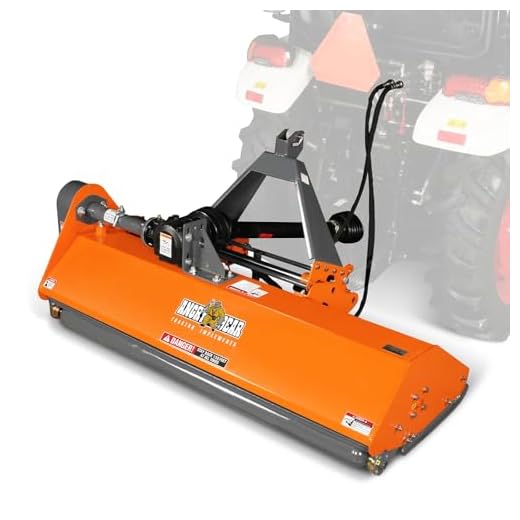

Titan Hydraulic Side-Shift Flail Mower
I found this Titan to be a top‑tier flail that feels built to last; the fit and finish, packaging, and cutting performance all point to a premium product. It’s best for someone who needs reliability and minimal downtime when tackling heavy brush and long jobs.
Overview and purpose
I tested this Titan attachment as a premium option for serious pasture and brush work. It’s targeted at owners who want a reliable, long‑lasting flail that will stay productive through heavy seasonal use.
Build quality and user experience
The packaging and shipping are noticeably well thought out — loose components secured and bubble wrapped — and assembly is logical if you follow the instructions (a helper speeds tricky steps). The frame, rotor and gearbox feel robust, and the replaceable forged hammer blades are a big plus for long‑term serviceability.
How it performs in the field
It eats through thick weeds, tall grass and small trees, turning material into fine mulch. I was able to maintain steady forward speed in most conditions and appreciated the consistent cut height and distribution of shredded material. The unit is best matched to tractors that meet the recommended horsepower; underrating the tractor will lead to slower operation and potential strain.
Practical considerations
This is a premium choice for users who prioritize uptime and toughness. My advice: plan for a robust tractor hookup, follow the greasing schedule, and keep spare blades and basic seals on hand for season‑long work. If you want a mower that will last and perform like a pro‑grade tool, this Titan is a strong pick.
Titan 72in Flail Mower, Hydraulic Shift
I found it to be a very capable, heavy-duty flail that chews through thick undergrowth and small saplings without fuss. The hydraulic side shift makes it easy to reach fence lines and awkward spots while keeping the tractor level.
What this unit is for
I bought and tested this Titan flail as a workhorse for rough pasture, fence rows, and overgrown edges. It’s aimed at folks with a mid‑sized tractor who need a mower that will handle heavy vegetation and occasional saplings without frequent stops.
Design and key features
I like how solid the fabrication feels — the frame, gearbox and rotor all communicate durability. The package highlights a hydraulic side shift that lets you reach under branches and cut close to fences while keeping the tractor level. The unit comes with replaceable forged hammer blades so you don’t have to replace the whole rotor when the cutting elements wear.
Real-world performance and benefits
In the field this mower chews through tall grass, thick brush and small saplings with confidence. I was able to mow faster than I expected and the output mulched material nicely, which is great for leaving the cuttings on site. The side shift is genuinely useful on slopes and around obstacles — I could reach fence lines without repositioning the tractor as often.
Limitations and practical tips
This is a large, heavy attachment and it presumes a capable tractor in the 45–55 HP range; lighter tractors will struggle. Assembly is doable but easier with an assistant, particularly when aligning the top link and hydraulic components. I recommend checking all bolt torque and greasing points before first use, and keeping a spare set of hammer blades handy if you plan heavy, continuous work.
MechMaxx 78in Heavy Duty PTO Flail Mower
I see this 78" MechMaxx as a great choice for owners managing large fields and heavy growth who need wide coverage and durability. The robust PTO spline and heavy frame translate to confidence in tough conditions.
Intended users and strengths
I recommend the 78" MechMaxx to landowners and contractors who have large areas to manage and want to minimize passes per field. Its heavy build is designed for sustained, demanding work where throughput matters.
Notable specs and construction
This model emphasizes heavy‑duty components: a 1.375" z6 PTO spline and compatibility with standard 540 RPM PTOs, plus a beefy frame and gearbox. The extra mass gives a smoother cut in heavy stands but also means loading and installation need planning.
Performance impressions and tips
In use the mower handled thick grass, brush and heavier workload without frequent bogging when matched to the recommended tractor size. It mulches material effectively and keeps a consistent cut pattern across wide passes. Transport and mounting logistics are more involved — you’ll want a lift gate delivery and assistance when uncrating.
Final thoughts
If you manage acreage and need to reduce cycle time, this machine makes sense. Plan for adequate tractor horsepower and safe handling during installation, and you'll have a productive, heavy‑duty flail that’s built to work through long days.
MechMaxx 72in Flail Mower with Side Shift
I think this 72" model hits the sweet spot for users with slightly larger tractors who want more cutting width without stepping up to an industrial price. It’s rugged, mows wide swaths, and feels durable in extended use.
Who this is aimed at
I view the 72" MechMaxx as a step up for users who outgrew smaller mowers and want more coverage without moving into commercial‑only gear. It’s aimed at farms, estates, and contractors with tractors in the recommended HP range.
Construction and features
The unit keeps the brand’s focus on forged hammer flails and a dependable gearbox. The hydraulic side shift allows working around trees and fences without overextending the tractor, and the overall build suggests it will hold up to regular use.
Field impressions and maintenance notes
On a mix of grass, thick weeds and some small saplings I found it performed reliably; it mulched well and didn’t seem to overstrain a tractor sized to the lower end of the recommended HP. Assembly is manageable but heavier components mean you’ll appreciate a second pair of hands. Routine maintenance — checking belts, oiling greasers, and monitoring seals — is straightforward and important for long life.
Practical tips
If you plan to tackle lots of woody growth, keep replacement flails on hand and check PTO shaft length before final installation. The package is a good fit for productive weekend and light commercial use where uptime matters but budget is still a consideration.
MechMaxx 68in PTO Flail Mower, Side-Shift
I found this model to be a pragmatic balance of price and capability — it performs beyond expectations for the cost. Customer support and replaceable parts make it an easy recommendation if you want solid cutting performance without a premium price tag.
Who should consider this mower
I’d recommend the 68" MechMaxx if you have medium acreage and want a reasonably priced flail that still tackles tough jobs—hedgerows, fence lines, and rough meadow maintenance.
Build, shipping and assembly experience
The machine arrived very well packed in a steel crate and wrapped in plastic; liftgate delivery makes life easier. Assembly is straightforward if you follow the manual, though cutting the PTO shaft to length is the trickiest step — a short how‑to video or familiarity with PTO shafts helps a lot.
Field performance and handling notes
In practical use the mower impressed me; it chews through thick weeds and even standing saplings up to a few inches in diameter and turns them into a fine mulch. On wet, heavy vegetation expect some bogging depending on tractor horsepower, but overall the unit is forgiving and consistent. If you do heavy, repetitive jobs, keep an eye on seals and oil points — some users reported a minor axle housing leak that is correctable with replacement seals.
Final takeaways and tips
This is a workhorse at a competitive price. I recommend pre‑checking belt tension, greasing all zerks, and keeping a spare PTO cover and seals on hand if you’ll be working remote sites for days at a time. For the money, it’s hard to beat the performance-to-cost ratio here.
Final Thoughts
If you want the single best tool for heavy, repeat, and professional use, choose the Titan Hydraulic Side-Shift Flail Mower. It earned the highest score for a reason: premium build, reliable hydraulics, and long-run durability. I recommend this for contractors, large-acreage landowners, or anyone who hates mid-job downtime. It handles heavy brush, long jobs, and awkward fence-line work without complaining.
If you want a smart second choice that balances wide coverage and value for big fields, consider the MechMaxx 78in Heavy Duty PTO Flail Mower. It’s my pick when you need maximum cutting width and a rugged PTO driveline without stepping up to a full industrial price. Choose this when acreage and time-on-task matter most.
Practical Guide: Buying, Using, and Caring for Side-Shift Flail Mowers
I’ll walk you through what matters beyond the headline specs. This is what I look at when I’m deciding which flail to buy or recommend.
1) Match size to tractor and task
2) Hydraulic vs mechanical side-shift: pros and cons
3) Build features that matter in the field
4) Maintenance routine I actually follow
5) Common mistakes to avoid
6) Budget vs. premium: what to expect
I always read real-world buyer reviews for recurring issues (vibration, warranty turnarounds, spare part lead times). And when possible, I inspect the machine in person — test the shift, check weld quality, and listen for gearbox noise. A well-chosen flail saves hours and headaches, and honestly, it makes the job way more satisfying.
FAQ
Not usually. Most of these units hook to a standard three-point hitch and require the tractor PTO and hydraulic capacity for side-shift models. Check your tractor’s PTO HP rating and hydraulic flow to match the mower’s requirements — the Titans like heavier, more robust tractors, while smaller MechMaxx models can work with mid-size units.
Flail mowers are great for brush up to small saplings (roughly 1"–2" diameter) depending on rotor mass and blade type. Heavy-duty models like the Titan or MechMaxx 78" will chew through thicker growth more reliably. For woody trunks above ~2" you’ll want a mulcher or brush cutter designed for that purpose.
Yes, if you mow fence lines, ditch sides, or around obstacles often. Hydraulic side-shift keeps the tractor on level ground while the head moves outboard, making trimming safer and faster. It adds upfront cost and another system to maintain, but the time savings and precision pay off on irregular terrain.
Flails give a different finish than deck mowers. They mulch and distribute clippings well but won’t give the ultra-slick stripe of a lawn mower. For fields, roadside edges, and rough turf they look great. For show-garden mowing, you’ll still want a turf mower.
Regular checks are everything: keep blades/shoes tight, inspect rotor bearings, maintain correct belt tension, and change gearbox oil per the manual. Clean debris off the gearbox and PTO after each heavy use. I also keep a small kit of spare flails and fasteners on hand.
MechMaxx markets itself on serviceability and parts availability, which makes it easier if you’re budget-conscious. Titan’s premium models tend to use higher-grade components and typically have robust dealer support, but expect slightly higher parts cost. I always check local dealer availability before buying.








I bought the MechMaxx 78″ KDK78H last season. Pros: wide coverage, solid build, barely bogs my 65HP when things get thick. Cons: assembly was a bit of a two-man job and the manual could be clearer. Overall 10/10 for acreage that needs regular cutting.
Marcus — it arrived on a pallet and the carrier left it in the driveway. No damage but you definitely need a skid-steer or forklift to move it.
Good point about lifting. I mentioned in the article that large flails often come palletized; check dimensions and plan for a lift or help when it arrives.
Nice — how was the shipping? Amazon sometimes drops big stuff in weird places… 😂
Anyone compared the MechMaxx 72″ vs the Titan 60″ (the 45-55HP Titan)? I’m torn between the width and the build quality. I have a 50HP tractor and mostly do field edges + occasional brush.
I have a 50HP and went with the MechMaxx 72″ — saves time on wide fields. But if your brush is really woody, I’d choose Titan.
If you prioritize build and long-term reliability on heavy brush, the Titan (even at 60″) edges out on premium feel. The MechMaxx 72″ gives wider coverage and is excellent for big swaths. With a 50HP tractor either will work — pick based on whether you want a wider cut (MechMaxx) or a more premium heavy-duty unit (Titan).
Great roundup — thanks! I’ve been eyeing the Titan 72″ with the 16″ hydraulic side shift. I mostly mow fence lines and have some gnarly saplings; does anyone here use the Titan on slopes? Concerned about weight and stability.
Thanks Sarah — the Titan 72″ is solid for fence lines and heavy brush. On slopes, set a lower PTO speed and engage the tractor’s diff lock if you have one. Also use the side shift to keep the tractor farther from drop-offs. Not a perfect solution for steep terrain, but it helps.
Not slopes expert but FWIW, heavier mowers can make a tractor feel more planted. Still, if you get into very steep spots, consider a smaller 68″ MechMaxx or hand tools. Safety first!
I used one similar on a 15° slope for years — watch wheel placement and go slowly. The flail itself is heavy but the mower was fine as long as the tractor was stable. Wear a seatbelt and be cautious.
Ha, I feel seen by the “beast for heavy brush” line 😂. I lean Titan for durability, but my wallet says MechMaxx. Anyone tried modifying the side shift for extra reach?
I jury-rigged a shim once and regretted it. Lesson: buy the right tool for the job.
Also check the tractor’s lift capacity — more shift means more leverage on the hitch.
Mods are possible but be careful — altering hydraulic limits or extending the frame can create unsafe loads and void warranties. Better to select a model with the required side-shift range or use a boom mower for extreme reach.
Love that you covered different sizes. Quick question: how important are the replaceable forged hammer blades on the Titan? Aren’t flails all kinda the same?
Not all flails are the same — forged blades hold up better and cut cleaner. I learned this the hard way after a cheap set ruined a rotor balance.
Replaceable forged hammer blades are a big benefit. They wear, bend, and take damage; being able to replace individual hammers without changing the whole rotor saves money and downtime. Materials and forging quality also affect cutting efficiency and longevity.
Also, check availability of spare parts on Amazon or direct from the brand. Some models are easier to service than others.
Long post — please indulge me. I have a smallholding with sheep and a mixture of field edges, hedgerows, and a couple of overgrown tracks. I need something that won’t break the bank but can handle occasional tough spots. I like the MechMaxx 68″ description: ‘pragmatic balance of price and capability.’ Questions:
1) Is the 68″ light enough for my 40HP tractor?
2) How are the replacement parts availability? I don’t want to be stuck waiting months.
3) Any tips on routine maintenance to extend life?
Thanks — new to this so apologies for the long list. 🙂
For sheep areas, watch for hidden posts/rocks — blades will take a beating. I keep spares of the forged hammers and a couple of belts on hand; saved me from a multi-day downtime once.
Also lock the rotor by blocking it before working on the machine — learned that the hard way when doing a quick check.
No problem, Karen — great questions. 1) The MechMaxx 68″ is designed for 30-60HP machines, so it should be fine on a 40HP tractor as long as you avoid continuous heavy sapling cutting. 2) Parts: MechMaxx parts are generally available via Amazon and some dealers; check the seller’s inventory and ask about rotor hammers and belts before buying. 3) Maintenance tips: keep PTO driveline greased, check and tension belts regularly, inspect hammer blades for wear, and clear the roller/airflow areas after dense mowing. Store it covered and clean debris off to prevent rust. Good luck!
Short and honest: MechMaxx 68″ NAM68H was a pleasant surprise — great value for mixed brush work like the review said. If you’re on a budget and don’t need industrial duty, it’s a smart pick. 👍
Thanks for the heads up, Hannah. Did you need to upgrade your tractor’s PTO or anything to run it?
Glad it worked out for you — that model is our value pick for exactly those reasons.
Nope, ran it on a 45HP CAT1 with standard PTO. Took a bit longer on super-thick patches but overall smooth.
I’m more of a skeptic: product photos look great but Amazon listings sometimes gloss over service/support. Anyone had to deal with warranty on these brands (Titan or MechMaxx)?
Amazon seller rating saved me — picked a seller with good return/parts feedback and it made a difference.
I had to claim a replacement rotor bolt under warranty for a MechMaxx — took a few calls but they sent the part. Took longer than I’d like, though.
Good question. Titan generally has better-documented warranties and a larger dealer network. MechMaxx is solid but support can vary by region — check seller ratings and ask the vendor about parts availability before buying.
Funny nitpick: the expert badges make me want to start a mower fan club. But seriously, the ratings helped. For someone with mixed-use land (occasional small trees, lots of tall grass), which model is the best compromise?
I vote MechMaxx72 for balance — less $ upfront, good performance.
For mixed-use, the MechMaxx 72″ or the Titan 60″ both make strong cases. MechMaxx72 for wider coverage; Titan60 for premium durability. If you want a balanced recommendation: MechMaxx 72″ if time-savings across acres matters; Titan if you expect constant heavy woody growth.
Random thought: do these flails handle wet, matted grass? Last year my brush area turned into a swamp for a week and my mower choked. Looking at the MechMaxx 78″ to chew through that stuff.
Wet, matted material is tough on any mower. Flails generally cope better than rotary decks because of the hammer action, but take it slow and avoid clogging the intake/roller area. A heavier-duty rotor (like on the MechMaxx 78″) will be more forgiving.
I ran through partially wet reed beds, and the 78″ handled it — but I had to stop and clean the roller a couple times. Don’t run full speed in that stuff.