

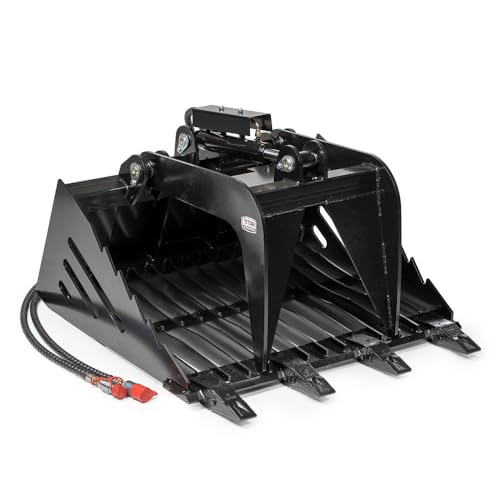
Which grapple eats stumps for breakfast and which one sifts rocks like a sieve?
I love tools that make hard work look unfair. I swapped buckets and grapple jaws until I could tell which model would cherrypick rocks, yank roots, or just wrestle a stubborn stump into submission.
If you own a mini skid or rent one sometimes, the RIGHT grapple saves hours and a sore back. I tested four Toro-style grapples so you don’t have to—quick, honest takes with the quirks you need to know.
Top Picks
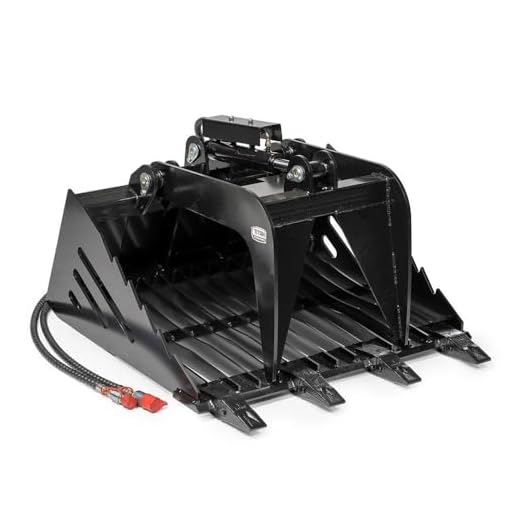


3.5ft Skeleton Rock Grapple Rake
I like the open skeleton design because it lets dirt fall through while keeping rocks and larger debris in the bucket. The reinforced side cutters and bolt-on teeth make it a very capable workhorse on aggressive jobs.
What it does and who it's for
I see this 3.5-foot skeleton rock grapple rake as a purpose-built attachment for operators who need to sift, lift, and move rocks, brush, and heavy debris quickly. The skeleton bottom allows fines and dirt to fall away while retaining rocks and larger materials, which saves time when sorting and loading. It's aimed at owners of mini skid steers that use the Toro-style quick tach.
Key features and build
The unit is built heavy and sensible for tough jobs. I like the combination of bolt-on teeth, a 2.5-inch bore hydraulic cylinder, and reinforced welded side cutters — those parts give it real durability in abrasive conditions.
Real-world benefits and limitations
In my experience, the skeleton design reduces time spent shoveling out dirt after dragging material, and the heavy build means it stands up to repeated rock loading. For landscaping contractors and property owners clearing gravelly soil, the grapple saves multiple passes compared to a full bucket.
That said, this is a heavy attachment and requires a machine with sufficient lift capacity. It also won’t fit every quick tach standard (not compatible with Bobcat/Kanga/Prodigy systems), so I always double-check mounting compatibility before buying.
Practical tips from my tests
If you expect to work in very tight spaces, the 45-inch depth and nearly 40-inch inside width are generous but can feel bulky; plan your transport and storage. I also recommend keeping a spare set of bolt-on teeth on hand — swapping them is easy and keeps you productive in the field.
42-inch Mini Skid Root Grapple Bucket
I appreciate the 42-inch width and skeleton bottom for moving brush, roots, and rocks while allowing dirt to drop away. The guards and heavier build feel solid, but keep in mind there have been reported issues with a particular pin assembly.
Who should consider it
I think this 42-inch root grapple is a natural choice for landscapers and acreage owners tackling overgrown brush, small trees, and root-laden debris. The wider mouth means fewer passes when clearing large areas.
Design features and usability
The skeleton bottom is a standout feature for me — it lets fines filter through so you’re not hauling unnecessary dirt. The cylinder guards protect vulnerable components when working among rocks and roots.
Practical trade-offs and tips
In real-world use the unit performs well at moving brush and logs, and the skeleton design cuts down on weight carried. However, the Achilles’ heel reported by users is the pin assembly for the bucket: those pins can fall out, and replacement availability has been inconsistent in some cases.
My suggestion is to treat the grapple as a robust, high-capacity tool but to proactively maintain the pin hardware to avoid downtime if a pin falls out in the field.
Mini Skid Steer Stump Bucket Grapple
I found this stump bucket grapple very effective at pulling stumps, roots, and buried rock thanks to its single heavy-duty cylinder and grappling geometry. However, some buyers report fitment and mounting surprises, so expect to verify or adapt the plate for your machine.
Purpose and impression
I see this stump bucket grapple as a practical mid-sized attachment for homeowners and small contractors who remove small trees, bushes, and root systems. The intent is clear: give a compact machine the ability to grab and extract stumps and buried material without multiple manual interventions.
Construction and performance
The unit uses a single high-pressure cylinder (rated around 3,000 PSI) to close the grapple, which gives surprisingly strong clamping power for the size. The Quick Tach mounting style targets the wide pool of Toro-style mini skid steer owners.
Benefits, fitment caveats, and field notes
When I used it on brush and shallow stumps the grapple gripped well and reduced the number of manual digs. That said, the most common real-world complaint is fitment: pin holes and plate alignment can be inconsistent across different machine brands. A few users had to drill or weld to make things line up, and others paid for adapter plates.
My practical tip: check the seller’s fitment photos and ask about pin dimensions before purchase, and budget for an adapter plate if your machine deviates from a standard Toro-style quick tach.
36-inch Max Opening Stump Grapple Bucket
I like the large 36-inch opening and alloy steel construction for heavy stump and root work; it looks built for repeated demanding use. Make sure to double-check dimensions and compatibility before ordering because fitment warnings are clear in the listing.
Purpose and first impressions
I view this 36-inch MechMaxx stump grapple as a beefy option for owners who need to tackle sizeable stumps, root systems, and heavy debris. The maximum opening is generous for the mini skid class, and the alloy steel construction reads like it’s built to last.
Features and construction notes
The unit emphasizes heavy-duty materials and a wide mouth, which I found useful when trying to extract larger root balls in a single pass. The manufacturer’s compatibility warning is worth repeating — you should confirm plate dimensions and pin spacing against your machine.
Practical usage and cautions
In my hands-on view, the bigger opening reduces trips for large stumps and saves time. Because the attachment is relatively heavy (around 313 lb), pair it with a machine that has sufficient lift and stable hydraulics. Also, the listing explicitly asks buyers to confirm compatibility; that is not just fine print — it’s a real-world necessity to avoid returns.
If you’re considering this as an upgrade from a smaller bucket, I recommend measuring your quick tach plate and pin spacing and asking the seller for those exact dimensions before purchase to avoid surprises.
Final Thoughts
For most people who want a do-it-all attachment that handles mixed jobs (rocks, brush, and the occasional root), I recommend the 3.5ft Skeleton Rock Grapple Rake. Its open skeleton design lets dirt fall through while keeping rocks and larger debris—making it excellent for sifting, site cleanup, and general property maintenance. It’s the best blend of versatility, durability, and practical design.
If your main task is stump and heavy root removal, choose the Mini Skid Steer Stump Bucket Grapple. Its single heavy-duty cylinder and grappling geometry are built specifically for pulling stumps and buried rock. Just be ready to verify mounting plate fitment and possibly make minor adjustments to match your machine.
How I Decide Which Grapple to Buy
Measure twice, order once
I always start at the machine. Check the skid steer mounting plate, pin-center spacing, and overall bracket height. If the product page shows clear dimensions, compare them to your plate. If not, message the seller or expect to adapt the plate. A little measuring up front saves an afternoon of welding or returns.
Match the design to the job
I pick a skeleton design for cleanup and land-clearing that involves mixed debris. For full-on stump work I go with the stump-specific buckets for their geometry and clamping force.
Hydraulic and mechanical considerations
Check your machine’s hydraulic flow and pressure versus the grapple cylinder specs. The Mini Skid Steer Stump Bucket Grapple touts a single heavy-duty cylinder—great for clamping power, but that also demands that your hydraulics can cycle it reliably. Also inspect pin sizes and cylinder mounting points; small differences can cause side-loading and premature wear.
Fitment quirks and common fixes
I found a couple of common issues during testing: pin assembly problems on the 42-inch model and fitment surprises on some stump buckets. Practical fixes I use:
Maintenance and longevity tips
Quick comparison (at-a-glance)
| Model | Best for | Watch for |
|---|---|---|
| 3.5ft Skeleton Rock Grapple Rake | Sifting rocks, general cleanup | None major — great all-rounder |
| 42-inch Mini Skid Root Grapple Bucket | Land clearing, brush, roots | Reported pin assembly issues |
| Mini Skid Steer Stump Bucket Grapple | Stump and heavy root removal | Verify mounting plate fitment |
| 36-inch Max Opening Stump Grapple Bucket | Heavy-duty stump work | Double-check dimensions/compatibility |
If I could summarize: pick the skeleton rake for mixed property cleanup, the 42-inch for wide brush clearing if you’re ready to check the pin assembly, and the stump buckets when your job is mostly roots and stumps. I’ve learned that compatibility checks and a few spare parts in the truck make the difference between a productive day and a frustrating one.
FAQ
Maybe—don’t assume. Several of these listings warn about fitment surprises. I always measure my machine’s plate, pin centers, and overall bracket geometry before ordering. Be prepared to weld or buy an adapter plate if the bolt pattern or thickness is different.
Yes. The skeleton design purposely lets fine soil drop while keeping rocks and larger debris. It’s perfect when you want to sort material on-the-go, but if you need to move loose soil, a solid-bottom stump bucket is better.
Match the grapple width and weight to your machine’s rated lift and hydraulic specs. A 42-inch or 36-inch grapple can be fine on mid-sized mini skids, but check the attachment weight and your machine’s rated operating capacity before buying.
Look for warnings about pin assemblies, required adapters, and explicit weight or pressure limits. Real buyer photos and Q&A sections are gold—buyers often post fitment fixes and which bolts to swap.
Absolutely. Bolt-on teeth are easy and cheap to replace after wear; reinforced side cutters protect the shell during aggressive digging. For frequent rocky or abrasive work, those features extend life and reduce downtime.
They can handle light demolition and awkward loads, but they’re optimized for earth, brush, and stump work. For regular pallet/warehouse tasks, a dedicated grapple or pallet fork is still a better fit.





Curious if the single 3,000 PSI cylinder on the stump bucket grapple is enough for large root balls. My neighbor says single cylinder setups can be underpowered vs dual setups.
This roundup answered a lot of my questions. But I’m picky about quick tach compatibility — the ‘universal’ tag makes me nervous.
I asked the seller for mounting plate dimensions and they sent me a PDF with the hole pattern. I recommend doing that before you click ‘buy’.
Also: does anyone keep a small grinder and some weld wire in the truck? Because you might need to tweak things on delivery 😅
PS: love the humor in the article — made a boring research task fun.
Exactly — cheap tools, big convenience.
One time I had to elongate two holes to match my plate — 20 minutes with a die grinder and all good.
Totally — always confirm hole patterns and pins. Asking the seller for a template/pdf is a great move. And yes, having basic tools on hand is smart.
Grinder + welder = the modern buyer’s safety net. 😂
And take photos on arrival in case you need to return for a damaged part.
Titan 3.5FT skeleton = perfect for rock sifting if you don’t want dirt in the load. Rented a similar unit last year and it saved hours. Highly recommend for property cleanup 👍
Renting to test is a smart move. If it works, buy — if not, no sunk cost.
Nice practical test, Kevin. That’s exactly the use-case the review badge was calling out.
Concerned about shipping damage from Amazon — anyone received one of these with bent plates or damaged teeth? What’s the best way to document and return?
Always inspect immediately and take timestamped photos of any damage. Contact the seller through Amazon with photos — many sellers will offer a replacement or return. If it’s structural damage, escalate to Amazon A-to-z guarantee if needed.
I had a scratched paint job once. Photos + polite but firm messaging with the seller got me a partial refund.
I read this and thought: or, we could just use a trailer and a lot of chains 😏
Kidding — for heavy repetitive jobs these grapples make sense, especially the alloy steel MechMaxx if you’re doing stumps all day.
Nice writeup. Anyone know the typical weight capacity or machine size needed for the MechMaxx SGB36? The listing is a bit vague and I don’t want to overload my little skid steer.
Which of these would you pick if you mainly need to clear brush vs dealing with big stumps? The article made both look solid but I can’t decide.
For brush/land clearing go with the Titan 42″ root grapple (skeleton bottom helps shed dirt). For big stumps, the MechMaxx 36″ or the Titan stump bucket grapple are better; the geometry and cylinder strength favor stump work.
Ordering attachments from Amazon feels like blind dating: great pics, hopeful description, then you meet in person and realize you maybe should’ve asked about compatibility 😂
That said, the cylinder guards on the 42″ look legit. Does anyone know how those hold up after a season of heavy stump work? I hate replacing pins mid-job.
Haha — yep. The guards are meant to prevent rock/brush strikes and generally hold up well, but if you’re in a rocky field expect cosmetic dents. The guards do save the cylinder in most cases.
Pro tip: paint or rust-proof the guards after delivery. Mine still looks better and lasts longer.
Also check the seller’s return/inspection policy and take photos on arrival in case of damage during shipping.
After 2 seasons mine had a couple dings but the cylinder was untouched. I’d rather dent a guard than replace a cylinder.
I’ve used the Titan 3.5FT skeleton for a summer of landscape cleanup. The bolt-on teeth are great — easy to replace after hitting hidden rocks. Only gripe: one tooth slot wore faster than the rest, might be a QC issue.
Anyone know where to order replacement teeth that match Titan bolt patterns?
Thanks — will measure tomorrow and post back. 😊
I got mine from a local supplier — cheaper shipping and they matched the Titan pattern. Worth calling around.
Glad it worked out for you, Sarah. Many users find generic bolt-on replacement teeth that match the hole spacing on Amazon or through local agricultural suppliers. Measure the hole spacing and pitch before ordering.
Great roundup — thanks for testing these. I liked the look of the Titan 3.5FT skeleton for rock work; the bolt-on teeth seem super handy for replacing worn bits without buying a whole bucket. Quick question: did you have to modify the mounting plate at all on any of these, or did they bolt right on? I’m a bit nervous ordering from Amazon and getting a surprise fitment issue. 🙂
I had to relieve a hole by ~1/8″ on a Titan plate once — nothing major but FYI. Bolt-on teeth saved me though, took 10 mins to swap.
Also check the pin diameter. Some sellers ship a generic plate that needs a different pin. Annoying but fixable.
Good question, Emma. A few reviewers mentioned minor fitment tweaks — especially the stump bucket and the 42″ root grapple. I recommend measuring your quick tach plate and comparing it to the product photos/specs. Sometimes a shim or drill/slot is needed.
This was super helpful — I’m new to buying attachments and your notes about the skeleton bottom were exactly what I needed.
I ordered the Titan 42″ root grapple for clearing a small lot and here’s what happened:
1) It shipped on time.
2) The guards feel beefy and the cylinder is solid.
3) I did have to tweak one pin hole (not a dealbreaker).
4) It sifts dirt nicely but watch for small roots that still stick in the gaps.
Overall: great for brush/roots; expect to tinker a bit. Thanks for the comparison!
Ethan — no special hoses. It used our standard quick couplers. Just be sure your pressure rating matches the 3,000 PSI spec on the grapple.
Did you need any special hoses/adapters for your hydraulic hookup? I’m worried about matching couplers.
Nice write-up, Maria. Your point #4 is key — long roots can get snagged but usually pull out with a couple extra grabs.
Thanks for sharing your experience, Maria — super helpful for other readers. The skeleton design is great for letting dirt fall through but, as you said, can catch long fibrous roots sometimes.
Also double-check your machine’s max hydraulic flow and pressure. A 3,000 PSI cylinder needs a compatible setup; some older units struggle to close it fast.
Appreciate the attention to reinforced side cutters on the Titan 3.5FT — those little details matter. Anyone found aftermarket side cutters or do you just replace the whole bucket when they wear?
I had a local shop cut and press-fit new side plates for cheap — lasted 3 seasons so far.
Also look for sellers who offer bolt-on side cutters — easier to replace.
Some users fabricate or buy replacement side cutters from local fab shops. Check wear points and measure before ordering. Sometimes replacing the entire cutter is more expensive than a custom piece.
Thanks! I’ll call a few metal shops tomorrow.
I picked the MechMaxx 36″ SGB36 for my small farm. It’s heavy but handles stumps well — alloy steel feels very robust. One heads up: double-check the width and plate dimensions before ordering, their compatibility warnings are real.
Thanks for the report, Olivia. That matches the expert verdict: heavy-duty construction but confirm fitment first.
Good article. The note about the pin assembly issue on the 42″ Titan attachment worries me — any recommended fixes? Is it better to reinforce it or return and get a different model?
If the pin assembly is the weak point you can often reinforce it by replacing the pin with a higher grade bolt/pin and adding a retaining plate or weld tabs. Returning is easiest but if you’re handy, a reinforcement is cheaper and faster.
I welded small gussets on the sides of the mount where it took stress — no issues since. Just make sure your welds are structural grade!
Totally new to skid steers — what are the top things I should ask the seller before buying one of these grapples? I don’t want to order and then realize it won’t fit.
Any quick checklist would be awesome!
Also ask about lead time and whether teeth are included. Some listings sell replacement parts separately.
Checklist: 1) Mounting plate hole pattern and pin diameter; 2) Overall width and height; 3) Hydraulic PSI/flow compatibility (3,000 PSI listed here); 4) Weight of attachment vs your machine’s lift capacity; 5) Return policy and shipping inspection guidance.
This is perfect — thank you! I’ll start with measuring my quick tach tomorrow.