


Can a compressor whisper while you work? Spoiler: yes — and two of these practically nap beside you.
Most air compressors sound like a lawnmower—until you try a truly quiet one. I tested ten of the hushiest models and was surprised how many actually let you carry on a conversation while nailing.
I care about quiet because it changes where and when I work. Less noise means indoor use, fewer complaints, and less fatigue. These picks focus on real-world performance: portability, sustained CFM, and how much they disturb the people next to you.
Top Picks



Light & Quiet 1 Gallon Compressor
I’m impressed with how quiet and portable this tiny California Air Tools unit is — it runs with almost no intrusion and still produces useful air for brad and finish nailers. It’s a superb choice for indoor hobbyists and light professional use.
Overview
I chose the California Air Tools CAT‑1P1060S because it redefines what a 1‑gallon compressor can be: remarkably quiet, lightweight, and dependable. For anyone doing indoor finish work, airbrushing, or light nailing, this unit minimizes noise without making too many compromises on capability.
Key features and benefits
I like that it provides a peaceful working environment while still powering small pneumatic tools effectively. The fast recharge times make short bursts of work convenient.
Limitations and practical notes
Who this is for
If silence, portability, and minimal maintenance are your top priorities, this compressor is a standout in the small‑tank category.
2.0 HP Soundproof Cabinet Compressor
I appreciate how this model blends a full‑size motor with truly quiet operation — it feels like a shop compressor that won’t interrupt conversation. It’s a great pick if you need sustained CFM and low noise in a shared or indoor space.
Overview
I picked this California Air Tools 2.0 HP model because it solves a common shop trade‑off: getting serious CFM and pressure from a powerful motor while keeping operating noise to a minimum. The sound‑proof cabinet, oil‑free dual piston pump, and low RPM motor are built around the idea of an indoor‑friendly workplace compressor.
Key features and benefits
I like that it gives usable CFM for finishing tools and medium pneumatic tasks while remaining quiet enough to leave in a shop or garage. The cabinet design also helps keep heat down during longer runs.
Limitations and practical notes
Who this is for
If you need a robust stationary compressor that won’t wreck conversations, this is a top pick. It’s particularly useful for small professional shops, serious hobbyists, or anyone working in noise‑sensitive environments who still needs respectable CFM and pressure.
1 Gallon Ultra‑Quiet Portable Compressor
I love how quiet and compact this Metabo HPT unit is — you can run it indoors and carry on a conversation. It’s an excellent pocket‑sized workhorse for finish nailers and touch‑up tasks where portability matters most.
Overview
This Metabo HPT EC28M is one of my favorite small compressors for finish work: compact, quiet, and built to last. It’s aimed squarely at users who need portable, low‑noise service for 1–2 nailers, airbrushing, or inflating.
Key features and benefits
The unit’s small footprint makes it ideal for taking from room to room during interior finishing or for carrying between work sites. I appreciate the build quality — it feels sturdier than typical bargain portables.
Limitations and practical notes
Who this is for
This is my go‑to recommendation if you want a portable, whisper‑quiet compressor for finishing, touch‑ups, and small pneumatic tasks where noise and portability are top priorities.
1.0 HP Ultra Quiet Aluminum Compressor
I find this model to be an excellent balance of quiet operation, portability, and affordability for hobby use. It’s compact enough to move around and delivers reliable intermittent CFM for brad nailers, airbrushing, and tire inflation.
Overview
I like this California Air Tools 1.0 HP unit because it gives hobbyists and small shop users near‑silent performance without a large footprint. The 2‑gallon aluminum tank makes it straightforward to move between jobs, and the oil‑free dual piston pump promises extended service life compared with cheaper pumps.
Key features and benefits
For small finishing tasks, inflation, and intermittent nailing, this compressor hits the sweet spot: quiet, portable, and capable. I especially appreciate the lighter tank for bringing into tight spaces.
Limitations and practical notes
Who this is for
If you’re a hobbyist, woodworker with occasional pneumatic needs, or someone who values low noise and portability, this is one of the best value quiet compressors available.
2.0 HP Portable 4.6 Gallon Compressor
I respect how this California Air Tools model delivers robust airflow while staying quiet for its class. It’s fast to recover, low maintenance, and performs well for typical shop and jobsite intermittent tasks.
Overview
I selected the California Air Tools 4620AC because it brings impressive airflow in a compact 4.6‑gallon package while keeping noise relatively low. It’s a go‑to for someone who needs more punch than tiny 1‑gal units but still wants portability and quiet operation.
Key features and benefits
I like how quickly the tank recovers, which reduces downtime when using nailers or finishing guns. The low RPM motor design helps with both noise and motor longevity.
Limitations and practical notes
Who this is for
If you need a portable compressor with real airflow for common shop tools, this model is a very practical, low‑maintenance option that I’d recommend for small shops and serious hobbyists.
20 Gallon Quiet Vertical Shop Compressor
I appreciate this Stealth 20‑gallon unit for its large reservoir and steady CFM that supports more continuous work. It’s quiet for its size and gives an excellent balance of capacity and price for heavier DIYers and small shops.
Overview
This Stealth 20‑gallon compressor is a practical choice when you want a true shop reservoir without the noise penalty associated with older industrial compressors. I like the larger tank because it smooths out tool cycles and reduces frequent motor starts during longer jobs.
Key features and benefits
For paint touch‑ups, finish work, and running higher‑draw tools intermittently, the 20‑gallon tank keeps pressure steadier and reduces compressor cycling. The vertical orientation and wheels make it easier to tuck into a corner of the garage.
Limitations and practical notes
Who this is for
This is my pick for heavy DIYers, small shops, or solo pros who want a substantial tank and reliable airflow without stepping up to a commercial installation.
12 Gallon Quiet Portable Shop Compressor
I like how this Stealth 12‑gallon model offers a solid balance of tank size, portability, and quiet operation for a home shop. It feels built for regular use around the garage and recovers quickly between tool cycles.
Overview
I recommended the Stealth 12‑gallon compressor because it fills a practical niche: larger tank capacity and useful CFM for a single‑person garage without the noise and footprint of a commercial compressor. It’s clearly aimed at the homeowner or solo shop operator who wants more capability than a tiny tank.
Key features and benefits
It recovers fast enough to run framing nailers in short bursts and handles typical finishing and inflation tasks smoothly. The wheels and upright profile make it easier to stow in a garage bay.
Limitations and practical notes
Who this is for
If you want an upgrade from a pancake or 2–6 gallon compressor and need an approachable stationary portable unit for garage tasks, this is a solid, cost‑effective option.
8 Gallon 1.5HP Quiet Oil‑Free Compressor
I find this 8‑gallon unit to be a practical middle ground: enough tank for finishing work and framing tasks while still being manageable to move around. Noise and recovery are acceptable for most home projects.
Overview
This 8‑gallon oil‑free compressor is a versatile pick for DIYers who need more tank than compact units but don’t want a full shop compressor. I like it for medium tasks like spray touch‑ups, brad and finish nailers, and occasional air impact use.
Key features and benefits
In practice the larger tank means fewer motor starts for short bursts of nailing or spraying, which makes for a smoother workflow. It’s also a good bridge if you’re stepping up from 2–6 gallon compressors.
Limitations and practical notes
Who this is for
Pick this if you want a roomy tank and decent CFM for common garage and home shop projects without the size and cost of 20+ gallon shop compressors.
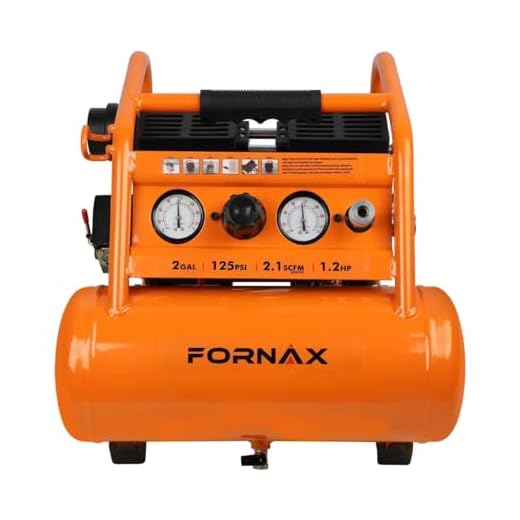
2 Gallon 1.2HP Silent Compressor
I appreciate this Fornax model as an affordable, quiet 2‑gallon compressor that does basic shop and inflation tasks well. Quality control (gauges, handle) can be inconsistent, so inspect on arrival and be ready to address small issues.
Overview
The FORNAX 2‑gallon compressor is an attractive budget option if you want a quiet, compact compressor without a high price tag. I’d recommend it for light shop tasks, inflation, and short bursts of finishing work where portability is helpful.
Key features and benefits
In daily use it’s pleasantly quiet and refills the small tank quickly, which keeps interruptions minimal for short jobs. The performance is solid for single nailers, inflation, and light airbrushing.
Limitations and practical notes
Who this is for
Pick this if you want a low‑cost, quiet portable compressor for basic workshop and home tasks and you’re prepared to verify quality on delivery or perform small fixes if needed.
6 Gallon 1HP Ultra Quiet Compressor
I like this unit as an inexpensive step up from tiny pancake compressors — it’s quiet enough for a garage and delivers usable CFM for small tools. Build quality is hit‑or‑miss, so I’d treat longevity as a variable.
Overview
This 6‑gallon 1 HP oil‑free compressor is an attractive mid‑range option if you want more reserve than a 1–2 gallon tank without stepping up to a lawn‑tractor sized unit. I view it as an economical choice for moderate hobby and light professional use.
Key features and benefits
In practice, it’s useful for tire inflation, finishing nailers, light spray work, and running tools for short bursts. The recharge time is quick compared with small pancake models, which makes workflow smoother.
Limitations and practical notes
Who this is for
Choose this if you want an affordable, quietish compressor with more tank capacity than the smallest models and are comfortable accepting some variability in long‑term durability.
Final Thoughts
I’m picking two clear winners for different needs.
Light & Quiet 1 Gallon Compressor — Best for indoor hobbyists and light pros. This California Air Tools style unit is the quietest in its size class and unbelievably easy to move. I recommend it when you need near-silent operation for brad and finish nailers, airbrushing, touch-ups, or any work you want to do inside without startling the neighbors or losing the ability to talk. It’s my go-to when portability and minimal sound matter more than long continuous run time.
2.0 HP Soundproof Cabinet Compressor — Best for whisper-quiet heavy-duty work. If you need sustained CFM and full-size motor performance without a shop full of noise, this is the one I pick. It delivers shop-grade airflow with cabinet-style sound isolation, so you can run bigger nailers or more continuous tool cycles in a shared garage or indoor shop and still hold a conversation.
If you want one compact quiet unit for light indoor tasks, grab the 1-gallon Light & Quiet. If your work includes longer runs or heavier tools and you need real capacity without the racket, get the 2.0 HP Soundproof Cabinet model.







Nice list. I’m torn between the California Air Tools 10020SPC (10 gal sound-proof cabinet) and the Stealth 20 gallon unit for a two-person home shop.
The CAT promises whisper-quiet heavy duty work, but the Stealth has the bigger reservoir and higher CFM for sustained use. Anyone used both? Which one actually stays quiet when pulling 5+ CFM for a sustained period?
Also consider recovery time and compressor placement — putting the unit in a separate closet or behind a sound curtain can make either choice much more tolerable.
The 10020SPC is impressive for full-size shop use — the cabinet really reduces perceived noise. For sustained high-CFM tasks the Stealth 20 will supply more continuous air due to its reservoir, but you’ll hear it more when it kicks in. If noise is the top priority, go CAT; if throughput is, go Stealth.
If it helps: I run a spray booth with the CAT 10020SPC and it stays low enough to talk. The cabinet does make a difference, especially in enclosed shops.
I switched from a Stealth 12 to the Stealth 20 — the bigger tank is a game-changer for two-person work. Still quieter than my old pancake compressor, but yes, you’ll notice the 68 dB kicks.
Full disclosure: I’m a hobbyist who paints and does trim work on weekends.
The California Air Tools 2010A was my pick and it’s been great. Quiet enough to work inside without the cat freaking out, easy to move, and far more reliable than the cheap pancake I had before.
If you want short, clear advice: buy the 2010A if you want value and low noise for light jobs. Save the bigger tanks for sustained shop work.
Thanks — that helps. Which nailers are you running with the 2010A? I’m mainly using a brad and an airbrush setup.
Great summary — the 2010A is often the best balance for hobbyists. Thanks for sharing your experience!
Has anyone tried the Metabo HPT EC28M with different nailers? I like the universal quick coupler idea, but I’m not 100% sure about compatibility with my older Paslode finish nailer. Looking for real-world compatibility notes.
I run a Metabo HPT with a couple of different finish nailers — no issues. Super portable and quiet. 👍
The Metabo HPT uses standard fittings; most Paslode finish nailers work fine with it. If your Paslode predates common quick-connects, you might need a simple adapter, but electrically/mechanically it’s fine.
I was disappointed the 4620AC is listed as ‘quiet’ at 70 dB. That’s almost the same as a vacuum cleaner IMO. If you’re in a shared workspace or apartment, 70 dB will get noticed. The review’s verdict praises it, but the numbers don’t convince me.
Maybe it’s a good trade-off for the power, but I wouldn’t call 70 dB ‘quiet’ without context.
You’re right to call that out. 70 dB is louder than the smaller models — the ‘quiet’ in the verdict is relative to other compressors of similar power. If absolute quiet is required, consider the cabineted 10020SPC or smaller 56–59 dB units.
70 dB = not whisper silent. I use mine in a detached garage so it didn’t bother me, but neighbors would’ve complained if it were inside.
Agreed. I owned a 4620AC for a while and it definitely sounded louder than the inbox pictures suggested. Powerful though — recovers fast.
I used the 8 Gallon (1.5HP 4.52 CFM) for a small car repaint and it held up surprisingly well for basecoat/clearcoat work.
Not the absolute quietest, but the tank size was very practical. Definitely better than the pancake compressors for paint jobs.
Anyone else used the 8 gal for automotive paint?
Good to hear it worked for paint — the 8-gallon is a good middle ground. For consistent paint finishes, pair it with a moisture trap and a decent gun regulator.
Yep used it for spot repairs — added a small inline filter and it did the job. Not ideal for full resprays, but great for patches.
Metabo HPT or CAT 1P1060S for portability? I’m a contractor who needs something I can toss in the truck for trim jobs. Both look compact and quiet.
I take the Metabo everywhere — lighter to carry. CAT is a touch quieter, but the weight adds up on all-day jobs.
Both are excellent. Metabo HPT is very compact and geared toward portability; CAT-1P1060S is slightly larger but super quiet. If truck space and weight are critical, Metabo HPT wins; if noise inside homes is your top concern, go CAT.
Thinking about the FORNAX 2 gal budget option. The review mentions QC issues (gauges, handle). Has anyone had to return one? I’m fine with a budget buy but not if it arrives busted. Also—any quick DIY fixes for dodgy gauges?
I returned mine — gauge didn’t budge from zero. Amazon RMA was straightforward though. If you’re patient, it’s a cheap way to get a quiet little compressor.
DIY gauge swap is easy if you’re handy. Otherwise expect some customer-service juggling.
If you buy, consider ordering from a seller with good returns and keep the packaging intact until you’ve tested it. That makes any return process smoother.
I got one and the handle was a bit loose but I tightened the bolts and it’s fine. The gauge looked cheap but reads ok compared to a digital tire gauge.
Returns are hit-or-miss—some users got perfect units, others had minor defects. If the gauge is off, you can temporarily use an inline gauge or replace the gauge (standard replacements are inexpensive). Inspect on arrival and document photos for an easy return.
Quick question about oil-free compressors: are they noticeably less durable than oil-lubricated ones long-term? The article lists several oil-free units (CAT, Metabo, etc.) — I’m considering long-term shop use and don’t want to trade quiet for a short lifespan.
Oil-free pumps generally need less maintenance and are lighter; many modern oil-free designs are robust for hobby and light professional use. For heavy continuous-duty shop work, oil-lubed units can offer longer life, but the noise and upkeep increase. Choose based on duty cycle.
Also: proper ventilation and not overheating the compressor will extend oil-free pump life substantially. Don’t block intake vents, and follow start/stop duty recommendations.
I’ve had an oil-free unit for 6 years with light-to-moderate use and it’s still fine. If you run 8–10 hours daily, consider oil-lubed.
Thanks for the roundup — great writeup!
I’m leaning toward the California Air Tools CAT-1P1060S for working inside my garage while my wife paints furniture. Does anyone run this model for longer than quick nailer bursts? I’m worried about duty cycle and heat if used for 15–20 minute sessions.
Also, how loud is 56 dBA in practice? I know numbers are helpful but curious about real-world use (conversation-level, or still noticeably quieter?).
Good question — the CAT-1P1060S is designed for intermittent use (brad/finish nailers) and is fine for 15–20 minute sessions with short breaks. 56 dBA is roughly like a quiet office — you can hold a normal conversation without shouting.
56 dBA felt surprisingly quiet to me — less intrusive than my fridge hum. But if your plan is continuous spray painting you might want a bigger tank.
I have that CAT unit — it runs cool for the short bursts I do. If you’re doing continuous nailing it’d struggle a bit, but for furniture trim it’s perfect. 👍
I really appreciated the dBA comparisons in the article. A few thoughts from my side:
– Always compare dBA at the same distance and similar load conditions.
– A 2–4 dB difference is noticeable but not dramatic; 10+ dB is a big jump.
– For shared spaces, consider cabineted models or putting the compressor in an insulated closet.
Noise preferences are personal — some of us are extremely sensitive, others could care less. The roundup helped me prioritize options based on where I’d use the compressor.
Excellent practical notes — especially the point about measurement conditions. Thanks for adding that useful context.
The dB distance thing is key. A compressor might read 56 dB at 1 m but much quieter at 3–4 m if you can locate it away from your workspace.
Exactly — placement can turn a noisy unit into a ‘background hum’ real quick. Worth planning before buying.
So apparently ‘ultra quiet’ compressors are a thing now. Who knew? 😅
I was half expecting a tiny whispering robot. Bought the Stealth 12 gal for the garage and it really is quieter than my old tank. Still, when it kicks in everyone in the house knows — laughable vs ‘silent’ marketing.
But seriously, it’s a solid workhorse and the wheels help — two thumbs up.
Totally — I call mine ‘the polite compressor’ rather than silent. 😂 It hums but doesn’t ruin the afternoon.
Exactly! ‘Polite compressor’ is perfect. Also — pro tip: move it on a rug and the sound reflection changes for the better.
I found placing it slightly behind a workbench cuts the perceived noise by a lot. Sound baffling works wonders.
Ha — marketing does like to exaggerate. ‘Ultra quiet’ is comparative. Glad the Stealth 12 worked out for you; wheels are underrated.
The 6 Gallon 1HP 2.5 CFM @90PSI model looks like a good budget pick. Anyone had mixed build quality like the reviews say? I’m ok replacing parts if cheap, but don’t want a unit that’s a constant headache.
Some users report hit-or-miss quality. If you get one, check fittings and gauges immediately and keep packaging until you’re satisfied. Many are fine out of box; a subset need small fixes.
I bought a similar 6 gal unit — had to reseal a loose fitting but otherwise solid. For the price it’s hard to beat.