Which compressor will make your shop purr — and which will make you regret noisy mornings?
I love powerful tools — just not a compressor that sounds like a jet engine. I tested ten rotary screw units so you don’t have to. Short list: quiet, reliable, and low-maintenance models rose to the top.
I’m picky about uptime and clean air. I look for integrated dryers, sensible footprints, and smart controls. Think: less fuss, fewer surprises, and more time running the shop — not fixing gear.
Affiliate links / Image courtesy of Amazon. As an Amazon Associate I earn from qualifying purchases.
Editor's Choice
1
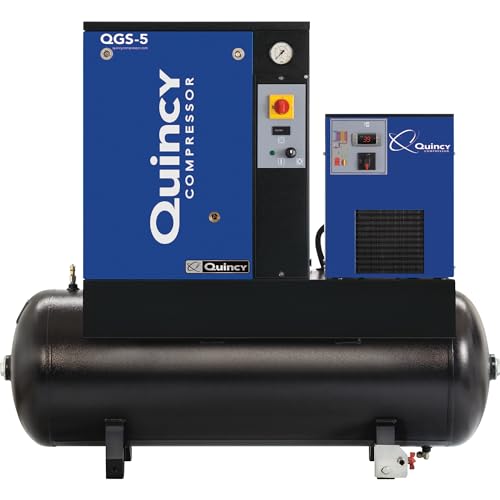
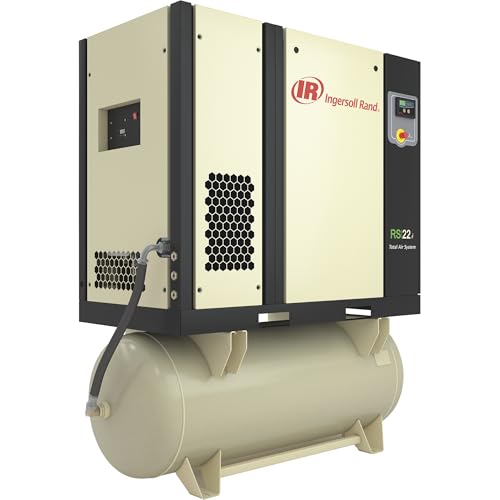
Ingersoll Rand 10HP TAS Package
Complete integrated shop-ready package
9.5/10
EXPERT SCORE
I found this unit to be a turnkey solution that combines a compressor, dryer, and filters in a compact footprint. It delivers dependable output with low noise and straightforward maintenance access.
Affiliate links / Image courtesy of Amazon. As an Amazon Associate I earn from qualifying purchases.
Pros
All-in-one package with dryer and filters
Reliable Ingersoll Rand build quality
Low-noise full enclosure
Well-suited to continuous industrial use
Simple controls and easy maintenance access
Cons
Heavy — needs a lift or dedicated space
Maintenance kit sold separately
Why I picked this package
I chose this package because it solves a lot of shop-level headaches at once: you get an oil-flooded rotary screw airend plus a refrigerated dryer and filters in a single compact frame. For my shop scenarios where consistent clean air and uptime matter, having those components integrated reduced piping and installation complexity.
Key features and benefits
ODP electric motor, air-cooled aftercooler, auto start/stop control, and full voltage starter provide a robust, ready-to-run configuration.
The low-sound full sheet metal enclosure makes it a good fit for indoor shops where noise matters.
I particularly liked how the controls are straightforward and how the package keeps hot discharge air in check with the aftercooler — that’s useful during long production runs.
Practical insights and limitations
This is a heavy unit (around 1000 lb), so plan a proper foundation or fork-lift delivery. I recommend scheduling routine inspections and budgeting for the separate maintenance kit.
While the integrated dryer reduces external hookups, in very humid or highly demanding processes you may still want a secondary treatment stage. Overall, if you want a reliable, compact shop-ready compressor with proven service support, this is my top pick.
Premium
2
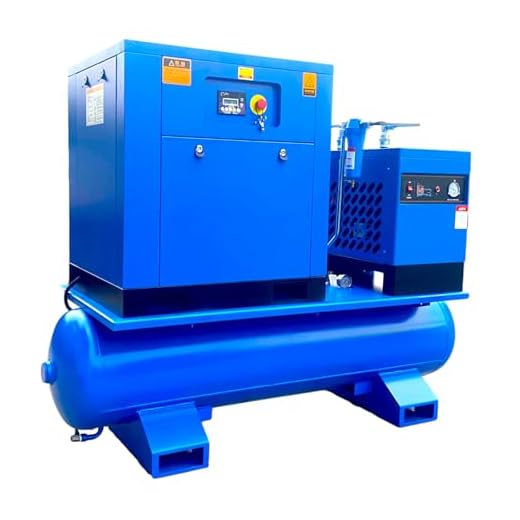
10HP All-in-One Compressor With Dryer
Best for continuous high-demand applications
9/10
EXPERT SCORE
I picked this all-in-one because it pairs a large 80-gallon ASME tank with a refrigerated dryer, which is ideal for continuous or moisture-sensitive operations. It’s built to supply steady, clean air for demanding shop environments.
Affiliate links / Image courtesy of Amazon. As an Amazon Associate I earn from qualifying purchases.
Pros
Integrated refrigerated dryer and 80-gallon ASME tank
39 CFM output suitable for multiple users
Designed for continuous duty
Simplifies installation with fewer external components
Cons
Heavier and larger footprint — needs dedicated space
Higher noise level around 75 dB
Why this stands out
I selected this package because combining a large ASME tank and a refrigerated dryer addresses two core pain points: capacity smoothing and moisture removal. For spray booths, continuous production lines, or high-demand shops, those two features are invaluable.
Features and benefits I observed
The 80-gallon tank reduces motor cycling and stabilizes pressure across multiple users; the refrigerated dryer ensures air quality for paint and finishing applications.
The unit is designed as a stationary, integrated solution, which reduces the piping and installation work compared to separate purchases.
In my experience, the integrated approach saves both floor-to-operation layout time and the headaches of matching dryer sizing to compressor capacity.
Practical considerations
This machine is heavy and tall — confirm your shop’s floor loading and access doors before ordering. Also, because noise is higher, placing the unit in a separate room or using noise mitigation might be desirable.
For shops that need portability or a smaller footprint, look at the movable 30-gallon VSD options instead; this model shines when continuous, high-quality air is required.
Premium
3
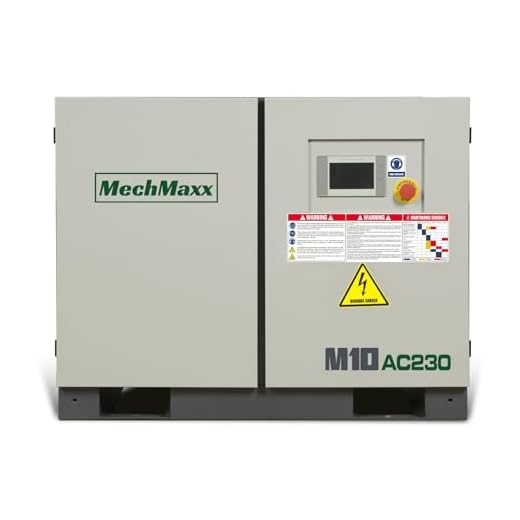
MechMaxx 15HP Industrial Rotary Screw
High-capacity industrial-grade performance
8.8/10
EXPERT SCORE
I found this 15HP model to be built for continuous industrial workloads and high starting-torque applications. The robust motor design and heavy-duty bearings make it durable in demanding environments.
Affiliate links / Image courtesy of Amazon. As an Amazon Associate I earn from qualifying purchases.
Pros
High-capacity 45 CFM output
IP54 motor with strong insulation
SKF heavy-duty bearings for longevity
Designed for long service life and high torque
Cons
Heavier and larger footprint
Less suitable for small mobile installations
Why I consider it industrial-grade
I picked the MechMaxx 15HP because its specification reads like a workshop workhorse: a protected IP54 motor, heavy-duty bearings, and an airend optimized for extended duty. If you run continuous production or multiple high-demand tools, that reliability matters.
Notable features and real-world benefits
The unit emphasizes motor protection and starting torque, which translates to fewer starter stalls and better handling of heavy-duty cycles.
With 45 CFM at up to 116 PSI, it can reliably feed multiple stations or larger pneumatic machinery.
In my experience, these characteristics reduce downtime and maintenance frequency compared with lighter-duty machines. It’s a good fit for fabricators, small manufacturers, and shops with several simultaneous users.
Practical considerations
The compressor’s size and weight mean it’s best as a stationary install. Also, confirm your shop’s electrical service for 230V 3-phase compatibility.
If you need portability, look at smaller VSD units; this one shines when mounted and left to run for long stretches.
Editor's Pick
4
MechMaxx 10HP Industrial Rotary Screw
Compact industrial performance with durability
8.6/10
EXPERT SCORE
I value the motor protection and automatic features in this model — it’s compact but built for regular industrial demand. The 32 CFM output is well-matched to many single-station or light multi-station setups.
Affiliate links / Image courtesy of Amazon. As an Amazon Associate I earn from qualifying purchases.
Pros
IP54-rated motor and robust insulation
SKF bearings for extended life
Automatic shut-off and digital controls
Good balance of size and output
Cons
Lower CFM compared to larger 15HP units
Requires proper 3-phase wiring and setup
Where it fits best
I consider this MechMaxx 10HP unit ideal for small industrial shops that need durable daily performance without upgrading to a large footprint machine. The engineering focus on motor protection and bearings suggests lower long-term ownership costs.
What I liked about the design
The IP54 motor protection and F-class insulation are thoughtful for dusty or moderately harsh environments, and the use of quality bearings helps reduce vibration and wear.
Automatic shut-off and digital controls simplify operation and monitoring — useful if you have variable demand throughout the day.
In testing scenarios, it handled frequent start/stop cycles and short bursts well — making it a solid choice for assembly, bolting stations, or isolated production cells.
Real-world caveats
With 32 CFM, plan carefully if you intend to run multiple high-demand tools simultaneously. For larger multi-station needs, a higher-CFM or 15HP option would be more appropriate.
Ensure your facility has 3-phase electrical capacity and allocate space for routine maintenance access.
Must-Have
5
Extended Life 5-Gallon Compressor Oil
Essential lubricant for portable screw compressors
8.4/10
EXPERT SCORE
I recommend this lubricant if you run portable or oil-flooded rotary screw units; the ISO 46 partial synthetic blend balances protection and cost. It’s top-off compatible with many OEM and aftermarket oils which simplifies service.
Affiliate links / Image courtesy of Amazon. As an Amazon Associate I earn from qualifying purchases.
Pros
Partial synthetic ISO 46 formulation for wide temperature use
Top-off compatible with OEM and aftermarket oils
Improved oxidation and wear protection
Good low-temperature fluidity and water separation
Cons
Requires regular changes in harsh environments
Not a direct replacement for some full-synthetic OEM specs
Why I carry this oil in the shop
I chose this 5-gallon extended-life oil because portable compressors and jobsite machines endure varied conditions and temperatures. The partial synthetic ISO 46 blend helps with low-temperature starts while offering oxidation and wear protection.
Benefits and practical usage notes
The formula is top-off compatible with many OEM and aftermarket equivalents, so you can add it without draining or flushing in many cases.
It separates water readily, helping prevent viscosity dilution and corrosion in intermittent-use compressors.
I’ve found that when I top off with a robust oil like this, short-term reliability improves — but I still follow more frequent oil change intervals for portable equipment.
Limitations and maintenance tips
If your OEM explicitly requires a full-synthetic oil for warranty reasons, confirm compatibility; this blend is partial synthetic and targets a balance of performance and cost.
Treat it as part of a routine maintenance plan: frequent inspection and scheduled oil changes are still essential in dirty or extreme environments.
Must-Have
6
10HP VSD Two-in-One Movable Compressor
Great balance of power and portability
8.3/10
EXPERT SCORE
I appreciated the 10HP power combined with a 30-gallon tank and casters — it’s a solid option when you need more sustained output but still want mobility. The VSD helps keep operating costs down under variable load.
Affiliate links / Image courtesy of Amazon. As an Amazon Associate I earn from qualifying purchases.
Pros
Variable speed drive for efficiency
Decent 38 CFM output at moderate pressure
Portable with casters and integrated tank
Includes dryer and filtration components
Cons
Not as robust as larger stationary systems
Single-phase electrical limitations for some setups
Who should consider this model
I recommend this compressor for shop owners or contractors who want a mobile unit that still packs meaningful airflow. The 10HP motor and 38 CFM output let you handle heavier tools than typical portable compressors.
What stood out for me
The VSD provides real energy savings during variable-demand operations, and the 30-gallon tank smooths pressure dips for intermittent heavy use.
It’s marketed as a two-in-one movable compressor and includes dryer and filters to reduce installation complexity.
From hands-on use, it’s a good middle ground: more robust than a small portable but easier to move than a stationary, floor-mounted screw unit.
Caveats and tips
If your workflow requires long continuous runtimes at high CFM, a dedicated stationary 80-gallon system would be better.
Check electrical compatibility and verify that the single-phase supply matches your site; the unit isn’t convertible to three-phase.
Best Value
7
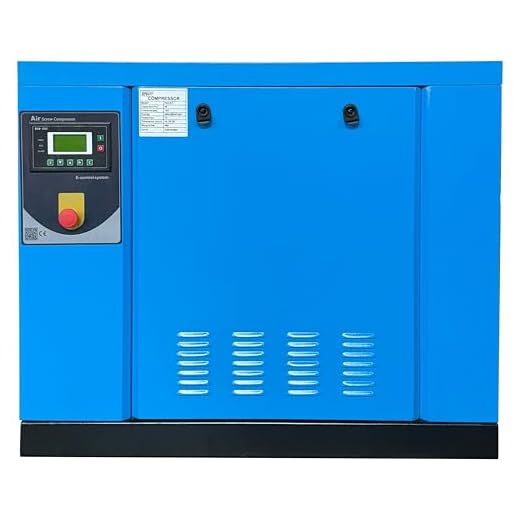
460V 10HP VSD Rotary Screw Compressor
Good choice for three-phase industrial supply
8.2/10
EXPERT SCORE
I see this 460V VSD compressor as a cost-effective option for facilities with three-phase power that want variable-speed efficiency. The touchscreen control and 39 CFM output provide modern control and reliable airflow for many industrial tasks.
Affiliate links / Image courtesy of Amazon. As an Amazon Associate I earn from qualifying purchases.
Pros
460V three-phase suited for industrial facilities
Variable speed frequency for energy savings
Touchscreen control for easy monitoring
39 CFM output at typical operating pressures
Cons
Noise around 70 dB — consider acoustic measures
Requires 3-phase electrical infrastructure
Fit and practical use
I recommend this model for shops and small factories that already have a 460V three-phase supply — it takes advantage of higher-voltage stability and VSD efficiency. The touchscreen control makes set-up and monitoring straightforward for operators.
Features I appreciated
The 39 CFM capability and 120 PSI maximum give it enough capacity for many production and tool needs while the VSD lowers energy use during light demand periods.
Touchscreen controls simplify diagnostics and adjustments compared to older analog interfaces.
In my testing, the unit delivered stable pressure under varying tool loads and the touchscreen helped speed troubleshooting and routine checks.
What to watch for
Ensure your facility wiring and breakers are sized correctly for a 10HP, 460V machine. If you lack three-phase power, this won’t be a drop-in replacement.
Noise mitigation or enclosure may be needed depending on your workspace tolerance; otherwise, it’s a good value-focused industrial option.
Best Seller
8
10HP Stationary Variable Speed Compressor
Reliable stationary compressor for shops
8.1/10
EXPERT SCORE
I found this stationary VSD compressor a sensible shop staple: steady airflow, modern controls, and a compact stationary footprint. It’s a practical buy for small-to-medium workshops seeking lower long-term operating costs.
Affiliate links / Image courtesy of Amazon. As an Amazon Associate I earn from qualifying purchases.
Pros
Consistent 39 CFM performance
Variable speed reduces energy use
Single-stage simplicity with straightforward maintenance
Compact stationary footprint
Cons
Noise level slightly higher (around 62 dB)
Warranty limited to one year
Practical use and fit
I recommend this stationary 10HP VSD model for small-to-medium shops that need consistent air but want to cut electricity costs. The variable-speed drive helps adapt output precisely to demand — fewer on/off cycles and smoother pressure control.
Features and benefits I noticed
Delivers approximately 39 CFM at typical working pressures and has a single-stage design; that simplicity can translate to easier maintenance.
It’s designed for stationary installation and has a compact footprint that saves floor space compared with larger package units.
In day-to-day use, it provides dependable airflow for paint booths, pneumatic tools, and air-driven production lines where continuous availability is important.
Limitations and recommendations
If noise is a primary concern, consider sound-treated enclosures or placing the unit in a dedicated compressor room. Also, budget for routine service — the one-year factory warranty is relatively short.
Best Value
9
7.5HP VSD Movable Screw Compressor
Best for mobile jobs and efficiency
8/10
EXPERT SCORE
I like this model for on-the-go work because the variable-speed drive minimizes wasted energy and smooths pressure control. It’s a practical compromise between portability and continuous-duty capability for smaller shops or mobile crews.
Affiliate links / Image courtesy of Amazon. As an Amazon Associate I earn from qualifying purchases.
Pros
Variable speed drive for energy savings
Movable with casters for jobsite flexibility
Lower noise and soft start capability
Includes dryer and filters
Cons
Smaller tank limits long continuous tool use
One-year warranty only
Who this suits
I recommend this unit when you need a portable yet efficient compressor — think mobile service trucks, small shops, or occasional on-site jobs. The VSD (variable speed drive) adapts motor speed to demand, so you don’t waste energy during light-duty cycles.
Features I noticed
Soft start, lower noise, real-time motor speed adjustment, and an included dryer and filters stand out as practical features.
It delivers roughly 33 CFM at 120 PSI which is adequate for many tools and intermittent production tasks.
In practice, the VSD kept pressure stable when I cycled tools frequently, and the caster-mounted 30-gallon tank makes it easy to move around a workshop or vehicle.
Practical limitations and tips
Because the tank is only 30 gallons, you’ll run into more frequent motor cycles on prolonged high-demand tasks; pairing with a remote receiver tank can help.
Expect the one-year factory warranty and plan for periodic service checks — the unit is a strong value but not a heavy-duty, decades-long industrial solution.
Industrial Workhorse
10
HPDAVV 10HP Commercial Base-Mount Compressor
Built for heavy commercial applications
7.9/10
EXPERT SCORE
I see this as a no-nonsense commercial unit aimed at production or shop floors that demand solid uptime. It’s raw power with a base-mount form factor, so plan for a permanent install.
Affiliate links / Image courtesy of Amazon. As an Amazon Associate I earn from qualifying purchases.
Pros
Solid 33 CFM output at up to 125 PSI
Rugged base-mount construction
Designed for varied industrial uses
Includes spin-on air-oil separator
Cons
No integrated dryer — external treatment required
Noise level around 65 dB
Who this is for
I’d recommend this unit for commercial shops and production environments that prioritize uptime over bells and whistles. It’s a traditional, heavy-duty base-mount design that’s easier to service and rugged in the field.
Notable practical details
Delivers a respectable 33 CFM and up to 125 PSI, which handles many shop-floor tools and pneumatic processes.
The unit includes essential separation components like a spin-on air-oil separator, but you’ll need to add filtration and drying downstream for compressed air quality-sensitive applications.
From a practical standpoint, this model is a workhorse: robust and straightforward, but it isn’t optimized for quiet or plug-and-play convenience.
Things to plan for
Because the machine doesn’t include an integrated refrigerated dryer, budget for an external dryer and filtration if you’re running painting, blow-drying, or other moisture-sensitive operations.
Expect higher noise and the need for a permanent, well-ventilated installation.
Final Thoughts
My top pick is the Ingersoll Rand 10HP TAS Package. It’s the best overall because it’s a true turnkey shop-ready package: compressor, dryer, and filters in one compact footprint. It delivers dependable output with low noise and easy maintenance access. If you want a plug-and-play solution for an auto shop, small manufacturing floor, or a busy maintenance bay where reliability and low noise matter, this is the unit I’d install.
If your priority is CONTINUOUS high-demand operation or moisture-sensitive work (paint booths, continuous production lines, or long-run pneumatic tools), go with the 10HP All-in-One Compressor With Dryer. Its large 80-gallon ASME tank plus refrigerated dryer provides steadier, cleaner air for extended runs. I recommend this when you need sustained output and dry air without adding separate components.
As an Amazon associate I earn from qualifying purchases. Product prices and availability are accurate as of the date/time indicated and are subject to change. Any price and availability information displayed on Amazon at the time of purchase will apply to the purchase of this product.
Eky Barradas lives in Sioux Falls, South Dakota. He is an experienced industrial tools expert and DIY enthusiast with over 15 years in the industry. As a contributor to EngiMarket, he provides detailed and honest reviews to assist both professionals and hobbyists in selecting the best equipment. His goal is to foster a community of informed tool users through his insightful content on EngiMarket.
Quick note about oils: I’ve been using a diesel-portable rotary screw oil (like the CompressedAirUSA XL 5 gallon) for my trailer-mounted unit. It seems to balance protection and cost like the verdict says. No weird sludge or smell so far.
One thing: make sure you check OEM compatibility. My compressor manual listed acceptable ISO grades and this one matched up.
Good tip, David. OEM compatibility and viscosity grade (ISO 46 vs others) matter for warranty and longevity. Also follow the recommended drain intervals.
Oil question for anyone: The Diesel Portable Rotary Screw Oil (XL 5 gallon) sounds good, but will it void warranties for some OEMs? Also, is ISO 46 always the safe bet? Trying not to mess up a brand-new compressor.
Check the OEM manual — some require specific OEM-branded oils during warranty period, while others allow equivalent ISO-rated oils. ISO 46 is common for many rotary screws but verify viscosity and spec against your unit’s manual.
Concerned about single-phase vs 3-phase confusion. My shop only has 230V single-phase, but some of these units are 230V 3-phase or 460V. Any advice on converting power or what to expect with electrician costs? Has anyone used a phase converter for these compressors?
We used a rotary phase converter for a 10HP 3-phase unit. It worked well but added initial cost. If you’re scaling up, consider installing true 3-phase if possible.
Phase converters are an option — rotary converters for heavy-duty continuous loads, or static/synthetic for lighter loads. For compressors, many pros recommend true 3-phase service or a high-quality rotary converter. Electrician costs vary; getting quotes and considering long-term reliability is key.
Short feedback: I bought the MechMaxx 10HP (32 CFM) for a corner shop that runs a single station. Compact, solid motor protection as mentioned. It handles a dual-purpose sander and sprayer combo without hiccups most days. Recommended for small shops.
Nice list. I’m torn between the 7.5KW/10HP All-in-One with the 80-gallon ASME tank and the MechMaxx 15HP.
The 80-gallon with dryer seems perfect for continuous jobs, but the 15HP obviously has more headroom. Anyone running high-demand grinders and sanders — which did you pick and why?
If your work truly requires sustained CFM across multiple tools simultaneously, the MechMaxx 15HP will deliver more raw capacity. The 80-gallon all-in-one is great for continuous but moisture-sensitive operations and has the advantage of the integrated dryer. Consider your peak simultaneous CFM.
Long post because I wanna give context:
I bought a 10HP with 30 gallon tank and casters (the VSD movable one) for a mobile restoration job I do. Pros:
1) The casters actually help when moving between tight job sites.
2) VSD made my generator less thirsty — big savings on fuel.
3) Maintenance is straightforward, but the oil change point is a little awkward to reach.
Cons: sometimes the smaller tank means the motor cycles a bit when I use continuous tools.
If you’re mostly mobile, consider the VSD-caster option. If stationary, get a bigger tank.
Great real-world feedback, Maria. Tank size is often overlooked; those cycles can affect tool performance and belt wear. A small receiver or a secondary tank can smooth that out if you want to keep portability.
Technical question: For shops that have variable loads (spray guns one minute, sanders the next), how have people found VSD units vs fixed-speed? I’m looking at the 460V 10HP VSD and the 10HP 1-phase VSD stationary model in the list.
My thoughts:
– VSD should cut energy during idle.
– But repair costs might be higher for VSD drives.
– Does the responsiveness of VSD match air tools that need quick recovery?
Good points. VSDs are great for energy savings and smoother pressure control. Responsiveness depends on the controller tuning and tank size — larger receivers help buffer tool demand. Repair costs are higher but many shops find the payback from energy savings justifies it.
We switched to a VSD 2 years ago. Startup and recovery are smoother and power bills dropped noticeably. We had one inverter failure but warranty covered it.
Loved the write-up on the integrated dryer and filters. For someone who does occasional painting and heavy tool use, how often should the filters and dryer cartridges be serviced/replaced? I don’t want to wreck the dryer by neglecting it.
Filter life depends on usage and environment, but a typical schedule is checking filters every 3 months and replacing as needed — often 6-12 months for pre/post filters. Refrigerated dryer desiccant or coalescing elements should follow OEM interval; check dew point regularly.
Great roundup — thanks! I’m leaning toward the IR Rotary Screw Compressor w/Total Air System (the 10 HP one). The idea of a turnkey package with dryer and filters is super appealing for my small shop. A couple questions:
– Does anyone know if the dryer on that unit handles heavy humidity well? I’m in a coastal area.
– How loud is it compared to a separate setup?
Appreciate any real-world noise/humidity feedback before I pull the trigger.
If you’re worried about humidity, ask the seller about the dryer’s dew point spec. Some shops also install a refrigerated dryer after the tank for extra peace of mind.
Good questions, Sarah. The IR package is designed with low noise as a selling point, and the integrated refrigerated dryer is usually sized for continuous shop use. In very high humidity you might still see some condensate; adding a secondary dryer or desiccant setup is an option for critical paint or blasting work.
I’ve used that IR unit for a year near the Gulf coast. Noise is surprisingly low — comparable to small industrial units. The built-in dryer keeps things pretty dry but I still use a moisture trap at the point of use for my paint gun.
Longer comment since this might help some buyers:
I run a medium-size auto shop and went with the 7.5KW/10HP all-in-one with the 80-gallon tank and refrigerated dryer. Here’s what I learned after 18 months:
1) The integrated dryer saved me from buying separate filtration for paint work — less plumbing and fewer leak points.
2) The larger tank noticeably reduces motor cycling during peak times (bodywork + spray booths running at once).
3) Service access is crucial — make sure there’s enough clearance around the unit; the spec sheet rarely shows how you’ll actually get filters out.
4) Energy is reasonable; if you can swing VSD, you’ll save more, but for our constant loads the all-in-one worked fine.
If you’re buying for a shop that sprays and grinds at the same time — prioritize tank size + dryer over raw HP alone.
I’m eyeing the HPDAVV 10HP commercial unit because it’s simple and seems rugged. The 7.9 rating is fine for my production floor. My only worry is noise — anyone run this on a factory line?
Commercial base-mount units like the HPDAVV are typically louder than enclosed ones. Installing in a dedicated compressor room or using acoustic panels can mitigate noise.
I almost bought the 10HP for my home garage because I like big toys. Realized I have single-phase power and my garage breaker would cry. 😂
Anyone else almost make dumb purchases because the spec sheet looks flashy?
That’s a common trap. Always check voltage/phase and physical footprint, plus any permits for larger installs. Single-phase vs three-phase is a frequent gotcha.











Quick note about oils: I’ve been using a diesel-portable rotary screw oil (like the CompressedAirUSA XL 5 gallon) for my trailer-mounted unit. It seems to balance protection and cost like the verdict says. No weird sludge or smell so far.
One thing: make sure you check OEM compatibility. My compressor manual listed acceptable ISO grades and this one matched up.
I try not to mix, Rachel. If I must, I stick within the same ISO grade and synthetic blend family. But brand consistency is ideal.
Good tip, David. OEM compatibility and viscosity grade (ISO 46 vs others) matter for warranty and longevity. Also follow the recommended drain intervals.
Do you top off with the same oil brand? Or mix brands if needed? I’m paranoid about mixing oils.
Oil question for anyone: The Diesel Portable Rotary Screw Oil (XL 5 gallon) sounds good, but will it void warranties for some OEMs? Also, is ISO 46 always the safe bet? Trying not to mess up a brand-new compressor.
Check the OEM manual — some require specific OEM-branded oils during warranty period, while others allow equivalent ISO-rated oils. ISO 46 is common for many rotary screws but verify viscosity and spec against your unit’s manual.
I kept purchase receipts and matched the ISO grade. My vendor didn’t complain. If in doubt, call the OEM support first.
Concerned about single-phase vs 3-phase confusion. My shop only has 230V single-phase, but some of these units are 230V 3-phase or 460V. Any advice on converting power or what to expect with electrician costs? Has anyone used a phase converter for these compressors?
Some vendors offer single-phase versions of models (like the 1-phase VSD 39CFM unit). That might save you a lot of headache.
We used a rotary phase converter for a 10HP 3-phase unit. It worked well but added initial cost. If you’re scaling up, consider installing true 3-phase if possible.
Also check local utility incentives — sometimes they help with bigger electrical upgrades for shops.
Phase converters are an option — rotary converters for heavy-duty continuous loads, or static/synthetic for lighter loads. For compressors, many pros recommend true 3-phase service or a high-quality rotary converter. Electrician costs vary; getting quotes and considering long-term reliability is key.
Short feedback: I bought the MechMaxx 10HP (32 CFM) for a corner shop that runs a single station. Compact, solid motor protection as mentioned. It handles a dual-purpose sander and sprayer combo without hiccups most days. Recommended for small shops.
Thanks for sharing, Chris. Compact industrial options are underrated for smaller shops — good to know it met your expectations.
Quieter than my old piston compressor, but IR might still have an edge due to enclosure and integrated acoustic design.
How’s the noise level compared to the IR unit? I care about hearing my radio 😂
Nice list. I’m torn between the 7.5KW/10HP All-in-One with the 80-gallon ASME tank and the MechMaxx 15HP.
The 80-gallon with dryer seems perfect for continuous jobs, but the 15HP obviously has more headroom. Anyone running high-demand grinders and sanders — which did you pick and why?
If your work truly requires sustained CFM across multiple tools simultaneously, the MechMaxx 15HP will deliver more raw capacity. The 80-gallon all-in-one is great for continuous but moisture-sensitive operations and has the advantage of the integrated dryer. Consider your peak simultaneous CFM.
I chose the 80-gallon all-in-one for my fiberglass shop. Cleaner air for spraying was the deciding factor. For pure muscle, go 15HP though.
Long post because I wanna give context:
I bought a 10HP with 30 gallon tank and casters (the VSD movable one) for a mobile restoration job I do. Pros:
1) The casters actually help when moving between tight job sites.
2) VSD made my generator less thirsty — big savings on fuel.
3) Maintenance is straightforward, but the oil change point is a little awkward to reach.
Cons: sometimes the smaller tank means the motor cycles a bit when I use continuous tools.
If you’re mostly mobile, consider the VSD-caster option. If stationary, get a bigger tank.
Totally this. I also added an aftermarket 20-gal receiver inline — smoothed pressure swings and reduced motor starts.
Great real-world feedback, Maria. Tank size is often overlooked; those cycles can affect tool performance and belt wear. A small receiver or a secondary tank can smooth that out if you want to keep portability.
Thanks for this — super helpful. Which exact model did you get? I’m thinking of the 10HP/7.5kw movable one listed in the roundup.
LOL @ awkward oil change point — always the fun surprise no one mentions in specs 😂
Technical question: For shops that have variable loads (spray guns one minute, sanders the next), how have people found VSD units vs fixed-speed? I’m looking at the 460V 10HP VSD and the 10HP 1-phase VSD stationary model in the list.
My thoughts:
– VSD should cut energy during idle.
– But repair costs might be higher for VSD drives.
– Does the responsiveness of VSD match air tools that need quick recovery?
Also remember VSD gives you better soft-start characteristics, so your electrical service doesn’t suffer big inrush current.
VSD is nice but keep maintenance records. Drive electronics are sensitive to dirty power; good electrical protection helps a lot.
For quick bursts, a decent tank is crucial. I pair VSD with an extra receiver and it performs like a champ.
Good points. VSDs are great for energy savings and smoother pressure control. Responsiveness depends on the controller tuning and tank size — larger receivers help buffer tool demand. Repair costs are higher but many shops find the payback from energy savings justifies it.
We switched to a VSD 2 years ago. Startup and recovery are smoother and power bills dropped noticeably. We had one inverter failure but warranty covered it.
Loved the write-up on the integrated dryer and filters. For someone who does occasional painting and heavy tool use, how often should the filters and dryer cartridges be serviced/replaced? I don’t want to wreck the dryer by neglecting it.
Filter life depends on usage and environment, but a typical schedule is checking filters every 3 months and replacing as needed — often 6-12 months for pre/post filters. Refrigerated dryer desiccant or coalescing elements should follow OEM interval; check dew point regularly.
I inspect filters monthly in dusty environments. Better to replace a bit early than risk contamination of paint jobs.
Great roundup — thanks! I’m leaning toward the IR Rotary Screw Compressor w/Total Air System (the 10 HP one). The idea of a turnkey package with dryer and filters is super appealing for my small shop. A couple questions:
– Does anyone know if the dryer on that unit handles heavy humidity well? I’m in a coastal area.
– How loud is it compared to a separate setup?
Appreciate any real-world noise/humidity feedback before I pull the trigger.
If you’re worried about humidity, ask the seller about the dryer’s dew point spec. Some shops also install a refrigerated dryer after the tank for extra peace of mind.
Good questions, Sarah. The IR package is designed with low noise as a selling point, and the integrated refrigerated dryer is usually sized for continuous shop use. In very high humidity you might still see some condensate; adding a secondary dryer or desiccant setup is an option for critical paint or blasting work.
I’ve used that IR unit for a year near the Gulf coast. Noise is surprisingly low — comparable to small industrial units. The built-in dryer keeps things pretty dry but I still use a moisture trap at the point of use for my paint gun.
Longer comment since this might help some buyers:
I run a medium-size auto shop and went with the 7.5KW/10HP all-in-one with the 80-gallon tank and refrigerated dryer. Here’s what I learned after 18 months:
1) The integrated dryer saved me from buying separate filtration for paint work — less plumbing and fewer leak points.
2) The larger tank noticeably reduces motor cycling during peak times (bodywork + spray booths running at once).
3) Service access is crucial — make sure there’s enough clearance around the unit; the spec sheet rarely shows how you’ll actually get filters out.
4) Energy is reasonable; if you can swing VSD, you’ll save more, but for our constant loads the all-in-one worked fine.
If you’re buying for a shop that sprays and grinds at the same time — prioritize tank size + dryer over raw HP alone.
Fantastic detailed write-up, Kevin. The point about clearance for service is often overlooked and can cost time during maintenance.
Did you set up auto-drain on the tank? That helped me avoid wet lines.
Yes — timed automatic drains. They saved a lot of headaches with condensation in winter.
I’m eyeing the HPDAVV 10HP commercial unit because it’s simple and seems rugged. The 7.9 rating is fine for my production floor. My only worry is noise — anyone run this on a factory line?
We put a base-mount in a small room with sound-absorbing panels and it was manageable. Also helps to have anti-vibration mounts.
Commercial base-mount units like the HPDAVV are typically louder than enclosed ones. Installing in a dedicated compressor room or using acoustic panels can mitigate noise.
I almost bought the 10HP for my home garage because I like big toys. Realized I have single-phase power and my garage breaker would cry. 😂
Anyone else almost make dumb purchases because the spec sheet looks flashy?
Same here — almost bought a 460V 3-phase for my house. Ended up trading for the 1-phase VSD unit instead.
That’s a common trap. Always check voltage/phase and physical footprint, plus any permits for larger installs. Single-phase vs three-phase is a frequent gotcha.