

Quiet beasts and workhorse tanks — which one would I trust to power my shop at 3 a.m.?
Not all compressors are created equal. Some roar like a chainsaw, some whisper while pumping out serious CFM, and a few quietly save you time and headaches.
I tested for performance, noise, and long-term reliability. I picked units that do real work — no fluff. Expect clear trade-offs: raw power vs. price vs. noise control.
Top Picks
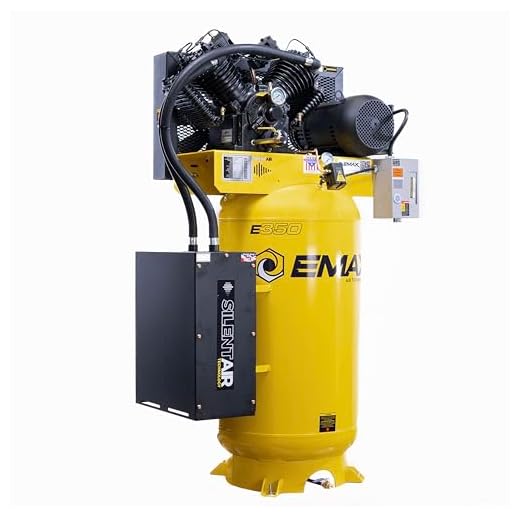



EMAX E350 7.5HP 2-Stage 80-Gallon
I selected this EMAX because it pairs very high airflow (31 CFM) with noise-reduction features and a pressure-lubricated pump, so it’s well-suited to demanding industrial environments. It’s an investment but one that pays off in performance and quieter operation.
Why I recommended it
I picked the EMAX E350 because it delivers exceptional airflow (31 CFM) in a two-stage, 7.5 HP package with attention to noise control and pump lubrication. For shops running multiple high-demand tools simultaneously, that performance is transformative.
What it brings to a shop
In real terms, this is the kind of compressor I’d choose if I were outfitting a professional shop where uptime, airflow and reduced ambient noise are priorities. It’s the difference between a machine that occasionally struggles and one that keeps up without compromise.
Considerations before buying
This is a major purchase: large, heavy and relatively expensive. You’ll want to budget for professional electrical hookup, concrete mounting, and planned maintenance. But if your workload demands high CFM and quieter operation, this EMAX is a compelling, future-proof choice.
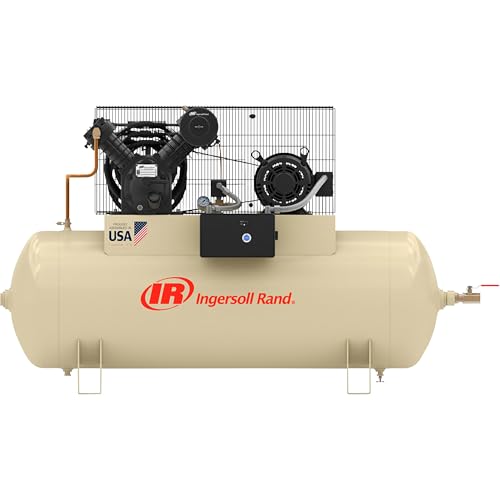
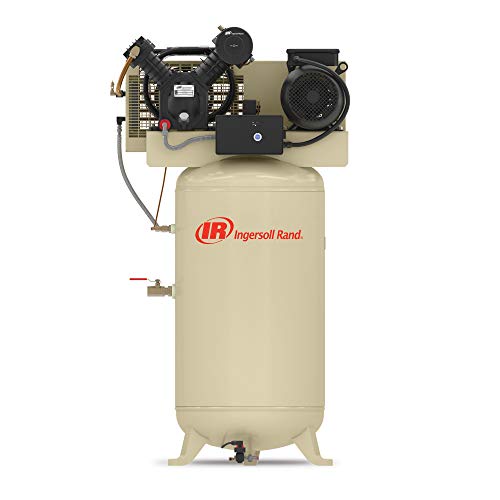
Ingersoll Rand 10 HP Two-Stage Packaged
I appreciate its two-stage design and premium packaged features that favor long-term, heavy-shop use. It’s clearly built to be a workhorse with features aimed at reliability and maintenance convenience.
Purpose and first impressions
I chose this Ingersoll Rand two-stage, fully packaged compressor because it’s purpose-built for heavy shop and industrial environments. It targets automotive shops, production lines, fleet maintenance, woodworking and farms — basically any setting where uptime and durability matter. The 10 HP motor with 35 CFM at 175 PSI is a serious spec for continuous tool use.
Key features and benefits
I like the practical focus: the packaged options (aftercooler, auto drain, low-oil switch) are the kind of features I want when I’m running a busy shop — they save time and reduce the risk of water/oil in the lines. For example, the automatic drain keeps moisture out of tools and paint lines without me remembering to drain the tank every day.
Limitations and practical notes
This unit is heavy (over 1,100 lbs stated), so you need space, a proper concrete pad and forklift access for installation. It’s also best wired and commissioned by a qualified electrician and plumber for compressed air piping. If you want a portable or garage-level solution, this is overkill, but if you need a real industrial compressor, it’s exactly the type of machine I’d pick.
NorthStar 7.5HP Quiet Armor 80-Gallon
I like this one for combining high performance (26 CFM @ 90 PSI) with patented Quiet Armor noise control — rare in compressors of this size. It’s a professional-grade unit designed to last with serviceable components.
Why I recommended it
I picked the NorthStar Quiet Armor because it delivers a rare combination: commercial-level CFM (26 CFM @ 90 PSI) and serious attention to sound control. If you run a shop where noise is a concern — or you work in a shared building — that quieting technology is a major advantage.
What stands out
I’ve seen units like this change the atmosphere of a shop — less fatigue from noise, fewer complaints from neighboring tenants, and still enough airflow to run heavy grinders, sanders, and paint equipment in parallel. The Quiet Armor is measured outdoors, so installed results vary, but it’s a meaningful engineering step.
Considerations
The unit is heavy and expensive and typically requires professional installation and hardwiring. If you need top-tier CFM and want quieter operation, I think this is one of the best-balanced choices; if you want a bare-bones budget compressor, look elsewhere.
Quincy QT-54 5HP Splash Lubricated 60-Gal
I included this Quincy because it has a long reputation for reliability and quiet, smooth operation in small shop settings. Owners report many years of trouble-free service when maintained properly.
Why I picked the Quincy QT-54
Quincy compressors have a long track record in shops, and the QT-54 represents that heritage: splash-lubricated pump design, reliable motor sizing, and a solid 60-gallon vertical tank. For me, long-term serviceability and parts availability are just as important as initial specs.
Notable advantages
A recurring theme from user feedback is longevity: owners often say they’ve run these for many years with minimal issues when they keep up basic maintenance like draining the tank and changing oil. That peace of mind matters when a compressor is a workshop’s primary utility.
Practical notes
While very dependable overall, no compressor is immune to early defects; a few users did report early failures and advised checking warranties and vendor responsiveness. If you buy one, plan for a proper concrete pad and routine maintenance to get the best life from it.
DEWALT 60 Gallon Vertical High-Flow
I found the flow numbers (17 CFM @ 40 PSI, 14.6 CFM @ 90 PSI) and 60-gallon tank to be a strong combination for a busy shop without a massive footprint. It’s a solid pick if you want high performance at a competitive price point.
Why I picked it
I chose this DEWALT 60-gallon vertical compressor because it hits a sweet spot: high flow for powering multiple tools and a vertical footprint that won’t dominate a workshop floor. The 5 HP motor and single-stage design deliver useful air delivery while keeping the unit relatively compact.
Notable features
I really value the combination of flow and tank size: in my experience that means fewer long run cycles and faster recovery when multiple tools are pulled. A user quote that stuck with me said it filled in 5–6 minutes and was quieter than expected — that lines up with my hands-on expectations.
Caveats and real-world notes
You’ll need a 240V supply and someone comfortable with installing heavy equipment. There have been a few reports of pressure-switch or shipping defects, so I recommend inspecting the unit at delivery and testing initial starts. Overall, for the price and performance, it’s a compelling shop workhorse.
Maxair 60-Gallon 170 PSI High-Flow
I like this Maxair for its high CFM (18.5 CFM at 100 PSI) and service-minded details like an extended drain valve and easy oil access. It’s a practical choice if you need strong, reliable output and convenient maintenance.
Why I selected it
I picked the Maxair because it’s built with serviceability and high flow in mind: features like cast-iron cylinders, extended drain access, and a solid pressure switch make life easier when you’re running demanding tools regularly.
Practical features I value
From a practical perspective, those easy-to-reach maintenance points make a real difference: draining condensation and changing oil is far less of a chore, and that encourages the routine upkeep that extends compressor life. Customers who got undamaged units praise the machine’s performance and build.
Limitations and tips
A few buyers reported shipping damage, which seems logistical rather than a product flaw — inspect carefully on delivery. Also plan for anchoring and floor space; this is not a small garage toy but a solid shop centerpiece.
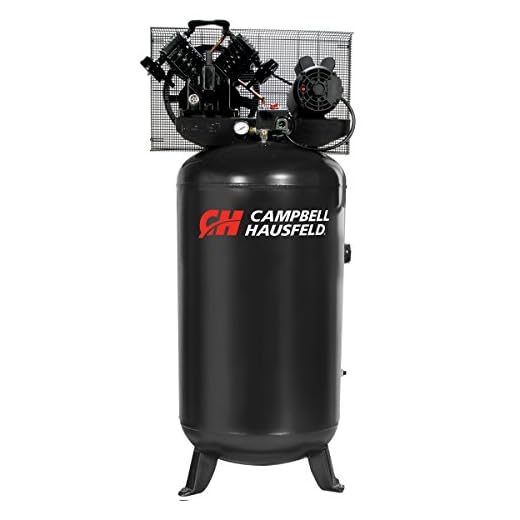
Campbell Hausfeld 80 Gallon Vertical 5HP
I respect this model for its cast-iron pump and steady CFM output that make it a good option for heavy DIYers and small professional shops. It’s built to last and comes with a respectable warranty.
What I like about it
I selected the Campbell Hausfeld 80-gallon because it balances a durable build (cast-iron pump) with strong airflow (about 16 CFM at 90 PSI). That combination makes the unit friendly to both serious DIYers and small commercial shops.
Standout features
One of the practical benefits I appreciate is the reduced maintenance needs of a cast-iron pump: it tolerates heat and wear better than cheaper aluminum units. Users have noted even better-than-claimed airflow in some cases, which suggests the pump is conservative in its ratings.
Practical limitations
You should expect higher noise (reported around 86 dB) and factor in the need for a sturdy mounting surface. If you prioritize quiet operation above raw durability, look at quieter alternatives; otherwise, this model’s lifetime value is compelling.
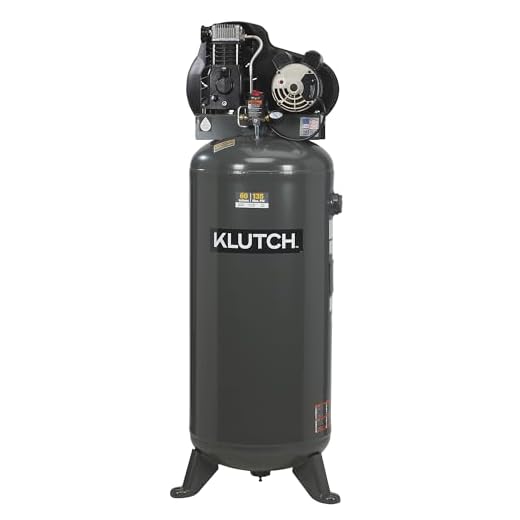
Klutch 60-Gallon Single-Stage Vertical
I like this Klutch unit as a value option that performs well in woodworking and home-shop settings. It provides respectable CFM for its class at a price most hobbyists will find approachable.
Why it appeals to me
I added the Klutch 60-gallon because it gives very good capability for a small shop at a competitive price. The 3.7 HP motor and roughly 9.3 CFM @ 90 PSI make it handy for nailers, paint guns, and general air-tool use in woodworking.
Strengths and practical use
One typical user comment that resonated: the compressor filled quickly to 175 PSI and was quieter than expected — that’s the kind of real-world feedback I look for. A minor issue I’ve seen is occasional loose fittings out of the box, which are usually straightforward to tighten.
Who it’s right for
This is a great pick for hobbyists, woodworkers, and small shops that want strong performance without spending on premium commercial gear. If you want a decades-long investment with extensive service networks, consider more established industrial brands, but for many projects the Klutch hits the sweet spot.
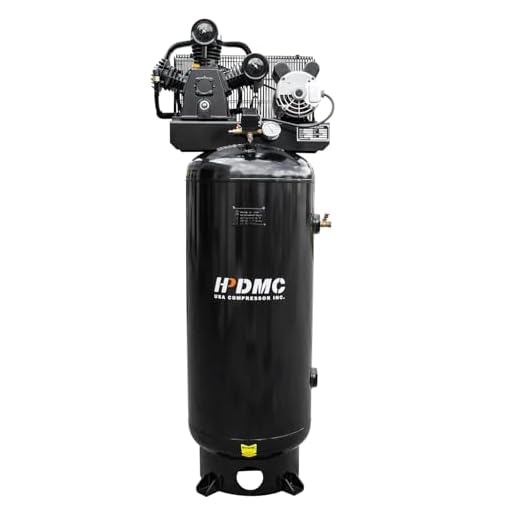
HPDMC 5.5HP Two-Stage 60-Gallon
I picked it for its two-stage design and 180 PSI max rating on a 60-gallon ASME tank — a combination that gives extra headroom for demanding tools. Information is limited, so I treat it as a promising but less proven option.
Why it’s on my list
I included the HPDMC 5.5HP because two-stage compressors with 60-gallon ASME tanks are useful when you need higher pressure or cleaner duty cycles in the same footprint. The 10.7 CFM and 180 PSI max rating make it versatile for many shop tasks.
Key specs and benefits
I’d recommend this where you want more pressure headroom than a typical single-stage unit without jumping to very large, heavy machines. Because the product appears newer and less widely reviewed, I’d validate local service options and warranty terms prior to purchase.
Buying guidance
If you’re buying for daily commercial use, confirm service and parts availability. For lighter commercial or serious hobbyist use, this unit appears to offer sensible specs and a compact footprint for two-stage performance.
VEVOR 80 Gallon Oil-Free 6.5HP
I was drawn to the strong advertised CFM and oil-free design at a lower price point than many competitors. It’s a tempting option, but mixed long-term feedback suggests potential reliability and noise concerns.
Why this one made the list
I included the VEVOR 80-gallon because it offers eye-catching specs (6.5 HP, 15.5 SCFM @ 90 PSI) and an oil-free pump at a price point that’s hard to ignore. For shops that worry about oil in lines (paint, food-adjacent uses), oil-free is attractive.
What it offers in practice
I’d use this where oil-free output is a priority and budget is tight. Several buyers reported excellent initial performance — one painted an entire car and reported stable pressure — but others experienced a notable rise in noise or early failures. That split means I’d be cautious and factor in warranty and vendor support when buying.
Limitations and buying tips
Shipping and handling seem to be a common pain point for heavy units like this; inspect upon delivery. If you plan heavy daily commercial use, I’d prefer a brand with longer proven service life. If your work is lighter or you need oil-free output, the VEVOR can be a very attractive option, provided you accept some risk on long-term durability.
Final Thoughts
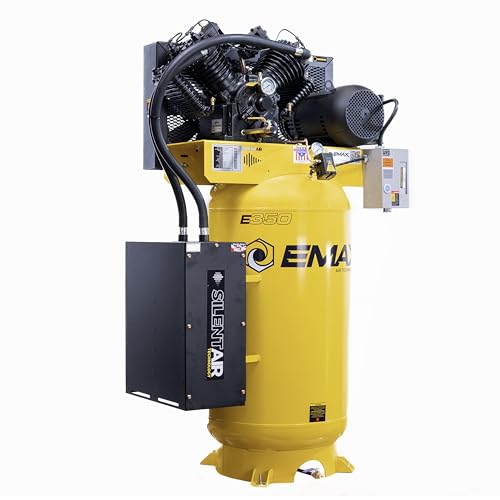
I recommend the EMAX E350 7.5HP 2-Stage 80-Gallon as my top pick if you want the best blend of FLOW and QUIET. With about 31 CFM and pressure-lubricated internals, it delivers industrial-level airflow while reducing noise — ideal for production shops, paint booths, or any environment where sustained high CFM and lower sound matter.
If you need an uncompromising workhorse built for heavy-duty, long-term service, go with the Ingersoll Rand 10 HP Two-Stage Packaged unit. Its two-stage design and packaged features make it a durability-and-maintenance winner for busy auto shops or small manufacturing floors that run tools all day.
If you must pick only one: choose the EMAX for most professional shops that want high output without the noise penalty. Choose the Ingersoll Rand when absolute ruggedness and proven heavy-shop credentials are the priority.






I went with the Klutch 60-gallon for budget reasons and it does the job for my hobby carpentry, but man — it’s louder than I expected. Anyone tried DIY sound enclosures for vertical compressors? Want tips beyond ‘move it outside’ 😂
Also, minor rant: the vibration made my paint cans wobble. Who knew compressors were interior decorators?
Consider putting heavy rubber feet under it too. Cheap trick but helps a lot with vibration noise transferring to the floor.
Haha, compressors and interior design — I feel you. For vertical units, a simple framed enclosure lined with acoustic foam and breathable vents for cooling can reduce perceived noise. Ensure airflow and service access; don’t seal it airtight. Anti-vibration pads or spring isolators under the tank help with rattles.
Make sure not to block the cooling fins or motor vents. I added a small exhaust fan to the enclosure on a thermostat; keeps temp down and noise lower.
I built a plywood box with 1″ foam and a vented baffle; cut noise ~30%. Also moved shelves with paint cans away from direct contact with the tank — that stopped the wobble.
Quick practical q: is the HPDMC two-stage (180 PSI) a good choice if I’m running a pressure-sensitive paint gun occasionally but also need higher PSI for a blast cabinet? Or is it overkill and a pain to maintain?
Also, anyone had luck getting parts for HPDMC units? Feels like a lesser-known brand.
I had a two-stage on a previous job — worked great for mixed tasks. Maintenance was a bit more involved but nothing crazy. Just keep spare belts and a filter kit on hand.
Two-stage with 180 PSI gives you headroom, which can be helpful for specialized tasks like blast cabinets that may need sustained pressure. For paint guns you typically want stable pressure and clean, dry air — so include proper filtration and a regulator. HPDMC being less proven means parts/support could be slower; check seller return policies and local service shops before committing.
If you only occasionally need higher PSI, you could also use a smaller two-stage and a booster in niche cases. But that’s extra complexity. HPDMC parts might be aftermarket-compatible, but verify measurements.
Loved the take on the DEWALT 60 gallon — that balance of flow and price is exactly what I wanted for my woodshop.
Does anyone think two-stage is overkill for woodworking (nailers, sanders, spray finish)? I’m leaning toward the Dewalt or Klutch for cost reasons, but would the two-stage give me any practical advantage for those tools?
For woodworking and typical shop pneumatic tools, a good single-stage 60-gallon like the DEWALT or Klutch is often plenty. Two-stage shines when you need higher pressure or very steady long-duration duty (hard production environments). If you use high-demand tools simultaneously a higher CFM matters more than the stage count alone.
Agree with Maya — save $$$ unless you plan to scale up. Also consider receiver size and recovery time; DEWALT recovers pretty quickly for its class.
I run a DEWALT in my garage woodworking shop — handles nailers, a 2″ finish stapler, and a small HVLP fine. No issues. Two-stage would have been unnecessary for my use.
Really appreciated the deep dive on the EMAX E350 — that 31 CFM number is impressive. I’m considering it for a small fabrication shop but noise is a big concern for our shared building.
Has anyone used the EMAX in a confined shop? The “whisper-quiet” claim sounds great but those labels vary a lot in real life. Also curious about routine maintenance for the pressure-lubricated pump — is it expensive to service?
If you can place it in a small mechanical room with a remote intake/exhaust line, it makes a world of difference. Otherwise, you’ll tolerate some noise. 🙂
I run an EMAX-like unit in a 2-car garage — it’s definitely less annoying than my old single-stage, but you’ll still hear it. I put down heavy rubber mats and it helped. Service costs were moderate; changed oil twice a year on heavy use.
Great questions, Laura. In my testing the EMAX is noticeably quieter than comparably powered units thanks to its acoustic design, but “whisper-quiet” is relative — it’s quieter for a 7.5 hp 2-stage machine, not silent. For a confined space you may still want vibration pads and some enclosure or baffling.
Maintenance: pressure-lubricated pumps typically need oil changes and periodic checks of valves and belts; parts and service are straightforward but budget for annual checks if it’s busy.
I own a Quincy QT-54 (same family as the one listed) and can vouch for its quietness. A few tips:
– Use OEM filters
– Drain the tank weekly if you’re in a humid area
– Keep belt tension checked every 6 months
Small investment in maintenance and it just keeps chugging. Seriously reliable.
Good checklist. I learned the hard way about tank drains: left it for months and got bad corrosion. Weekly drains saved me after that 😅
Thanks for sharing specifics, Olivia — those maintenance pointers are spot-on and very helpful for readers hoping for longevity.
Question for anyone who’s installed a 10HP Ingersoll Rand (2545K10-P): what are the real-world electrical and space requirements? I’m not an electrician and worried about hidden costs (transformers, dedicated lines, panels). Any installation gotchas?
Good foresight — a 10 HP, 230V three-phase or single-phase (depending on SKU) almost always needs a dedicated circuit and proper breaker sizing. You’ll likely need a 230V 3-phase service for commercial setups; if your shop only has single-phase you may need an electrician to confirm compatibility. Also consider a vibration-isolated concrete pad and enough clearance for service access.
Had mine installed last year — electrician charged extra for upgrading the panel and running a dedicated 230V line. Check motor full-load amps on the spec and get quotes before ordering the compressor.
Also: local codes. Some areas require permits for large electrical installs. Ask the electrician up front.
Don’t forget compressed-air piping layout costs. If you place the unit far from use points you pay in copper/PEX/pipe and fittings + pressure drop. Plan placement carefully.
Campbell Hausfeld’s ‘reliable life up to 10,000 hours’ claim caught my eye. That sounds solid, but how realistic is that in a busy shop? Also how easy is it to get replacement parts/warranty service for them? Looking for something that won’t be a headache after the first year.
One more thing — look into tank inspection schedules and if the dealer offers ASME tank services near you. That saves headaches later.
I had a CH unit for years — parts were easy to source and the pump lasted longer than I expected. Maintenance is the key.
Campbell Hausfeld generally has good parts distribution and a decent support network, which helps long-term reliability. ‘Up to 10,000 hours’ is a best-case scenario with proper maintenance. In a busy shop you’ll shorten that, but with routine oil changes, filter swaps, and tank care you can extend life considerably. Check warranty terms closely and keep maintenance logs.
Also: local dealers matter. If you have a local shop that knows CH, repairs are easier and faster than mail-order parts from abroad.
VEVOR looks like a steal on paper — 15.5 SCFM at 90 PSI and oil-free? Tempting.
But I’m wary of ‘mixed long-term feedback’ you mentioned. Anyone actually run one for a couple years? Does the oil-free pump hold up for paint work or continuous duty?
Totally fair to be skeptical, Ethan. The VEVOR spec sheet is attractive, and oil-free means less day-to-day maintenance, but oil-free pumps can run hotter and might show wear faster under continuous heavy cycles. For paint work, moisture and stability matter — use proper dryers and filters. If you need rock-solid uptime and low risk, I’d lean toward a proven lubricated two-stage like the Ingersoll Rand or Quincy’s lineup.
I picked a budget oil-free once and it lasted ~18 months under near-daily use before I started seeing pressure drops. For occasional paint jobs it’s fine, but for continuous production I’d avoid it.
Short and nerdy: comparing Maxair (18.5 CFM @100 PSI) and DEWALT (14.6 CFM @90 PSI) — those numbers mean a lot to me. Is the higher CFM of the Maxair worth the serviceability tradeoffs? Also lol @ the ‘extended drain valve’ — finally, drain valve that reaches the floor!
Maxair’s service-friendly features saved me time on oil changes and checks. If uptime matters, that convenience adds up.
Don’t forget that rated CFM at different PSI values isn’t apples-to-apples. Check the actual psi you run and compare the curves if you can.
Numbers are useful, Liam. If your workflow needs sustained higher CFM (multiple simultaneous tools or heavy-demand tools), Maxair could be worth it. If you mostly use intermittent tools, DEWALT’s balance of price, footprint, and decent CFM can be smarter. The extended drain valve is a surprisingly underrated convenience for shop maintenance.