

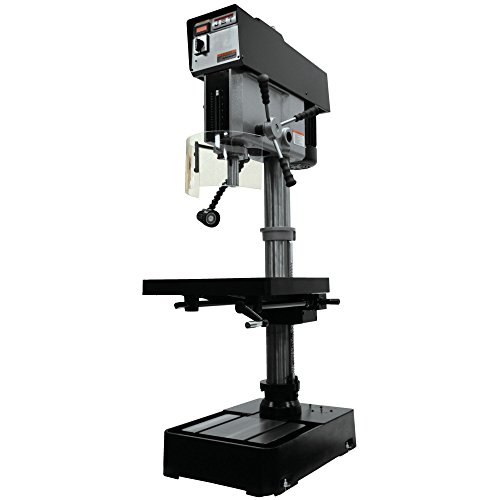
Big, heavy, and oddly satisfying — which 20-inch beast earns your shop’s floor space?
Never underestimate a 20-inch drill press. These machines are the difference between sloppy punch-outs and perfectly repeatable holes. They’re loud, heavy, and strangely gratifying.
I’ve spent time with metal shops and hobby benches, and I look for rigidity, speed control, and real-world durability. If you want accuracy that lasts, you want a machine that won’t flex or fuss when the work gets serious.
Top 6 Picks




JET 20-Inch Variable-Speed Metal Drill Press
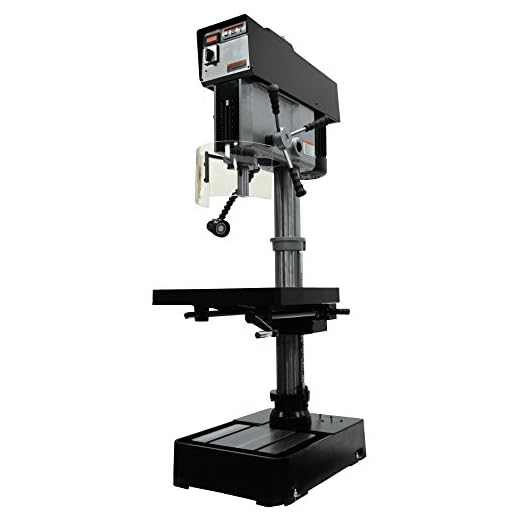
I appreciate the massive head construction and the variable-speed control with an LED RPM readout — it delivers rigidity and accuracy for demanding metalwork. It’s a big, heavy, and pricey machine that usually requires shop-level power and floor space, but it pays off in repeatable results.
Overview
In my experience, this Jet variable-speed 20" press is aimed squarely at metalworkers who need repeatable accuracy and plenty of muscle. The combination of a heavy cast head, variable-speed control, and a front-mounted RPM readout makes it straightforward to dial in the correct speed and hold it there under load.
Features I lean on in shop work
These features add up to markedly better hole quality and less chatter when drilling larger diameters or working in tough steels. The RPM readout is particularly helpful when you switch tooling frequently and need repeatable settings.
Considerations before buying
This machine is an industrial-style press — it’s heavy, expensive, and generally expects a proper shop environment (floor mounting and appropriate power). If you’re running a small garage shop without three-phase power, plan for electrical work or a VFD solution.
Final take
For metal fabrication shops that need a dependable, accurate 20" variable-speed drill press, this Jet model is hard to beat. It’s an investment, but one that delivers durability, control, and the horsepower to handle tough jobs.
Baileigh DP-1250VS 20-Inch Heavy Duty Press
I value the inverter-driven head and digital RPM readout — they give precise, smooth speed control that’s excellent for fabrication and machining. The built-in coolant system and heavy T-slotted table make it a great shop workhorse, but it requires 220V and represents a significant upfront cost.
Overview
I see the Baileigh DP-1250VS as a true heavy-duty shop press built for machinists and fabricators who want precise, repeatable results. The inverter-driven head with digital readout makes speed control simple and accurate, and the integrated coolant system helps maintain bit and tap life during tough jobs.
Features I use every time
Those elements combine into a machine that’s comfortable for long runs and forgiving under high-torque demands. The digital readout eliminates guesswork when matching speeds to material and tooling.
Practical considerations and tips
It’s a large, costly machine that requires a 220V supply (single-phase) and proper floor mounting. Baileigh backs the press with a one-year parts warranty and lifetime technical phone support, which matters if you rely on the machine daily.
Final take
If you’re running a professional or serious hobby shop and need a reliable, precise 20" press with modern speed control and coolant integration, this Baileigh is one of my top recommendations. It’s a solid investment for heavy fabrication and machining work.
JET 20-Inch Geared Head Tapping Press
I appreciate the geared head and power downfeed — it’s designed for production drilling and accurate tapping. It’s a heavy, professional unit that’s overkill for casual hobbyists and usually requires additional accessories (a chuck often isn’t included).
Overview
I view the JET GHD-20PFT as a professional, production-minded drilling and tapping press. Its geared head, power downfeed, and integrated tapping/reverse controls make it tailored for shops that run frequent tapping operations where repeatability and control matter more than a low price.
Key features that matter in production
In use, the power downfeed gives a consistent feed that improves thread quality and reduces broken taps when compared to hand-fed tapping. The internal gauge and fine downfeed let me dial in repeatable depths quickly for production runs.
Practical considerations
This machine is big, heavy, and expensive — it’s built for an industrial or heavy shop environment. One important logistical note from users: the press is sometimes shipped without a chuck, so you’ll likely need to buy an arbor and chuck separately.
Final take
If your work includes frequent tapping and you need a dependable, production-capable press, this JET geared-head model is an excellent fit. For casual users or light-duty needs it’s more machine than necessary, but in a shop context it rewards with control and repeatability.
JET 20-Inch 12-Speed Floor Drill Press
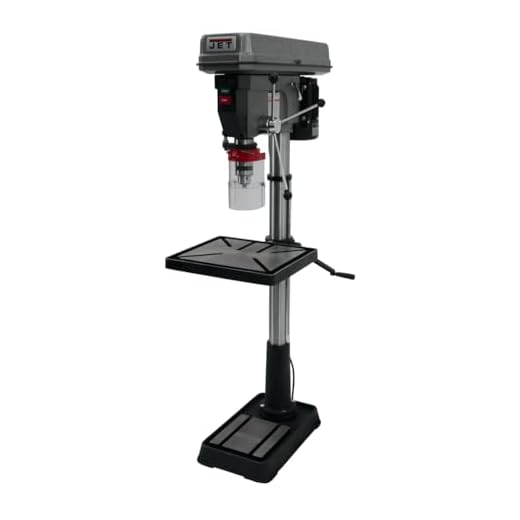
I find the JET 20" to be a workhorse — very solidly built with a wide speed range and a sizeable table. It’s heavy and a bit awkward to assemble solo, and the table locking/slot layout can require modifications for dedicated jigs or vises.
Overview
I consider the JET JDP-20MF a pragmatic choice if you want a durable floor drill press that covers woodworking and metalworking needs without breaking the bank. Its 12-speed head and robust construction make it adaptable to many shop tasks, from precision small-hole work to heavier drilling when set at lower speeds.
What stands out in daily use
In practice, the belt change is straightforward and the machine tracks well under load. The table is roomy and the single-bulb lamp gives decent illumination for alignment.
Practical caveats and tips
The unit is very heavy — plan for two or more people (or a hoist) during assembly. Some users report sharp table edges and variations from the manual, so I recommend deburring the table slots and checking parts before final assembly. The table’s ability to rotate when unlocked means you may want to add a drill press vise adapter or a custom fixture for repeat work.
Final take
I recommend this JET model as a value-oriented, built-to-last drill press. If you want a heavy-duty machine with a wide speed range and don’t mind handling the weight and doing minor shop tweaks, it’s a very sensible buy.
Shop Fox M1039 20-Inch Floor Drill Press
I find the Shop Fox M1039 to be a capable mid-range floor press with useful speed variety and a solid table size. It can suffer from shipping or quality-control hiccups (missing chuck/parts, reversed motor wiring) so inspect components on arrival.
Overview
I see the Shop Fox M1039 as a reliable middle-ground floor drill press — large enough for most garage and small-shop jobs yet not as costly as purpose-built industrial presses. The 12-speed head and good table real estate make it flexible for both woodworking and metalwork when properly set up.
What I like about it
The table offers practical mounting options and the speed range covers a wide set of tooling needs. I’ve found the machine to be straightforward to wire and integrate into a 220V shop if you want higher torque/voltage operation.
Pitfalls and practical tips
Multiple users have reported issues like missing chucks, wet or rusty packaging, or a motor that initially ran in reverse. Those are solvable but worth checking during unboxing. I recommend inspecting all hardware, deburring any sharp table edges, and confirming motor rotation before final installation.
Final take
If you want a flexible, capable floor drill press without spending industrial prices, the M1039 is a solid pick — provided you’re prepared to inspect and make small fixes on arrival. For many DIYers and small-shop owners it offers strong value and useful features.
Powermatic 20-Inch Variable-Speed Drill Press
I like the gear-driven design and the visibility aids — the laser and LED make setup fast and repeatable. That said, the machine has a few frustrating usability and fit-and-finish issues (noise, table locking, and lack of spindle lock) that may bother meticulous users.
Overview
I see this Powermatic as a feature-rich, gear-driven 20" floor drill press aimed at shops that want consistent torque and useful visibility aids. The laser pinpoint and LED worklight make alignment and production runs much faster, and the reversible handles and sizable cast table give practical flexibility for varied projects.
Key features I use most
Those features translate to real benefits: the laser and LED save setup time on repeats, and the gear drive keeps torque under load where belt-only machines sometimes bog down. The included fence and stop make production drilling easier without buying add-ons.
Limitations and practical notes
I’ve also noticed real-world trade-offs you should plan for. The unit runs louder than I expected, and several owners report the table won’t lock cleanly at the exact zero position. There’s also no way to lock the spindle, which complicates setting up jigs and fixtures.
Final take
If you want a feature-packed, heavy-duty-feeling drill press with excellent visibility and consistent torque delivery, this Powermatic is attractive. I recommend it when torque and shop-grade features matter, but be prepared for some setup work and consider the noise and spindle-lock limitations before buying.
Final Thoughts
My top pick is the JET 20-Inch Variable-Speed Metal Drill Press. I recommend it if you do heavy metalwork and need repeatable, accurate results. Its massive head and variable-speed control with an LED RPM readout give rigidity and fine control that pay off on thicker stock and tougher materials. Be prepared for a big, heavy, and pricier unit that needs shop space and solid power.
If your work leans toward fabrication or machining with features like coolant and very smooth speed control, go with the Baileigh DP-1250VS. The inverter-driven head and digital RPM readout make it excellent for precise fabrication runs, and the built-in coolant plus a heavy T-slotted table turn it into a true shop workhorse. Note: it requires 220V and a higher upfront investment, so plan your power and budget accordingly.





The JET 20-Inch Geared Head (GHD-20PFT) being ‘best for precision tapping and production’ caught my eye.
I do some small-batch production parts and tapping by hand is getting old. The review mentions a chuck often isn’t included — what sizes/types of chucks or collets are typically needed for tapping heads like this? Also any rough idea of the extra cost for the right accessories?
Good question, Hannah. Geared head models often use larger spindle tapers and many come without a general-purpose chuck to let users purchase the appropriate tooling for production — common tapers are MT6 or Morse tapers in that class. For tapping you might prefer a 3-jaw chuck or an arbor/collet setup depending on the shank sizes you use. Expect to pay anywhere from $100–$400+ for a quality chuck or collet set and another $50–$200 for tapping attachments, depending on brand and taper.
I bought a geared head years ago and went with a quality 3-jaw chuck and a quick-change tapping head — total about $350. Totally worth it for consistency and speed.
Really loved the deep dive on the JET 20-Inch Metalworking Drill Press (JDP-20VS-3).
I run a small fabrication bench and the variable-speed with LED RPM readout sounds perfect.
My main hesitation is the 230/460V 3-phase requirement — I don’t have that in my garage. 😅
Has anyone converted one of these to single-phase or used a phase converter? Also curious if buying a used one is worth the savings or a maintenance headache.
FWIW I bought a used 20″ JET last year. Saved a ton but had to replace bearings and the old chuck. If you can inspect in person (or get a good return policy), used is worth it. 😬
Good questions — thanks for reading, Emily. The JET JDP-20VS-3 is definitely a shop-level machine and most owners either have three-phase service or use a rotary phase converter. A static phase converter will run the motor but you lose some torque. Converting the motor to single-phase is possible but often expensive; replacing the motor with a single-phase equivalent can work if you get the correct HP and service factors. Buying used can be a great way to save money, but inspect bearings, spindle runout, and look for signs of hard use.
I used a rotary phase converter for a similar JET in my small shop for ~5 years — it worked fine for drilling and tapping. You’re paying for convenience and rigidity with that model. If you go used, bring a dial indicator and check spindle runout before committing.
I was eyeing the Powermatic PM2820EVS because of the laser and LED — those little visibility aids are sooo handy for setup.
But the review says it has noise, table locking issues, and no spindle lock. For someone doing detailed woodworking and occasional metal drilling, is the gear-driven torque worth the tradeoffs?
I hate noisy machines and fiddly tables… does anyone use it daily for fine work?
The Powermatic’s gear drive gives excellent torque and the visibility features speed up alignment, which many small shops appreciate. If quietness and rock-solid table locking are priorities, the Powermatic might frustrate you. The JET JDP-20MF is often recommended as a more balanced option (less feature-rich but very solid). For fine woodworking, consider whether the extra torque is necessary — a quieter, better-finished machine might be preferable.
I own a PM2820EVS — the laser is a game-changer for repeat setups, but yeah it’s louder than my old benchtop. Table lock required a shim/adjustment to stop wobble, but once dialed in it’s fine. If you love quiet and perfect fit-and-finish, maybe skip it.
Sarcastic take: the laser will make you feel like a Bond villain lining up your workpiece — very satisfying. 😂 But seriously, for hobbyist-level woodworking it’s overkill unless you need the torque for large bits.
If you’re concerned about noise, another option is to mount the machine on vibration isolation pads and ensure pulleys/belts (if present) are aligned. That doesn’t fix design issues but can help.
Short version: I’m torn between the JET JDP-20MF (best balance), Baileigh (precision), and Powermatic (visibility/torque).
I’m a weekend hobbyist doing metal and wood — occasional thicker metal plates up to 1/2″ and lots of jigs. Which one would you pick? Budget-conscious but want something that won’t feel cheap.
Also — can someone explain if ‘geared head’ vs ‘variable speed’ makes a big difference for hobby use?
I went with the JET JDP-20MF as a hobbyist and it’s been solid. If you think you’ll graduate to heavier metalwork often, consider Baileigh — but you’ll need the 220V and deeper pockets.
For a hobbyist who wants a reliable, all-around machine, the JET JDP-20MF is often the best compromise — solid, decent speed range, and easier to live with in a mixed-use shop. The Baileigh is great if you need fine velocity control and have 220V; the Powermatic is nice for torque and alignment aids but has the fit-and-finish caveats mentioned.
Geared head machines are designed for production and provide high torque and precise feed control — often overkill for casual use. Variable-speed (belt or electronic) offers flexibility and is usually more user-friendly for mixed tasks.
If budget is tight but you want longevity, buy the best-condition JET or Shop Fox you can find with good seller support. Accessories and proper maintenance will extend the machine far more than a slight model upgrade.
Story time: ordered a Shop Fox M1039 as a mid-range option because it seemed like a good balance.
What arrived had a missing chuck and the motor wiring was reversed — motor spun the wrong way. Took me a week to get replacement parts and the shipping damage claim was a mess.
For people buying online, how do you guys inspect these floor presses on arrival? What should I absolutely test before the installer leaves? Any checklist would be great — I want to avoid another headache.
And if you’re not comfortable doing the wiring/motor checks yourself, have the installer do them while they’re still there — they usually know what to look for.
When I ordered a Shop Fox, I made the delivery guy wait while I did a quick power-on test. If they push back, take pics and refuse the pallet. Saved me tons of trouble.
One more tip: keep the original packaging until you’re 100% satisfied — that helps with returns and parts replacement.
Totally agree with the checklist. Also check that the motor mount isn’t cracked and that the wiring harness looks factory (no loose connections). If motor spins the wrong way, don’t run it long — that can damage the stator.
Ugh, that’s frustrating, Miguel — sorry you had to deal with it. Quick arrival checklist:
1) Inspect packaging and photograph any damage.
2) Verify all listed components (chuck, key, belts, guards, fasteners).
3) Run the motor briefly (no load) to confirm rotation direction and unusual noises.
4) Check spindle runout with a dial indicator if possible.
5) Test table movement and locking, and check T-slot alignment.
6) If anything’s off, refuse the delivery or note issues immediately and contact the seller/Amazon with photos.
Document everything — it speeds up replacement or refund.
Nice write-up on the Baileigh DP-1250VS. The inverter-driven head and digital RPM readout sound like what I need for precise holes.
Quick question: how hard is it to set up the 220V 1-phase in a residential garage? And does the Baileigh accept standard drill press tooling or do I need adapters?
Thanks, Jason. The Baileigh is a great machine for precision. For 220V installation, you’ll probably need a licensed electrician to run a dedicated circuit and install the proper outlet — it’s not typically a DIY plug job unless you already have a compatible outlet. As for tooling, it accepts standard drill press chucks and tooling, but always double-check the spindle taper/size; some industrial units use different tapers or require a spindle adapter.
I had an electrician install a 220V receptacle for mine — painless and worth it. No weird tooling needed; just the usual drill chucks and tapered shanks.