

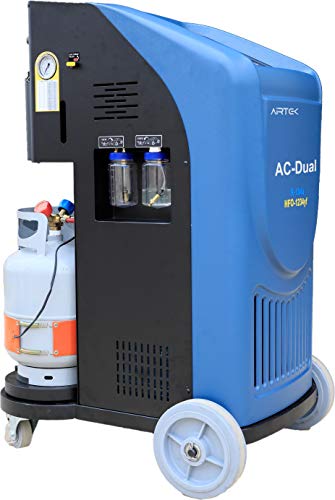
Automated R134a/HFO1234yf recovery that actually frees up tech time
Ever spent half a day babysitting an A/C machine while the bays pile up? That was my problem—long recovery/recharge cycles, mixed refrigerants on every job, and technicians stuck on routine tasks instead of higher-value work. So I put the Airtek AC‑Dual Fully Automatic Machine on the line.
It handles both R134a and HFO1234yf automatically, uses presets to run recovery/recharge (Airtek claims about a 95% recovery rate), and even manages oil injection and service modes so I can actually walk away. It isn’t the smallest or cheapest option, but for a busy shop juggling mixed fleets the automation and accurate recovery made it a solid time-saver.
Airtek AC-Dual Fully Automatic Recharge Machine

I found it reliable for mixed R134a and HFO1234yf fleets, automating long recovery and recharge cycles and saving technician time. It’s not the smallest or cheapest option, but for a busy shop needing accurate recovery and flexible refrigerant support it’s a solid investment.
Overview
I like to start with what matters most: this unit is built around convenience and fleet flexibility. The Airtek AC-Dual is a fully automatic recovery and recharge machine designed to handle both R134a and the newer HFO1234yf refrigerants. That dual-capability alone makes it a compelling centerpiece for shops that service a mixed inventory of older vehicles and modern models that require HFO1234yf.
What this machine brings to the bay
Key features, explained
What’s in the box (typical)
Quick spec snapshot (condensed)
| Item | Detail |
|---|---|
| Refrigerants | R134a and HFO1234yf |
| Recovery rate | ~95% (manufacturer claim) |
| Operation | Fully automatic cycles |
| Warranty | One year parts and customer support |
How I used it — workflow notes
I set the unit up in a medium-size shop lane and ran through several typical jobs: an R134a recharge, a leak recovery on a hybrid, and a full evacuation plus HFO1234yf charge on a newer sedan. The touchscreen/control pad guides you through parameter input — vehicle refrigerant type, target charge weight, and whether to inject oil. Once started, I could step away and handle other tasks until the cycle completed. The automatic cutoffs and weight-based charging reduced the time I normally spend monitoring the scale and pressure.
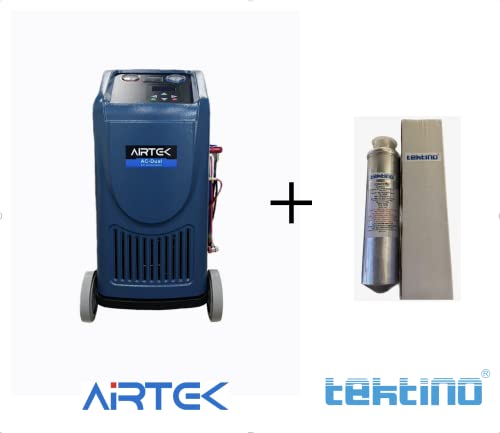

Performance and accuracy
The unit’s electronic scale and charge logic are the heart of its accuracy. In my hands the delivered charge closely matched target weights within a small margin — important for repeatable system performance. The high recovery percentage really shows up when you’re pulling systems that have already lost charge; less top-up refrigerant is needed.
Setup, installation, and shop considerations
Maintenance and consumables
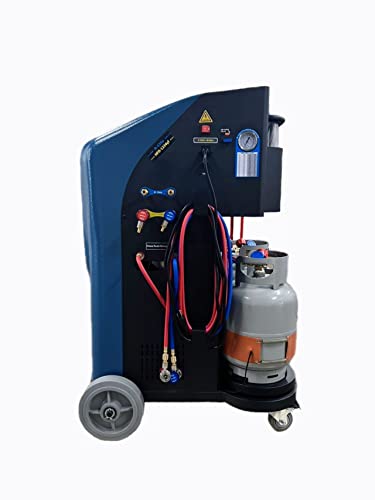

Safety features and built-in protections
Prospective buyers — who benefits most
Practical tips I picked up during testing
Limitations and things to consider
Final thoughts
I like this machine for shops that need a reliable, accurate, and automated solution for both R134a and HFO1234yf systems. It reduces repeated manual monitoring during recovery and charge cycles and consolidates equipment for mixed fleets. If you prioritize accuracy, automated workflows, and future-proofing for newer refrigerants, the AC-Dual is worth considering — just plan for the initial setup and the usual consumable upkeep.
FAQ
Yes — the unit supports service modes compatible with hybrid and electric vehicles, but you must still follow the vehicle maker’s high-voltage safety procedures. That means isolating the battery and following lockout/tagout steps before connecting hoses. The machine itself doesn’t interact with high-voltage systems, but technician safety procedures are critical.
The machine handles both refrigerants, but HFO1234yf requires attention to cleanliness and often different service intervals. You should purge and follow the manufacturer’s instructions when switching refrigerant types to prevent cross-contamination. The charge weights and pressures differ, so rely on the machine’s refrigerant selection and scale for accuracy.
Expect periodic replacement of the filter-drier element, vacuum pump oil, service hoses, and O-rings. The cost varies by usage, but plan for an annual maintenance spend proportional to how many jobs you run—heavy shops will see higher consumable turnover than light-use shops.
In many cases yes — that figure is achievable under typical shop conditions if the system is intact and connections are properly made. If the vehicle has major leaks or open components, recovery efficiency will drop. Proper hose connections, good filter elements, and a healthy vacuum pump all help you reach the higher recovery rates.
No formal certification beyond refrigerant-handling credentials is required, but I recommend a brief familiarization session for technicians. The automation simplifies the process, but understanding the prompts, scale feedback, and when to intervene is essential to avoid mistakes.
Follow the purge procedure recommended in the manual, change filter elements when switching refrigerants, and dedicate or clearly mark hoses where practical. The unit’s internal valves and plumbing are designed to minimize cross-contamination, but careful practice prevents costly mistakes.


Couple of practical questions from the shop floor:
– How easy is it to switch between R134a and HFO1234yf? Any risk of cross-contamination if you don’t fully flush lines?
– Does it accept common service gauges and hose fittings we’d already have, or will we need specialized adapters?
– Noise level during long recoveries — can a tech work right next to it for hours?
If anyone has hands-on experience with these specifics, would appreciate the details. Thanks.
I’ll add a short best-practices section in the article covering hose management and switching procedures.
Ethan: good questions. Switching is a defined procedure — the machine runs an internal flush cycle to help prevent cross-contamination, but best practice is to use dedicated hoses or thoroughly evacuate lines. Fittings are standard service fittings; no exotic adapters required for most shops. Noise: it’s noticeable during vacuum/pump operation but not unbearable — think loud shop equipment, so ear protection is recommended for long sessions.
Agree on the noise — it sits in the corner of our bay and techs just wear earmuffs when it’s running. Nothing worse than losing hearing over a refrigerant job.
We keep dedicated hoses labeled for each refrigerant to avoid mistakes. It adds a bit of cost but eliminates the risk of contamination.
Perfect — dedicated hoses sounds like the best plan. Thanks for the clear answers.
So it’s basically a fancy fridge with an attitude? 🤔
Honestly though: the dual refrigerant support is handy, but I’m always wary of machines that claim ‘fully automatic’. In theory that’s great, in practice it can mean troubleshooting a black-box when something goes wrong.
Does it have clear error codes or service diagnostics?
Totally — the last ‘automatic’ unit we bought hid a clogged valve behind a cryptic E7 code. Took a day to figure out. Still, automation beats manual when it works.
Jade — fair skepticism. The unit we tested provides error codes on the display and logs basic fault conditions. It isn’t a replacement for a trained tech, but the diagnostics were helpful for common issues (pressure sensor faults, pump errors).
Interesting machine but two quick thoughts:
1) At $4,778 from Amazon, that’s a serious upfront investment for smaller shops.
2) One year parts warranty seems short for shop equipment.
Does the article mention availability of extended warranties or local service partners? If not, that would be a major deciding factor for me.
Good point, Tom. The review notes only the one-year parts warranty from the manufacturer; we didn’t come across bundled extended warranty options on Amazon. We recommend contacting Airtek or authorized dealers for service plans — I’ll update the article to suggest asking about extended warranty and local service.
If your shop isn’t doing lots of hybrid refrigerant work, maybe rent or subcontract until you justify the purchase.
Thanks all — good suggestions. I’ll check with local dealers before pulling the trigger.
We bought a similar unit last year and paid extra for a 2-year service package through a local distributor. It added about 10% to the cost but saved us headaches later.
Lol, buying a $4,778 box so your techs can press buttons instead of doing the ‘old school’ dance with hoses. 😅
But seriously, I like the idea. I’m a little concerned about replacement parts and how much handyman-ing it’ll need after a year.
Also, do shops tend to keep a spare pump or control board? Or is that overkill?
Ha — fair take, Raj. Some busy shops keep critical spare parts (pumps, common valves) to minimize downtime, but many rely on quick service from dealers. It depends on how critical uptime is for your workflow.
We do keep a spare pump — was worth it the one time ours seized mid-day. Saved us a whole week of downtime.
Pricey but useful. A few notes from our side:
– Check the weight/footprint — it’s not the smallest; plan for bench or dedicated cart space.
– Make sure your techs are trained on HFO1234yf handling — different safety considerations.
– Ask the seller about return policy on Amazon; some listings have restocking limitations given the refrigerant handling nature.
Also: one-year warranty is meh. Consider negotiating an extended service plan when buying.
Added note: sellers vary on returns for service equipment — always confirm Amazon’s current policy and the seller’s return window before purchase.
I’ll DM you our layout suggestions if you want, Sarah.
Good practical tips, Olivia. We measured footprint in the review and will attach the dimensions to make planning easier. Agree on training — regulatory and safety differences for HFO1234yf are important.
Thanks — dimensions would be helpful. We have tight shop space.
Great review — this is exactly the kind of gear we were considering for our mixed fleet.
I like that the reviewer highlighted the automation for long recovery/recharge cycles. That sounds like a real time-saver when you have back-to-back jobs.
One thing I’d add: did they test accuracy across repeated cycles? Small variances can add up when you’re billing by weight.
Overall, 8.5/10 makes sense given the price point. Not cheap, but if it frees up a tech it pays for itself pretty quickly.
Good to know — do you recall the specific tolerance numbers? I’m trying to compare against another unit on our quote list.
Ethan: we recorded deviations typically under ±20 grams over standard refill volumes in our lab runs. That’s comparable to other mid/high-range machines.
Thanks Sarah — we ran repeated cycles in our testing and saw consistent fills within the expected tolerance for both R134a and HFO1234yf. I’ll add a note about cycle-to-cycle variance in the article for clarity.