


Can a mill save your deadline — and your sanity? I picked five that just might.
Fact: the difference between a good day in the shop and a ruined one is often one reliable spindle. I’ve tested machines that chatter, stall, or surprise you in the worst way — and a few that just get the job done, every time.
I picked these five CNC vertical mills because they cover real shop needs: heavy production, versatile mid-size work, precision hobby parts, desktop 4-axis experiments, and budget bench precision. Expect practical pros and cons, not marketing fluff.
Top Picks


JET JTM-1254RVS CNC Vertical Mill
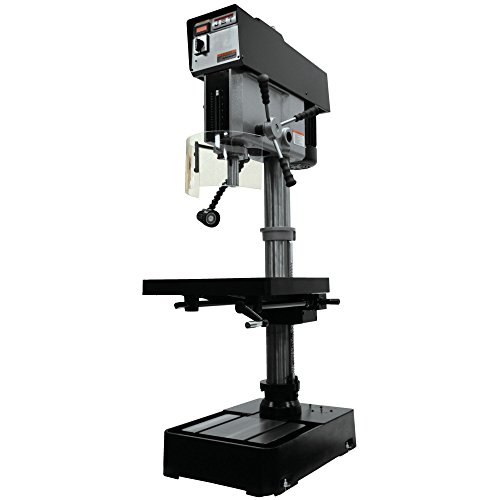
This mill is built for heavy, repeatable work and holds up well in a production environment. It combines rugged construction with a factory-installed CNC package for serious accuracy and uptime.
Overview
I view this mill as a shop-level workhorse — it's a full-sized vertical equipped with a factory-installed 2-axis ACU-RITE G-2 MILLPOWER control. The package is intended for shops that need CNC accuracy without the hassle of retrofitting or integrating separate controls. Expect solid Meehanite castings, hardened ways, and the mass that keeps heavy cuts stable.
Key features and what they mean for you
These features translate to less setup fuss, better first-run parts, and a machine that tolerates real shop workloads. If you do small- to mid-volume production runs or need consistent tolerances across batches, the control and build quality here shine.
Practical insights and limitations
Bottom line
If you need a heavy-duty CNC vertical mill that’s ready to run out of the box and can handle production work, this is a top-tier choice. I appreciate the combination of CNC accuracy, rugged mechanical design, and factory support — just be prepared for the cost and logistics of installing a machine of this size.
JET JTM-4VS Variable-Speed Vertical Mill
This variable-speed mill balances power and precision for a busy shop. It’s a versatile choice that handles a wide range of general machining tasks while offering durable construction and useful modern touches.
Overview
I see the JET JTM-4VS as a versatile, mid-sized vertical mill that fits well in job shops and educational shops where a mix of drilling, milling, and moderate production work occurs. Its variable-speed capability, heavy construction, and quality head components make it capable for steel and harder materials with predictable results.
Notable features and benefits
These characteristics give the machine a smooth feel in cutting and long-term stability — important when you want repeatable geometry across multiple parts. The internal coolant provision is especially useful when you need to cut metals and manage chip flow.
Practical perspective and limitations
Bottom line
If your shop needs a reliable, workhorse mill that offers modern conveniences like variable speed and robust mechanicals, this model hits a strong balance of capability and value. I appreciate its attention to practical shop features without overcomplicating common workflows.
Sherline 5400 Deluxe Benchtop Mill
This compact mill is ideal for modelmakers, hobbyists, and small-part prototyping on the bench. It gives excellent control and precision for its size while remaining highly affordable and easy to set up.
Overview
I consider the Sherline 5400 Deluxe a go-to for hobbyists and precision model work. It’s a benchtop mill with respectable travels (9" x, 5" y, 6.25" z) and a narrow table that makes it easy to fit into limited workspaces while still giving the control you need for small parts.
Features that matter on the bench
Those compact specifications mean you can set up fine work — watchmaking, small fixtures, and plastic or soft metal components — without committing to a shop-sized footprint. The machine is approachable for beginners, too.
Practical takeaways and limits
Bottom line
If you want a precise, compact mill for hobby projects, small prototypes, or detailed work, I find the Sherline 5400 to be an excellent value. It keeps costs and space requirements low while delivering predictable, accurate results for the types of jobs it’s designed to handle.
SainSmart Genmitsu 4040 PRO Desktop CNC
This desktop CNC is an affordable, feature-rich platform for makers who want to try 4-axis work and WiFi connectivity on a small scale. It’s well suited to wood, acrylic, and light metal with the right tooling and setup.
Overview
I recommend the Genmitsu 4040 PRO when you want a capable desktop CNC without the price and footprint of industrial machines. It’s designed for makers, small shops, and educators who want to experiment with 3D carving, 4-axis rotary work, or light-duty metal cutting given the right setups.
What stands out and why it’s useful
These features make it flexible for a wide range of creative projects — from sign-making and inlay work to small production runs of soft-metal parts. The ability to expand to 4-axis adds real capability for contoured or rotary pieces.
Limitations and practical notes
Bottom line
If you’re a maker or small shop looking to get into 4-axis work or want a compact, upgradeable CNC, the 4040 PRO offers a compelling mix of features and price. I like it for creative prototyping and light production where flexibility and expandability matter more than raw cutting force.
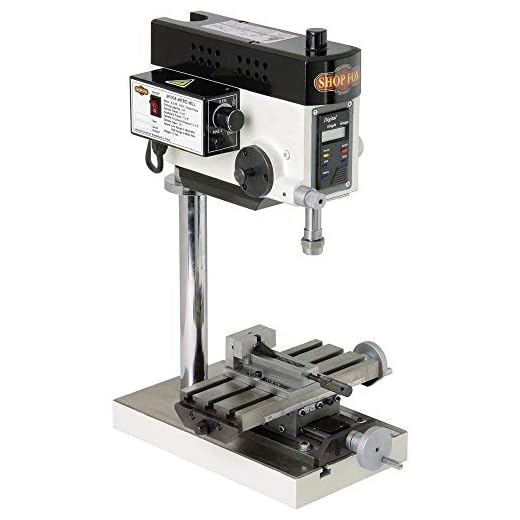
Shop Fox M1036 Micro Milling Machine
This micro mill is an affordable tool for precise, small-part work but it has some reliability caveats reported by users. It’s a decent option for gentle duty use and modelmaking if you accept occasional maintenance or upgrades.
Overview
I see the Shop Fox M1036 as a classic micro-mill for the hobbyist or modelmaker who needs fine control on small parts without investing in larger machinery. It brings features like a digital depth readout and micro downfeed into a small, affordable package that’s easy to place on a workbench.
Practical features and what to expect
In practice this means the machine is great for drilling, light milling, and making fixtures or model components. The DRO and microfeed give you a level of precision that’s valuable for small parts work.
Caveats and user experience
Bottom line
If you want a low-cost entry into bench milling with fine control for models or light fixtures, the M1036 can do the job — provided you accept its limits and potential need for follow-up support or component upgrades. I recommend it for careful hobbyists, not as a primary production machine.
Final Thoughts
If I had to pick just one mill to shoulder the hard work in a professional shop, it’s the JET JTM-1254RVS CNC Vertical Mill. It earns that spot by being built for HEAVY, repeatable production: rugged construction, a factory CNC package, and uptime that keeps jobs moving. Choose this if you run daily production runs, make fixtures, or machine tougher metals regularly.
For most shops that need flexibility without full production horsepower, I recommend the JET JTM-4VS Variable-Speed Vertical Mill. It’s my go-to when I need a balance of power and precision for diverse jobs — prototypes, tooling, and general machining. It’s the best single machine if you want one tool that can handle a wide range of tasks without over-investing in production gear.
Buying & Using Guide — What I Wish I Knew Before I Bought
How I match a mill to a shop
I always start with volume and material. If I expect day-to-day heavy cuts and long runs, I pick a machine built for production (like the JET JTM-1254RVS). For mixed workloads, prototypes, and varied projects, I lean toward a variable-speed mid-size mill (the JTM-4VS). If I’m doing models, small fixtures, or hobby parts at a bench, the Sherline or Shop Fox makes the most sense.
Practical tips and tricks I use in the shop
Maintenance checklist I actually follow
Choosing between budget and premium options
Budget mills (SainSmart, Shop Fox) are great learning platforms and work well for light duty, experimentation, and DIY upgrades. They’re lower risk financially and good for learning CNC workflows. Premium mills (JET models) bring rigidity, consistent accuracy, and less downtime for production work. I recommend investing up-front for accuracy if your parts are customer-facing or time-sensitive.
Common mistakes I see and how to avoid them
Quick alternative suggestions
I wrote these picks from hands-on comparisons and shop time. If you want, tell me what you make and I’ll tell you which of these five I’d pick for your exact workload.
FAQ
Hands down the JET JTM-1254RVS. It’s built to take abuse: heavy castings, robust table travel, and a factory-installed CNC package. If you run multiple shifts, do repeat parts, or lean on uptime, this is the one to avoid frequent headaches.
The Sherline 5400 Deluxe Benchtop Mill. It’s compact, precise, and forgiving for tiny parts, scale models, and prototyping. You won’t get production speed, but you’ll get excellent control and predictable results on the bench.
Yes — but cautiously. It’s best for softer metals like aluminum with light passes, small cutters, and rigid fixturing. Don’t expect the same feed rates or tool life you’d get on a solid cast mill. For wood, plastics, and light metals it’s a terrific budget 4-axis platform.
Spindle and backlash problems. Keep the spindle lubricated and the bearings checked, and monitor table backlash in the leadscrews or ball screws. Regular cleaning of chips and consistent lubrication are cheap insurance for accuracy and longevity.
Go variable-speed if you do diverse materials and small tooling — it saves time re-gearing and reduces tool wear. Fixed-speed tends to be robust for heavy cuts, but variable-speed gives more flexibility for mixed-use shops.
If your work is light-duty and you don’t mind occasional tweaks or upgrades, yes. It’s affordable and good for modelmaking and precision bench tasks. If you want reliability with less tinkering, consider stepping up to the Sherline or the JET mid-size model.







Quick question: For someone who mostly cuts wood and acrylic but wants to experiment with light aluminum, would the Genmitsu 4040 PRO or the Sherline be better? I’m leaning toward Genmitsu because of WiFi and 4-axis but curious about rigidity differences.
I’d add: get good clamps regardless — both setups benefit hugely from proper fixturing.
Genmitsu is the more versatile all-rounder for mixed materials and 4-axis projects. Sherline excels in fine detail and small parts — pick based on the scale of work.
Genmitsu for wood/acrylic + occasional aluminum. Sherline is more precise but too small for lots of non-metal work.
I appreciate the mix in this roundup — something for hobbyists to production shops. My two cents: if you can, see the machine in person. Photos lie and the feel of the table and spindle really matters.
Yes! I almost bought online and decided to demo one at a local shop. Saved me from a bad fit.
Couldn’t agree more. Seeing and touching a mill is invaluable for assessing build quality and ergonomics.
Has anyone tried the SainSmart Genmitsu 4040 PRO for light metal? The 4-axis feature sounds fun but I’m wondering if it’s worth the upgrade for occasional aluminum milling.
SainSmart is great for experimenting with 4-axis and small projects. For consistent metal work I’d recommend more rigid machines, but for hobby or prototyping it’s a good value.
Also watch the lead screw backlash — upgrade them if you want decent repeatability. Worth it if you like tinkering.
I did some light aluminum with the Genmitsu — with the right carbide bits and very conservative feeds it works. Don’t expect steel-level rigidity though.
Anyone have experience with the ACU-RITE G-2 MILLPOWER on the 1254RVS? I’ve used Fanuc and Haas controls before, so curious if the ACU-RITE feels modern enough for shop-floor integration.
It’s simpler than industrial controls but very stable. We integrated one in a smaller cell and it handled the job with minimal fuss.
ACU-RITE G-2 is user-friendly and excellent for milling tasks, though it’s not the same ecosystem as Fanuc/Haas. For a shop that needs repeatability and reliability without heavy PLC integration, it performs very well.
If you want full factory automation with complex toolchains, stick to the big CNC brands. But for pure milling accuracy the ACU-RITE is legit.
I laughed at the SHOP FOX caveats — been there 😂. Bought one as a starter, replaced the spindle bearings and upgraded the drive belt. It’s squeaky clean now. Not ideal out-of-the-box but cheap and serviceable if you like tinkering.
Upgrades are half the fun sometimes. If you’re doing that anyway, you might as well pick what fits your budget.
That’s exactly the experience some users report. For hobbyists who like upgrades, it can be a good platform; others might prefer a more robust out-of-the-box solution.
Small rant: the mill descriptions never say how noisy the machines are. If you’re in a shared workspace, some of these (looking at you, 1254RVS) are loud. Anyone got decibel notes or tips for soundproofing?
Noise is often overlooked. Sound-dampening enclosures, vibration pads, and strategic placement help. The larger mills do make more noise — PPE and hearing protection are recommended.
Also isolate the motor and use anti-vibration mounts. Makes a surprising difference.
We built a partial enclosure around our JET — reduced noise a lot and cut dust too. It’s a project but worth it.
Long post because I had a wild learning curve and maybe this helps others:
I started with a cheap desktop CNC and then upgraded to the JET JTM-4VS. Night and day difference. The powerfeeds alone saved me on repeated pocketing and contouring. Setup was straightforward but needed an electrician (3ph) — don’t forget that cost. The mill feels solid and handles my stainless and aluminum work much better than my old machine. If you’re between hobby and production, this is where I’d stop.
Hope that helps someone!
Great write-up, Ava. The 3-phase power requirement is frequently overlooked by newcomers — glad you mentioned the electrician.
Thanks for sharing. The transition experience is super relatable — the jump in capability is worth it.
I own a Sherline 5400 — tiny but mighty. For anyone doing modelmaking or electronic enclosures the precision is fantastic. Just a heads-up: it’s slow for bigger stock and you need patience. 😊
Sherline is perfect for bench-top precision. The article calls it ‘best for precision hobbyists’ for a reason — setup is quick and tooling options are plentiful.
Totally agree. I use the Sherline for aluminum prototypes and it shines. If you need throughput, though, it’s not the machine for you.
Funny thing — I bought the JET JTM-1254RVS thinking I’d never use all that capability. Fast forward a year and I love the uptime. If you do any moderate-high volume work, this will pay dividends. It’s unnecessarily comfy to run all day.
Do you mind sharing how big your parts are? Trying to gauge scale for my shop.
Great endorsement. Heavy-duty machines feel slightly overbuilt at first but save time and stress later when shop demands increase.
Why is the SHOP FOX M1036 ranked so low? I bought one for hobby projects and while it’s finicky, with a couple months of tinkering it’s been fine. Maybe the article is harsh on entry-level quirks.
Same here — had to tighten a few things and add lubrication points, but now it’s dependable for small parts.
Good point — the rating reflects reported reliability caveats. For hobbyists willing to accept or fix those quirks, it’s a useful, affordable tool. The article tried to balance cost vs. long-term reliability.
Heads up for international buyers: voltage and spindle variants can be a pain. The JTM-4VS listing mentions 230/460V 3Ph — double-check your site electrician and shipping. Don’t assume Amazon covers the installation details.
Had to import a transformer once. Pain in the neck but manageable if you plan ahead.
Also check duty cycle and available parts/support in your region. Big machines need local backing.
Good reminder — always verify the machine’s electrical specs and whether a motor starter or transformer is required. Sellers often don’t include that info by default.
Great roundup — thanks! I’ve been debating between the JET JTM-1254RVS and the JTM-4VS for my small production run. The heavy-duty rating for the 1254RVS is tempting, but I’m worried about power/space and cost. Does anyone here run repeated small batches on the JTM-4VS and feel it’s up to the task?
I run a mid-size shop and we use a JTM-4 series for lots of short-run jobs. It’s been reliable, but for heavy castings I’d pick the 1254RVS. Space is the main factor — the 1254RVS is a beast.
If budget allows and you want future-proofing, go 1254RVS. Otherwise JTM-4VS is a very capable workhorse.
If your parts aren’t enormous, the JTM-4VS often hits that sweet spot: plenty of power and the X/Y powerfeeds make repetitive jobs easier. The 1254RVS is more of a tank — ideal when you need absolute rigidity and uptime.
Honest question: are there any of these that are “plug and play” for a beginner with zero CNC experience? I want something I can learn on without spending months troubleshooting hardware.
For beginners, Sherline and Genmitsu are the gentlest introductions. Sherline for precise, small projects; Genmitsu for learning GRBL/4-axis and general CNC workflows. The JET machines are more involved but very well supported if you’re committed.
Genmitsu has a lot of community guides which makes it easier to start. Sherline is straightforward mechanically but still requires learning feeds and speeds.