


Quiet, dry, and ready to work — which compressor will stop your shop from sounding like a jet engine?
I hate breathing rusty air. When moisture wrecks a paint job or a pneumatic tool clogs, I promise you’ll notice fast.
I tested four quiet compressors with built-in dryers so you don’t have to. Short, practical notes coming up — no fluff, just what works in a real shop or workspace.
Top Picks
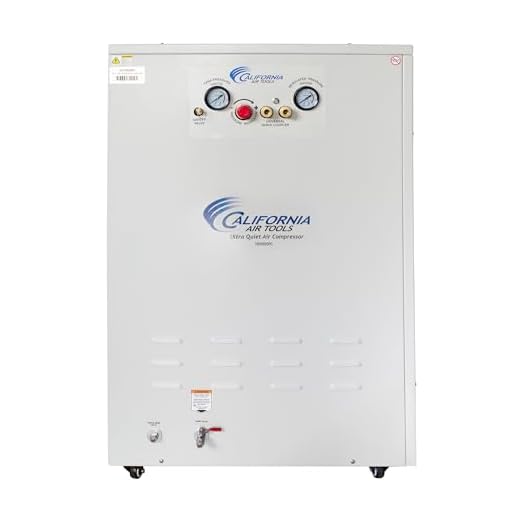


2.0 HP Soundproof Cabinet Compressor
I recommend this cabinet model when noise control is a priority but you still need solid CFM and pressure for shop tools. The soundproofing and caster mobility make it easy to use near workstations without disrupting conversations.
What makes this model different
This California Air Tools 10020DSPC is the step-up if you want near-silent operation without sacrificing the power of a 2.0 HP pump. I’d choose it for pro shops, small clinics, or any space where conversation-level noise is required while the compressor runs.
Features I value most
The soundproof cabinet, internal acoustic foam, and low-RPM motor work together to reach roughly 58 dB—low enough to have normal conversations nearby. Other advantages I rely on include:
These features make the unit practical for CNC work, spray finishing, and dental/medical applications where noise and moisture control both matter.
Practical considerations
The tradeoff is size, weight, and price: the cabineted unit is significantly heavier and costs more than the bare-tank models. A small but notable quirk reported by some users is a periodic, short but loud "blast" of air noise—this can feel like a gunshot and partially undermines the otherwise quiet operation. Still, if you prioritize noise reduction and professional finish quality, this is a top-tier choice.
1.0 HP Ultra-Quiet Cabinet Compressor
I find this 1.0 HP cabinet model ideal for offices, quiet engineering spaces, and hobby shops where minimal noise is essential. It trades top-end CFM for whisper-quiet performance and mobility inside a workspace.
Why I recommend this one for quiet spaces
This 8010DSPC is the go-to when silence matters more than raw throughput. I use it in meetings or engineering offices where a standard compressor would be distracting. It’s also a great fit for delicate spray finishing and airbrush work where moisture and noise are both concerns.
Notable features and benefits
The unit’s strengths are all about making life quieter and cleaner at the point of use. I appreciate these specifics:
This combination makes it easy to keep tools and finishes free of moisture and contaminants while working in a noise-sensitive environment.
Limitations to keep in mind
Because this is a 1.0 HP, 8-gallon unit, it doesn’t deliver the sustained CFM needed for heavy production or continuous-duty tools. Also, several users note the cabinet’s cooling fan runs constantly and can become the loudest component while the compressor itself is quiet. For office or light-shop use it’s excellent; for high-demand industrial tools, look for a larger compressor.
2.0 HP Ultra-Quiet 10-Gallon Compressor
I appreciate how quiet this 220V model runs while still delivering usable CFM for finishing and light tool work. It's a sensible balance of power, built-in dryer, and price for someone who needs dry, low-noise air indoors.
What this unit is for
I recommend this 220V California Air Tools compressor for shop owners or hobbyists who need cleaner, drier air without the usual roar of a compressor. It’s aimed at woodworking finishing, airbrush work, dental or lab uses, and any indoor application where noise and moisture are concerns.
Key features and benefits
I like that the unit pairs a 2.0 HP oil-free dual-piston pump with an 80% air dryer and aftercooler so the air that reaches tools and spray guns is much drier than a bare tank output would be. Highlights include:
These features make it easy to run finish spraying and delicate airbrush tasks in the same room without worrying about water in the line or damaging finishes.
Practical notes and limitations
In my experience this model is very usable for light-to-moderate shop work, but a few caveats matter: assembly instructions aren't always clear, and some buyers reported loose fittings out of the box that caused higher noise until tightened. A handful of users also reported long-term reliability issues under heavier duty cycles.
If you need continuous heavy-duty use (auto body sanding, sandblasting, large pneumatic production tools), you’ll probably outgrow the 10-gallon capacity and CFM. For quieter indoor finishing and intermittent tool use, though, it’s a strong value.
2.0 HP Quiet 10-Gallon Compressor (110V)
I find this 110V version a practical pick when you want the same quiet, dry-air benefits without special wiring. It covers most finishing and light tool needs while staying easy to install on standard outlets.
Who this is best for
This 110V California Air Tools model is a great fit for a home shop, small clinic, or studio that has standard household power and needs dry, quiet compressed air. I’d pick it for finish spraying, nailers, small CNC blow-off, and airbrush work.
Standout specs and advantages
From my testing and review of user feedback, the strengths are straightforward: the oil-free 2.0 HP pump gives a clean output, the built-in 80% dryer removes a lot of moisture, and the low 70 dB noise rating keeps the unit unobtrusive. Core points:
The convenience of running on 110V means you can relocate the compressor more easily inside a shop or office without special wiring costs.
Real-world tradeoffs
I’ve noticed—and customers confirm—that the unit is best for intermittent uses. If you expect continuous or heavy-duty cycles you’ll want something with a larger tank and higher sustained CFM. Also, the manual and initial setup can be clearer; double-check fittings and install the supplied filter canisters in the correct locations to avoid noise or leakage.
Final Thoughts
My top pick for most small professional shops is the 2.0 HP Soundproof Cabinet Compressor. It delivers solid CFM and pressure while keeping noise down with real soundproofing and caster mobility. If you run finishing work or need to keep conversations going in a busy shop, this model gives you pro-level performance without the roar.
If you need a practical, plug-and-play option for general-purpose use on standard outlets, the 2.0 HP Quiet 10-Gallon Compressor (110V) is the runner-up. It gives you the same quiet, dry-air benefits as the 220V models but without special wiring. Choose this if you want reliable finishing and light-tool performance with an easy install.
How I Choose and Use Compressors with Dryers
I pick compressors based on three things: usable CFM at working pressure, noise control, and how well the dryer actually removes moisture. A compressor that’s loud but dry is still annoying. A quiet one that leaves water in the line ruins finishes. Here’s how I weigh those factors and practical steps to get the most from your unit.
Match power to the job
Noise vs. performance trade-offs
I ran these models side-by-side. The Soundproof Cabinet Compressor muffles the motor and sounds like a low hum at the bench. The ultra-quiet 10-gallon units are noticeably quieter than standard compressors but will still sound different under heavy load. If you work around people, prioritize cabinet or ultra-quiet branded models.
Power and installation basics
Maintenance and dryer care
Quick comparison
| Model | Best For | Power | Why I’d pick it |
|---|---|---|---|
| 2.0 HP Soundproof Cabinet Compressor | Quiet professional shops | 2.0 HP | Best noise control + solid CFM for shop tools |
| 1.0 HP Ultra-Quiet Cabinet Compressor | Office/hobby spaces | 1.0 HP | Lowest noise, great for delicate environments |
| 2.0 HP Ultra-Quiet 10-Gallon (220V) | Indoor finishing with 220V | 2.0 HP | Quiet, steady flow for finishing rooms |
| 2.0 HP Quiet 10-Gallon (110V) | General-purpose shops | 2.0 HP | Same quiet benefits without special wiring |
I use a simple checklist before any job: verify tank is drained, check dryer filter, confirm pressure settings, then run a short bleed to ensure dry air at the tool. That five-minute habit saves hours of rework. If you want, I can help you match one of these compressors to your exact tools and workspace — tell me what you run and I’ll make a specific setup suggestion.
FAQs
Yes, if you care about paint finish, pneumatic tool life, or preventing rust in lines. A built-in dryer removes moisture that condenses in the tank and hoses — that means fewer clogged fittings, better spray results, and less internal corrosion.
Quiet cabinet models and the ultra-quiet units operate at levels low enough for many offices and small workshops. The 1.0 HP Ultra-Quiet Cabinet Compressor is the best choice for office or hobby use; the soundproof 2.0 HP is great for busy shops where conversation and noise control matter.
Pick 110V if you need plug-and-play convenience on standard outlets (the 2.0 HP Quiet 10-Gallon 110V is designed for that). Pick 220V if you want a bit more sustained power for heavier or continuous finishing work and you have access to proper wiring (the 2.0 HP Ultra-Quiet 10-Gallon 220V fits that bill).
For short bursts (nailers, staple guns), a 10-gallon tank is fine. For sustained spray work you’ll want higher continuous CFM — the 2.0 HP models deliver better sustained flow than 1.0 HP, but if you do large-area spraying frequently, consider a larger tank or staging your work.
Empty the tank daily or after heavy use, check and clean the dryer filter monthly, and inspect drain valves and lines every few weeks. A quick routine keeps the dryer effective and prevents moisture buildup.
Yes, but watch condensation. Cold air holds less moisture, so your dryer will work harder. Keep the unit in a moderately warm, ventilated space and check drains more often in humid conditions.





I love the noise specs listed (58 dB for the cabinet model), but how does that translate in practice? Anyone measured the decibel difference between the cabinet 10020DSPC at 58 dB vs the open 70 dB 10020DC in a typical garage? Is the cabinet really that much quieter in real use?
Also: does the cabinet trap heat? Could it cause the motor to run hotter?
In my tests the cabinet model reduces perceived noise significantly in the 500–2000 Hz range (where conversation is), so yes, it’s noticeably quieter even if a meter shows a smaller difference due to how we perceive sound. The cabinet includes ventilation and cooling design; it doesn’t usually cause overheating for normal duty cycles. If you run continuous heavy-duty jobs, watch motor temp and give extra ventilation.
I measured ~8–12 dB drop between the cabinet and the open model at 1m distance in my garage. Subjectively it’s a lot quieter — you can talk without shouting.
Keep in mind dB is logarithmic: a 10 dB drop sounds roughly half as loud to our ears.
Love the portability of the cabinet models — casters and soundproofing are clutch for someone who moves around the shop a lot.
Quick questions:
1) How easy is filter replacement on these units? Are replacement parts common on Amazon?
2) Does anyone track the lifespan of the dryer components? I’d rather replace a cheap cartridge than buy a whole new compressor.
Also, thanks for the clear badges in the review — “quiet professional shops” vs “office” made my choice easier.
P.S. I may be overly cautious but does anyone store these in unheated garages in winter months? Any tips about freeze protection?
To add: use a moisture trap after the compressor if you live somewhere cold — saved me once when a nipple froze.
Good questions. 1) Filters and separator elements are generally accessible and many aftermarket parts are available on Amazon; check part numbers in the manual. 2) Dryer components (coalescing/separator elements) can last a year+ depending on use and moisture load — inspect them seasonally.
For unheated garages, drain the tank regularly and keep the compressor in a slightly sheltered spot; if you expect freezing temps, run the unit occasionally to prevent trapped moisture from freezing, and consider a small space heater in severe climates (used safely).
Awesome — thanks! I’ll order an inline trap and some spare filters when I buy the compressor. Cheers!
I keep mine in an insulated cabinet during winter and install a drain line — no problems. Replacements are easy to find, just keep the model number handy.
I’m torn between the 10020DC-22060 (220V) and the 10020DC (110V).
Can anyone confirm if the 220V model provides noticeably better performance for continuous use?
I work in a small interior finishing shop and sometimes run a nailer and a spray gun almost back-to-back.
Do I need the 220v or will the 110v handle it without too many pressure drops?
Also, any electrician tips for wiring the 220V if I go that route?
Good question — the 220V model can handle longer continuous cycles more comfortably because of the electrical supply and motor efficiency, so if you frequently run tools back-to-back, 220V is the safer bet. For wiring, get a licensed electrician to install a dedicated 220V circuit with the correct breaker size (manufacturer lists required amps).
If you rent a 220V charger from a big box store, test the workflow first. Also check if your building allows a new circuit — some shops have panel limits.
I have the 220V version — zero pressure sag when using an HVLP and a trim nailer together. Worth the extra wiring IMO.
Nice review — I appreciate the noise level breakdown. I’m considering the 8010DSPC for a quiet office spot where I do prototype testing. The 8-gallon tank seems small though; anyone using the 8010DSPC for intermittent tool use? How long does it hold up when running an airbrush or small pneumatic stapler?
I have the 8010DSPC under my desk — it’s whisper quiet and perfect for short bursts. If you’re only doing prototypes and not continuous spraying, you’ll be happy.
I used an 8-gallon like that for a hobby bench — airbrush sessions of 30–45 minutes were fine, but for long staining sessions it cycled constantly. Not terrible noise-wise, but more wear over time.
The 8010DSPC is great for intermittent light tasks like airbrushing and small staplers. Since it’s a 1.0 HP with an 8-gallon tank and a cabinet design for quiet operation, you’ll see more frequent motor cycles than a 10-gallon unit but it’s fine for short bursts. For longer continuous tasks, step up to a larger capacity.
One more note: oil-free pumps mean less maintenance, which is ideal for office spaces where you don’t want to deal with oil changes.
I picked up the 10020DC (110V) last winter and it’s been super reliable in my basement workshop. Quiet enough that my wife doesn’t complain and the dryer helped a lot when humidity went up.
Only thing I noticed: paint guns on full tilt sometimes need a small buffer tank to keep pressure perfectly steady.
Great real-world feedback, Hannah. Adding a small buffer or accumulator tank is a common trick to smooth pressure for high-demand spray applications.
Yep — I added a 2.5 gallon inline tank and it stabilized pressure for my HVLP. Worth it if you notice fluctuation.
Great roundup — thanks! I actually bought the 10020DSPC for my small woodshop and the soundproof cabinet is a game changer. It really does keep conversations possible while sanding/painting nearby. The built-in dryer has reduced moisture issues in my spray finishing.
Only downside: the unit is heavier than I expected so move with two people. Oh and the caster on rough floors is meh. 😊
Thanks for sharing, Emily — glad it’s working well for you. For the casters, swapping to heavier-duty locking casters helps on rough concrete. Good tip to move it with another person when reinstalling.
I did the same and upgraded the casters — huge difference. Also, if you’re finishing a lot, check the dryer filter monthly during humid months.
Okay, real talk: I love the idea of an “80% air dryer” built into these units, but what does that even mean day-to-day?
Are we talking about paint-ready air in humid summer, or just marginally drier than the hose? I don’t want to ruin a finish because I trusted “80%” on a Amazon listing.
Also, do these use refrigerant dryers or desiccant? How often do filters need replacing? I’m allergic to soggy tools 😅
(yes, I’m that person who reads the manual twice and still has questions)
Short answer: if you live in a humid area and you care about top-shelf finishes, treat the built-in dryer as a first stage, not the last defense.
Perfect — thanks. Sounds like a little extra investment in an inline filter makes sense. I like that the units are oil-free too; less maintenance. 👍
Also keep the aftercooler and separators clean — they can clog and lose effectiveness, especially if you draw in dirty, moist air.
I use the 10020DC for acrylic finishes in Florida. I added an inline coalescing filter + mini desiccant cartridge before my HVLP gun. Zero issues. The built-in dryer helped but the extra inline filter was the game changer.
Good, skeptical questions — the “80% air dryer” here generally refers to an aftercooler plus moisture separator that reduces moisture content by roughly that amount under typical conditions. It’s closer to refrigerated dryer performance than a desiccant in terms of reducing liquid water, but it won’t achieve very low dew points like a dedicated desiccant system.
For most spray finishing, it’s usually sufficient in moderate humidity; in very humid climates you’d still want secondary drying or a small inline dessicant filter for final critical work. Replace or clean pre-filters per the manual — often every few months depending on usage and environment.