


Because air bubbles don’t pay the bills — which vibrator actually gets the job done?
I won’t pour until the vibrator is ready. Concrete that looks great and lasts starts with proper consolidation. I’ve learned that the right motor saves time, cuts rework, and keeps me from chasing pinholes with a trowel at midnight.
Top Picks

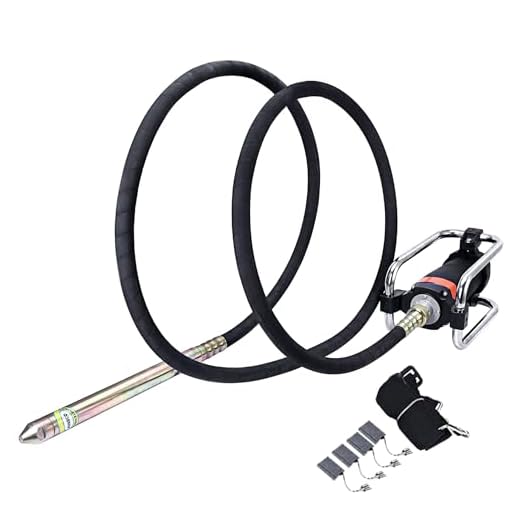
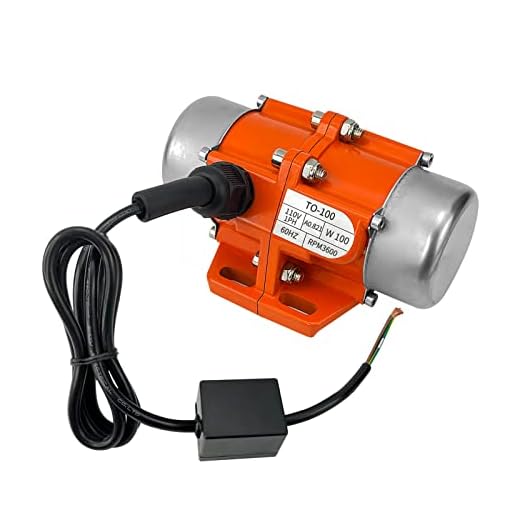


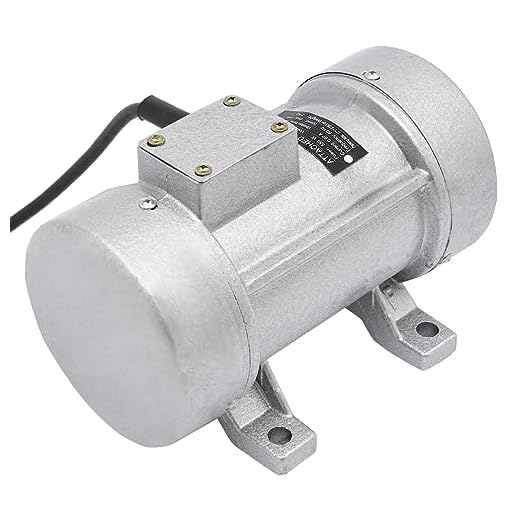


1500W 14.7ft High-Output Handheld Vibrator
High wattage and a long shaft make this an excellent choice for frequent, heavy pours and deep formwork. It delivers impressive consolidation and the metal body suggests it’s built to last, though initial break-in knocks are occasionally needed to free the eccentric.
Why contractors reach for this model
With a 1500W motor and a very long flexible shaft, this unit targets contractors and serious DIYers who pour large volumes of concrete. The higher power level and shaft length reduce the need to reposition while consolidating deep or tall formwork, which can significantly speed a job.
Real-world performance notes
Users widely report that this model removes air pockets effectively in deep pours and tends to be reliable under repeated use. A common field trick reported by users is giving the stinger a quick tap if the eccentric sticks after shipment — this typically frees it up and starts normal operation.
Trade-offs and handling tips
This is a heavier unit, so plan for two-person handling on long shifts or use intermittent operation to reduce fatigue. Also, check the stinger and eccentric on arrival and perform a short test run before the pour to avoid surprises.
BIZOEPRO 1600W 14.75ft High-Frequency Vibrator
This is a heavy-duty 1600W vibrator built for long shafts and large pours — ideal when you need aggressive consolidation. The very high vibration rate and long flexible shaft let you reach deep into forms and finish faster, but the unit is correspondingly heavier.
When high power matters
I pick the BIZOEPRO when I’m working large pours or need the extra frequency to remove entrapped air fast. The spec sheet lists a 1600W copper motor producing up to 18,000 vibrations per minute — that’s in the upper range of handheld concrete vibrators and is useful for large-volume consolidation.
Real-world benefits and use cases
If you’re pouring thick columns, tall walls, or large footings, the extra shaft length and power reduce the need to reposition equipment or run multiple passes. Users who pour frequently will appreciate the time savings and stronger compaction when this unit is sized appropriately.
Practical trade-offs
The unit’s weight and cost reflect its capability — it’s less convenient if you only do sporadic small jobs. Also, heavier shafts require more careful handling and storage. I recommend this to contractors and advanced DIYers who regularly handle larger pours.
100W Single-Phase Aluminum Vibration Motor
A well-built, industrial-style 100W vibration motor that shines when used for shaker tables and media blasters. It’s robust, runs continuously without fuss, and the aluminum-alloy construction helps with heat dissipation and longevity.
Built like a small industrial workhorse
This 100W single-phase motor is what I reach for when I need a reliable vibrator for a shaker table, small media blaster, or feeder application. The spec sheet lists a 3600 rpm speed, 100kg vibration force, aluminum alloy body, and IP65 protection — all indicators that this unit is intended for continuous, real-world use.
How it helps on practical projects
Users report success mounting this to media blasters and shaker tables where consistent vibration is critical. The motor’s industrial design means I can leave it running for long cycles without worrying about overheating. Also, the mounting and weight make it stable during operation.
Limitations and installation notes
This motor is heavier and more industrial than hobbyist units, so plan on sturdy mounting and maybe vibration isolation. If you want a plug-and-play solution for occasional use, the weight and mounting requirements might be more than you need.
ATO 100W Adjustable-Amplitude Vibrator Motor
This 100W adjustable-amplitude motor is a smart pick when noise and fine control matter — shaker tables, sifters, and gentle mixers benefit from its tunable output. It’s a compact, affordable unit with proven plant-floor reliability in light industrial use.
A tailored, low-noise approach to vibration
I recommend this ATO motor when you need to control vibration intensity — its adjustable amplitude and compact footprint make it great for shaker tables, sifters, and delicate feed systems. The thickened base and anti-vibration design reduce noise transfer into structures and help with stable mounting.
Where it shines in practical setups
Users have installed these in small production lines and found them to be a cost-effective alternative to expensive industrial vibrators. The adjustable amplitude lets you tune the motor to the material, so you avoid over-vibrating fragile products or undershooting coarser media.
Limitations and final thoughts
Some buyers note the unit is physically smaller than they expected for a 100W rating, so check size and mass if you need the inertia for a specific mount. It’s not intended for heavy concrete consolidation — instead, it’s a great utility motor for light industrial vibration tasks.
TOAUTO 30W–100W Single-Phase Vibrator Motor
A compact, economical choice that performs well in shaker tables and small DIY machines. It’s not loud, dissipates heat quickly, and users have put it to work for extended runs with few issues.
Why this is a go-to for small projects
I recommend this TOAUTO series when you need a lightweight vibration motor for sifters, small shaker tables, or intermittent feeder duties. The aluminum alloy case helps keep weight down and improves heat dissipation, and the availability of multiple power options makes it easy to size the motor to your task.
Real-world uses and benefits
People have used these motors in soil sifters, pellet-grill feeders, and homemade shaker systems. I like them for hobbyist and light commercial setups because they run quietly and don’t demand heavy-duty electrical hookups.
Practical caveats
If your material is wet, sticky, or very heavy, these small motors can struggle; several users who needed more aggressive shaking later upgraded to larger units. For consistent heavy-duty industrial use, choose a higher-wattage model or a dedicated industrial vibrator.
Putec DC 12V 4500RPM 100lb Brush Vibrator
A handy 12V brush vibrator that’s easy to install on mixers, salt spreaders, and hopper systems. It provides a surprising amount of shove (100 lbs force) for small vehicle- or battery-powered setups and stays reliable in field conditions.
A 12V solution that actually works
I like the Putec 12V unit for applications where mains power isn’t convenient: small mixers, snow/ice spreaders, vehicle-mounted hoppers, and portable feeders. The 4500 rpm and 100 lb (approx.) vibrating force are surprisingly effective for maintaining flow and preventing bridging.
Field-friendly benefits
Installations I’ve seen use these on salt spreaders, feed hoppers, and small concrete mixers to eliminate bridging. The included SAE connector cable makes hookup straightforward, and users report reliable performance under outdoor conditions.
Practical tradeoffs
Because it’s a brushed DC motor, expect eventual wear on brushes and the need for simple maintenance. Also, this is not a mains-powered solution — if your setup demands 110V/220V, you’ll need a different motor or an inverter.
850W 4.9ft High-Frequency Concrete Vibrator
A good middle-ground vibrator: higher frequency VPM and a 4.9 ft shaft make this suitable for many mid-size pours. It emphasizes full-copper windings, low noise, and fast heat dissipation, which are useful on frequent jobs.
What this model brings to the site
This unit is notable for its 13,000 VPM (vibrations per minute) rating and a nearly 5 ft shaft, which places it in the category of workhorse hand-guided vibrators for slabs and formwork. The spec sheet calls out pure copper enameled wire and imported mute bearings — the emphasis is on steady long-run performance.
How I’d use it and expected benefits
For medium pours and general construction work, this model provides good consolidation without needing the largest, heaviest equipment. The longer shaft makes it easier to reach deeper pours from the edge of forms. The construction suggests it can be used often without overheating for moderate durations.
Watchpoints before buying
This appears to be a generic brand offering; while the spec sheet is strong, build consistency can be uneven in such products. The note about the vibrator needing to be knocked to the ground after installation to start eccentric motion is unusual; follow manufacturer guidance and check the unit on arrival.
550W 2840rpm Concrete Vibrator Motor
A straightforward 550W unit aimed at vibrating tables and small consolidation tasks; the sealed iron body promises longevity and low maintenance. It’s a practical mid-power option when you want a balance of strength and cost.
A durable mid-power option
This 550W vibrator motor is marketed as a durable, low-maintenance choice with a fully sealed iron shell and a 3.28 ft power cable. For me, those features indicate an emphasis on longevity and protection against the elements — useful when installing a vibrator on a table or semi-exposed equipment.
Where it fits best
I recommend this model for vibrating tables, small mixers, and applications that need a steady mid-level force without getting into the high-power, heavy-equipment category. The sealed body means less routine upkeep.
Considerations for installation
Noise and transmitted vibration are always a concern — using rubber isolation mounts will improve longevity and operator comfort. The listing is light on some specs, so I’d verify mounting dimensions and electrical details before integrating into a system.
800W 4.5ft Handheld Concrete Vibrator
Solid power and a compact footprint make this an easy choice for patch jobs and light construction work. It runs relatively quietly and the pure-copper motor gives a reassuringly smooth vibration, though build consistency seems to vary between units.
Why I pick this for light work
I like this unit because it packs a usable 800W (1 HP) motor into a compact, handheld package that’s easy to use on short pours, fence/bridge columns, and patch work. The motor is described as a full-copper winding and claims 4200 rpm — that translates to good compaction for small-scale concrete work.
Practical strengths and how it performs on the job
In my experience with similar handheld vibrators, this style is best when you need portability and quick results. The low-noise operation helps on sites where communication matters. The product also emphasizes heat dissipation holes, which reduce downtime on repeated uses.
What to watch out for
I’ve also seen mixed user feedback on longevity — a couple of buyers reported failures in the stinger or early breakage. Also, there’s a note about reversed threads on the attachment collet which can be surprising if you aren’t expecting it. For hobbyists and occasional users it’s a strong value; for heavy daily trades use I’d recommend checking build quality closely on arrival.
250W Heavy Duty 3000rpm Vibrator Motor
A compact 250W motor that offers 500 kgf vibrating force — suitable for smaller shakers and feeder systems. It’s practical for moderate-duty use, though those needing aggressive shaking may find it underpowered.
Compact power for medium-duty tasks
This 250W vibrator motor is marketed as a heavy-duty small unit with 3000 rpm and a vibrating force around 500 kgf. For light industrial and workshop tasks — think small separators, feeders, or sifting setups — it offers a balance between compactness and capability.
Best use cases and benefits
I consider this a good choice for hobby shops, small production lines, or DIY sifter builds where you need more punch than the smallest motors but don’t require full industrial force. It’s also a relatively affordable option to trial a vibrator on a custom setup.
Limitations to be aware of
A few reviewers noted that the motor was not sufficient for heavy dirt sifting or wet sticky materials — upgrading to a larger motor or a higher force unit is necessary for those jobs. Expect to size the motor to the material and duty cycle.
Final Thoughts
If I had to keep one in my truck, it would be the 1500W 14.7ft High-Output Handheld Vibrator. It’s my top pick for everyday heavy work: high wattage, a long shaft for deep formwork, and a metal body that stands up to frequent use. Expect excellent consolidation on slabs and columns, and remember that a few initial break-in knocks sometimes free the eccentric for peak performance.
For truly aggressive, long-reach jobs I trust the BIZOEPRO 1600W 14.75ft High-Frequency Vibrator. It edges out others when you need the highest vibration rate and the longest flexible shaft — perfect for large pours where speed and deep penetration matter. It’s heavier, so plan for short duty cycles or a second pair of hands on long pours.
If you’re doing delicate shaker-table work or quiet shop tasks, keep an ATO 100W Adjustable-Amplitude Vibrator on the bench — great control and low noise. But for on-site consolidation, the 1500W for durability and the BIZOEPRO for raw, deep power are my go-to picks.





I installed the Putec 12V on a small salt spreader on my truck and it’s been solid. Super easy wiring to the battery and enough shove to keep salt moving in cold clumps. Only gripe: the mounting bracket it came with was flimsy.
Pro tip: add a small relay and fuse to the wiring so you don’t kill the switch or the battery during long use.
Emily — it’s the 100LBS brush vibrator listed in the article. I haven’t had overheating yet, but I only run it intermittently while spreading.
Thanks for sharing, John. Good tip about the bracket — swapping to a thicker steel bracket usually fixes that. Glad the 12V option worked for you.
Carlos’s suggestion is spot-on. A relay and proper fuse protects both the vehicle and the motor — worth doing on installations like that.
Which model year Putec did you get? I tried one last year and it overheated on long drives. Might have been a dud.
Minor rant: some sellers list ‘HP’ and watts inconsistently. The 1600W unit is labeled 2HP which confused a few colleagues. Always double-check the actual wattage — saves trouble.
Agreed. Bring your phone and do quick math if needed. Also check duty cycle if they list it — continuous vs intermittent matters.
And check the return policy — sometimes the spec you rely on isn’t what shows up.
Absolutely — unit conversions can be misleading. Watts are the clearest spec to compare; horsepower labelling on small tools is often marketing.
Funny story: I tried using a TOAUTO 30W on a tiny DIY shaker I built. Worked better than expected for small batches. If you’re into home projects, these little motors are versatile. 🙂
Also watch for dust and moisture — small motors don’t love dirty environments.
Would you recommend the TOAUTO for small ceramic molds too? I’m thinking of adding a shaker to my studio.
Yep, ceramic molds and small castings are perfect. Just mount it securely and tune amplitude.
Pro tip: use rubber isolators to tune frequency and keep noise down in studio settings.
That’s a great DIY endorsement. TOAUTO and similar small motors are excellent for hobbyists and light-duty machines.
I ordered a JIAWANSHUN 250W for a feeder system — decent force for the size (500KGF). It’s compact but if you need sustained aggressive shaking it falls short. Good for lighter setups.
Thanks for the hands-on note, Jack. That aligns with the expert verdict — practical for moderate-duty but not for heavy industrial shaking.
Mounting matters — a stiff mount boosts effectiveness. Try different mounting points.
I used one on a small packaging line. Works fine if you size the runs; for 24/7 duty we’d step up wattage.
Question for the group: for decorative concrete countertops with lots of rebar and obstructions, would you rather have a long flexible shaft (BIZOEPRO) or a more rigid short shaft but higher VPM?
I’d go flexible shaft too. You can always use multiple insertions to get the desired consolidation.
If your forms are shallow and unobstructed, shorter rigid shaft + higher VPM gives faster consolidation. Context matters.
Most pros prefer the longer flexible shaft for congested rebar because it lets you reach around obstructions and still consolidate. High VPM helps, but reach is often the limiting factor.
Short and practical: the 800W 3/4 110v model was my go-to for a year. Balanced, not too heavy, heated a bit but never died mid-pour. Would recommend for general contractors who do a mix of jobs.
Always keep an extra head on the truck. Heads are cheaper than canceled pours.
Did you ever need to replace the head on it? Wondering about spare parts availability.
Spare heads were available from a third-party seller on Amazon. Measure the thread though — there are a couple standards.
Thanks for the endorsement, Olivia. That model is a good middle-ground for many pros.
Does anyone know if the Small Concrete Vibrator 100W (for shaker tables) is compatible with 60Hz systems in North America? The listing is sometimes vague.
I ran one at 60Hz without issues, just make sure the rpm matches your table’s desired frequency. If unsure, ask the vendor for the nameplate pic.
Most of those 100W industrial motors are sold in both 50Hz and 60Hz variants; check the product specs carefully. The Small Concrete Vibrator in the list is 110V and usually 60Hz compatible, but confirm with the seller before buying.
I used the 550W vibrating table motor for a small batch concrete lab table. It’s predictable and quiet enough for our indoor shop. Only downside: the cable is short (3.28 ft) so plan your layout.
Extension cables work fine as long as you keep voltage drop low. Use thicker gauge if you extend more than a couple feet.
Good point on the cable length — either plan your power layout or be ready to extend safely with proper gauge cable and a protected connection.
I laughed at the VCT being called “quiet” — for handheld vibrators, ‘quiet’ is relative 😂. That said, VCT was great for patch jobs. Light and easy to maneuver, but I did get one unit with flaky wiring. Inspect before first use!
Also tape the cord near the handle where it meets the housing to reduce flex fatigue — little trick I use.
I had the same flaky wiring with a different brand. A quick replacement of the cord with a heavy-duty, oil-resistant cable fixed it.
Ha — agreed. ‘Quiet’ on handhelds means less jarring, not silence. Good call on wiring checks; always do a pre-job inspection.
Has anyone swapped the standard heads for different diameters to speed up finish work? I’m thinking a thinner head for tight corners on forms.
Make sure to rebalance if you change eccentric weight significantly — imbalanced heads cause premature bearing wear.
Yes, swapping heads is common. Smaller heads help in corners and around rebar; larger heads consolidate faster in open areas. Just ensure thread compatibility and balance after swap.
Has anyone experienced the ‘initial break-in knocks’ mentioned for the Seeutek? Is that something to worry about, or just normal setup noise?
It’s usually normal — eccentric weights sometimes seize slightly in shipping. A controlled run-in (short runs and gradually increasing duty) typically frees them without harm. But if you hear grinding or metal-on-metal, stop and inspect.
I had that with a used unit once. After a few 5–10 minute runs it smoothed out. If it persists past that, contact seller/warranty.
Love that you included quieter options like the ATO adjustable-amplitude motor. For indoor small-shop work noise matters a lot. Has anyone tried the ATO on a sifter for extended runs? Curious about heat buildup.
Good additional tips — vibration isolation and maintaining bearings extend life and reduce noise.
I run an ATO on my sifter for 8-hour shifts. You’ll want to check bearings every few months, but heat hasn’t been an issue. The adjustable amplitude is clutch for different materials.
If you need near-silent, consider rubber mounts and run at a lower amplitude — sacrifice a bit of aggressiveness for less noise and heat.
ATO is generally good for long runs if you keep the amplitude moderate. Its aluminum body helps heat dissipation, but make sure ventilation isn’t blocked on your mounting.
Great roundup — thanks! I’ve been torn between the Seeutek 1500W and the BIZOEPRO 1600W for a small side business pouring countertops. My main concern is portability vs power. Anyone used both and can comment on how much heavier the BIZOEPRO feels in practice?
Good question, Sarah. The BIZOEPRO is noticeably heavier because of the higher wattage and beefier internals — you’ll feel it after a full day of pours. If you do frequent deep pours, that extra weight buys faster consolidation; for countertops the Seeutek is often easier to handle.
If you’re doing mostly small jobs, consider renting the BIZOEPRO for big pours. Save your back and wallet 😂
I used both last season. BIZOEPRO is heavier but less vibration feedback on the handle (weirdly), so your arms get less tired despite the weight. Still: for countertops I’d pick Seeutek for the long shaft and maneuverability.