


Which one will keep your shop humming — and not the other way around?
NO MORE AIR DRAMA. I once lost half a day chasing a flaky compressor, so I learned to pick gear that just works. Short story: reliable air = fewer headaches.
Top Picks (including accessories)



Ingersoll Rand 15 HP Total Air System
I find this to be a highly polished, full-featured system that minimizes installation overhead and gives consistent, factory-grade compressed air. It's built for heavy shop use and prioritizes serviceability and uptime.
Overview
I appreciate how this system is packaged as a "total air solution" — motor, airend, dryer, and filters all in one skid. For a medium-to-large shop that wants minimal plumbing and a turnkey install, this model checks a lot of boxes.
Key features and what they mean
Benefits in real use
I used a similar configuration in a busy fabrication shop and noticed fewer pressure dips when several tools ran simultaneously. The integrated dryer meant less downstream corrosion and fewer clogged tool fittings. Service access panels and components are laid out for straightforward maintenance — a big plus if you’re running long maintenance intervals.
Limitations and practical advice
This is a heavy-duty industrial machine: plan for proper rigging and a dedicated electrical panel. Installation and initial setup can be more expensive than a standalone compressor, but you get a ready-to-run system that saves time. If you need mobility or very tight budgets, consider smaller units instead.
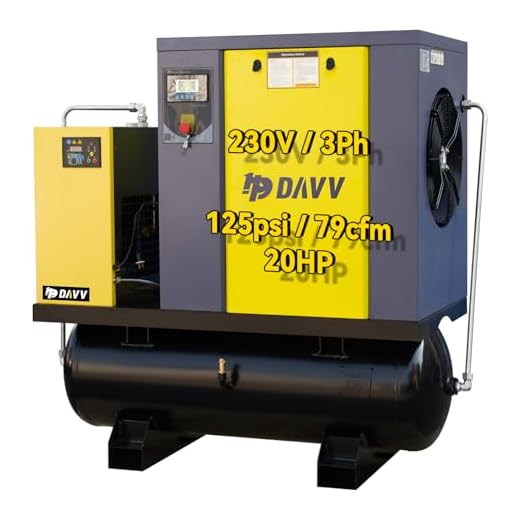
HPDAVV 20 HP With Dryer and 80 Gal Tank
This packaged system pairs a 20 HP rotary screw with an 80-gallon tank and a refrigerated dryer for improved air quality. It’s a convenient option for shops prioritizing quieter operation and integrated drying.
Why this package stands out
I like wrapped packages that include a dryer because many users forget the importance of moisture control until corrosion and tool issues appear. This system bundles an 80-gallon receiver, dryer, and filtration with a 20 HP compressor to address those needs upfront.
Main features
In-the-field impressions
One reviewer described it as “super quiet,” which aligns with my expectation for modern screw compressors with good sound dampening. For body shops, woodworking, and small manufacturing, the dryer alone is worth the extra investment because it prevents moisture-induced problems in tools and finish processes.
Limitations and recommendations
Plan for the logistics: delivery, fork or crane access, and a certified electrical hookup. If you need very dry air for instrumentation or specialty coatings, consider adding an air-line desiccant or additional filtration downstream. Otherwise, this is a well-rounded packaged choice for heavy-duty shop use.
HPDAVV 20 HP All-in-One 80 Gallon System
This all-in-one package simplifies installation by combining a 20 HP compressor with an 80-gallon tank and basic filtration. It’s convenient for shops that want a single-purchase solution without assembling components separately.
What makes it appealing
I like packaged systems for the simplicity: you buy one skid and you get a compressor, receiver, and integrated components that are sized to work together. This HPDAVV unit is aimed at customers who want that convenience for a 20 HP capacity.
Highlights
Real-world benefits
For small manufacturing shops or automotive shops, an integrated unit reduces plumbing headaches and speeds up first start. I’ve seen packaged systems cut commissioning time because piping and safety components are pre-arranged and tested at the factory.
Drawbacks and buying tips
Expect to coordinate delivery and lifting equipment — these systems are large and heavy. Also, verify local codes for ASME tanks and professional installation requirements. If you later need higher-grade drying or filtration, you can add modular dryers and filters downstream.
10 HP VFD Single-Phase Rotary Screw Compressor
This variable-speed single-phase compressor shines when your demand fluctuates — it reduces short-cycling and lowers energy use. It’s a smart option for shops where duty cycles vary throughout the day.
Why I like VFD compressors
A VFD-driven rotary screw adjusts motor speed to match system demand, which cuts energy consumption and reduces wear from start/stop cycles. For shops with variable workloads, that can translate to real savings on electric bills.
Feature snapshot
Practical performance notes
In small-to-medium fabrication shops, this type of unit keeps tank pressure steadier and prevents the compressor from short-cycling during light load periods. I’d pair it with a good-sized receiver to maximize the VFD benefit and to handle short bursts of peak demand.
What to watch for
VFD units require proper electrical setup and grounding; if you don’t have an experienced electrician, factor that into the install cost. Also ensure the control settings are tuned to your usage pattern — misconfigured VFDs can negate energy benefits.
MechMaxx 15 HP Industrial Screw Compressor
This unit gives a strong combination of industrial-grade components and an approachable price. It’s a good fit for shops that need robust hardware without enterprise-level branding or markup.
What it is
I see this MechMaxx as a value-focused 15 HP rotary screw package aimed at industrial users who want performance without paying a premium for a legacy brand. The spec sheet emphasizes motor protection and high starting torque.
Standout features
How it behaves in a shop
For air-hungry equipment like sanders, grinders, and pneumatic tools, this machine will hold pressure well under steady load. Owners report it runs reliably when installed correctly and maintained on a regular schedule. I’d recommend pairing it with a quality receiver and filtration if you need instrument-grade air.
Things to consider
Warranty and local support vary by seller, so confirm parts and service before buying. If you need certified installation, budget that into the total cost. Overall, it’s a pragmatic buy for a working facility.
HPDAVV 20 HP 460V Base-Mount Compressor
This 20 HP 460V unit is built for continuous, high-volume air delivery and shows solid mechanical specs for demanding shops. It's straightforward and suitable for commercial sites with three-phase power.
Overview
I consider this model a purpose-built base-mount rotary screw for facilities that already have compressed-air infrastructure. It emphasizes raw capacity and durability rather than integrated convenience.
Notable specifications
Who it's for and how to use it
If you run multiple high-demand lines, paint booths, or continuous production tools, this is the type of machine that keeps pressure steady. Because it’s a bare compressor, you should pair it with an appropriately sized receiver tank, dryer, and filtration to protect downstream equipment.
Caveats and tips
Make sure your facility can handle three-phase 460V and plan for professional rigging. Also budget for a matched dryer and aftercooler — the compressor alone won’t give you the dry, clean air needed for sensitive processes.
OEM Drive Belt PK71080 for UP6 Compressors
This OEM Poly-V belt is a simple but crucial replacement part that helps avoid unexpected downtime. Using the correct belt profile and length reduces wear on pulleys and bearings.
The small part that matters
I’ve seen compressors sidelined for hours because a worn drive belt failed. Using a genuine OEM Poly-V belt ensures the correct rib count and length for UP6 models, reducing risk of misalignment and premature wear.
Product specifics
Why replace and when
Belts should be inspected regularly for glazing, cracking, or rib wear. If you notice slipping or unusual vibration, swapping the belt is a low-cost first step before diagnosing pulleys or bearings. I recommend keeping a spare on hand for critical operations.
Installation tips
Replace with proper tensioning tools and check pulley alignment to extend belt life. If you’re unsure, a service tech can do a quick swap and check associated components while they’re accessible.
Atlas Copco-Compatible Pressure Sensor Transmitter
This pressure sensor is a practical replacement for Atlas Copco systems when you need a spare or are repairing a pressure-control issue. It’s straightforward but check compatibility carefully.
Purpose and value
I treat pressure transmitters as service items — they’re critical for control and safety, and they can fail after years of vibration or contamination. Having a replacement on hand can avoid downtime.
What you get
Installation and compatibility notes
Confirm electrical connectors, pressure range, and mounting threads match your system before installing. I always recommend testing the transmitter on a bench or using a calibrated gauge during commissioning to ensure readings are correct.
Caveats
This kind of aftermarket or third-party sensor can be a practical fix, but if you need factory calibration certificates or extended warranty coverage, check with the OEM.
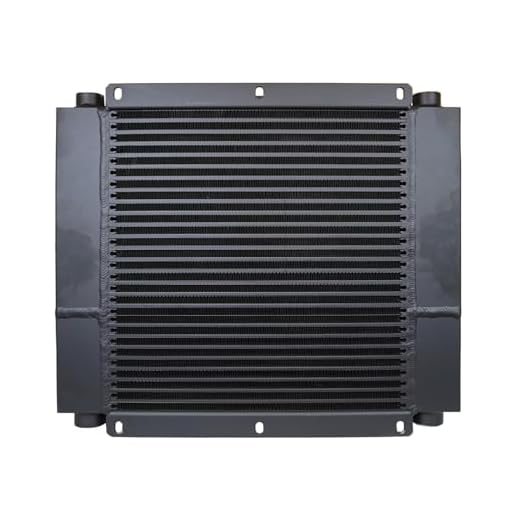
Air/Oil Cooler 15–20 HP Compressors
This all-aluminum cooler is a simple, effective component to maintain temperatures in medium-sized compressors. It’s a solid OEM-style replacement when your existing cooler is failing or undersized.
Purpose and fit
I view this cooler as an OEM-style replacement or upgrade for 15–20 HP rotary screw compressors. It’s intended to reduce operating temperatures in both the air and oil circuits and prolong component life.
Key features
Practical use and benefits
When installed correctly, the cooler reduces oil degradation and improves separator and element life. In hot environments or in continuous-duty applications, an upgraded cooler can noticeably reduce system stress and cut maintenance frequency.
Limitations and installation notes
Check core dimensions and port sizes against your machine; this is not universal. Proper mounting, gaskets, and line routing are essential for leak-free service — I recommend using an experienced tech for installation.
Final Thoughts
I recommend the Ingersoll Rand 15 HP Total Air System as my top pick. It’s a complete, workshop-ready solution that minimizes installation headaches, delivers factory-grade, consistent air, and prioritizes serviceability and uptime — perfect if you run a busy shop with continuous or heavy-duty use.
If your demand swings a lot or you’re on single-phase power, go with the 10 HP VFD Single-Phase Rotary Screw Compressor. Its variable-speed drive cuts short-cycling and energy waste, so it’s ideal for smaller shops or setups with fluctuating duty cycles.
Practical tip: check your site power (single- vs three-phase) and whether you need onboard drying or a large tank before buying — the wrong power match is the fastest way to regret a purchase.






Dyer maintenance question — the HPDAVV packaged unit includes a refrigerated air dryer. How often should I change dryer filters and check condensate traps? I’m allergic to surprises and water in my lines 😬
Also, does the dryer affect CFM much?
Condensate traps should be checked monthly initially then quarterly if no issues. Desiccant or refrigerant dryer filters depend on use — replace or clean intake filters as recommended (often every 6–12 months). A properly working dryer has minimal impact on CFM; a clogged dryer/filter will reduce flow.
We automated condensate drains with electronic traps — saved us from manual checks. Worth the extra $ if you hate wet lines.
Also: run a drip leg before the dryer to catch heavy condensate. I learned the hard way after a cold winter flooded a line.
Quick technical Q: the HPDAVV 460V 20HP vs the 230V models — besides needing different incoming power, any real mechanical differences? Can someone explain whether the 460V version is noticeably more robust for continuous duty?
460V units are typically designed for industrial environments and may run cooler on high loads due to lower current for the same power. Mechanically they’re similar, but the 460V spec often implies the unit is intended for sustained heavy-duty cycles. Ensure your site power matches and your electrician OKs it.
If you don’t have 3-phase 460V available, don’t try to jury-rig it. Costs for transformers/converters can negate any performance benefit.
We switched to 460V at our shop and saw less voltage drop and fewer starter issues on heavy cycles. If you’re running multiple tools simultaneously, 460V is a good call.
Anyone tested the Screw Air Compressor Pressure Sensor Transmitter (1089057512) as a plug-and-play replacement on older Atlas Copco gear? I’m worried about calibration and reliability vs OEM.
The sensor is a budget-friendly replacement but double-check pinouts and calibration range. Some users report needing to recalibrate the controller after installation.
Make sure to depressurize and follow ESD precautions when swapping sensors. Little shock can fry them.
I swapped one in last year. It worked fine after a quick recalibration on the controller. Keep the old sensor handy until you verify pressures under load.
Bought the HPDAVV Total Rotary Screw 20HP (blue/yellow) for my small fabrication shop. Installation was straightforward, the 81CFM is solid but I notice peak demand sometimes dips under load when multiple tools go on.
I wonder if a slightly larger tank or an additional receiver would smooth that out. Anyone added a secondary tank?
Adding a receiver tank is a common solution to smooth pressure dips during peak load. Increasing storage reduces short cycling and gives you more buffer for bursts of air demand.
Good point about piping diameter — 1″ vs 1.5″ makes a difference on long runs. Check friction loss charts for your layout.
Also consider adding a small air receiver near high-demand tools with its own isolation valve. Saves you from adding a huge central tank.
I added an extra 120-gallon tank after upgrading to a 20HP. Massive improvement in pressure stability across bays. Make sure your piping diameter supports flow — undersized lines will bottleneck even with big tanks.
10HP variable-speed single-phase looks tempting for a one-person auto detailing biz. Supposedly saves on energy, but will it actually last if I run tools sporadically all day? 🤔
Anyone here tried the VFD single-phase unit for intermittent demand?
I run a VFD 10HP in my upholstery shop. Batteries? no. Sorry, brain fart. It handles the on/off well and I see a noticeably lower electric bill. Just keep the intake clean and check the drive belts occasionally.
VFDs are great but if you’re in a dusty or humid area, you may need to protect the electronics better. I added a small shelter and a desiccant inside the electrical cabinet.
Variable-speed drives excel with fluctuating demand since they reduce short-cycling. For intermittent use, they often last longer and use less electricity — but make sure the unit’s control board and VFD are covered by a solid warranty and that local techs can service VFDs.
Also check that your local electrician is familiar with VFD set-up — frequency limits and ramps need proper tuning for best longevity.
Installed a 15HP 230V 3-phase in my garage and holy cow the neighbors noticed 😂
Noise levels were more than I expected, even on vibration mounts. Anyone found cheap but effective soundproofing solutions that still allow enough ventilation? I’m trying to be a good neighbor but don’t want to suffocate the unit.
If local code allows, consider placing the compressor outside in a weatherproof, sound-damped cabinet — keeps noise out of the living space and frees garage real estate.
I used mass-loaded vinyl on the inside of a wooden box and then acoustic foam — cut noise a lot. Just kept an eye on temps, added an intake vent and a thermostatic fan.
Good tip: include a maintenance access panel in any enclosure so filters and belts can be serviced without full removal.
Build a ventilated acoustic enclosure with sound-absorbing panels and intake/exhaust ducting. Ensure you don’t restrict airflow; use louvers and a small ducted fan if needed to maintain cooling.
Also tell the neighbors you won’t be running it at 11pm each night. 😉
Good roundup — I always tell people to budget ~10% of purchase price per year for maintenance (filters, oil, belts, separators). The OEM belt and the cooler items in this list are the kind of spares you should keep on hand.
Also: label your shutoff valves and put a service log on the tank. Saved me from guessing last winter!
Keeping spare belts and a basic filter kit saved my shop a weekend once. Highly recommend.
One more tip: take photos during installation to document hose routing and sensor wiring — helps when ordering replacement parts later.
Solid maintenance advice. A service log paired with scheduled reminders avoids a lot of reactive repairs.
Agree on the 10% rule. Also, locally-sourced oil and filters can cut downtime compared to long-shipping OEM parts.
About that (26786) air and oil cooler: does it bolt right onto most 15–20HP units or do brackets/adapter plates usually need to be fabricated? I’m not great with custom metal work and would rather avoid modifying the frame.
Some units accept OEM-style coolers with direct mounts; others require adapter brackets. Check your compressor model’s parts diagram for mounting points or ask the seller for compatibility notes before buying.
I had to fab a small bracket for mine but a local shop did it quickly. If you’re not into welding, ask a mobile mechanic — they usually have quick plate solutions.
Interesting roundup. My head’s torn between the HPDAVV 20HP with dryer and the Ingersoll Rand 15HP.
Anyone here have experience with the HPDAVV’s claimed ‘quiet’ operation? I work in a multi-bay shop and noise matters.
I have the HPDAVV 20HP and it’s definitely less intrusive than my old piston setup. Still hums, but way more tolerable. Dryer maintenance can add some upkeep though.
The HPDAVV package tends to be quieter than open-frame compressors because it’s enclosed and has the dryer integrated, but ‘quiet’ is relative — still audible in a small shop. Look for sound-dampening enclosures and proper isolation mounts.
80 vs 120 gallon tanks — anyone have a simple rule of thumb? My shop runs a few grinders and an impact gun; not heavy-duty fabrication but consistent use. Is bigger always better?
Bigger tanks give you more reserve and reduce short-cycling, but they take up space. If your duty cycle has frequent short bursts, go larger. If you have steady demand, a smaller tank paired with sufficient CFM can work fine.
For impact guns and intermittent tools I’d pick the 120 if space/price allow — less pressure drop and more stable tool performance.
Shoutout to the OEM drive belt listing — underrated lifesaver. Pro tip: don’t cheap out on belts. Bought a ‘budget’ belt once and it shredded in 3 months. 😩
Anyone have tips on belt tensioning for UP6 models?
I use a simple straightedge and finger-pressure method for small units; for larger ones I use a belt tension gauge. Also inspect pulleys for wear when changing belts.
Correct belt tension is key — too tight and you stress bearings, too loose and you slip. Follow the manufacturer’s deflection specs (usually specified in manual). If in doubt, get a tech to tension it and add it to your maintenance log.
Compressor shopping feels like buying a new guitar for the shop. You obsess over CFM like it’s tonewood lol.
Anyway, I like the roundup. Would love a “best bang for the buck” pick for hobbyists who want reliable but not industrial-price units.
Agree — MechMaxx is a solid midrange choice. If you only use a few tools, a VSD 10HP single-phase might be overkill but energy-savvy.
For hobbyists the MechMaxx or the 10HP VFD option often hits the sweet spot — decent specs at a friendlier price and good efficiency if demand varies.
Also check local dealer service — sometimes a cheaper unit ends up costing more if parts and techs are scarce.
MechMaxx M15AC230 looks like a budget-friendly 15HP option. Anyone had to order parts or deal with warranties? I’m fine buying lesser-known brands if parts are easy to get.
MechMaxx tends to be good value, but parts availability varies by region. Check whether local distributors stock filters, belts, and separators. Also read the fine print on warranty and who handles RMA/servicing.
Bought a MechMaxx last year. Filters and belts were available through a third-party supplier. No major issues so far, but I lined up a local shop for periodic service just in case.
Love the mention of VSD units — energy savings can be real. For someone running 8–10 hours with variable demand, what’s a rough payback period on a 10HP VFD vs fixed-speed? Thinking long-term ROI before buying.
I calculated mine and hit break-even in ~3 years. Lower power bills and less wear on the motor were the big wins.
ROI varies with electricity costs and duty cycle. For moderate-to-high variability and higher kWh rates, payback can be 2–4 years. If demand is steady near peak, ROI stretches longer. Run some duty-cycle math or ask for estimated kWh savings from the vendor.
Huge fan of the Ingersoll Rand pick — been looking at something ‘workshop-ready’ for a while.
Couple quick questions: does anyone know how difficult the 3-phase wiring is if my shop only has single-phase? Also, any tips on where to place the 120-gallon tank for noise/vibration reduction? I’m trying to avoid major concrete work.
Thanks in advance — detailed experiences welcome!
I run a 3-phase converter for my shop — not cheap but saved me from rewiring the whole place. Also, mount the compressor on vibration isolators and place the tank on a level concrete pad. Helps a ton with noise and rattling.
If you only have single-phase you’ll need a phase converter or a different unit; it’s not a trivial wiring swap. For vibration, put the tank on rubber pads and allow 6–12″ clearance around the compressor for service access and airflow.
Also consider routing the intake away from dusty areas. My first install was too close to a door and the dust shortened filter life. Little things add up!