


Which shaker will stop your trailer from staging a fertilizer mutiny?
I HATE CLOGS. One stuck hopper and the whole day goes sideways. I’ve banged on metal, cursed the weather, and learned that the right vibrator saves time and sanity.
So I put several trailer vibrators through real-world use. I looked for PORTABILITY, raw force, and low upkeep. Short installs and fewer trips back to the shop won the day for me.
Top Picks


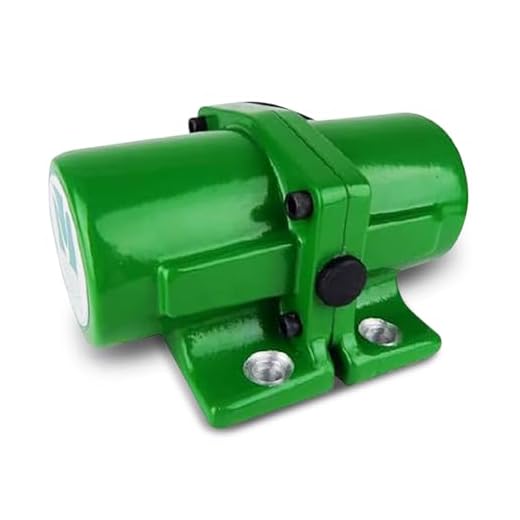


VMSAC Vacuum-Mount Air Piston Vibrator
A robust vacuum-mount air piston vibrator that makes portable, tool-free installation easy while providing strong, durable performance. It’s an excellent solution where temporary mounting and minimal maintenance are priorities.
Why I recommend vacuum-mount pistons
I reach for the VMSAC when portability and quick deployment are required — for example, unloading DDG from trailers or fixing intermittent flow problems in bins and hoppers. The vacuum-mount system makes setup fast without drilling or brackets, and the pneumatic piston design delivers strong, repeatable hits to break up material bridges.
Notable design and benefits
I like that the unit replaces hazardous manual interventions (hitting the hopper) and can be moved across jobs easily. The control box gives me modulation ability that simple electric motors lack.
Considerations for use
You’ll need access to compressed air and a regulator, so this isn’t a battery-only field solution. It’s heavier and typically costlier than small DC motors, but for applications that need portability and strong impact without permanent brackets, it’s one of the best options available.
12VDC 1-Phase Heavy-Duty Vibrator
A heavy-duty, battery-operated vibrator built to move large loads and tackle stuck material on big trailers. It’s loud and substantial, but if you need raw force and portability at 12 V, it shines.
What this unit is for
I reach for this 12VDC, 1-phase electric vibrator when I need raw force and portability on big trailers or dump bodies. It’s designed to free frozen or sticky material with a 3,500 lb force rating and runs from a 12V battery source, which makes it useful on remote sites or equipment without onboard hydraulics.
Key features and benefits
I appreciate the simplicity of being able to mount this and power it from a vehicle battery; it gets stubborn material moving fast. The prelubricated bearings help keep maintenance lower than older open designs.
Practical notes and limitations
I do call out a few tradeoffs: the unit is heavy and physically large (measured overall height/length/width in specs), which can complicate mounting in tight spaces. It’s also relatively loud compared with smaller motors, and price is on the higher side. For operators who need the extra force and portability, though, it’s a solid choice.
MG-200 DC Truck & Trailer Vibrator
A dependable, permanently lubricated DC shaker built for continuous duty in harsh environments. It delivers excellent force for medium-to-large spreaders and hoppers while keeping maintenance minimal.
Why I picked the MG-200
I often recommend this MG-200 when customers need a mid-high level of force (300 lbf) for V-box spreaders, salt/sand trucks, and seed tenders. It’s built for continuous operation in tough conditions and performs well across seasons, including very cold temperatures.
Standout features
The combination of reasonable weight, IP66 protection, and 300 lbf of force makes this a versatile choice for municipal and agricultural fleets. I like that it’s engineered for outdoors so you don’t have to baby it.
Practical considerations
Mounting location and power cable routing matter: you’ll get the best results when mounted securely on the hopper or spreader and wired to a stable 12V source. It’s not the smallest or cheapest option, but it strikes a good balance between power and reliability for fleet use.
MG-60 LP Low-Profile 12V Vibrator
A low-profile, lightweight vibrator that punches above its class with ~80+ lbs of force and low current draw. It’s perfect for tight spaces and portable hoppers where weight and low amp draw matter.
Where the MG-60 LP excels
I often choose the MG-60 LP when installation space is limited but reliable vibration is still required. Its compact footprint and light weight make it ideal for portable hoppers, small spreaders, and applications like paper shredding where clearance and low amp draw matter.
Features I value
Because it’s light and energy-efficient, I’ll often use two units spaced along a hopper to get consistent flow without heavy wiring. The MG-60 LP balances power and convenience very well for its intended uses.
Caveats and real-world tips
This isn’t the choice for very large, stuck loads — it’s a small-but-competent tool. I also recommend securing it to a rigid mounting surface and checking isolation to avoid transferring excessive vibration to the chassis.
MG-80 Small Truck & Trailer Vibrator
A compact, IP66-rated unit that delivers steady 100 lbf output for small hoppers and spreaders. It’s a low-maintenance performer that works reliably in outdoor environments.
Where this fits best
I reach for the MG-80 when dealing with small portable hoppers and spreaders that need a dependable nudge to keep material flowing. With about 100 lbf of force and an IP66 fully-encased motor, it’s ideal for outdoor-mounted mobile equipment where protection from dust and water matters.
Key attributes
It’s compact and straightforward — plug it in, mount it, and let it run. I like that it won’t demand much hands-on service, which is why this is often chosen for municipal trucks and small agricultural setups.
Limitations and tips
While it’s robust for its class, it won’t replace a high-force vibrator on large dump bodies. For best results, mount it to a stiff panel and use rubber isolation mounts if you need to reduce transmitted noise and shock.
MG-80 Truck & Trailer DC Vibrator
A tried-and-true MG-80 variant that offers 100 lbf of vibratory force in an IP66 housing for small truck and trailer hoppers. It’s a straightforward, reliable option for everyday material-flow issues.
Why this is a dependable choice
I often recommend the MG-80 for operators with small hoppers who want a low-maintenance, weather-protected vibrator. The IP66 enclosure and 100 lbf of force make it a practical all-season performer for spreaders and small trailers.
Practical features
It’s the type of unit you install and largely forget about; it just keeps material moving. Because it’s a common model, replacement parts and mounting guidelines are easy to find.
What to watch for
As with other small vibrators, it’s not a cure-all for massive clogs. I recommend pairing placement and isolation strategies (mounting pad, rubber washers) to avoid transmitting unnecessary vibration to surrounding structure.
Generic MG-60 LP Low-Profile Vibrator
A budget-friendly take on the MG-60 LP that keeps the core benefits of a low-profile 12V unit: lightweight, efficient, and easy to mount. It’s good for small agricultural and landscaping spreaders.
When I choose a generic MG-60 LP
I’ll pick a generic MG-60 LP when budget or rapid replacement is the priority and the job calls for a low-profile unit. It keeps the same basic advantages — compact size, modest force, and low amp draw — but buyers should be aware of variability in aftermarket manufacturing.
Strengths and practical benefits
For small spreading operations, landscaping trailers, or portable shredders, it’s a solid economical option. I recommend verifying the seller’s return policy and checking connector and mounting compatibility before installation.
Caveats I tell users
Generic units can be a great value, but they sometimes come without the documented testing or warranty of OEM parts. If you’re running continuous heavy-duty cycles, consider OEM alternatives or stock a spare unit.
3,500 lb Replacement Dump Body Vibrator
A replacement 12V vibrator claiming 3,500 lb force suited to longer trucks and heavy-duty dump bodies. It’s a focused solution if you need to swap out a DC-3500-style unit quickly.
When to use this replacement motor
I treat this unit as a practical replacement for DC-3500-style dump body vibrators on longer trucks (13' or more). When a fleet needs a quick swap to restore functionality, a compatible replacement like this can get you back on the road fast.
What it delivers
It’s useful if you already have a DC-3500 footprint and want a direct-fit replacement. That said, I always verify the exact mounting and electrical requirements before ordering.
Points to check before purchase
Because aftermarket replacements can vary, I advise confirming physical dimensions, wiring gauge, and duty cycle suitability for your application. The intermittent 60A rating means it may need rest or additional cooling in continuous heavy-duty scenarios.
VIB50 12VDC 50lb Salt/Sand Vibrator
A budget-friendly 12V vibrator built with corrosion-resistant materials and IP67 sealing, making it a practical choice for salt and sand spreaders. It’s a value option that offers decent performance for lighter applications.
Why I consider the VIB50
I recommend the AMBITIONMOTOR VIB50 when budget and corrosion resistance are primary concerns. It’s not a high-force commercial motor, but the aluminum housing, stainless hardware, and IP67 sealing make it a sensible economical choice for salt/sand spreaders and small spreader boxes.
Notable features
I like that it’s designed to stand up to corrosive environments without costing a fortune. The SAE connector makes swapping units or doing field installs straightforward.
Practical limits
If you have heavy, frozen, or densely packed material, this unit’s roughly 50 lb force won’t be sufficient. For light-to-moderate flow problems and corrosive environments, it’s a good value; for heavy industrial duty, choose a higher-force OEM model.
Final Thoughts
I recommend the VMSAC Vacuum-Mount Air Piston Vibrator (9.3/10) as my top pick for most fertilizer trailers. Its vacuum-mount design makes tool-free, temporary installs fast and painless, which is perfect when you need to clear stubborn clogs on the fly or move the unit between machines. It delivers strong, durable performance with minimal maintenance — choose this if you want portability and quick setup (and you have an air source available).
If you haul big loads or run long spreaders, go with the 12VDC 1-Phase Heavy-Duty Vibrator (9.0/10). It’s a battery-powered workhorse that delivers the raw force needed to free compacted material on large trailers. It’s louder and heavier, but when brute force and 12V portability matter, this is the unit I’d mount and trust.
Quick install tips from my experience: mount the vibrator near the hopper flow point, secure the bracket to a stiff surface, and protect the wiring with a fused feed. For temporary use, use the VMSAC vacuum pad where you need it; for permanent heavy-duty installs, hard-mount the 12V unit to the trailer frame.





I giggled at the “High-force battery-powered workhorse” line — that 60A unit sounds like it could moonlight as a jackhammer 😂
Serious question: has anyone tried pairing the 60A vibrator with a solar-charged battery setup for remote sites? Thinking off-grid salt/sand treatment for a seasonal property.
I did a small solar + AGM battery for occasional runs. Worked, but I wouldn’t rely on it for frequent, heavy-duty cycles — the initial battery cost climbs fast.
Fun mental image! You can pair a robust battery system with solar charging, but ensure battery capacity and inverter/charging controller are sized correctly for the vibrator’s high current draws. Short bursts are more feasible than long continuous runs on solar-only setups.
I needed a replacement for a DC-3500 and the Truck Dump Body Vibrator Motor 3,500 lbs Force did the job. Installation was straightforward and the price was right.
One note: the claimed 3,500 lb force feels like marketing — it’s powerful, but don’t expect physics-defying results. Still, it cleared compacted salt well.
Good point, George. Manufacturers sometimes quote peak force under ideal conditions — useful as a comparative metric but not a guarantee of real-world performance. Glad it worked for you though.
Yeah, numbers are optimistic. I used a similar unit on a long dump bed and it’s more about correct placement than raw claimed force.
Question for other users: the roundup mentions permanently lubricated motors (MG-200). How does that affect service life vs. units where you can lubricate? Is it a tradeoff?
Thanks — that helps with my spec decisions.
I prefer permanently lubricated for outdoor, gritty use — fewer maintenance steps and less chance of contamination from road grime.
Permanently lubricated motors are designed to be maintenance-free for the expected service life, which is great for low-maintenance fleets. The tradeoff is that when they do wear out, you typically replace rather than service. Re-greasable units can have longer life if maintained properly.
Some constructive feedback — the roundup is great but I wanted a quick decision chart (e.g., “Best for small hoppers,” “Best for heavy dump bodies”). I know the badges help, but a 1-page cheat sheet would be clutch for buying fast.
+1 on the cheat sheet. I usually skim to that kind of chart and then read details.
Great suggestion, Isabella — thanks. I can add a decision matrix in the next update (best for small hoppers, best for portability, best budget option, etc.). Glad the badges were useful though!
Thanks for the reply — that’ll make the article even more usable.
Has anybody compared the MG-200 to the MG-80 in the field? The MG-200’s 300 lbf vs MG-80’s 100 lbf is tempting, but I’m not sure if I need that much for a medium-sized hopper.
MG-80 here — low maintenance and steady. If you’re mainly dry bulk like pellets, MG-80 works great. If you spread wet sand/mud, go MG-200.
I swapped my MG-80 for an MG-200 after a season of wet compost. The MG-200 cured my headaches — but it did draw more current. Worth it for heavy, sticky stuff.
MG-200 gives you a lot more force and is better if you have frequent bridging or heavier material. MG-80 is fine for smaller hoppers and is lower maintenance. If you rarely have blockages, MG-80 is a sensible, quieter choice.
Anyone recommend something quieter for neighborhood roadwork? I liked the MG-60 LP idea for low amps, but I’m worried about the sound when spreading salt early mornings.
MG-60 LP is surprisingly quiet. Also schedule runs when traffic is low and keep bursts short — neighbors will be less annoyed.
If noise is a priority, low-profile DC units like the MG-60 LP are quieter than the big 12V 60A electric vibrators or the 3500-type motors. Also, consider isolating mounts and run brief pulses rather than continuous operation.
Thanks — will try the pulses and rubber mounts. 🙂
Love that you included the budget-friendly Generic MG-60 LP. Not everyone needs the brand-name price tag.
I’m using the Generic MG-60 LP on a small landscaper spreader and it’s been rock-solid for a year. Low amp draw = less headache. Only gripe: paint chipped a bit from road grit.
Thanks for the field report, Priya. The generic versions often match the performance for light tasks; just watch warranty and mounting hardware quality.
Do you find the generic lasts as long as the Cleveland units? Thinking about long-term reliability.
Same experience here. Cheap, effective. I wrapped mine in a thin rubber sleeve to protect the paint — cosmetic but practical.
I bought the Electric Vibrator, 60A, 12VDC last winter to clear salt from a long dump bed. It absolutely moves stuff — loud as a jet though 😂
Pros: insane force, battery power.
Cons: noise and battery drain. Anyone have tips on reducing amp draw or making it quieter?
Good summary, Tom. For amp draw: use a heavy-gauge wiring harness and a relay to avoid voltage drop; that helps it run more efficiently. For noise: mounting with good vibration isolators can reduce transmitted noise (but not the raw sound). Also, pulsing the unit short bursts helps limit battery drain.
I added a dedicated AGM battery and wired through a solenoid — cut battery problems. Noise is unavoidable, but I put a rubber pad under the mount and that reduced the rattle a lot.
Funny story: I mounted the generic MG-60 LP upside down the first week (don’t ask 😅). It still worked, but I switched orientation and performance improved. Moral: mounting position matters more than you think.
Haha been there. I also learned to mark the mounting bolt pattern so I don’t goof it up again.
Marking the pattern is genius. Mine will be labeled now.
Mounting orientation can affect feed and how vibration transmits. Good reminder to follow the manufacturer’s recommended mounting instructions — and put it the right way up! 😄
Honestly, the Cleveland Vibrator MG-80’s low-maintenance pitch got me. I run spreaders for a small municipal crew and the IP66 rating plus simplicity keeps downtime near zero. Not flashy, but reliable.
Also, the review badges were spot on — “Compact, low-maintenance vibrator” nails it.
Municipal here too — replaced three noisy units with MG-80s last season and no regrets.
Appreciate the endorsement, Noah. For municipal fleets that prioritize uptime, the MG-80 is often the sweet spot between force and reliability.
Great roundup — thanks! I’ve been eyeing the Cleveland Vibrator 1200 VMSAC for its portable vacuum-mount feature. I often swap trailers and the idea of tool-free install is a big plus.
Quick question: has anyone used the 1200 on dusty/sandy loads? Wondering about wear and clogging over time.
Thanks Sarah — glad it helped! The 1200 VMSAC is designed for temporary mounting and tends to handle dusty loads well because it’s an air piston design, but you’ll want to blow out the intake occasionally. If you run it in very abrasive dust long-term, seals can wear sooner than in cleaner environments.
I used the 1200 for a season hauling potting soil and hadn’t noticed major issues. I did clean the filter every couple weeks. Good little unit — super handy for switching between trailers.
If you’re in a really sandy area, maybe add a small pre-filter and try to avoid running continuous cycles. Intermittent pulses worked best for me.
I’m tempted by the AMBITIONMOTOR VIB50 because of the IP67 rating — salt/sand work here is brutal on gear. Has anyone used it through a winter? Curious about corrosion resistance and longevity.
IP67 is nice for splash and occasional submersion, but pay attention to shaft seals and the wiring gland quality. For heavy salt exposure, take care of connections and consider anti-corrosion dielectric grease.
Good tips — I’ll add a regular maintenance check to my checklist then.
Used a similar IP67 unit one winter. Survived well but I cleaned and greased terminals monthly. If you skip that, corrosion gets you.