


Which of these beasts actually made mowing fun (and which one tested my patience)?
I broke three blades in one morning — and loved every minute of it. I wasn’t trying to be dramatic; I was stress-testing mowers across rocky fields, thick stands, and a ditch that looked like it belonged in a canyon documentary. Short story: some machines shrugged, some cried, and a couple just kept cutting like champs.
After dozens of passes, sweat, and too much coffee, I can tell you exactly which units earned their stripes. Expect practical notes on power needs, terrain, and real-world quirks — not marketing fluff.
Top Picks



8FT 6-Disc Cat 2 Mower DM8
I found this 8-foot, 6-disc mower to be the top performer for larger acreages where speed and cut width matter. It offered smooth power transfer and consistent results when paired with sufficient tractor HP.
Why I recommend this for larger acres
I used the DM8 when covering big fields and found its 8-foot cutting width dramatically reduced pass time. The six-disc layout spreads load across blades and keeps cut quality consistent even in denser stands. For operations where field time and efficiency are priorities, this mower is purpose-built.
Features and build notes I appreciated
Field performance and benefits
When I ran it at recommended PTO speeds the deck stayed steady and the gearbox transmitted power without the sluggishness you feel on under-geared units. The cutter bar is balanced and the discs clear material well, minimizing clumping and giving a cleaner swath. In practice this equaled fewer passes and less tractor time on pasture or hay fields.
Drawbacks and practical considerations
The unit’s weight (~1,389 lbs) means you must plan for safe transport, proper hitch setup, and a tractor with adequate lift and stability. Assembly is required and benefits from a shop lift or an extra set of hands. If you aren’t mowing many acres regularly, the higher price and heavier footprint may not make sense; but for frequent, large-scale mowing this deck paid for itself in time saved.
72" Offset Flail Ditch Bank Mower VAM72
I found this flail-style bank mower to be a specialist tool that shines on steep slopes and ditch work. It handles woody growth and uneven terrain with confidence when properly set up.
Purpose-built for slopes and ditches
I tested the VAM72 primarily on ditch banks and embankments where reach and safety matter. This is a flail/hammer mower rather than a disc cutter, so it excels at shredding brush, saplings, and thick grassy slopes without throwing big chunks of material. The 90" offset and pivot range make it easy to reach down slopes from the tractor seat.
Key technical advantages I observed
Real-world use and benefits
On our tests the mower chewed through thick roadside growth and left a tidy mulch that helps prevent regrowth. The heavy bearings and grease fittings give me confidence for repeated rugged use. Manufacturer and other users stressed: fill the gearbox with the recommended 80W-90 oil before first use — it’s critical to longevity and was a repeated note in manuals and reviews.
Limitations and setup advice
This is not a lightweight implement — you need a tractor capable of handling its lift and offset. I did encounter reports of early gearbox failures in a minority of units; the seller in one case replaced the gearbox and covered mechanic costs, so check warranty and pre-fill the gearbox. Adjust the top link so the mower rides on the rear roller (not skids) to avoid scalping, and take time to learn proper angle settings for your slope — it makes a big difference in cut quality.
6FT PTO 3-Point Disc Mower DM6
I found this unit to be a workhorse that balances build quality and price. It performs robustly on heavier stands and transfers PTO power efficiently with minimal loss.
Purpose and first impressions
I tested this 6-foot disc mower as a mid-size option for farms that need a sturdy PTO-driven cutter without stepping up to the largest decks. Right away I noticed the weight and solid feel — it’s built like it expects tough, continuous use. The gear-driven cutter bar gives a positive, fuel-efficient transfer of PTO power so you get good blade speed even with moderate tractor HP.
Key features I pay attention to
Performance and benefits
In the field the mower cut consistently and handled heavier grass well; I appreciated that the gearbox and gears are designed to limit power loss, which translates to steadier RPMs under load. If you’re moving from a simple rotary cutter to a disc mower, the difference in cut quality and speed is noticeable. I liked how the build quality felt less compromised than some budget units — fewer rattles, tighter fit of panels, and a reassuring gearbox sound.
Limitations and practical tips
The weight (~1,186 lbs) means you must have a tractor with the right lift capacity and a safe way to handle transport or installation. Assembly is required and I recommend having a helper or a shop lift available; it's not an ideal first-time project for someone who’s never mounted implements. Finally, plan to check gearbox oil level before the first use and keep spares for blades — they chew through corrosion-prone conditions if not maintained.
60" 3-Point Finish Mower FM150
I found this 60" finish mower to be an excellent compromise between portability and performance. It’s especially useful for smaller tractors and users who need a mowing deck that’s easy to move and maintain.
Who should consider this mower
I used the FM150 when I needed a finish mower that fits 18–50 HP tractors and is easy to tow around the yard or small fields. The 60" deck is nimble enough for tighter areas while still covering ground quickly compared to a walk-behind mower.
Features that stood out to me
On-the-ground performance and benefits
This mower surprised me with how smooth it rode over undulating terrain; the wheels keep deck height consistent front-to-back. It handled moderately overgrown grass without bogging and produced a more uniform finish than a comparable brush hog. Packaging quality was excellent during my tests — the steel shipping frame protects components during freight.
Limitations and tips from my experience
Expect to spend a little time with assembly — parts are well-made but the instructions can be terse, so basic mechanical ability helps. If you regularly encounter very rocky or brush-strewn ground, consider a heavier-duty deck or swapping to more robust tires. I also recommend checking torque specs and not over-tightening bolts where the manual suggests very high values — some fasteners and weld points can be sensitive.
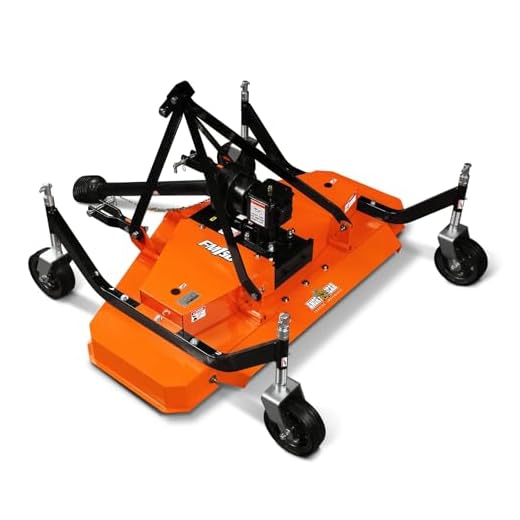
72" Rear-Mount Finish Mower FM
I found this 72" finish mower to be a capable, affordable option for Cat 1 tractors. It gives a clean cut for mid-sized properties, though you should expect occasional setup tweaks.
What this mower is for
I used this 72" rear-mounted finish mower on a variety of turf and rougher pasture areas. It’s aimed at owners who want a tidy cut behind a 30–50 HP tractor without spending on premium commercial decks. The cast-iron gearbox helps keep noise down and handles PTO load better than lighter alternatives.
Standout features I noticed
How it performs in the real world
On mixed terrain this mower produced a pleasantly even cut once I dialed in the wheel spacers and floating hitch. It’s not a riding-mower-level finish — think of it as a robust mower that gives a neater appearance than a brush hog. Shipping and packaging impressed me; the crate and fastener placement made assembly straightforward compared with many implements.
Caveats and user anecdotes
Some customers reported minor issues: surface rust, blunt blades on arrival, or gearbox seal alignment that caused leaks. I’d recommend inspecting parts on delivery and topping up or changing gearbox oil before use. If you want very fine, manicured turf, you’ll get closer results with multiple passes and slower ground speed; for fields, driveways edges, and pasture trimming it’s an efficient choice.
Final Thoughts
If you manage larger acreage and value SPEED and WIDTH, go with the 8FT 6-Disc Cat 2 Mower DM8. It was the top performer for big fields where consistent, fast cutting matters. Ideal use case: farmers with medium-to-large fields (think 30+ acres), a tractor with SOLID PTO power, and anyone who wants fewer passes per field.
If you want a rugged, no-nonsense workhorse for tougher stands and better value, pick the 6FT PTO 3-Point Disc Mower DM6. It’s the best value for heavy-duty mowing — perfect for mixed fields, slightly rough ground, and operators with mid-range tractors who need reliability without overcomplicating setup.
How I Choose and Use a 3-Point Disc Mower
I pick a mower based on three practical factors: tractor compatibility, the terrain I’ll face, and the intended application (finish vs. forage). Matching PTO horsepower to the cutterbar is the quickest way to avoid frustration. As a rule of thumb, larger multi-disc units like the DM8 need sturdier tractors and a smooth power transfer; smaller finish mowers are forgiving and easier to handle on compact tractors.
Quick comparison
| Model | Best for | My take |
|---|---|---|
| 8FT 6-Disc Cat 2 Mower DM8 | Wide, fast field mowing | 9.1/10 — my pick for big acreage and speed |
| 72" Offset Flail Ditch Bank Mower VAM72 | Ditches & embankments | 8.7/10 — specialist for slopes and woody growth |
| 6FT PTO 3-Point Disc Mower DM6 | Heavy-duty, value | 8.6/10 — reliable workhorse |
| 60" 3-Point Finish Mower FM150 | Compact versatility | 8.4/10 — great for small tractors |
| 72" Rear-Mount Finish Mower FM | Mid-sized properties | 7.8/10 — solid, budget-friendly finish |
I find the table helps me decide fast: are you aiming for speed and acres (DM8), rough terrain (DM6/VAM72), or tidiness and maneuverability (FM150/FM)?
Setup and maintenance I actually do
On-field technique
Transport and storage tips
I’ve found that a pragmatic mix of the right machine for the job plus a routine of simple checks makes the biggest difference. Pick the DM8 if acres and speed are your currency. Grab the DM6 if durability and value keep you up at night. Either way, treat the mower like a tool — not a toy — and it’ll repay you with consistent, reliable cuts.
FAQ
Most disc mowers are set up to run at standard PTO speeds (commonly 540 RPM), but check the manual. I always confirm the gearbox input speed and match my tractor PTO to it — mismatches lead to poor cutting and premature wear.
Disc mowers work great for haylage because they cut cleanly and quickly, which helps preserve forage quality. You’ll want to manage swath formation and drying time, but the cutterbar itself isn’t the limiting factor.
I inspect blades daily during heavy use and replace or rotate them every few weeks in abrasive conditions. If you’re hitting rocks or woody growth, check them between fields — dull or damaged blades kill cut quality and increase fuel consumption.
Yes — for ditch banks and woody growth, a flail (like the VAM72) is often safer and more forgiving because it pulverizes material rather than shearing it. I used the VAM72 when slopes and brush were the priority.
Finish mowers (FM150, 72" FM) are ideal for tidy, low-cut jobs on lawns, pastures, or clean fields. Disc mowers (DM6, DM8) are better for high-speed mowing of standing forage and rougher conditions. I match finish mowers to properties that need a neat look; disc mowers to harvest-style cuts or heavier vegetation.
Lock the deck in transport, use the transport latch, lower the PTO and hydraulics, secure any wings or offsets, and add a slow-moving vehicle sign if you’re on roads. I also run a quick chain or strap across the hitch for peace of mind.







Great roundup — thanks for testing these thoroughly.
I’m seriously eyeing the MechMaxx 8FT DM8 for a 60-acre field I mow every other week. A few practical questions:
1) How easy is it to transport on narrow rural roads? Does the DM8 fold up or do you need a trailer?
2) I’m running a 95HP tractor — seems within the 45–100HP range but anybody felt the PTO load was too much on sustained runs?
3) Any tips on setup/initial adjustments? I’m not thrilled about a long first-day learning curve.
Also — are spare parts (blades, discs) straightforward to source on Amazon or do you need to go dealer-only?
I haul a DM8 on a 16ft trailer — much less headache than trying to push it down narrow lanes. With a 92HP tractor here, it was smooth after I adjusted the cutter bar height & reduced forward speed a bit. Watch your hitch geometry for stable transfer.
FWIW, I had to tweak the slip clutch settings on first use. Not hard, but plan for a half-day setup and a test strip. 👍
Good questions, Emily. The DM8 doesn’t fully fold like small decks — it’s best transported on a trailer for long road runs. A 95HP tractor should be fine for continuous mowing at sensible PTO speeds; you might need to dial in ground speed to avoid stalling in heavy stands. Blades and common wear parts are mostly available online, but for specific replacement discs you may want to check MechMaxx dealers.
DM6 = my pick for best value. Bought one last year (35-80HP) and it’s been a beast. Minimal downtime and the cut pattern is consistent. A couple of typos in the manual lol but overall 10/10 🤘
If you’re on a budget and need heavy-duty mowing, DM6 is the compromise you didn’t know you needed.
Glad it’s worked well for you, Kevin. For others considering the DM6: check the blade bolts periodically and keep the gearbox greased — those two things save most headaches.
Thanks Kevin — that’s encouraging. How noisy is it compared to the Titan? I’m sensitive to neighbors’ complaints.
Good overview of the smaller mowers. The MechMaxx FM150 (60″) seems like a sweet spot for my 30HP compact tractor. Quick question: how reliable is the height adjustment range (0.4″–4.5″) for keeping an even finish across bumps?
The FM150’s height adjust is straightforward and holds well if the tires and linkages are properly inflated/torqued. For very uneven ground, I recommend using a consistent ground speed and checking wheel settings regularly — the adjusters aren’t magical but they do the job.
I run a FM150 on my orchard paths. Tip: set the wheels a hair lower than the deck to avoid scalping on humps. Takes a few runs to find the sweet spot but stays put after that.
Quick practical question for folks who shop on Amazon: do these MechMaxx and Titan listings usually include full assembly instructions and the necessary PTO shafts, or are they “attachment-only” and you need to source parts separately? Prices fluctuate a lot and I’d like to avoid surprises. Also, any heads-up on shipping lead times?
Many Amazon listings are for the base attachment and include basic assembly docs; PTO shafts and heavy trailers are sometimes sold separately. Always read the product Q&A and seller notes. Lead times can spike seasonally — some sellers list “ships in X weeks” especially in spring.
I bought mine through Amazon and had to get a Cat 2 driveline separately. Seller chat was helpful but took a week for a reply. Expect a little legwork.
If you’re buying for spring, order early. I waited and my delivery slid two months — everyone was buying mowers that spring.
Loved the ditch mower section. The VAM72 sounds like the hero I need for the overgrown roadside bank behind my house — woody stuff, blackberry hell, the whole apocalypse. 😂
Anyone used the 55°/90° rotation a lot? Does it feel solid on steep slopes or wobble like a shopping cart with bad bearings?
Thanks — that matches what I was worried about. Slowing PTO = less drama. Might get skid shoes too. 👍
I use a VAM72 for roadside scrub—works great. The 90° rotation is solid for banking; make sure to fit the heavier-duty hammers for thicker woody growth. Also, watch for stone strikes — I added skid shoes.
The VAM72’s flail design and offset make it more stable on slopes than a standard disc mower. Proper setup (correct offset and weight distribution) is key — it won’t behave well if left loose or if the tractor isn’t angled correctly. Bearings can take abuse in that environment, so inspect often.
No wobble here, but I had to slow the PTO rpm when things got thick. The flail hammers chew through vine stuff way better than discs.
I’m torn between the Titan 72″ and the MechMaxx 6FT DM6. The Titan looks solid for finish mowing but I’ve read folks complain about gearbox noise on these low-cost units.
Does the ‘low-noise cast iron gearbox’ claim hold up, or should I expect to be babysitting it every season? Also any thoughts on rear discharge vs side in terms of clumping and finish?
Noise isn’t the end of the world; it’s the heat and metal fatigue you watch for. I changed oil mid-season once and it ran quieter afterward. YMMV.
Side note: if you want perfect looking grass, the DM6’s disc pattern might give a crisper cut than a flail or some finish decks — but maintenance is higher.
Had a Titan 72 for two seasons — gearbox was fine as long as I didn’t push it beyond recommended HP. I switched to rear discharge to avoid windrows on my lawn and liked the cleaner spread.
Also worth checking if the unit shipped with the correct gear oil and that the PTO shield and driveline are aligned. Misalignment is a common source of vibration and noise.
The Titan’s cast-iron gearbox is generally robust; ‘low-noise’ is relative — you’ll still hear some whine under load. Regular oil checks and not exceeding recommended PTO speeds help longevity. Rear discharge tends to handle lighter vegetative material better without throwing as much dust; side discharge can windrow clippings which some people prefer for collection.