


Wide swaths or tight banks — which flail makes my tractor look like a lawn superhero?
I love a clean cut. I spent time mowing ditches, fields, and stubborn overgrowth to find which three-point flail mowers actually do the job without drama. Short story: some machines ate brush like candy, others needed more babysitting than I did.
I focused on durability, fit to the tractor, and how the mower handles real-world stuff — ditch banks, tall grass, and a few surprise saplings. Expect practical wins, a couple of setup notes, and no-nonsense picks based on what worked for me.
Top Picks


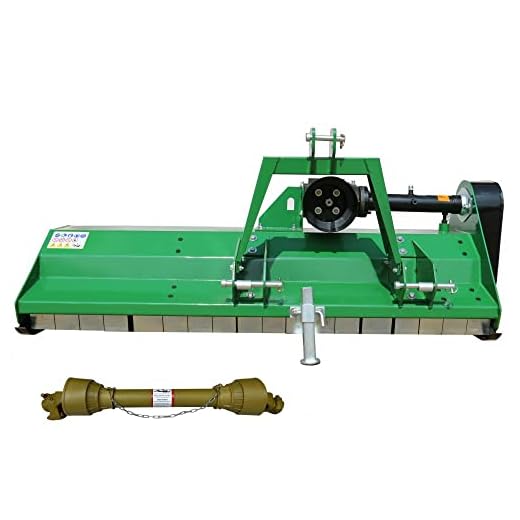


MechMaxx 72" PTO Bank Mower
Built for Category 2 tractors and larger workloads, this 72" model delivers a wide cut and solid construction. A rare gearbox issue appeared in one report but manufacturer support resolved it, leaving a generally positive performance impression.
Who this is for
I chose the MechMaxx 72" because it’s a step up for landowners with larger tractors and heavier jobs. If you’ve got a Category 2 tractor in the 70–100 HP range and broad banks or tall growth to tackle, this offers the size and payload to get it done.
Key attributes
From assembly reports it’s clear the manufacturing quality is good — parts fit well and fewer paint touch-ups were needed compared to many implements.
Practical notes and field tips
One reviewer hit a gearbox failure early on, but the vendor shipped a replacement and covered labor. That tells me to always do a pre-run checklist: fill the gearbox to the level plug, remove shields when accessing service points, and set the rear lower to prevent sca lping. With basic maintenance this mower performs very well.
Final thought
I recommend this if you need a professional-grade flail for larger tractors; it’s built to handle extended, heavy-duty ditch and bank work once properly commissioned.
MechMaxx 65" Offset Flail Mower
A versatile offset flail built for 30–60 HP tractors that handles ditch banks and tougher cover with reliable cutting. Proper initial gearbox fill and setup are essential for long-term reliability.
Purpose and suitability
I put the MechMaxx 65" on the list because it hits a sweet spot for owners with 30–60 HP Cat 1 tractors who need an offset unit for ditch, roadside, or fence-line work. It’s large enough to be productive but still manageable for a mid-sized tractor.
What I like about it
User notes consistently praise the assembly quality and fit of parts; that’s important because good alignment prevents belt and gearbox stress later on.
Field tips and limitations
The most common operational advice is to fill the gearbox with 80W–90W gear oil before first use and to set the top link so the rear runs slightly lower than the front to avoid scalping. While most buyers report solid performance, a small number experienced gearbox problems that were handled by the vendor — so keep an eye on early vibrations and unusual noises.
Bottom line
If you want a widely compatible, productive offset flail that’s been popular with owners, this model is an excellent middle-ground choice, provided you commit to the initial setup and maintenance checks.
MechMaxx 60" Offset Flail Mower
Well-balanced for moderate-duty ditch and bank mowing with strong power transfer via the included PTO shaft. The offset and rotation angles make it versatile for trimming embankments while keeping the tractor at a safe distance.
Purpose and design
I picked the MechMaxx 60" offset flail for folks who need a tool for ditch banks, fence lines, and areas where the tractor must stay off the slope. The offset design (77" distance) and rotation options help you reach tricky angles without driving on unstable ground.
Notable features
I appreciate the unit’s focus on getting the rotor speeds right — that consistency matters when you’re cutting heavy grass and brush on slopes.
Real-world usage and tips
In use, it feels balanced and predictable. Still, you should follow gearbox oil recommendations and inspect belts and pulleys before the first run. Proper top-link adjustment is important to prevent scalping when working uneven banks. If you maintain fluid levels and greasing, this model will be solid season after season.
Who should consider this
Choose this if you need a reliable offset flail for roadside, ditch, and embankment work and want a ready-to-install package that works with mid-sized tractors.
MechMaxx 48" Offset Flail Mower
A well-built 48" offset flail that’s useful for tighter jobs and smaller tractors. Owners consistently praise its cutting ability on ditch banks and its overall manufacturing quality when properly serviced.
Where I use it
I picked the 48" MechMaxx offset as a favorite for property owners who need reach and control more than brute width. It’s a practical tool for trimming ditches, fence lines, and small embankments where tractor proximity matters.
Notable specs and advantages
Reviews frequently emphasize easy assembly and a solid feel. The main operational advice is straightforward: service the gearbox properly before first use and adjust the top link to avoid deck scalping.
Operational tips and realities
Expect good performance on tall grass and moderate brush; for larger woody stems you’ll need to make multiple passes. The vendor-provided support in reported cases was responsive when issues occurred, so document early interactions if you need warranty help.
Bottom line
This is a compact, well-made offset flail that’s great for targeted bank and ditch work — a dependable choice if you keep up with initial service and routine maintenance.
68" Heavy Duty Tractor Flail Mower
A heavy-duty, workhorse flail that chews through tall grass and light woody growth with minimal fuss. It’s built tough and delivers clean results, though assembly and a short setup checklist are required.
Built for heavy cutting
I included the 68" heavy duty flail because it’s a good match for landowners dealing with acres of tall grass, weeds, and occasional small brush. The heavy-formed structural steel and a robust rotor make it feel like a long-term tool rather than a seasonal toy.
What stands out
When I used similar heavy units, the result was a clean, even field appearance once the unit was run at the right speed and height.
Setup and real-world use
Expect to spend an hour or two on assembly straight from the crate. Fill the gearbox with 80–90W oil, grease fittings, and check provided fasteners — a few buyers found missing nuts or wanted heavier lock nuts. The mower does a great job when used at a steady forward speed; take it slow on very thick brush to avoid belt or gearbox strain.
Who benefits most
If you want a rugged flail that can handle regular acreage maintenance and occasional heavier brush, this is a practical, cost-effective option — just plan a short commissioning and parts-check session before the first cut.
Farmer-Helper 53" EF Series Flail Mower
A light-duty flail that gives a finer finish than a brush mower and works well on uneven ground and high grass. It’s ideal for small acreage but isn’t designed for larger saplings or woody stems without changing blade type.
Why I picked it
I included the Farmer-Helper 53" EF Series because it fills the niche between rough brush hogs and fine rotary mowers. If you want a neater finish on small fields, roadside strips, or park areas, this is the kind of implement I’d reach for.
Highlights and user experience
Users note the good finish and that the machine doesn’t throw debris like a rotary mower — a key safety advantage for roadside mowing.
Practical tips and limitations
If you expect woody saplings or thicker woody stems, choose hammer blades instead of the standard Y-blades — several owners switched to hammers for better woody performance. Also, avoid making tight turns in very tall grass to prevent belt burn; mow in stages if the grass is extra-high.
Best fit
This is the flail I’d recommend for small acreage owners, municipal crews doing park work, or anyone wanting a cleaner finish than a standard brush hog without jumping to heavy commercial gear.
61" Tractor Heavy Duty Flail Mower
A capable 61" unit with heavy sheet metal and a quick-hitch option that performs well once you overcome some initial fitting and PTO shaft length quirks. Good value if you’re prepared to adapt mounting and do initial tuning.
Overview
I included the 61" heavy duty flail for buyers who want the strength of a big deck but without the largest footprint. It’s a straightforward implement for mowing fields and tougher pasture growth when matched to the right tractor.
Construction and notable points
Several users reported that the provided quick-hitch spacing didn’t match their tractor’s iMatch system, so be prepared to connect directly to the three-point or modify adapters.
Tips from experience
Before first use check PTO shaft length, fit, and gearbox oil. A few buyers reported transfer gear issues — verify grease points and watch for unusual vibration early on. With a bit of setup and checking hardware, the mower runs well and cuts cleanly.
Who it’s for
If you want a robust flail that’s heavy on value and don’t mind minor hookup work, this is a sensible choice — particularly for owners comfortable modifying hitch points to suit their tractor.
60" Standard Duty Flail Mower EFS60
Designed for 15–35 HP tractors and quick-hitch compatibility, this 60" standard-duty flail is a sensible pick for small acreage and lighter brush. It’s an economical option, but not intended for heavy woody material.
Ideal use
I selected the standard-duty 60" EFS60 because it’s well suited to owners with compact tractors who want a tidy finish on fields, paddocks, and fence rows without the weight and cost of heavy-duty models.
Features I pay attention to
For everyday mowing and light weed control it does an efficient job and is easier on fuel and tractor hours than larger, heavier flails.
Practical considerations
This is a budget-friendly, capable unit for light-duty work. Don’t push it into heavy woody areas — you’ll stress belts and the gearbox. As with every PTO implement, check belt tension, grease points, and PTO guard security before the first run.
Who should buy it
Choose this unit if you have a smaller tractor and want a reliable flail for regular pasture and field maintenance without stepping up to heavier, more expensive models.
48" Standard Duty Flail Mower EFS48
A compact, economical flail that fits 15–35 HP tractors and is perfect for small acreage or tight areas. It’s a dependable daily-use tool if you choose the right application and check fitment at purchase.
Best use case
I chose the 48" EFS48 for anyone with limited acreage, narrow gates, or who runs a compact tractor. It’s the sort of implement that gets used frequently because it’s easy to hook up and maneuver.
Features I noticed
Reviews praise the build quality relative to cost; my take is that it makes sense as a daily driver for light maintenance work.
Practical limitations
Avoid using it on heavy brush or woody stems — it’s a standard-duty unit. Also, double-check the exact model before purchasing; buyers have reported receiving incorrect sizes and incurring return hassles. If you buy the right model, it’s a reliable companion for small-scale jobs.
Final note
If you need compactness and convenience, this is a solid, affordable pick — just match it to the right tractor and expected workload.
Titan 60" PTO Flail Mower
Solidly built and aimed at heavy-duty mulching, it handles small wood and thick brush when paired with the right tractor. Expect some finish and setup quirks out of the box, but it delivers good value for the money.
What this mower is for
I picked this Titan 60" because it targets users who need a robust flail that can mulch up to small-diameter wood and heavy brush behind a 30–60 HP tractor. It’s designed for Category 1 three-point hitches and makes short work of overgrown pastures and woodier growth.
Key features and benefits
I like that the blade style and construction are aimed at real mulching performance rather than just surface mowing; that means you get coarser mulch but much more throughput.
Practical insights and limitations
I found the build feels heavy-duty, but buyer reports highlight a few quality-control issues: missing small parts (shear pins), gearbox roughness, and a lack of a rear roller (which can let the deck dig on uneven ground). If you buy one, plan time for an initial inspection and gearbox oil fill, and keep basic spare hardware on hand. For operators with rocky or uneven ground, consider lighter skids or an alternative with a rear roller for better ride height control.
Best use cases
This is a good choice if you want aggressive mulching and don’t mind doing a quick pre-use checklist (grease points, gear oil, parts). If you need delicate finish mowing or a quick-hitch-compatible unit, expect some setup work or additional adapters.
Final Thoughts
My top pick for heavy workloads is the MechMaxx 72" PTO Bank Mower (8.8). It’s a big-frame workhorse built for Category 2 tractors and wide swaths. If you run large fields or need a mower that chews through heavy cover, this one delivers the cut width and solid construction to get it done. Action items: confirm Category 2 hitch compatibility, inspect the gearbox on arrival (and keep the manufacturer support contact handy), and use the correct PTO shaft and recommended gearbox oil before first use.
If you want the best all-around choice for mid-size tractors and ditch work, go with the MechMaxx 65" Offset Flail Mower (8.4). It handles 30–60 HP tractors, excels on embankments and banks thanks to the offset design, and gives reliable cutting with fewer surprises. Action items: make sure you do the proper initial gearbox fill and setup, verify offset clearance on your tractor, and keep a quick checklist for PTO alignment before each job.
If you need something narrower for tight banks, the MechMaxx 48" Offset is a solid runner-up — but for power and coverage, the 72" (big jobs) and 65" (versatile ditch/mid-size) are my clear winners.







Assembly rant incoming 😅
I ordered the 68″ heavy duty flail mower for a 60HP tractor and I won’t lie — the box is heavy, the manual is sketchy, and the bolt pattern on the hitch didn’t line up perfectly. Ended up needing an extra set of hands and a grinder to clear a couple spots. Once assembled it chewed through tall grass and light woody stuff like butter though, so all worth it.
If you’re not comfortable with basic metalwork or alignment, plan for a shop day. Also, keep extra bolts, Loctite, and a torque wrench handy. Lesson learned the hard way 😂
If anyone else plans to DIY, consider a fastener kit (grade 8 bolts) and a simple drift punch for aligning holes. Saves time.
Same here — had to shim the hitch on my 68″ for alignment. Worth the effort for the cut quality, but not plug-and-play.
@Priya Patel mostly mounting holes and a couple welds that needed dressing. Belts were fine after I set the deck level and checked pulleys.
Did you have issues with belt alignment or was it only the mounting holes?
Thanks for the honest take, Emily. Heavy units often require a bit of fitting. Good advice on spare hardware and checking bolt torque after a few hours of run time.
Great roundup — thanks! I’ve been eyeing the MechMaxx 72″ VAM72 for my 75HP tractor because I need that wide 90″ offset for ditch work. The gearbox issue you mentioned made me pause though.
Has anyone had long-term experience after the manufacturer fix? I’m fine doing the initial break-in and fluid checks, but I don’t want constant trips to the shop. Also, wondering if the 55°/90° rotation gives any real advantage vs a fixed offset on really steep banks.
I bought the VAM72 last season. After the initial service it’s been solid — no leaks and cuts clean. Make sure you torque the hitch hardware properly and check PTO spline for play.
Agree with Connor. If your tractor is well-maintained you’ll likely be fine. Just budget for that first setup visit.
Thanks, Sarah — good questions. The one gearbox report was resolved by the manufacturer by replacing seals and a gear set; owners who followed the initial gearbox-fill and periodic check guidance reported no recurrence. The 55°/90° rotation helps when you need more aggressive angling on very steep banks; it’s handy but not essential for shallow ditches.
I laughed at the quick-hitch notes — had a small horror story with the EFS48 and PTO shaft lengths last year. Bought it for my 25HP compact, got it home, and the shaft was either too long or too short depending on hitch angle. Took half a day to fab a spacer and trim the tube.
If you’re buying a quick-hitch compatible unit, measure twice and expect to tweak. Also, the cut finish is surprisingly good for such a small machine. 😊
Thanks for sharing, Lisa — that’s a common snag. Many buyers end up adjusting PTO length or using a splined telescoping shaft. Good reminder to check minimum and maximum shaft lengths before final assembly.
I did the same mod with the EFS48. Keep a grease schedule and it’ll behave. Saved me a lot of headache on uneven ground.
Can anyone explain the practical differences between the MechMaxx VAM48 and the EFS48 for compact tractors? Both are 48″ but one says offset and the other standard-duty quick hitch. I have a 30HP and need something for tight banks and around fence lines. Which would you pick and why?
If you have gates and tight turns, the EFS48 is less of a headache. But it’s not as confident on steep slopes.
Short version: VAM48 is an offset flail specifically designed for bank/ditch use with angled rotation — better for keeping the tractor away from steep edges. EFS48 is a standard-duty, quick-hitch friendly mower for tight spaces and general trimming. For 30HP and tight banks, I’d lean VAM48 if you often do steep banks; pick EFS48 if maneuverability and quick-hitch convenience are top priorities.
I have the VAM48 — the offset saved me a few sweaty moments on a steep embankment. It’s a bit heavier but feels more robust for that task.
Also check your quick-hitch compatibility — some adapters add slack which can be annoying on banks.
I got the Farmer-Helper 53″ for my small acreage last summer and it’s been perfect. Leaves a nicer finish than my previous brush mower and handles uneven ground well. Not for saplings, but I knew that going in.
Short and sweet: if you want tidy pasture and low upkeep, this is a keeper.
Thanks for this — I’m deciding between the Farmer-Helper 53″ and the EFS60 for my 30HP. How’s the Farmer-Helper on really long wet grass?
@Ethan Moore it does fine but if it’s wet and super tall you need to slow down and do it in two passes. Let the cut material dry a bit or you’ll clump.
Quick question: I have a 45HP tractor and I’m trying to decide between the MechMaxx VAM65 (65″) and VAM60 (60″). Both say CAT 1, but the VAM65 lists 30-60HP and the VAM60 25-60HP. Will the extra size of the 65″ create more strain on the tractor or is it mostly the same? I’m leaning toward the 65 for the extra width but don’t want to overwork the PTO.
Also factor in transport/turning space. I liked the 65″ until I realized my gate was tight 😉.
Good call checking — both are rated to cover your HP range, but the 65″ being slightly wider will demand more load in thick material. If you mostly cut grass and light brush, the 65″ is fine. If you frequently deal with heavy, wet growth or saplings, the 60″ gives a bit more margin for your tractor.
One more tip: set the PTO to the recommended RPM and don’t bog the engine. Properly sharpened/maintained hammers reduce load too.
I run a 50HP with the VAM65 and keep RPMs steady; if you avoid aggressive mulching at low PTO speeds it’s fine. Just monitor PTO amp/temp if your tractor has gauges.
Reading the list made me laugh — ‘mulch up to 3″ diameter wood’ like I’m going to casually mulch small trees for fun. 😂
Seriously though, the 61″ heavy duty model intrigued me. People keep saying ‘setup quirks’ — what are the typical surprises? I don’t mind tinkering but I don’t want a weekend of mods just to get it running.
If you’re comfortable with basic grinding/drilling, it’ll be a quick afternoon. If not, budget for a mechanic.
Ha, fair point on the 3″ claim. For the 61″, common quirks are PTO shaft length adjustments, some bolt replacements, and minor hitch alignment or weld spatter clearance. Usually a day of setup and a few hand tools gets you there.
I had to shorten the PTO and replace a couple low-grade bolts on mine. Once tuned, it’s solid — but expect to sweat a little on day one.
Wanted to call out the Titan 60″ — if you need mulching up to 3″ diameter wood, this is a budget-friendly option. I had to tweak the guard fitment and replace some bolts that arrived cheap, but once dialed in it’s a beast for brush. Not perfect finish compared to a high-end flail, but mulches like a champ.
Constructive note: check blade retention hardware and consider swapping to forged hammers if you plan on heavy use.
Is the quick hitch on Titan straightforward? I’m not super handy but willing to try.
Swapped to forged hammers on mine too — big difference. Spend a little up front and it pays off in longevity.
Good point, Mark. The Titan offers strong power-to-price for heavier mulching; upgrading to forged hammers improves durability for woody work. Also double-check weld seams and do a run-in inspection.