

Which mill will make you feel like a one-person manufacturing army — and which one just looks cool on the bench?
Good machines whisper, great machines hum. I love a mill that feels like a trusted coworker — steady, predictable, and ready before I am.
I’ve run everything from tiny Proxxon rigs to full-sized JETs. If you want dependable cuts, precise small work, or a platform you can upgrade, I’ll tell you which two machines I reach for most and why.
Top Picks 2025/26




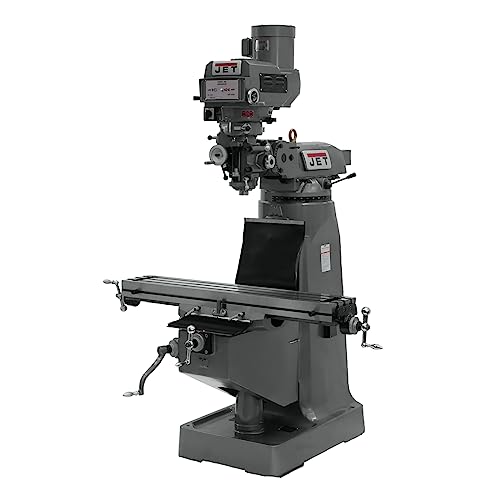
JET JTM-4VS Variable-Speed Vertical Mill
I find this mill to be exceptionally robust and dependable for day‑in, day‑out shop work. It balances power, precision, and serviceability better than most machines in its class.
Purpose and who it's for
I consider this mill a go-to when you need a full-size, floor-standing vertical mill that will live in a small production shop or serious home shop. It's built to handle heavier cuts, longer runs, and frequent use without complaining.
Key features and benefits
I like how JET combined proven mechanical design with modern conveniences: a precision-bored head, a chromed large-diameter quill, and hardened/ground ways. Those parts translate to less deflection and more consistent finish when you're cutting steel or cast iron.
These features make setup and daily maintenance straightforward, and the feed controls + downfeed auto-stop are especially handy during repetitive operations.
Practical insights and limitations
In day-to-day use I appreciated the two-year full service and parts warranty — it gives you peace of mind for a machine of this investment. The trade-offs are its physical size and weight (it requires dedicated space and a forklift to move) and the price, which positions it as a professional tool rather than a casual hobby purchase.
Example uses
I’d recommend this mill for small shops making fixtures, tooling, or low-volume production work. If your projects include heavy alloy work or you need long-term reliability, this is the kind of mill you’ll be happy to own.
Proxxon Micromot MF 70 Mini Milling Machine
This compact mill shines for delicate, high-speed work like jewelry, optics, and small prototypes. I find it impressively rigid and well-made for its size and price point.
Who should consider this mill
I recommend the Proxxon MF 70 for model makers, jewelers, watchmakers, prototypers, and hobbyists who need fine, precise milling with small cutters. It isn't intended to replace a full-size mill, but for detailed work it's hard to beat.
Why it excels at precision tasks
The cast-iron base and treated aluminum components give great vibration damping, and the balanced 24-pole motor allows very high spindle speeds that are ideal for micro cutters. The included collet range and precise handwheels make layout and finishing cuts predictable.
I often use this style of machine for drilling and milling small stainless or brass parts where surface finish and positional control matter more than brute force.
Limitations and practical notes
Don't expect to mill large billets or take heavy cuts. If your work includes thicker metals or heavy roughing, you'll outgrow this quickly. But for what it is — a compact precision tool — it delivers strong value and consistent results.
JET 3 HP Variable-Speed Vertical Mill
This version brings beefy 3 HP power and robust construction suited to demanding milling tasks. It delivers strong cutting performance and long-term durability in a shop environment.
What this mill does best
I view this JET variant as the go-to if you need extra horsepower for tougher materials or larger cutters. The 3 HP motor and heavy construction let you take more aggressive passes without bogging down.
Core features I appreciate
The machine comes with precision head components and hardened/ground ways for rigidity and smooth movement. The package also includes a flat way cover, pleated way cover, draw bar, and a helpful toolbox of accessories which shortens the time to start cutting.
These practical features reduce downtime and routine maintenance hassles.
Limitations and practical tips
This is a heavy, workshop-grade mill — plan your shop layout and power supply accordingly. If you only do light hobby work, the footprint, setup cost, and three-phase options may be overkill, but for production or serious metalworking it's worth the investment.
PROXXON MICRO Mill MF 70 Precision
This little Proxxon mill does a superb job on small precise jobs where finesse matters more than brute strength. It’s stable, high-speed, and comes with a useful set of collets for tiny cutters.
Who should choose the Proxxon MF 70
I reach for this mill when the job is small, delicate, and requires clean finishing — jewelry, small electronics enclosures, and model parts are perfect matches. It’s designed for detail rather than horsepower.
Key strengths and what I use it for
The cast-iron base and well-damped column give surprising stability for a machine of this size. The motor's high RPM range makes it perfect for tiny endmills that need speed to cut cleanly. The included collets cover a sensible range of shank sizes so you can use fine cutters without added adapters.
I often use it for precision drilling, routing micro features, and finishing thin stainless parts where surface quality matters.
Limitations and practical advice
It won’t replace a full-size mill for steel fabrication — the motor power and travel are intentionally small. For bench work and detailed milling it's excellent; for heavy-duty material removal, look elsewhere.
Sherline 5000 Vertical Milling Machine
I see this as the go-to economical choice for people starting a miniature machine shop or converting to CNC. It’s lightweight, well-supported, and has a broad accessory ecosystem.
Who this is for
I recommend the Sherline 5000 for hobbyists, educators, and light-duty shops where small parts production and ease of upgrade matter. It's an excellent learning platform and can grow with you if you later convert to CNC.
Strengths and day-to-day use
The mill’s aluminum base and carefully machined slides keep the unit light and movable, which is useful when space is limited. The included 90V DC motor with electronic speed control gives a nice range for small cutters, and the thoughtfully designed handwheels and oil reservoirs simplify maintenance.
I’ve seen these used successfully in model shops and labs where consistent small-part machining is required without the cost and footprint of bigger equipment.
Practical caveats
Expect limitations on material removal rates and maximum cutter sizes. If you plan to machine thicker sections of steel frequently, consider a larger machine. For fine work, prototyping, and teaching, it’s an outstanding value.
JARYANNIX 1300W R8 Mill with Power Feed
This JARYANNIX model offers a strong 1300W brushless motor, large table, and three-axis grating rulers that make it capable for varied metalworking tasks. It’s a pragmatic choice for makers who want an all-metal benchtop mill.
Overview and target user
I recommend this mill to people who need a rugged benchtop machine capable of cutting a variety of materials — stainless, aluminum, wood, and plastics. The machine's all-metal construction gives it a professional feel and useful longevity.
Features I found most practical
The 1300W brushless motor delivers steady torque and the R8 spindle taper opens up a wide tooling ecosystem. The grating rulers on three axes help with repeatability, and the X-axis power feed helps when you have lengthy or repetitive cuts.
Those features combine to make common shop tasks — slotting, facing, drilling, and light surfacing — more straightforward and consistent.
Practical limitations and final thoughts
Because this machine is heavy, plan for a strong bench or a dedicated stand. Initial setup — cleaning, tramming the head, and checking runout — will pay dividends in accuracy. Once dialed in, it’s a flexible and capable benchtop mill for serious hobbyists and small shops.
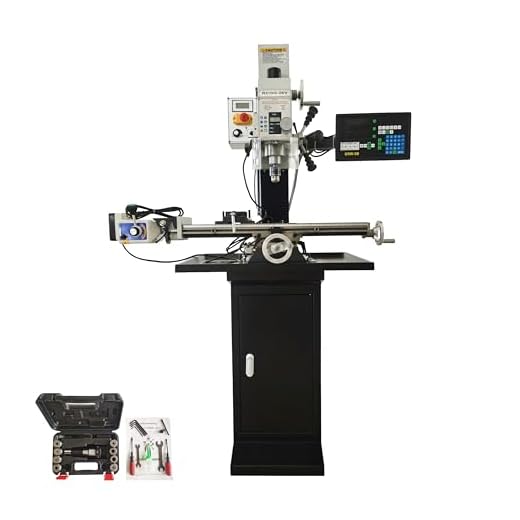
INTBUYING Mini R8 Mill Drill with DRO
This INTBUYING unit packs many features — R8 taper, grating ruler, and axis power feed — into a benchtop footprint that appeals to advanced hobbyists. I found it capable, but you should expect setup and compatibility checks out of the box.
Who should buy this
I recommend this INTBUYING model for advanced hobbyists and small workshops that want the capabilities of a larger mill without the full-size footprint. It's a good bridge between mini mills and larger floor machines.
Features I found most useful
The R8 spindle taper is a welcome inclusion for those who want to use industry-standard tooling. The grating ruler / DRO and X-axis power feed add precision and repeatability that make contouring and repetitive cuts more consistent.
When tuned and set up, these features noticeably improve workflow compared to a bare-bones benchtop mill.
Practical limitations and tips
Expect to inspect and possibly replace some supplied accessories (like the vise) and confirm drawbar threading before committing expensive tooling. The seller support and manual quality vary, so budget time for initial setup and calibration.
INTSUPERMAI 1300W R8 Brushless Mill/Drill
This machine offers a higher-power option with a large table and an R8 spindle, which is attractive for heavier hobby and light-professional tasks. Expect to spend time in setup and cleanup after delivery to get the best results.
Machine profile and intended users
I view this INTSUPERMAI model as an attractive option for users who need more power than the typical mini mill but still want a benchtop solution. It’s aimed at hobbyists and light professional shops that want ample table capacity and stronger motors.
Practical features that stand out
The 1300W brushless motor and R8 spindle taper allow the use of a wide range of tooling and give more headroom for tougher materials. The inclusion of grating rulers and a support base makes it easier to achieve repeatable accuracy after proper setup.
If you want to machine mild steel or thicker aluminum plates at reasonable rates, this model is a logical choice within the benchtop segment.
Caveats and setup recommendations
I strongly recommend carefully removing shipping grease without attacking the paint (test cleaners first) and checking the table slides for gouges caused in packing. Expect to do alignment checks and clean-up before precision work; once dialed in, it performs well for its class.
BEILOCKERY RCOG-25V Brushless Mill/Drill
I see this machine as a cost-effective option that blends brushless power with a sturdy all-metal construction. It delivers solid rigidity and a useful feature set for small shop production or serious hobby projects.
Overview and intended use
I recommend this machine for someone who wants a step up from mini mills but isn't ready to commit to a full-sized floor mill. It's well suited for metal, wood, and plastic work in a garage or small shop.
Notable features I liked
The integrated spindle and brass gearing give the unit a durable feel and help resist wear. The brushless motor provides consistent torque across a useful speed range, and the included grating ruler and X power feed add precision and repeatability.
Those pieces together make it practical for machining small fixtures, prototype parts, or model components.
Real-world considerations
Expect to spend some time cleaning, aligning, and dialing-in the machine after unboxing — I recommend checking spindle drawbar threads and tooling standards carefully (some mills ship with metric/alternate threads). For midrange users this is a solid bargain, but advanced shops may want to verify accessory compatibility before buying.
INTBUYING R8 Benchtop 7"x27" Mini Mill
I like this machine as a starting point if you plan to convert to CNC — plenty of users have adapted it successfully. It requires upgrades and careful inspection but can become a very capable system.
Why I recommend it for tinkerers
If you enjoy modifying and improving machines, this INTBUYING model is a nice starting point. Many builders have converted this platform to closed-loop CNC with ball screws and upgraded drives because the basic frame and motor are serviceable.
Useful features out of the box
It provides an R8 spindle, an adequate work envelope, and a list of included tooling that helps you start quickly. The motor and spindle feel robust for the price point, and the table size is generous for typical hobby parts.
For a shop that wants a DIY CNC project, this mill is appealing, but be prepared to replace or re-thread the drawbar and get a decent vise.
What to watch out for
Out-of-the-box accuracy is variable. I suggest budgeting time and money to tighten the gibs, square the head, and verify threads. If you want a plug-and-play machine, this one will likely require additional work.
Final Thoughts
If I had to pick one mill to keep in my shop, it would be the JET JTM-4VS Variable-Speed Vertical Mill (rated 9 out of 10). Its combination of robust construction, variable-speed control, and serviceability makes it my go-to for DAILY shop work and heavier metalcutting. Buy the JTM-4VS if you need a mill that tolerates long runs, heavier cutters, and frequent use without fuss — it’s built for reliability and repairability.
For precision small work where finesse matters more than brute force, choose the Proxxon Micromot MF 70 Mini Milling Machine (rated 8.8 out of 10). I reach for the Proxxon for jewelry, optics, miniature prototypes, and any job that needs high RPMs and tight control. It’s compact, rigid for its size, and perfect when you care more about accuracy than horsepower.
Those are the two I recommend: JET JTM-4VS for a hardworking full-shop solution, and the Proxxon MF 70 when tiny, delicate, high-precision cuts are the priority.







Proxxon MF 70 owner here. Milled some brass clock gears last month — tiny cutters, high speeds, buttery finish. This little machine punches way above its weight for precision tasks.
If you need advice on collet sizes or spindle speeds for non-ferrous metals, ask away.
Nice — Proxxon is great for clockwork and small prototypes. For brass, smaller diameters at higher rpm with light passes usually give the best finish.
ER11 adapter is the move. Also use sharp carbide and a little cutting fluid for the best surface finish.
Which collets are you using? The stock set was meh for me; I bought an ER11 adapter and it’s night and day.
I’ve been running a BEILOCKERY RCOG-25V for about 8 months and overall it’s been a good value purchase.
Pros: brushless motor is quieter and cooler, table is decent size, power feed is handy.
Cons: had to re-tighten a few fasteners after the first week and the instruction manual is borderline useless. Also, grating ruler accuracy seems fine but I still check with gauges.
Would recommend for midrange hobbyists who like to tinker a bit.
Mostly just tightening and swapping a couple of screws for better grade bolts. I also added Loctite to some non-load bolts and upgraded the coolant line. No major part swaps.
Thanks for the real-world review, Hannah. Those are the exact kinds of trade-offs we meant by ‘best value for midrange hobbyists’ — good hardware but expect some setup out of the box.
Did you have to replace anything mechanical or just tighten? I’m debating between the BEILOCKERY and JARYANNIX.
Quick question: the ACU-RITE 203 DRO that’s paired with the JET JTM-4VS — how much of an accuracy/throughput improvement does it really make in a small shop? Is it worth the price premium compared to a basic indicator setup?
Also consider resale value: machines with DROs tend to hold value better when you upgrade later.
+1 — DRO saved me hours when I started doing taper repeats and pocket arrays. Worth it if you can afford it.
The ACU-RITE DRO improves throughput and repeatability significantly: faster setups, fewer manual measurements, and easier complex layouts. For a small shop doing repeat jobs or small batches, it often pays for itself in saved time. If you’re only doing one-off one-piece jobs, a good indicator might suffice, but DROs reduce human error.
Long post — sorry! I’m planning a CNC conversion and the INTBUYING 7″x27″ model was recommended by a friend as a cheap donor. I’m mostly doing aluminum parts, occasional steel.
Questions:
1) Is the 1100W motor enough for cutting 6061 with small endmills (3–6mm)?
2) What should I change first when converting (leadscrews, spindle, control)?
3) Any pitfalls to avoid (belt stretch, coupler issues, electrical safety)?
Would love a checklist or tips from anyone who’s converted one.
Thanks all — super helpful. Anyone got a recommended ballnut size for the X axis on that model?
I used a 1605 ballscrew for the X and Y on mine. It’s a good compromise between speed and rigidity.
Don’t forget to upgrade the control software and invest in a proper E-stop and spindle inverter if you’re adding a VFD. Safety first!
I converted an INTBUYING — swapped to ballscrews first, then fitted a water-cooled spindle later. Ballscrews made the biggest difference in accuracy.
Great project! Short answers:
1) 1100W can handle 6061 with small cutters if you respect chiploads and don’t try heavy hogging.
2) Prioritize leadscrews/ballscrews and steppers/servo mounting, plus a rigid spindle coupling.
3) Pitfalls: poor grounding, soft couplers that introduce backlash, and underpowered drivers. Also check the spindle taper (R8) if you want to use standard tooling. Start with a rigid mechanical baseline before tuning control loops.
I own a Proxxon Micromot MF 70 and a Sherline 5000. Small mills are amazing for fine work but holy moly the learning curve with fixturing is real lol.
Proxxon feels more rigid to me; Sherline has more accessories. If you do jewelry or watch parts, Proxxon all day. 😊
Agree with David. I had both; sold the Sherline because I preferred the Proxxon’s spindle speed and vibration control for tiny cutters.
Did you retrofit either for CNC? I’m thinking of converting a Sherline but worried about backlash.
I retrofitted the Sherline with steppers and a belt drive. Backlash was manageable with preloaded nuts, but you do need a patient weekend and some CAD skillz.
Good comparison — Proxxon often wins for rigidity at tiny scales, Sherline for ecosystem. If you plan to expand later (CNC, rotary tables) Sherline’s accessory ecosystem makes upgrades smoother.
I laughed at the price tags on JETs 😂
For woodworking I grabbed a JARYANNIX and it’s been surprisingly stout. Big table, quiet brushless motor — not a JET but it does the job without breaking the bank.
JARYANNIX is a sensible pick for mixed metal/woodwork. As noted in the roundup, it’s robust and versatile — just watch for accessory quality and tighten everything after unboxing.
Good to know — woodworkers always want something less overbuilt. But for metal, I’d still aim for a JET if you can swing it.
Great roundup — thanks for compiling this.
I’ve been eyeing the JET JTM-4VS with the ACU-RITE 203 DRO (690202). My shop is small but I do production runs a few days a week.
Couple of questions: does anyone here run the 4VS on a single-phase converter or do you need 3-phase? Also, how reliable is that DRO long-term — any calibration headaches?
Appreciate real-world input, not just spec-sheet praise.
Thanks Sarah — good questions. The JTM-4VS model in the roundup with the ACU-RITE 203 DRO usually ships in a single-phase configuration for the smaller shops, but there are three-phase variants. If you need 3-phase power you can either have the motor rewired or use a phase converter. For the DRO: ACU-RITE units are solid — routine calibration is minimal, just keep the scales clean and check backlash occasionally.
I run a JTM-4VS in a garage shop on a static converter. No dramas for light-to-moderate runs. The DRO has held up well for 3 years — I only had to re-zero a scale after I knocked a toolholder once. 😂
If you do production runs regularly, consider getting a dedicated 3-phase supply if possible. Phase converters work but can be a headache when you push the motor hard.
Nice list but gotta say: some of the Chinese benchtop mills (INTBUYING, INTSUPERMAI, BEILOCKERY) are hit-or-miss.
I bought an INTBUYING years ago — package included lots of accessories, but the alignment needed serious work and the power feed was noisy. For hobbyists on a budget they’re tempting, but expect to tinker.
Anyone else had to shim or re-scrape surfaces after delivery?
I own the INTSUPERMAI — had to lap a table and replace a couple of grub screws, but once sorted it’s been solid for light milling. Patience is the key.
You’re not alone. Many of those units are good value for money but require setup: tramming the head, shimming ways, and sometimes replacing bearings or belts. We mention that in the verdicts — ‘expect setup’ — because it’s pretty common.
Trying to decide between the JET JTM-4VS (ACU-RITE DRO) and the heavier 3 HP JTM-4VS 230/460V model for a small prototyping shop.
I like the DRO on the first one, but I’m worried about power when cutting tough alloys. Any thoughts on trade-offs (power vs serviceability vs cost)?
If you can get 3-phase, go 3 HP. If not, the ACU-RITE variant is fantastic and the DRO saves tons of time.
Good trade-off question. The ACU-RITE-equipped JTM-4VS is optimized for shop precision and easier electronics support. The 3 HP 230/460V model gives you more torque for heavy cuts and longer-lasting spindle life under load but needs 3-phase power (or a converter). If you do intermittent heavy work on steels, the 3 HP is worth it. For prototyping with varied small-to-medium parts and frequent DRO use, the ACU-RITE combo is more convenient.
Also consider tooling costs — more powerful mills let you use larger endmills which can reduce cycle time. Factor that into the decision.
Thanks! That helps a lot — leaning toward the ACU-RITE for now because my space doesn’t have 3-phase yet.
Tiny mills for jewelry again? Cute. 😂
Kidding aside, the Proxxon picks are hilarious for anyone used to real industrial gear, but they rule for studio work. Lightweight but precise — like a scalpel vs a sledgehammer.
Ha — fair analogy. There’s definitely a place for both scalpel and sledgehammer in a well-rounded shop.
Agreed. Don’t underestimate the tiny ones — saved me hours on delicate fixtures.