
I Shared My Top 5 Rotary Draw Tube Benders Picks 2026


Which bender will make your tubes sing (and your scrap pile shrink)? Find out which one I actually trust in the shop.
Bending tubes isn’t a magic trick—it’s engineering with attitude. A single good bend saves hours, material, and a lot of swearing. I’ve broken my share of tubing to learn that lesson the hard way.
Top Picks

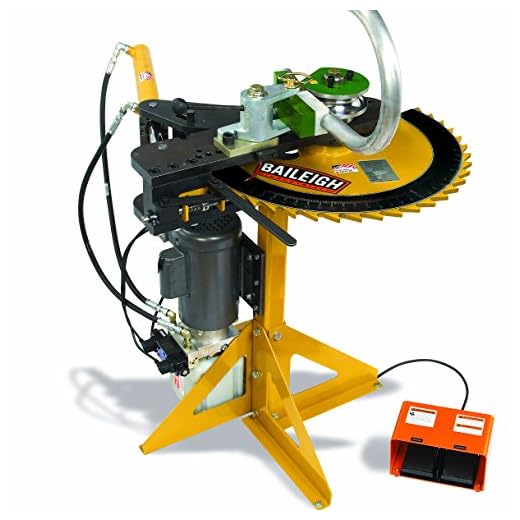


Baileigh RDB-150 110V Hydraulic Tube Bender
A proven American-made hydraulic rotary draw bender that set the standard for one-shot 180° bends and continues to be reliable in production environments. It runs on 110V and delivers industrial-grade hydraulics and an 8" CLR maximum for heavy-duty fabrication.
Why this model stands out
I recommend the RDB-150 when you need a top-tier hydraulic rotary draw bender that can handle production-level work and stubborn materials without repinning or re-fixturing. It historically raised expectations by delivering true one-shot 180° bends.
Notable features and workplace benefits
Those capabilities translate into faster throughput on repetitive work and a long life in a busy shop environment — reasons thousands of units remain in service decades after purchase.
What to plan for
This is an investment: expect a higher upfront cost and to allocate floor space and handling for a heavy machine. Also plan for dies and any additional tooling — they’re generally purchased separately and are necessary to get the most from the machine.
Final take
If your work requires a reliable, one-shot 180° hydraulic solution with proven longevity, I consider this a premium pick. It’s especially good for shops that need consistent, repeatable bends without extensive manual intervention.
Baileigh RDB-125 Hydraulic Rotary Bender
A well-engineered hydraulic rotary draw bender that blends quiet operation with industrial-strength bending for up to 2.5" OD tube. It’s fast to reach 180° with an anti-spring-back mechanism and accepts standard drop-on tool sets for wide flexibility.
Overview
I picked the RDB-125 as my go-to hydraulic unit for shops that need reliable, repeatable hydraulic power without moving to large industrial systems. It offers a good balance of capacity, quiet operation, and safety features suited to repeated heavy-duty work.
Key strengths
Those features make it fast for production work: I can reach 180° in about four complete pushes, and the anti-spring-back saves recalibration time between bends.
Practical considerations
You’ll pay more than for a manual bender, and you should plan for where the machine will sit in your shop — it’s not a bench-top toy. Also account for tooling costs: while it accepts common drop-on dies, you’ll want a matched die set for your most-used tube sizes.
Verdict
If you need efficient hydraulic bending up to 2.5" OD and value quieter, repeatable performance, this is an excellent mid-range hydraulic choice. I find it a great compromise between affordability and professional capability.
Baileigh RDB-050 200° Manual Tube Bender
A heavy-duty manual rotary draw bender with three selectable speeds and a full 200° range that handles chromoly and mild steel. It offers strong torque and very quick changeovers, but tooling is sold separately which can catch first-time buyers off guard.
What it is and who it's for
I see the RDB-050 as a shop-focused, heavy-duty manual rotary draw bender built to tackle challenging tubing like chromoly and larger mild steel. It's designed for fabricators who need high torque and repeatable bends without investing in hydraulics.
Key features and benefits
Those features make it straightforward to do complex chassis work: for example, I can start heavy sections on Speed One for maximum torque and switch to Speed Three for thin-wall stainless for faster progress.
Limitations and practical considerations
I need to be clear: the unit is sold without dies or tooling, so a first-time buyer should plan on additional expense and ordering the correct die sets for their tube OD and CLR. It's also a physically large and heavy machine, so you should plan where it will live in your shop (pedestal or floor mount). Here are a few practical tips I give colleagues:
Bottom line
I like this bender for small to mid-size fabrication shops that need a reliable, high-capacity manual machine. It’s built tough and flexible with the speed selection, but you must factor in dies and a stable mounting surface before you buy.
Baileigh RDB-25 Manual 8-Die Tube Bender
A compact, affordable manual bender that ships with eight common die sets, making it a great starter machine for hobbyists and light-duty shops. The included dies give immediate capability, but their cast finish can mar tubing if you need cosmetic perfection.
Who should buy the RDB-25
I often suggest the RDB-25 to hobbyists, restorers, and small shops that want a ready-to-use manual tube bender without a huge investment. It comes with a broad set of dies that let you start bending common tube sizes immediately.
Useful features and included items
The included die sets are particularly valuable for someone starting out — you can move from one project to the next without ordering extra tooling right away.
Real-world limits and tips
Some users (and I agree from hands-on inspection) have found the cast die surfaces to be rougher than machined dies; this can leave marks on high-gloss tubing. If you care about finish, expect to upgrade to machined dies or fabricate custom dies from aluminum or steel for a smoother contact surface. Also, this unit is not aimed at heavy production or very large diameter tubing.
Summary
For a beginner or hobbyist, I think the RDB-25 is a practical, affordable choice that gets you bending right away. If your priority is pristine finishes or larger capacity, plan to budget for machined dies or a higher-capacity hydraulic bender down the road.
Eastwood High-Capacity Rotary Draw Bender
A budget-friendly rotary draw hand bender that covers a surprisingly wide range of materials and die options for its price. It’s solidly built for the money, though you may need to source a handle or tinker with fitment on some components.
Who should consider this bender
I recommend the Eastwood unit if you want the most bending capability for your money and you’re comfortable with a bit of hands-on setup. It’s ideal for garages, hobbyists, and small shops that bend common tube sizes and want a cheaper alternative to full hydraulic systems.
What it does well
In practice I’ve found these strengths make it very versatile for HVAC, small exhaust runs, and custom handrail or roll-cage-related tasks where you don’t need extreme capacity.
Limitations and setup notes
Out of the box you may need to fit the handle yourself or lightly dress some brass fittings for a snug fit — a couple of users mentioned using a rubber mallet or minor setup work. If you plan to bend very thick-walled chromoly or need production-level throughput, this won’t replace a hydraulic RDB.
Final thoughts
For the price, I think this is one of the best value picks — it gives broad capability with the expectation that you’ll do a bit of setup and possibly source an aftermarket handle or fine-tune die fits.
Final Thoughts
If you want a single, clear winner for serious fabrication and production work, go with the Baileigh RDB-150 110V Hydraulic Tube Bender. It’s the industry-standard one-shot 180° machine — rugged, American-made, and designed for repeatability. Use it when you need consistent, heavy-duty bends, large CLR capacity (up to 8"), and hydraulic power on 110V.
If you’re a hobbyist, home shop builder, or just getting started, the Baileigh RDB-25 Manual 8-Die Tube Bender is my pick. It’s affordable, ships with eight common dies so you can start bending right away, and it’s compact. Just be mindful the included dies are cast-finish and may need dressing for cosmetic parts.
Quick runner-up: if you want quieter hydraulic performance for medium-duty work, the Baileigh RDB-125 is an excellent middle ground — powerful, quiet, and flexible for up to 2.5" OD tubing.
How I Choose and Use a Rotary Draw Tube Bender
Hydraulic vs Manual: pick based on volume and material
I always start by asking how much bending I’ll do. Hydraulic machines (RDB-150, RDB-125) are for daily use, larger tubing, and when I need one-shot 180° consistency. Manual units (RDB-25, RDB-050, Eastwood) are perfect for hobby work, occasional chassis tweaks, or when portability matters.
Capacity and CLR: match the bender to your project
Think about OD, wall thickness, and the required centerline radius. I measure the largest tube I’ll bend and the minimum radius I need. For large CLR and heavy fabrication I pick the RDB-150 (8" CLR, industrial hydraulics). For smaller OD or common automotive work, the RDB-125 covers up to 2.5" OD and has anti-spring-back to improve accuracy.
| Model | Best for | Standout spec |
|---|---|---|
| Baileigh RDB-150 | Production/Heavy Fabrication | One-shot 180°, 8" CLR, 110V hydraulic (9.7) |
| Baileigh RDB-125 | Medium shops, quiet hydraulic | Up to 2.5" OD, anti-spring-back (9.2) |
| Baileigh RDB-050 | Chassis shops, manual torque | 200° range, 3-speed manual (8.5) |
| Baileigh RDB-25 | Hobbyists, beginners | Ships with 8 dies, compact (8.0) |
| Eastwood High-Capacity | Budget-conscious hobbyist | Wide die options, solid value (7.5) |
Tooling, mandrels, and surface finish
Tooling quality determines both part strength and appearance. I prioritize:
Setup tips and angle control
Good setup beats brute force. I always:
Maintenance and tweaks that save time
Simple maintenance keeps accuracy and lifespan high:
I use the RDB-150 when repeatability and heavy work can't be compromised, but I keep a manual unit around for quick mockups and oddball jobs. Buy the best tooling you can afford, and you’ll thank yourself on the fifth bend when everything lines up.
FAQs
If you’re bending often, working with larger OD or thicker wall tubing, or need one-shot 180° bends, go hydraulic. Manual benders (like the RDB-25 or RDB-050) are great for lower volumes, occasional use, and tight budgets. I use manual for prototyping and hydraulic for production.
CLR (Centerline Radius) is the radius measured from the centerline of the tube to the center of the bend. It determines how tight a bend you can get without collapsing or work-hardening the tube. Bigger CLR = gentler bend; the RDB-150’s 8" CLR gives you room for larger, structural bends.
Yes, but with caveats. Chromoly and stainless work harder than mild steel and are more prone to cracking if you push them too tight. Use the right die radius, consider a mandrel or support, and avoid aggressive bends on thin-walled sections. For chromoly used in roll cages, follow the alloy’s forming recommendations.
Very. Good dies and proper tooling make or break a bend. The RDB-150 and RDB-125 accept standard drop-on tool sets, which gives you flexibility. The RDB-25 includes common dies—great for starting—but you’ll want better-finished tooling for show-quality work.
Keep hydraulic fluid clean and at the right level, grease pivots, inspect seals and hoses, and store dies clean and dry. I also check bend accuracy and recalibrate the angle stop occasionally—especially after heavy use.
Yes. Most metals spring back a bit after bending. Machines like the RDB-125 include anti-spring-back features. Otherwise, over-bend slightly (based on material and wall thickness) or use a digital angle gauge to hit the target angle after accounting for spring-back.








I bought the RDB-125 for quieter operation and it lives up to the ‘quiet, powerful’ badge. We do a lot of light exhaust tube work and anti-spring-back saved a bunch of scrap.
One note: invest in a decent set of dies early on — it really improves finish and repeatability.
I prefer polished steel dies for visible work. Bronze works for softer metals. Don’t forget proper lubrication during bends.
Great practical tip, Priya. Do you recommend a specific die material/finish for better tube cosmetics?
As a weekend fabricator who flips car projects, I liked the article’s mix from industrial to budget. Wanted to share a little checklist I use before buying:
1) What diameter and materials will I bend most? (steel vs chromoly vs stainless)
2) Do I need 180° vs 200°? (some chassis work needs the extra range)
3) Tooling availability and cost — include in budget
4) Shop power and footprint — can I accommodate a 150?
5) Futureproofing — will I want to scale to production?
Hope this helps others — made my purchase decision a lot easier.
This checklist is gold. Adding: check spare parts availability — hydraulic seals, handles, etc. Saved my butt once when I needed a quick replacement.
Sure, go ahead — glad it helps. I wish someone told me about tooling costs up front when I bought my first bender.
That’s an excellent checklist, Daniel — very actionable. Mind if we quote it in an update to the article (with credit)?
Eastwood on a budget — yep, been there. Works surprisingly well for the price but that handle/fitment thing is real. Spent an afternoon filing and re-drilling once 😂
Still, for one-off hobby stuff it’s unbeatable.
Good to know, Marcus. We noted in the roundup that some tinkering might be required out of the box — thanks for confirming it’s manageable for hobbyists.
Really appreciated the RDB-25 mention — I started with that as a hobbyist and the included eight dies got me rolling immediately. The cast finish did scuff some tubes but for the price it’s perfect.
Anyone tried polishing the dies or adding a protective sleeve?
Great question, Maya. Some users lap the dies lightly or add thin silicone/rubber sleeves for cosmetic work. Just be careful not to alter die profiles too much.
I wrapped the tube in plumber’s tape for delicate tubing; it helped reduce marring without changing the bend radius.
I’ve been using a Baileigh RDB-150 at our shop for about a year now. It’s a beast — the 8″ CLR capacity saved us on a couple of heavy-frame jobs. Runs on 110V which made setup easy in the existing shop.
Only gripe: it’s heavy and took two of us to uncrate. If you’re doing production runs, though, it’s worth every penny.
Thanks for the hands-on insight, Jacob — glad it’s holding up. For anyone worried about uncrating, we recommend getting a pallet jack delivery and checking if the seller offers placement.
How’s the maintenance? Any recurring problems with hydraulics or seals?
Totally agree — we had our installer drop it inside and bolt it to the floor. Makes a huge difference for vibration and accuracy.
Trying to decide between the RDB-125 and the RDB-150 for a small metal fab shop. I like that the RDB-125 is quieter and still handles up to 2.5″ OD, but the RDB-150’s 8″ CLR is tempting for larger pieces.
We mostly do railings and some chassis brackets. Budget isn’t unlimited but I also don’t want to outgrow a machine in a year.
Any thoughts on longevity/ROI between those two?
Thanks! I think I’m leaning 150 for future-proofing. Might be heavy now but less chance of needing to replace in a couple years.
If budget’s tight, see if you can rent a 150 for a big job — that way you don’t buy up-front and you learn if you really need it.
We went RDB-125 and upgraded tooling instead of the bigger bender. Saved money and it’s been solid — but if your jobs trend big, you’ll want the 150.
If you foresee regular large CLR bends (like heavy railings), the RDB-150 gives more headroom and is more production-oriented. The RDB-125 is easier on shop power and is quieter, but for larger radii the 150 is a safer long-term buy.
Also consider floor space and uncrating help. The 150 will require a bit more planning for installation.
Short and sweet: love the RDB-25 as a starter. Saved me from ordering custom bends every time 😅
If anyone wants, we can compile a short setup checklist for die marking and repeatability tips.
Same — perfect for small projects. Pro tip: mark your dies with a sharpie so you can repeat setups faster.
Great idea, Omar. Will try that next weekend!
Glad it worked out, Hannah! The included dies make it a great first machine.
Heads up for first-timers: the RDB-050 is powerful as advertised but tooling sold separately — that caught me off guard. I bought it thinking I’d get dies like the RDB-25 and had to wait a week for tool sets. If you’re on a deadline, order tooling at the same time.
Also, the three selectable speeds are awesome for chromoly work; makes controlling spring-back WAY easier. But yeah, plan tooling costs into your budget.
If anyone wants, I can post links to the die options we found reliable (OEM and vetted aftermarket).
I grabbed the OEM dies in the end — liked the precision — but a couple of local fab shops recommended aftermarket sets that worked fine for non-critical parts.
Thanks — I almost made the same mistake. Where did you source your dies from? Baileigh sells them but I found a compatible third-party set cheaper.
Good tip, Oliver. We added a note in the article about tooling not being included for the RDB-050 — seems like a frequent oversight for new buyers.
Quick question: are all these machines truly 110V-friendly? My shop is mostly 110/120V circuits and I don’t want to deal with rewiring. I saw the RDB-150 and RDB-125 listed as 110V — anyone ran them on standard outlets or did you need a dedicated circuit?