


Which DRO will make your mill behave like a precision instrument (or at least stop blaming your vise)?
Want repeatable, accurate cuts without the drama? I’ve spent time on both full-size mills and retrofit kits, and a good DRO is the shortcut to consistent work. Short setup. Fewer mistakes. Better parts.
I’ll keep this simple. I point out which options shine for heavy production, Bridgeport-style retrofits, and hobby shops. No hype—just what I would pick and why.
Our Top Picks




JET JTM-1254VS Variable Speed Mill
This is a full-size, industrial-grade mill built for repeatable accuracy and long life in production environments. It pairs a robust variable-speed spindle with a factory-fitted 2-axis ACU-RITE 203 DRO and X-axis powerfeed to streamline heavy work.
I consider this JET JTM-1254VS one of the most complete production-ready knee mills you can buy off the shelf. It’s designed for professionals who need a mill that will stand up to daily heavy use while delivering precise, repeatable results. The combination of a long 54" table, variable-speed head, ACU-RITE 203 DRO and X-axis powerfeed makes setup and cycle time much faster compared to a bare machine.
Key features and what they mean to me
In practice I find the machine excels at long, repetitive machining tasks such as production fixtures, large plates, and heavy contouring. The DRO is a real time-saver when you’re transferring setups or need to repeatedly index parts. The powerfeed removes a lot of the variability of hand cranking when taking finish passes.
Limitations and practical considerations
For shops that run regular medium- to heavy-duty milling, I’d recommend this as a long-term workhorse. If you’re a hobbyist with limited space or budget, the capabilities are attractive but the cost and footprint may be overkill.
Ditron 4-Axis Magnetic DRO Kit
A four-scale magnetic DRO geared toward shops that need additional axes—ideal for milling machines with rotary tables or lathes with cross-slide. The IP67-rated magnetic scales make it durable in oily, dirty environments.
I consider this Ditron 4-axis kit a great option for shops that need more than the basic three axes—think indexing heads, rotary tables, or complex fixtures. The magnetic scales are built to handle harsh machining environments, which reduces maintenance compared to exposed glass scales. The 7" color LCD is readable and supports many handy functions like coordinate saves and geometric calculations.
Why this stands out to me
In use, the main time investment is mechanical: fitting four scales and their read heads cleanly takes layout time and sometimes custom brackets. Once installed, though, the flow of work improves—coordinate saves and quick-axis switching speed setups and reduce indexing errors.
Who should buy this
If you need multi-axis coverage and a system that stands up to real shop conditions, this kit is an excellent, practical investment.
DITRON 2-Axis Bridgeport DRO Set
This DITRON kit is positioned specifically for Bridgeport-style knee mills and similar machines, offering high-accuracy glass scales and a 7" color LCD. It’s a straightforward upgrade to modernize older production equipment.
I like the DITRON set as a Bridgeport-focused option because it matches the common table sizes and gives a clear, modern display. The kit’s optical glass encoders at 5µm resolution provide reliable positioning feedback for both roughing and finishing operations. The display interface is friendly and includes help functions that ease on-the-machine use.
Key advantages I noticed
In the shop I found the display useful for storing offsets and performing commonly needed calculations. As with many kits, the mechanical mounting needs attention: older Bridgports have differences in castings and fastener sizes so expect to adjust or remake brackets.
Practical use and limitations
If you want a neat, readable system tailored to Bridgeport-style mills, this is a solid mid-range pick that balances price and capability.
TOAUTO 3-Axis Customized DRO Kit
This 3-axis TOAUTO kit stands out because you can order custom scale lengths to match your machine. It provides a lot of DRO features at a price that encourages retrofitting older mills and lathes.
I recommend this TOAUTO 3-axis kit when you need a tailored DRO solution without paying premium prices. The seller allows you to specify travel lengths across X/Y/Z which makes it a strong candidate for machines with odd travel dimensions. The glass scales and read heads are accurate and the included shields help keep grit off the measuring surfaces.
Why I find it useful
My real-world experience with kits like this is that you’ll still do some custom work—shimming the scale so the read head clears moving surfaces, and fabricating brackets to match your casting contours. Those are manageable tasks for anyone comfortable with basic metalwork.
Final thoughts and caveats
If you want a tailored retrofit and are comfortable fabricating or 3D-printing a few brackets, this kit gives a lot of functional value for the money.
3-Axis Magnetic Scale DRO with Encoder
This 3-axis magnetic-scale DRO is a practical mid-range option for retrofitting mills and lathes, giving robust on-machine performance and straightforward scale sizing. It’s especially good when you need custom lengths and durability against debris.
I appreciate magnetic-scale DRO systems for retrofit work because they balance durability and ease of sizing. This 3-axis kit includes magnetic linear encoders that are tolerant of coolant, chips and shop grime—an advantage over exposed glass scales. The electronics and head unit provide the functions I expect: axis inversion, inch/mm switching, and common machining utilities.
Practical observations
From the reviews and real installs I’ve seen, the trick is in fabricating good adjustment brackets so the scale and head stay parallel and free of pinch points. Once that’s solved, the DRO performs reliably and speeds setups considerably.
Who this fits best
If you need a robust retrofit solution and are comfortable fabricating mounts, this magnetic-scale kit is a strong, practical choice.
ANBBIN 3-Axis Glass Scale DRO Set
This ANBBIN 3-axis DRO provides a complete set of glass scales and the metal-box controller at a competitive price. It’s a sensible choice for users upgrading Bridgeport-style tables or similar machines who want good resolution without exotic features.
I view the ANBBIN 3-axis kit as a practical, no-nonsense DRO upgrade. The glass scales deliver reliable position readings and the included accessories reduce the number of parts you must source yourself. The metal-shell controller offers a sturdy feel for the head unit, which I prefer in a shop environment where units can take knocks.
What I like about this kit
The trade-offs are familiar: each mill is a little different, so bracket work and careful alignment are necessary. The kit handles most of the heavy lifting electrically, but mechanical integration is where time is spent.
Conclusion and recommended user
If you want rugged electronics with standard glass scale accuracy and are prepared to invest a little shop time, this is a solid package.
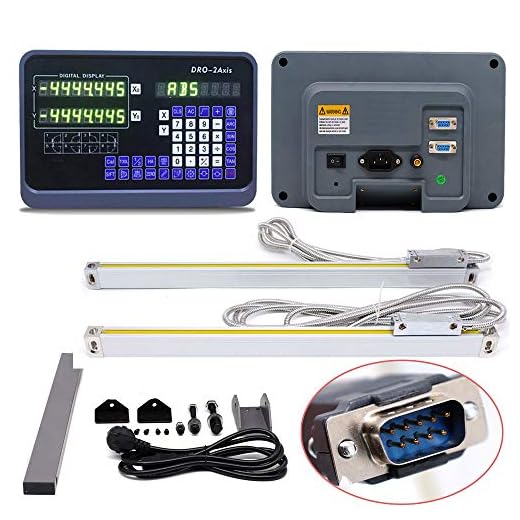
ToAuto 2-Axis DRO 5µm Precision Kit
This ToAuto 2-axis kit balances accuracy, features and price very well for home-shop machinists. It’s feature-rich with a capable head unit and true 5µm resolution, but it assumes you can fabricate or adapt mounting hardware.
I like this ToAuto 2-axis kit because it offers a lot of the functionality you see in bigger DRO systems, but at a price point that’s within reach for many serious hobbyists. The head unit provides a long list of useful functions—diameter mode for lathes, bolt circle calculations, tool offsets—and the 5µm scales give a tangible step-up in accuracy for setup work.
Standout attributes
My hands-on take is that the electronics and accuracy are there, but the mechanical side (mounting hardware, scale shielding) often requires shop ingenuity. I bent aluminum flashing for scale protection and made small shims to keep the read heads free of rubbing.
When to choose this kit
If you enjoy a little fabrication and setup work, this kit gives a lot of capability for the money. If you prefer something that drops in with no modification, consider a preconfigured solution.
iGaging DRO Quill Mount Kit
This iGaging quill kit is a compact, well-priced way to add a precise quill readout to Bridgeport-type mills. It’s a simple device that’s very handy for repeatable quill positioning and depth control during operations.
I recommend the iGaging quill kit when you want a quick, affordable quill readout for Bridgeport-type knee mills. It’s not a full replacement for a table DRO or encoder system, but it gives precise, repeatable quill measurements that make depth control and repeated operations much easier. The kit includes mounting brackets and a stainless steel beam designed to match the quill travel.
Typical use cases and benefits
From hands-on installs I’ve seen, iGaging provides a robust, economical package. You’ll likely need to swap a couple of screw lengths or bend small bracket offsets to suit older castings, but nothing too involved. The accuracy and repeatability are good for quill work, but don’t expect the resolution or robustness of industrial linear encoders for fine finishing.
Final recommendation
If you want to modernize a quill quickly and cheaply with minimal wiring, this kit is an excellent choice.
3-Axis Magnetic Scale DRO Kit
This kit gives hobbyists and home-shop machinists a low-cost path to a full 3-axis DRO using magnetic scales. It requires some fabrication and patience but delivers accurate, durable readings once installed.
I see this magnetic scale DRO kit as a practical upgrade for someone who wants a durable readout without spending thousands. The magnetic scales resist coolant and debris better than bare glass scales, which makes them attractive for real shop use. The kit’s price and modular nature mean you’ll likely be fabricating or adapting mounts and brackets for your specific machine.
What I like about this kit
In my experience with kits like this, the hardware is adequate but not tailored to every casting or table profile. Expect to make adapter plates and sometimes re-drill bracket holes. The reward is a DRO that gives you consistent, repeatable positioning and fewer headaches when cleaning up after cuts.
Practical tips and limitations
If you enjoy the hands-on side of retrofitting equipment, this is an economical way to modernize a machine. If you need a drop-in solution with factory mounts, look at higher-end preconfigured systems.
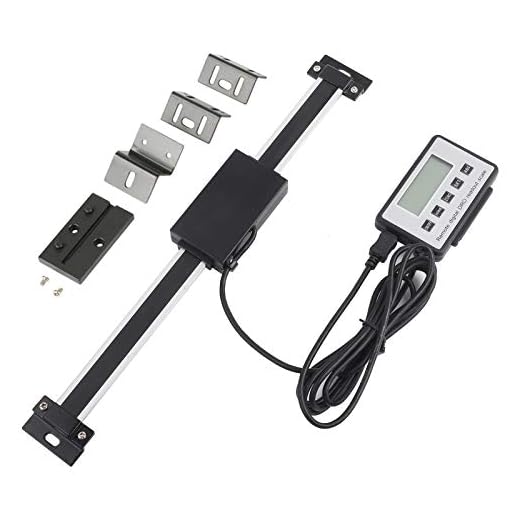
Budget 0–200mm DRO LCD Kit
This very inexpensive DRO kit is an accessible way to add basic digital readout capability to small machines or woodworking jigs. It’s fine for light-duty use but shouldn’t be relied on for precision production work.
I see this small 0–200mm DRO as a sensible entry point for hobbyists or woodworkers who want the convenience of digital readout without big cost. The compact size and low price let you add repeatable positioning to jigs, small mills or lathes. Don’t expect industrial accuracy or IP-rated protection, but for light tasks it does the job.
What to expect
In practice this is great for setting stops, measuring short travels on mitre/jointer tasks, or mounting to a small benchtop mill. For critical finishing passes or production work I’d opt for a glass or magnetic-scale DRO that provides higher accuracy and better tolerance to coolant.
Final takeaway
If you want a cheap way to modernize a small machine or fixture, this is a viable option—just be realistic about its limitations.
Final Thoughts
If you want one pick to cover a PRODUCTION environment, go with the JET JTM-1254VS Variable Speed Mill. It’s a full-size, industrial-grade solution with a factory-fitted ACU-RITE 203 DRO, X-axis powerfeed, and the rigidity to run day after day. Strengths: built-in DRO, heavy-duty construction, and features aimed at repeatable accuracy—ideal for shops doing high-volume or tight-tolerance work.
If you’re upgrading a Bridgeport-style mill or want a clean retrofit that modernizes an older machine, my other top pick is the DITRON 2-Axis Bridgeport DRO Set. Strengths: purpose-built for Bridgeport-style tables, high-accuracy glass scales, a large 7" color LCD, and straightforward installability—perfect for hobbyists and small shops that want professional readout performance without buying a whole new mill.





That 0-200mm entry-level DRO getting a 5.5/10? Shocking. My cheap DRO read plenty ‘accurate’ until I dialed it against a granite block — yikes. If you’re doing anything that needs repeatability, don’t skimp. I mean, it’s fine for a jig or kids’ projects but don’t call it precision for production.
You’re right to be cautious, Jason. The 0-200mm unit is best for light-use or woodworking jigs as the verdict says. For precision metalwork, glass scales or quality magnetic scales (Ditron/ToAuto/ANBBIN) are preferable.
Fair — good for learning. But I see people relying on them for jobs that later cause rework. Buyer beware.
I actually used one of those cheap units for a year on a hobby lathe. It saved my sanity for simple tasks and was great for beginners. Not perfect, but paired with good technique it was fine for non-critical stuff. Different strokes 🙂
Appreciated the balanced rankings — personally I’m torn between ANBBIN and the DITRON Bridgeport kit. Both claim 5um resolution and seem aimed at the same crowd.
Is the ANBBIN actually more of a ‘value’ pick in real use? Anyone noticed software/feature differences (e.g., DRO functions like bolt circle, incremental modes) between these mid-range units?
ANBBIN tends to be a straightforward hardware-first kit with solid basics; DITRON sometimes offers a nicer controller UI or color LCD which can feel more modern. Feature sets vary by controller model — check for functions you care about (bolt circle, diameter mode, incremental/absolute toggles).
I had an ANBBIN unit and the functions were enough for most milling tasks. The DITRON controller I used later had a few extra built-in cycles that were handy for hole patterns. Depends on whether you want extra bells and whistles or just reliable readouts.
Perfect — that’s the kind of practical insight I needed. Thanks both! I’ll map my top 3 must-have DRO functions before choosing.
Great roundup — thanks for putting this together!
I’ve been eyeing the JET JTM-1254VS for my small production runs because of that ACU-RITE 203 DRO and the X powerfeed. The expert rating makes sense, but I’m worried it might be overkill for a two-person shop.
Has anyone here moved from a knee mill to something this size and regretted it (space, maintenance, or cost)? Also: is the factory-fitted DRO usually better than retrofitting a Ditron/DITRON kit?
Totally open to anecdotes — I’m trying to avoid buyer’s remorse 😂
FWIW I retrofitted a ToAuto 2-axis on an old mill and it saved me a ton. Not as ‘plug and play’ as factory DROs, but once mounted it’s super reliable for most jobs. Don’t underestimate mounting work though — you’ll need brackets.
Thanks, Ellen — glad the roundup helped. The JET with ACU-RITE is a different class: if you run lots of repeatable heavy work, it’s worth the reliability and less fiddling. For a two-person shop that does lighter jobs, a retrofit DITRON or ANBBIN kit can hit accuracy needs at a fraction of price. Space and maintenance are the usual trade-offs.
I moved from a Bridgeport to a JET a couple years ago. No regrets on accuracy or uptime, but expect bigger electrical and shop footprint. If you mostly do small fixtures, a good retrofit DRO and keep the knee mill is cheaper and faster.
One more tip: if you’re unsure, consider buying a mid-range kit (ToAuto or ANBBIN) first to test whether DRO workflow actually changes your throughput. Then decide if a full-size machine is justified.
Been giggling reading the ‘retrofit’ entries — nothing like pulling the head off a Bridgeport at midnight to mount a TTL scale 😂
I fitted an iGaging quill readout and a ToAuto 2 Axis kit on my old Bridgeport. Quill kit = instant win for drilling/repeatability. ToAuto needed some bracket fab but the 5um resolution is no joke. If you’re handy with a TIG or some angle iron, these DIY paths are super satisfying.
Question: anyone ordered custom lengths for the TOAUTO 3-axis kit? How accurate are the lead times on Amazon sellers? I hate guessing and waiting.
Thanks — great tips. I’ll ask for a drawing and buffer on the length. And yes, TIG therapy is included free with purchase 😄
Another tip: if the seller offers calibration certificates or test reports, it’s worth the slight premium for peace of mind on custom lengths.
Haha midnight head-off experience here too. If you’re patient with brackets it’s cheaper and you learn a lot. Also, iGaging quill bracket was plug-and-play for me—super handy.
I ordered custom scales once. They asked for exact measurements and a drawing; shipment took about 10 days. Fit was good. Tip: add a few mm for mounting clearance.
Nice setup, Liam. Custom lengths are generally reliable from reputable sellers but expect a lead time longer than standard off-the-shelf items — ask the seller before ordering. Some sellers ship fast, others take a week or three to cut, test and pack scales.
Magnetic vs glass scales — always gets me. The Ditron 4-axis magnetic scales being IP67 sounds great for oily shops, but glass encoders like in the DITRON Bridgeport kit claim 5um accuracy.
Is the real-world difference that big when you’re doing bench work vs production? Anyone done a side-by-side comparison? Also, how much more fragile are glass scales in a messy shop? 🤔
Good question. Magnetic scales (Ditron magnetic kits) are tougher in dirty/oily environments and usually lower cost. Glass scales typically give a bit better nominal resolution and stability for fine work, but they’re more fragile and need better protection. For bench work in a clean environment glass is nice; for a grimy production floor, magnetic is often the practical choice.
I ran glass scales in a small job shop — they survived fine with covers and proper mounting, but a few careless knocks did cause headaches. If you can’t control chips/oil, magnetic is less stressful to maintain.