


Cordless champ or steel-eating workhorse — which one earns a permanent spot in my van?
Drill smart, not harder. I’ve wrestled with cords, shaky magnets, and a few too many ruined bolts. Short on time and patience, I learned which mag drills actually make life easier.
I’ll keep this simple. I tested for build, magnet strength, and real-world usefulness. No fluff — just what I’d reach for on site or in the shop.
Our Top Picks



Fein 18V Cordless Brushless Mag Drill
A premium cordless mag drill that delivers exceptional build quality, long motor life, and professional-level performance. It’s built for contractors who need cord-free operation without compromising on cutter capacity or reliability.
Why it stands out
I consider the Fein AJMU137 PMQW a top-tier cordless mag drill — it’s engineered with high-end components and a brushless PowerDrive motor that’s meant to last in heavy professional use. For technicians who need the freedom of cordless without sacrificing cutter life or consistency, this is a standout choice.
Key features and benefits
Fein packed this model with pro-level traits:
The result is a machine that feels like it belongs in a service vehicle or a production cell where reliability matters every day.
Practical considerations
The big tradeoff is cost: it’s a premium tool and you’ll spend more on batteries if you don’t already run Fein-compatible packs. It’s also slightly heavier than some compact corded drills, but that weight corresponds to rugged construction and long-term durability.
My recommendation
If you’re a professional who drills frequently and values cordless mobility combined with industrial performance and longevity, this Fein should be at the top of your shortlist.
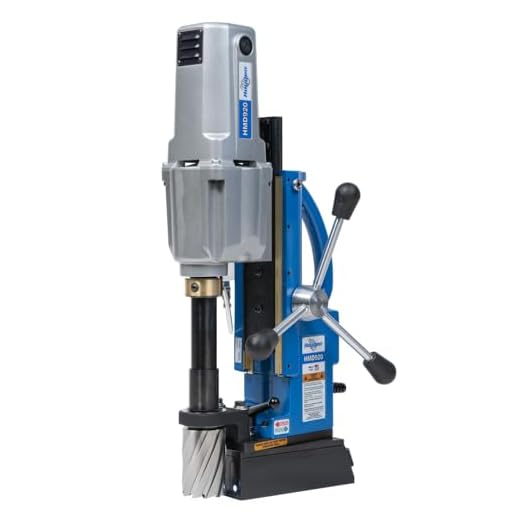
Hougen HMD920 3" Depth Mag Drill
A heavy-duty, well-built mag drill that feels designed for production environments. It balances smooth feed, solid magnet performance, and compatibility with standard Hougen accessories for long-term serviceability.
Purpose and overview
I see the HMD920 as a professional-grade mag drill built for fabricators, maintenance shops, and contractors who want a reliable production tool. It targets users who need consistent results on steel work and who value straightforward serviceability and compatibility with established cutter systems.
Key features and benefits
The machine brings a thoughtful feature set that helps on real jobs:
These items add up: the multiple speeds help match cutting tool size and material, and the Hougen cutter compatibility keeps operating costs predictable if you already use that ecosystem.
Practical insights and limitations
In practice I found this kind of tool shines in repeat operations — punching multiple identical holes in structural steel, flanges, or plates. The HMD920 is heavier and more substantial than entry-level drills, so it isn't my go-to for occasional light overhead work or very tight clearances. If you need longevity and serviceability and aren’t constrained by budget, this is a top-tier pick.
Who should buy it
I recommend it to professional shops and contractors who drill frequently and want a dependable, repairable machine. Hobbyists or very occasional users may find the cost and size more than they need.
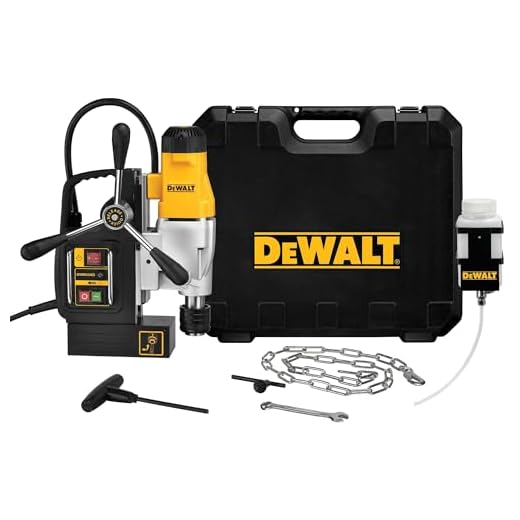
DEWALT DWE1622K 2-Inch Mag Drill
A practical all-rounder that balances power, portability, and user-friendly features for tradespeople. The quick-change chuck, strong magnet, and overload protection make it an excellent daily-use mag drill for on-site work.
What it does best
I view the DWE1622K as a true workhorse for contractors and fabricators who need a dependable mag drill on the jobsite. It’s built to be versatile: the motor has enough torque for annular cutters, and the accessory system makes switching between cutter types easy.
Standout features
DEWALT focused on practical features you actually use on site:
Those features mean fewer stops during a long day and less worry about burning tools or motors when conditions get tough.
Real-world performance and caveats
From hands-on reports and usage scenarios, it drills very true for a jobsite mag drill and the quick-release feed handle is a time-saver. Expect a small amount of runout compared with premium industrial drills — this is normal for this class and acceptable for most construction and fabrication work. The coolant tank is useful but can be fiddly depending on how you mount it.
Who should pick it
I recommend it for professional tradespeople and serious hobbyists who want a reliable, rugged mag drill that’s simple to operate and serviceable in the field.
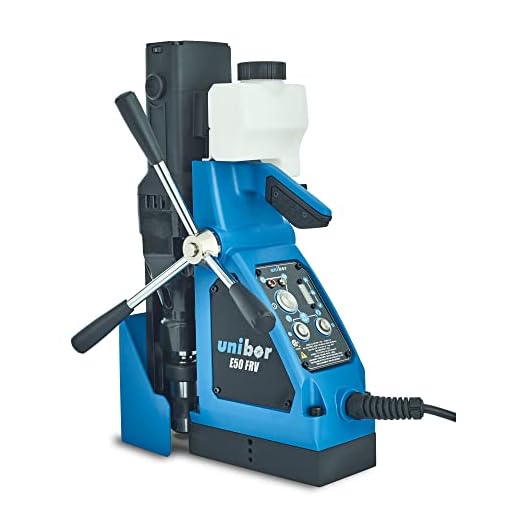
UniBor E50FRV/1 2" Forward/Reverse Drill
A versatile pillar-style mag drill with forward/reverse and tapping capability that broadens its use beyond simple hole cutting. It’s a strong choice for shops that need both drilling and light tapping without changing machines.
Overview and target user
I value the Unibor E50FRV/1 for workshops that need a single machine to handle drilling, tapping, and light production tasks. The forward/reverse function is a differentiator in this segment and makes it more flexible than straight-through-only mag drills.
What stands out
Key practical advantages jump out in daily use:
Those attributes make it useful across welding shops, HVAC, shipbuilding, and maintenance departments.
Use cases and limitations
In practice I found it especially useful where tapping operations and drilling are both required — for example, creating a hole and then tapping it for a fastener in a single setup. It is heavier on cost than entry-level drills, so it’s best for users who will exploit its added capability rather than those who need a single occasional hole or two.
Final thought
If you need tapping plus drilling, and value portability with strong magnetic hold, the Unibor is one of the most practical options in this class.
Milwaukee 14" Magnetic Drill Press Kit
A purpose-built machine from a reputable brand that feels solid and powerful in real-world use. It’s a professional-grade choice for fabricators who need repeatable results and a secure magnet on heavy sections.
Overview and intended use
I consider Milwaukee’s 14" mag drill kit a step up for professionals who regularly tackle thick plate or structural work. Its larger travel and stronger motor make it a go-to when you need extra capacity and consistent results.
Key strengths
Milwaukee focused on durability and usable power:
The combination of motor power and travel makes it easy to work through common structural tasks without repeated setups.
Practical considerations
This machine is heavier and less nimble than compact units, so it’s not ideal for tight overhead or recessed work. However, its robustness suits shops and contractors who value uptime and predictable performance. Unpacking it on a steel table can be surprising — the magnet locks firmly — so be careful during setup.
Bottom line
If you drill often and need capacity and reliability, this Milwaukee kit is an investment that pays off in fewer tool swaps and more consistent holes.
Evolution EVOMAG42 1.625" x 2" Mag Drill
A sensible mid-range mag drill that balances affordability with performance. It’s not bulletproof industrial gear, but it’s dependable for frame work, rail drilling, and light fabrication in small shops.
Who this suits
I think the EVOMAG42 is ideal for shop owners and hobby fabricators who want a reliable mag drill without stepping up to expensive industrial rigs. It handles a wide variety of common drilling tasks and does so with minimal fuss.
Features that matter
The Evolution packs practical features for the working shop:
In use it’s forgiving and delivers expected performance for occasional heavy jobs.
Performance and caveats
The unit is not bulletproof for continuous, daily high-volume production; that’s where more industrial models justify their higher cost. However, for most modest shop needs, it’s a dependable tool and the company’s warranty and customer service track record are positives that matter when something goes wrong.
Conclusion
If you want a practical, middle-ground mag drill that won’t break the bank but will exceed a basic consumer machine in capability, this is a good pick.
DEWALT 20V MAX FVA Cordless Mag Drill
A flexible cordless mag drill that frees you from cord management and makes work in remote or awkward locations much easier. It won’t replace a heavy corded production drill for all-day cutting, but it’s invaluable where portability matters.
Why consider cordless
I recommend the 20V MAX FVA for technicians and maintenance crews who often work where a power cord is inconvenient or unavailable. The major benefit is mobility — you can take this drill onto scaffolds, in trenches, or onto field equipment without running extension cords.
Notable features
The cordless format still offers features you expect from a mag drill:
For non-stop production drilling you’ll still prefer a corded option, but for mobility this fills a key niche.
Practical limitations
Battery heat and capacity limit long sessions of continuous cutting, and you may need multiple batteries for a full day. Torque and magnet pull are typically lower than heavy corded machines, so plan jobs accordingly. Still, the convenience and reduced setup time often offset those downsides for field-focused work.
My recommendation
If you value access and portability and you already use DeWalt 20V batteries, this is a practical, high-utility tool to add to your kit.
ZELCAN 1550W Portable 2" Mag Drill
A surprisingly capable budget mag drill that delivers strong magnetic force and a powerful 1550W motor for its price. It’s a solid pick for small shops and occasional fabricators who want performance without a premium price tag.
Who it's for
I see the Zelcan as a pragmatic choice for small shops, maintenance crews, and DIYers who need a capable mag drill without the premium brand markup. It’s aimed at users who want raw power and a generous accessory pack at a modest price.
Key features I like
The spec sheet and real-world usage highlight useful strengths:
The included coolant tank, spare brushes, and adapter kit are practical bonuses that shorten the setup curve.
Limitations and practical notes
There are a few tradeoffs you should accept for the price. The safety sequence on some units allows the motor to run if the magnet drops, which I consider a real safety risk unless you add your own interlock. Also, some buyers have reported minor fitment and fastening issues that require occasional maintenance. Despite that, the drill performs well for repeated hole-making when used with proper technique and coolant.
Final thought
If you want the most drilling power for the dollar and are comfortable being hands-on with occasional tweaks, the Zelcan is a strong value proposition.
VEVOR 1450W 2" Variable Speed Mag Drill
A value-packed mag drill with a powerful 1450W motor and strong magnet; it performs very well for the price. Expect the occasional QC hiccup, but overall it’s a capable machine for low-to-medium volume work.
Quick summary
I see this VEVOR model as another strong budget option that trades a little finesse for a lot of capability. It’s suited for users who need raw drilling performance and a starter set of cutters without paying premium brand prices.
Key specifications and benefits
The drill combines higher wattage with a useful accessory pack:
For many real-world tasks, that translates to fewer interruptions and longer cutting life when used with proper cutting fluid.
Practical warnings and recommendations
A few buyers reported early electrical or connector issues; basic checking of terminals and fasteners at setup is a good idea. I also found that some mounting/adaptor tolerances required light adjustment. These are manageable for a mechanically comfortable user, but if you want plug-and-play perfection, a higher-tier tool is worth the extra cost.
Verdict
For budget-conscious buyers who need genuine drilling power and a kit that’s ready to go, this model is a pragmatic and effective choice.
VEVOR 1300W 1.57" Portable Mag Drill
A compact and capable mag drill that’s great for smaller shops and individual fabricators. It handles repetitive light-to-medium drilling tasks well, especially when paired with its starter kit of coring bits.
Short introduction
I see the VEVOR 1300W mag drill as a practical machine for users who need a portable unit with an included starter kit. It’s best suited to tasks like flange drilling, stair stringer fabrication, and general shop work where a full production rig isn’t necessary.
Feature breakdown
The VEVOR brings a useful package for the price:
Having a set of common cutter sizes in the box is a real convenience when you want to start drilling immediately.
Practical experience and caveats
I’ve seen this model perform well in medium-duty applications like drilling dozens of holes in plate material. The coolant system occasionally needs modification to achieve reliable flow, and the single-speed setup can slow progress on some jobs compared with variable-speed machines.
Who should consider it
Buyers who want a ready-to-run kit that covers most common hole sizes and who value portability over industrial-level tolerances will find a lot to like here.
Final Thoughts
My top pick is the Fein 18V Cordless Brushless Mag Drill. If I need one drill for jobsite mobility and professional results, this is it. The brushless motor, heavy-duty build, and cordless freedom mean I can work remote, in tight spaces, or on scaffolding without losing cutter capacity or reliability. Buy this if you’re a contractor or pro who values portability without sacrificing performance.
My second pick — when I’m in the shop and need repeatable, high-precision holes — is the Hougen HMD920 3" Depth Mag Drill. It shines in production environments with smooth feed, rock-solid magnet holding, and long-term serviceability. Choose Hougen if you do heavy fabrication, structural steel work, or any job where precision and durability matter more than cordless convenience.





Long post but hopefully helpful:
I’ve owned a couple of the budget VEVOR/VEVOR-style machines and they’re fine for occasional heavy cuts, but expect QC hiccups as the roundup mentions.
If you need reliability and repeatability, the Fein or Hougen is worth saving up for.
That said, the Evolution EVOMAG42 surprised me — it handled frame work and some rail drilling with no complaints and cost a fraction of the top-tier units.
If you’re a weekend fabricator like me, Evolution or ZELCAN are great bang-for-buck choices. YMMV.
Yep, safety strap is a must. Also replace the cheap cutters that come in kits — invest in a good HSS or carbide cutter and performance jumps.
Totally — I bought the EVOMAG42 last year and it’s been rock solid for my small shop. Not glamorous but gets the job done. 👍
One thing to add: when using cheaper mag drills, double-check the magnet engagement on curved surfaces. I had one slip (no injuries) and now always add a safety strap.
Great safety reminders. We also recommend using an auxiliary clamp for overhead or curved-surface drilling even if the magnet seems strong.
Thanks for the detailed experience, Daniel — spot on. Many hobbyists get excellent mileage from mid-range units like Evolution; the key is correct setup and good quality cutters.
Nice breakdown of budget vs pro picks. I’m a one-person metalworker and ended up choosing between ZELCAN and VEVOR based on price. The ZELCAN’s 1550W and advertised 2922 lbf mag force convinced me.
Fast follow-up: any suggestions on which coring bit brand to buy for the ZELCAN? The kit that ships with it looked… basic. I want something that lasts for stainless and mild steel.
Also, get a spare pilot pin — they wear out faster than you’d think and cause a lot of wobble when neglected.
I use M42 HSS cutters from a recognized brand — they cut cleaner and last longer. If you can swing it, carbide-tipped for stainless helps too.
Good pick for a solo shop. For coring bits, look for reputable brands like Annular (M42 cobalt) or Guhring equivalents; they hold up better on stainless. Also consider a pilot drill replacement kit and keep cutting fluid handy.
I’m torn between the HOUGEN HMD920 and the DeWALT DWE1622K for a small fabrication shop. The article says Hougen is best for precision industrial work and DeWALT is best for jobsite versatility.
Which would you pick if most of your work is plate drilling for structural brackets, occasional small production runs, and maybe some on-site work?
For mostly shop-based plate work I’d lean Hougen — it feels more at home in production with smoother feeds and heavy-duty build. DeWALT wins if you need to move between sites often and want tool familiarity/parts availability.
Agreed with admin. I had a DeWALT for a few years and it was great on jobs, but when we upped volume the Hougen’s magnet and feed control made the work repeatable and faster. Downsides: Hougen is heavier and less ‘grab-and-go’.
Weight rant: the ‘Magnetic Drill Press Kit, 14 in. H’ sounds beefy. I need something I can carry up a ladder occasionally.
Would the 20V MAX FVA 2 IN MAGNETIC DRILL BARE be the only realistic option for mobility, or are there light corded models that still have decent magnet strength?
I took a small corded mag drill up a ladder once — never again 😂 cordless all the way if you care about your spine.
For ladder/overhead work, cordless 20V-class drills like the FVA are usually the most practical. Some light corded models have good magnets but lugging the cord and a heavy transformer up a ladder is less convenient. If portability is frequent, go cordless and keep extra batteries.
Question for the UniBor users: the UniBor E50FRV mentions forward/reverse and tapping capability. I mainly make fabricated assemblies where I sometimes need to tap after drilling.
Has anyone actually used the UniBor for tapping? Any tips for settings or limitations?
Also, is the 2″ max diameter real-world or just on paper?
Tip: use a quick-change arbor and test taps on scrap first to dial feed and speed. That reduces the chance of breaking taps and saves time.
Thanks — this is the answer I needed. Planning to buy one for my school shop, this helps a lot! 😊
I’ve used the UniBor for a lot of tapping on mild steel — works well if you use cutting fluid and don’t push too fast. For threads >1/2″, I sometimes prefer a dedicated tapper, but for small jobs UniBor is clutch.
UniBor’s forward/reverse and tapping make it versatile. For tapping, use lower speeds and a rigid setup. The 2″ max diameter is possible but depends on material thickness and your cutters/taps; for thicker sections you may be limited by motor torque and chucking accessories.
Great roundup — I was already leaning toward the Fein 18V cordless one and this review pushed me over the edge.
It’s expensive but the cordless freedom is a game changer on retrofit jobs where cords are a nightmare.
Has anyone measured actual battery life under load with a 1-3/8″ HSS cutter? I’m curious if one battery will do a half-day of moderate drilling.
Also, does anyone run it with a vacuum attachment for chips? I work in tight spaces and chip control matters.
I was gonna ask the same about battery life. Thanks guys! Does anyone know if the Fein battery fits the 20V MAX FVA? 🤔
I run the Fein on site a lot — one big battery will get you through most morning schedules if you pace the cuts. I keep a spare battery in the truck. Also: yes to vacs, but I 3D-printed a little shroud to guide chips — saved me a ton of cleanup time.
Good questions, Sarah. In our tests the Fein with a high-capacity battery managed roughly 40–60 medium holes (1″–1-1/4″) on a single charge depending on feed rate and coolant use. For heavier cuts you should expect fewer. Vacuum attachments work but require careful positioning — the magnet sometimes interferes with clamp-on vacs.