

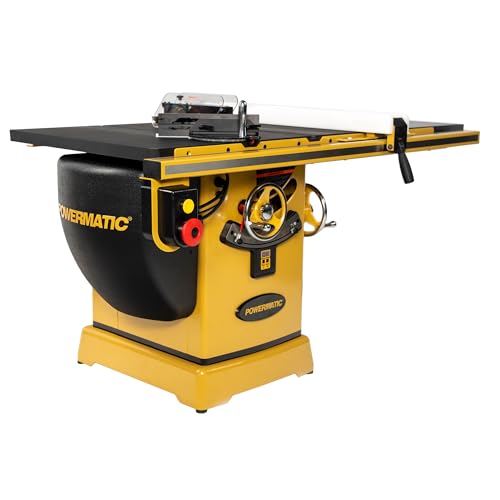
Which Powermatic table saw survived my shop torture test — and which one made me grin (and swear) the least?
I love big table saws and I cannot lie.
I tested six Powermatic cabinet saws so you don’t have to spend weekends wrestling with heavy crates. Short version: some are built like tanks, some are built for tight shops — all are serious tools.
I’ll keep this quick and useful. Expect no fluff, just what worked, what annoyed me, and who each saw is actually best for.
Our Top Picks




ArmorGlide 10-Inch 5 HP Cabinet Saw
Massive cast-iron tables, low-friction ArmorGlide coating, and thoughtful ergonomics make this a standout for pro shops or serious hobbyists. It delivers rock-solid stability, easy maintenance, and high repeatability for demanding joinery and long rip cuts.
Why I like this saw
I immediately noticed the build quality — this feels like an industrial machine scaled for a dedicated shop. The ArmorGlide coating reduces friction and helps keep the cast-iron surface resistant to rust, which translates to less maintenance and smoother material feed. The oversized cast-iron wings give you confidence when you’re working large panels or long rips.
Key features and what they mean in the shop
I appreciated how those features reduce setup time and keep cuts consistent over long production runs. In practice the digital readout speeds up repetitive bevels and the arbor lock is a small ergonomic win that adds up daily.
Limitations and practical considerations
This saw is built like a tank, which is great for performance but not for portability — expect a delivery crew and a planned installation. The cost reflects that industrial design; if you only occasionally rip plywood or small projects, this machine is overkill. For those who value longevity, low maintenance, and high-precision work, though, it’s a machine I trust to handle heavy use.
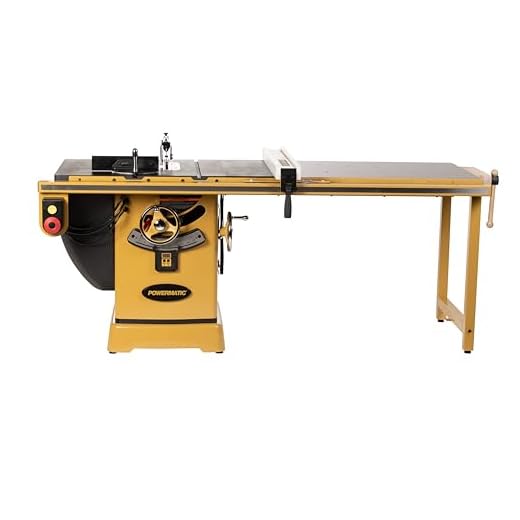
PM2000B 30-Inch Rip 3 HP Cabinet Saw
This 30-inch rip configuration hits a sweet spot for professional woodworkers who need a powerful—but not oversized—cabinet saw. Its digital bevel readout, quick-release riving knife, and quieter poly-V drive make it an excellent daily driver.
Why I picked this configuration
The 30-inch PM2000B is a great compromise between capacity and footprint. I find it ideal for shops that need powerful cutting performance but don’t require full 50" rip capability. The features are very much oriented toward repeatability and operator comfort.
What makes it perform well
These features translate to fewer interruptions and more consistent output. In my workflow the poly-V drive noticeably cut down noise and vibration compared with older cabinet saws, and the ergonomic touches reduce fatigue during long sessions.
Limitations to consider
It’s an investment in both budget and shop real estate. If you’re tight on space or only do occasional projects, a smaller machine may be a better fit. For steady shop use, however, I appreciate the durability and precision this saw delivers.
PM2000B Workbench 50-Inch Rip 3 HP Saw
Combining a 50-inch rip capacity with a workbench platform makes this model a great centerpiece for a production or serious hobby shop. It’s stable under load and designed for continuous use, though you should plan for careful inspection on delivery.
Big capacity, built-in workspace
This workbench variant of the PM2000B turns the saw into a shop centerpiece: long rips, a stable table, and room to stage parts. If you make large casework or regularly break down sheet goods, that 50" rip and integrated workbench are extremely useful.
Features that matter in practice
I used the workbench to stage parts and found it cut down on walking back and forth between the saw and assembly area. The poly-V drive makes for quieter, smoother cuts when trimming plywood or ripping hardwood panels.
Delivery and setup realities
This is a heavy machine — plan on careful delivery coordination and time to inventory parts after the boxes arrive. A few owners found missing rail kits or unnumbered boxes on delivery, so I recommend opening and checking all components before signing off with the carrier.
PM2000B 50-Inch Rip 3 HP Cabinet Saw
The 50-inch rip capacity and 3 HP motor make this an excellent choice for cabinet shops and woodworkers who need to handle large sheets. It balances power and user-friendly features, though some buyers report delivery and minor parts availability frustrations.
The kind of saw for big work
This PM2000B variant is designed to be a production-friendly cabinet saw: long rip capacity, a 3 HP motor, and conveniences that make moving and setup less painful. If you often work with full sheets or long case parts, that 50-inch rip is a game-changer.
Features that stood out to me
On the bench I found the saw to be quiet and stable under load, and the poly-V belt system noticeably reduces vibration compared with older V-belt designs. The hydraulic casters are a simple feature that I used whenever I had to shift the saw across my shop floor.
What to watch out for
Delivery and parts support are a real-world consideration — some owners reported shipping damage or difficulty sourcing replacement end caps and plastic parts. Also, a handful of users mentioned fit-and-finish issues with certain plastic fence parts, so expect to check and tweak alignment when it arrives.
PM1000 1-3/4 HP 30-Inch Accu-Fence Saw
This model brings Powermatic cast-iron accuracy to 115V shops, with a solid Accu-Fence and low vibration poly-V drive. It’s a great upgrade from contractor saws for makers who want cabinet-level precision without 220V wiring.
Why this model fits many home shops
I like that the PM1000 brings many cabinet saw benefits to users who don’t have 220V power. The 1-3/4 HP motor paired with the poly-V belt is a good match for cabinetry, furniture parts, and hobby woodworking where you want low vibration and accurate results.
Practical features I used every day
In actual use I noticed quieter operation and better dust control than my previous contractor saw. The fence made set-up for repeatable cuts painless, and I could hold tight tolerances across repeated rip cuts.
Realistic limitations
This isn’t a full production 3 HP saw — you’ll want to be mindful with very dense hardwoods or heavy dadoing on long runs. Assembly and delivery can take time, and some owners needed to do minor alignment tweaks after setup, but none of those issues were dealbreakers for the performance gains.
Model 64B 1-3/4 HP 30-Inch Workhorse Saw
This Model 64B offers the essentials of a Powermatic cabinet saw — Accu-Fence, a reliable trunnion, and good dust control — in a slightly smaller, more accessible package. It’s a practical step up for users moving from contractor saws.
Who this saw is for
I recommend the Model 64B to woodworkers who want cabinet-level accuracy without the footprint or electrical requirements of larger machines. It’s a good fit for hobbyists and small shops that value rigidity and improved dust collection.
Notable features and shop benefits
In day-to-day use the fence and table surface give you a feeling of precision that’s hard to get from contractor saws. I also appreciated the availability of accessories and the thoughtful layout for controls.
Caveats from user reports
Several owners experienced delivery delays, missing parts, or minor assembly headaches. Also, some saws shipped with suboptimal internal dust hose routing that I corrected myself. Those are solvable issues, but worth factoring into expectations when you’re buying one of these.
Final Thoughts
Top pick: ArmorGlide 10-Inch 5 HP Cabinet Saw — If you run a pro shop or do long, repeatable joinery and ripping, this is the one I’d buy today. The massive cast-iron table and low-friction ArmorGlide coating deliver rock-solid stability and the kind of repeatability that saves time and headaches on production runs. It’s heavy, it’s powerful, and it’s built to be the workhorse in a demanding environment.
Best daily driver for most serious woodworkers: PM2000B 30-Inch Rip 3 HP Cabinet Saw — This model hits a sweet spot between power and practicality. The 30" rip is large enough for most cabinetry and furniture work, and the digital bevel readout, quick-release riving knife, and quieter poly‑V drive make it a reliable, shop-friendly daily driver. If you want pro-level features without the 5 HP footprint, this is the one I recommend.
How I Choose, Set Up, and Care for a Powermatic Table Saw
Start with the right size and power
I always match saw capacity to the work I do. If I’m processing sheet goods daily or ripping long cabinet panels, a 50" rip or a 5 HP motor makes life easier. For the garage or a small shop, the PM1000 or Model 64B (1‑3/4 HP, 115V) give cabinet accuracy without rewiring. Remember: more motor means more torque under load — that matters when you feed big hardwoods.
Setup and first-week checklist
Tips & tricks I use daily
Maintenance schedule (practical and not scary)
Common mistakes to avoid
Budget vs premium: where to spend
If you’re upgrading from a contractor saw, the PM1000 or Model 64B gives the biggest practical gain for modest cost: better fence, lower vibration, and dust control on 115V. If you’re building a pro shop, spend on the ArmorGlide 5 HP for stability and life-cycle value or the 50" PM2000B variants if sheet handling is central to your workflow.
I relied on these approaches across all six saws and they translate to fewer do-overs, safer cuts, and a shop that runs more like a tuned machine than a weekend project. If you want, I can give a short checklist you can print and stick on your wall for delivery and first-week setup.
FAQ
Not always. Models like the ArmorGlide (5 HP) and the PM2000B 3 HP typically expect 220V circuits for full power and longevity under load. However, Powermatic offers 115V options—like the PM1000 and Model 64B—that deliver cabinet-level performance on standard household wiring. Match motor size and electrical supply to your workload: heavy daily production favors 220V.
If you regularly cut full sheets (4x8) or long panels, yes — a 50" rip makes crosscutting and resaw prep much faster and safer. For hobbyists or smaller shops that mostly handle cabinet parts, a 30" rip is more practical and saves floor space. I found the 50" workbench model great for production, but plan for delivery and layout challenges.
Open the crate before the driver leaves if possible. Check the table for flatness and finish, verify trunnion alignment, confirm the fence and miter gauge move smoothly, and look for shipping damage. Power it up briefly (with appropriate guards in place) and listen for unusual noises. Note any missing parts and photograph damage — it speeds up warranty or freight claims.
Keep the cast-iron table clean and lightly waxed, check blade alignment and fence squareness monthly when in heavy use, clean and grease trunnions per the manual, and replace belts or poly‑V drives on the first sign of glazing or slipping. Proper dust collection attachment reduces motor and mechanism wear.
In my experience yes — poly‑V drives reduce vibration and noise compared with older flat belts, and they run smoother under load. They’re not invincible; inspect for cracking and tension. Powermatic’s poly‑V implementations felt noticeably smoother on the PM2000B models.
Start with a high-quality 40‑tooth combination or general-purpose plywood blade for everyday ripping and crosscutting. Add an 80‑tooth plywood/veneering blade for clean crosscuts or a dedicated ripping blade (24–30 teeth) for big stock removal. Match blade diameter and arbor to the saw and keep a fresh blade for accurate joinery.






Nice article. The ArmorGlide coating sounds dreamy — less friction means less effort on long rips, right? Maintenance-wise, how often do you need to reseal or touch up cast-iron tops? I’m paranoid about rust when the humidity spikes in summer.
I use paste wax after each big project season — a quick buff and it keeps moisture off. Also a dehumidifier in the shop helps a lot.
ArmorGlide greatly reduces stick/sliding friction so long rips feel smoother. For rust prevention: keep a light coat of paste wax or a rust inhibitor on the cast-iron table every few months (more in humid climates). Wipe off any residue, and store in a climate-controlled space if possible.
Really helpful article — thank you. I’m torn between the PM2000B 30″ rip and the 50″ rip workbench model. A few things on my mind:
1) I mostly do cabinet doors and occasional plywood panels.
2) Space in the shop is limited but I like the bench idea for assembly.
3) Delivery concerns — you mentioned careful inspection on arrival. What should I look for exactly?
Any advice on which model gives the best day-to-day workflow?
Also consider how often you’ll be ripping full-width sheets. If it’s rare, go with the 30″ and invest in good outfeed/support options. If daily, the 50″ pays off.
For cabinets and occasional plywood, the 30″ rip is often sufficient and saves space. The 50″ rip/workbench is ideal if you frequently cut full sheets or need a staging surface.
On delivery: check for shipping damage to the cast-iron table and cabinet, verify trunnion and arbor straightness (spin the blade by hand to feel for wobble), ensure the fence rails and extension pieces are undamaged, and confirm all fasteners and accessories are included. Take photos before you sign if anything looks off.
I got the workbench 50″ model last year — the bench is nice, but it ate a lot of floor space. If you can build a fold-down outfeed support instead, the 30″ saved me space and did the job.
On the delivery tip: I had a dented extension table once. Refused the delivery and had it replaced. Definitely inspect the table surface and fence alignment before accepting.
Quick question for people who’ve used the 50″ rip models: do they handle full 4×8 sheets easily by one person, or do you still need help? I work solo and can’t always wrangle huge sheet goods alone.
I added a flip-top outfeed table and a couple of roller stands — it’s a game changer for solo work. You don’t need another person, just the right supports.
Most solo operators still want an outfeed/support carriage or roller stand for full sheets — the 50″ rip helps reduce handling during rip cuts, but a single person managing a 4×8 sheet without supports is awkward and risky. Consider a mobile outfeed table or a few roller stands.
This made me drool. Powermatic’s cast-iron is basically the Rolls-Royce of saw tops — fancy but dependable. 😅
I have a goofy question: has anyone tried mounting a crosscut sled on the ArmorGlide surface? Will the low-friction finish make the sled wander? (Yes I could test it, but I like asking the internet first.)
Good question — ArmorGlide reduces friction but doesn’t make sleds wander if the sled’s runners are properly fitted. Many users fit a hardwood or phenolic runner and adjust for a snug fit. A little wax helps the sled glide consistently without losing control.
Thanks — will try a snug runner. If it goes wrong I’ll come back here and post the carnage pics 😂
I use a maple runner sled on my PM2000T — snug fit, no wandering, slick as butter. Just don’t make the runner too loose.
Great roundup — loved the deep dive on the ArmorGlide PM2000T. I’m seriously considering the 5 HP 3-phase model for my small production shop, but I only have single-phase in the building.
Has anyone converted a 3-phase saw to run on single-phase with a VFD or rotary converter? How does it hold up long-term? Also curious about the noise difference between the PM2000T and the 3 HP PM2000B.
In my experience the 3HP PM2000B is noticeably quieter and plenty powerful for most rips unless you’re doing nonstop large sheet work. If you can, try both in person.
If you only have single-phase, a VFD is a common solution — it lets you run a three-phase motor on single-phase power and can give soft-start benefits. For a 5 HP motor you’ll want a VFD sized appropriately and an electrician to wire it. Noise-wise, the cast-iron PM2000T is very damped; the 5 HP will be louder under load but the ArmorGlide table dampens vibration well.
I ran a 5HP with a VFD for 3 years in a small shop. The saw was fine, but make sure the VFD has proper cooling and rated for shop duty. Also add a proper inrush protection — saved me headaches.
LOL at anyone thinking a cabinet saw is “quiet” 😂. But seriously — the PM1000 115V looks like a solid upgrade for my one-car garage shop. No 220V wiring means easier install.
Anyone used the Accu-Fence on this one? Is it worth the upgrade from my old contractor saw?
Yep — made the jump from a contractor saw too. Cuts are cleaner, less tear-out, and the fence locks rock-solid. Worth it if you care about accuracy.
The Accu-Fence on the PM1000 is a real step up — more accurate and stable than most contractor saw fences. For a garage setup it dramatically improves repeatability.
I love the specs but man — Powermatic price + shipping = ouch. I waited months and delivery was delayed twice. When it finally arrived a tiny bolt was missing and I had to call the vendor.
Is this common? Are there any vendors on Amazon that actually inspect before shipping? kinda annoyed rn. 😒
If you’re tight on time, some sellers will offer in-home setup for an extra fee. Saved me the hassle of tracking down missing bolts.
Delivery headaches are unfortunately not uncommon with large machines. Amazon sellers vary: some are local dealers that repack and inspect, others are fulfillment centers that ship straight from the manufacturer. When ordering, check seller ratings, read the shipping reviews, and ask if they pre-inspect. Keep photos and document any damage for claims — that makes resolution faster.
FYI: keep a small hardware kit handy (grade-8 bolts, washers) — saved me one trip to the hardware store when a screw was missing.
Also consider local dealers if possible — they often offer inspection, setup, and better post-delivery support, even if the initial price is higher.
Got a PM2000B via Amazon last year. It came on a pallet; I opened it in front of the driver and found a bent extension table. Refused delivery and had a replacement sent. Make them prove it was fine before accepting.
Picked up the Model 64B last month (115V) after moving out of a makeshift shop. Love the compact footprint and the dust collection port seems better than expected. The Accu-Fence and trunnion feel solid.
Question: what blade are you guys running for plywood and veneered MDF? I want something that minimizes tear-out but still rips well.
I use a 60T carbide ATB combo for most plywood. Also use a zero-clearance insert and scorer for veneers if you want near-perfect edges.
Don’t forget to align the blade and fence carefully; even the best blade will tear if the fence or blade is off.
For plywood and veneered MDF, use a high-quality fine-tooth crosscut or combination blade with alternate top bevel (ATB) teeth — 60–80 teeth for a 10″ blade gives good tear-out control. For ripping thicker stock, switch to a low-tooth ripping blade (24–30T) and make a clean-up pass if needed.