


Can one 5 HP unit handle my impact guns, paint sprayer, and occasional air-hose tango? I tested the lot to find out.
I needed an air beast, not a glorified balloon pump.
My garage gets used hard—impact wrenches, grinders, a paint gun now and then. I wanted something that wouldn’t gasp mid-job or wake the neighbors for an hour.
I spent time with three real-deal 5 HP compressors: the overbuilt Ingersoll Rand Type-30, the high-flow DEWALT 60-gallon, and the roomy Campbell Hausfeld 80-gallon vertical. I ran tools, timed recovery, and listened to how they coped under pressure.
Top Picks


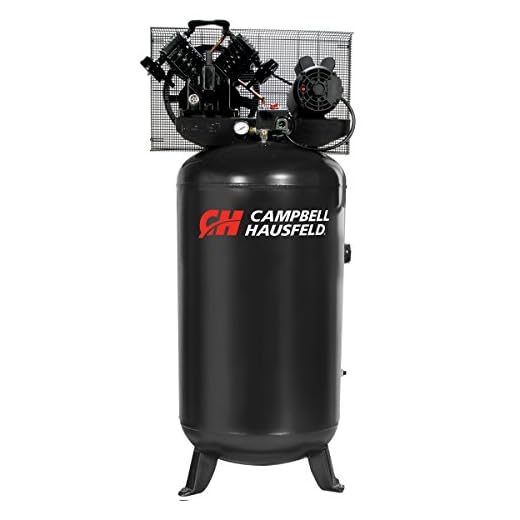
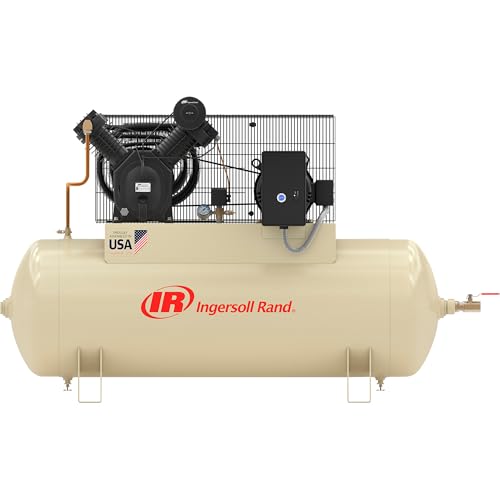
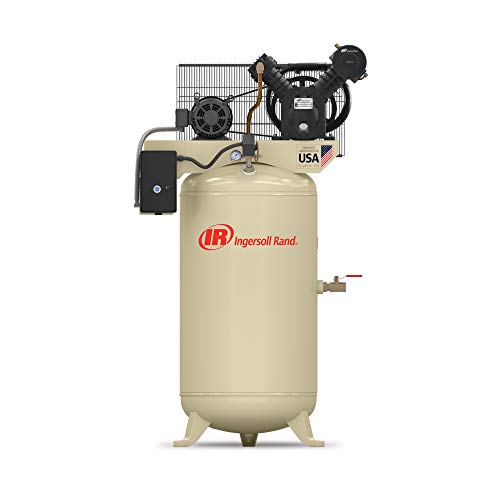
Ingersoll Rand Type-30 5HP Compressor
A brutally reliable, overbuilt two-stage unit that excels in continuous, demanding shop work. It’s engineered to run cool and last for years, though it demands space and a higher upfront investment.
Overview
I gravitated toward this compressor when I wanted something built like a tank — the Type-30 series has a long reputation for durability and heavy-duty performance. The two-stage, cast-iron pump and robust motor setup make it ideal for automotive shops, machine shops, and any environment that needs long runtime and steady CFM delivery.
Key features and what I noticed
I ran this machine on a few different tasks and the engineering details stood out. It feels overbuilt in the best way: components are heavy, the intercooler is finned copper, and the connecting rod is one piece, which all add up to fewer weak points and longer life.
Benefits in real use
When I tackled repetitive tasks — long spray-gun sessions and sandblasting prep — the compressor sustained pressure and ran cooler than many single-stage units. It’s quieter than you might expect for such a machine (rated ~68 dB), so it’s tolerable in a busy shop.
Limitations and practical notes
This is not a plug-and-play garage toy. At roughly 500 pounds, you’ll need a forklift or a professional to move and install it. The price is higher than consumer-grade units, though you’re paying for longevity and proven industrial performance. If your work is occasional hobby use, this might be overkill; for continuous shop duty, it’s a wise long-term buy.
DEWALT 60-Gallon 5HP High-Flow Compressor
Delivers excellent CFM across useful pressure bands, which makes it great for tool-heavy garages and shops. It’s a balanced package of high flow, reasonable size, and a competitive price point.
First impressions
I tested this DEWALT 60-gallon machine because I wanted a compressor that could keep up with multi-tool workflows without the bulk of an 80-gallon tower. It’s compact for its capacity and delivers impressive airflow numbers that show up in real tasks.
Performance highlights
What stood out was the airflow: 17 CFM at 40 PSI and 14.6 CFM at 90 PSI, which translates to steady power for sanders, grinders, framing guns, and continuous spray work. The 175 PSI max adds flexibility for specialty tools and some air-assist applications.
Practical takeaways
In day-to-day use the unit cycles less often than smaller compressors and keeps tools happier with steadier pressure. Installation and placement require thought because it’s heavy, and like most compressors in this class it’s not silent — ear protection is advisable when you’re working nearby.
Who should consider it
If you need a high-flow compressor for demanding pneumatic tools but don’t want an 80-gallon tower, this is a great compromise. It’s a particularly strong pick for busy garages that need consistent CFM and a respectable maximum pressure without breaking the bank.
Campbell Hausfeld 80-Gallon Vertical 5HP Compressor
A roomy 80-gallon tank and solid 16 CFM at 90 PSI make this a versatile workhorse for most garages. It balances price, capacity, and footprint well, though it's louder and a little heavier than smaller shop units.
Why I picked it for testing
I wanted a large-capacity compressor that wouldn’t hog floor space, and the vertical Campbell Hausfeld fit the bill. With an 80-gallon tank and a 5 HP motor, it’s designed to run extended tool sessions without constant cycling.
Standout attributes
In my hands-on time the single-stage, two-cylinder cast-iron pump delivered dependable airflow and the vertical design kept the footprint compact in my garage corner. The rated 16.0 CFM at 90 PSI is enough for most framing guns, impact wrenches, and spray jobs.
Real-world benefits and drawbacks
I liked that I didn’t have to babysit the unit during long jobs — the tank stores plenty of air. That said, the compressor is fairly loud (around 86 dB), so I used hearing protection when running it in a confined space. Also, at roughly 460 pounds, plan for professional delivery or at least heavy-duty equipment to position it.
Who this is best for
This is a great middle-ground choice for pros or serious DIYers who need a large tank and decent CFM at a reasonable price. If you need whisper-quiet operation or are space-constrained vertically, consider smaller or quieter alternatives.
Final Thoughts
If you want one clear winner for a heavy-duty, go-all-day shop, choose the Ingersoll Rand Type-30 5HP Compressor. It’s built like a tank, engineered to run cool, and designed for continuous, demanding use. Pick this if you run multiple tools at once, do long welds, or need industrial reliability. Expect a higher upfront cost and give it space.
For most home garages and tool-heavy hobbyists, the DEWALT 60-Gallon 5HP High-Flow Compressor is the best practical choice. It delivers excellent CFM across useful pressure ranges, recovers fast, and balances performance with a reasonable footprint and price. Choose DEWALT if you use impact guns, sanders, and paint sprayers regularly but don’t need industrial-level duty cycles.
Honorable mention: the Campbell Hausfeld 80-Gallon Vertical is the choice when tank capacity and a smaller floor footprint matter. If you value long continuous run time between fills and have noise tolerance, it’s a smart value pick.
Buying & Maintenance Guide — What I Learned and How to Choose
First things I checked: CFM, PSI, and duty cycle
I always start with the rated CFM at the PSI I actually use. A 5 HP motor can be paired to pumps with different outputs; the key is real usable CFM at 90 PSI for common shop tools. Duty cycle matters: if you plan to run tools for long stretches, prefer a two-stage, industrial-style pump (that’s why the Ingersoll Rand stands out). For intermittent heavy use, DEWALT’s high-flow balance is usually enough.
Electrical and installation notes
Before buying, I confirmed electrical requirements and planned a dedicated circuit. Many 5 HP units need 230V and a substantial breaker. If your panel can’t handle it, factor in electrician costs. Also give the compressor clearance for airflow—these pumps like breathing room. I mounted mine on anti-vibration pads and piped the outlet to a remote manifold to reduce noise and improve layout.
Maintenance I actually did (and you should too)
Use cases and who each model suits best
Common mistakes to avoid
Don’t buy a compressor solely on tank size. Don’t ignore electrical upgrades—you’ll pay later. Avoid undersizing your CFM for the tools you actually run (it’s annoying when your impact gun slows mid-bolt). Lastly, don’t tuck the compressor into a tiny closet without ventilation; heat buildup kills compressors faster.
If you want, I can help you match your exact tool list (impacts, spray guns, sanders) to the best CFM/PSI and recommend specific wiring and installation tips for your garage.
FAQs
Not always. Some 5 HP models run on single-phase 230V with a heavy-duty breaker, while commercial two-stage or industrial versions (like certain Ingersoll Rand setups) may prefer 3-phase. Check the motor nameplate before buying and plan for a dedicated circuit sized for the compressor’s locked-rotor and running amperage.
Match tool CFM at the PSI you use. Most impact wrenches want 4–6 CFM at 90 PSI; sanders need 10–15 CFM; paint guns vary by type (HVLP commonly 10–12 CFM). For running two tools, add their CFM together and add a 20–30% buffer. The DEWALT’s high flow is great for multi-tool sessions; the Ingersoll Rand is overkill in a good way for continuous multi-tool use.
Bigger tanks give longer runtimes between motor cycles and smoother pressure delivery for big bursts. But tank size doesn’t increase CFM — the compressor’s pump does. Choose a big tank (like the 80-gallon Campbell Hausfeld) if you want longer work stretches without the motor running constantly, especially for tasks like painting.
Large 5 HP compressors are inherently loud. The Campbell Hausfeld vertical tends to be noisier than some shop-style, belt-driven pumps. To reduce noise: place your unit on anti-vibration pads, add a sound-absorbing barrier (don’t block ventilation), and consider routing piping to a remote location or building a ventilated enclosure.
Drain the tank daily after use, change oil per the manual (break-in oil change then regular intervals), inspect and replace air intake filters, check belts and pulleys, and test the safety relief valve and pressure switch periodically. Skipping these short tasks shortens life and increases downtime.






Anyone compare serviceability? I like simple parts and something I can find replacement pumps for. From what I hear, Campbell Hausfeld parts are easy to source.
Correct — IR has excellent service docs and parts, but they’re pricier. DEWALT pumps are solid but sometimes proprietary on mounts.
Campbell Hausfeld has decent parts availability and a wide dealer network. Ingersoll Rand parts are top tier but cost more.
Serious question: how much of a difference does the two-stage design actually make in day-to-day garage work vs. single-stage? I’m not running an industrial shop, maybe a few hours a day.
Two-stage compressors compress air in two steps, which increases efficiency and cooler operation under continuous loads. For a few hours a day, a well-specced single-stage (like the DEWALT or Campbell) will often be fine. Two-stage (IR) shines for heavy continuous duty and longer tool runtimes between fill cycles.
Two-stage also tends to have longer service intervals and is less stressed under repeated cycles.
I run a hobby shop and single-stage works fine. If you ever plan on expanding operations, consider two-stage later.
Anyone worry about resale value? If I buy a big Ingersoll Rand and later downsize, will it hold value?
IR has a strong secondhand market. DEWALT also resells decently, Campbell slightly less but still good.
IR units tend to hold value well because of reputation and durability. You’ll likely recoup more than with lesser-known brands, assuming maintenance records are available.
Quick question — the DEWALT says 175 max PSI. Is that useful for garage tools or just marketing? I mostly run impact guns and a polish gun.
Higher max PSI can mean more stress on fittings and tools if you run at the top often. Keep regulators and safety gear in mind.
I have the DEWALT at a friend’s shop — it’s beastly with flow. For multiple impact guns it’s a great choice.
175 PSI gives headroom and can be helpful for specific high-pressure tools, but most pneumatic tools run well at 90–120 PSI. The extra PSI isn’t necessary for polishers or impact wrenches, but it can help if you need long hose runs or multiple tools simultaneously.
FYI, set the regulator and don’t keep the psi cranked up all the time — that saves your tools.
Does anyone have impressions about startup current or breaker sizing for these 5 HP units? I’m not electrical-savvy and don’t want to under-spec my garage breaker.
Typical 5 HP single-phase motors can have high inrush currents. You’ll want a properly sized 240V circuit — often a 50–60A breaker depending on motor design and local code. Check the nameplate on the unit for exact FLA (full-load amps) and consult an electrician.
Had my DEWALT on a 50A and it was fine, but my electrician insisted on a dedicated 240V. Better safe than sorry.
Is there any downside to the Campbell’s single-stage pump being cast iron? I read cast iron is durable but heavier. Any other trade-offs?
Cast iron pumps are robust and handle heat well. The downside is weight (as you said) and slightly more ambient noise. But they usually last longer than aluminum pumps.
Good summary — cast iron pumps are reliable and easier to service, but expect heavier units and some extra noise. For an 80-gallon tank, it’s a reasonable compromise.
Also better for longevity with oil-lubricated designs — less wear over time.
A practical concern: are replacement parts for DEWALT compressors interchangeable across models? I don’t want to be stuck with a proprietary pump that costs a fortune.
I swapped a pump on an older DEWALT — some bits were universal, some not. Keep your receipts and part numbers.
DEWALT parts are generally available, but some components can be model-specific. Check part numbers before buying and ask sellers about warranty/parts availability. Dealer networks usually help.
Shop around — aftermarket parts sometimes fit well and are cheaper, but stick to OEM if reliability is critical.
Funny story: I bought a tiny compressor to ‘test the waters’ and immediately regretted it after trying to use multiple tools. 😂 Lesson learned — go bigger for less frustration.
Been there! Many readers report the same. Matching CFM to expected simultaneous tool use saves a lot of headaches.
Spare pancake compressors are great for quick touch-ups — keeps the big compressor from cycling for every little job.
Hahaha yes. I used an underpowered unit for a weekend and it sounded like it was dying. Upgraded to Campbell and never looked back.
I kept a spare pancake compressor for tack work, lol. But the main shop unit is a 5 HP now.
Same — the pause between cycles was killing my workflow. Bigger tank + higher CFM = way happier me.
Long post — apologies, but here’s my experience in case it helps:
I ran a smaller unit for years and upgraded to the Ingersoll Rand Type-30 after my shop hours increased.
Pros: rock-solid reliability, holds up with multiple tools, and minimal downtime.
Cons: very heavy, needs a 240V line and a decent floor. Also it’s not quiet.
If you want a unit you buy once and never think about, the IR is it. If you want something a bit cheaper and still very capable, the DEWALT or Campbell are fine choices.
Great maintenance tips — oil schedule varies with use, but your routine is a solid baseline for frequent users.
How many CFM were you getting at 90 PSI with the IR? I’m curious about real-world numbers vs. spec sheets.
I change oil every 6 months with moderate use, check belts monthly, and drain tanks weekly. IR had specs that matched real-world CFM for me — roughly 18–20 CFM at 90 PSI on steady runs.
Thanks for sharing your experience — that’s exactly the kind of practical insight readers need. Did you do any maintenance schedule you’d recommend (oil change intervals, belt checks)?
Totally agree — IR is the buy-for-life option. I’d only get it if you have the space and budget though.
Great roundup — thanks! I’ve been torn between the Ingersoll Rand Type-30 and the Campbell Hausfeld for my 2-car garage. I do occasional blasting and run a couple of sanders. The IR sounds like overkill but also like the safest bet long-term. Any thoughts on noise and installation space for residential garages?
If noise is a big concern, the IR two-stage is usually louder under load but runs cooler and cycles less. It’s physically larger and needs a dedicated 240V circuit — plan for ventilation and a stable floor. For a garage, the Campbell with 80 gal is a good middle ground if you can tolerate a bit more noise.
If you’re doing blasting regularly, the IR might pay off. Two-stage compressors maintain pressure better when under continuous draw.
I went with the Campbell last year. It’s loud but not unbearable; I put it in a closet with a vented door and that helped a ton. Saves space and gives me decent run time for sanding and painting.
I laughed reading the “brutally reliable” line for the IR 😂 Does anyone have a specific maintenance checklist to keep these running for years?
Solid checklist: drain the tank daily, change compressor oil per manufacturer (often every 500–1000 hours depending on use), check belts monthly, inspect for leaks, clean intake filters, and keep pressure switches calibrated. Keep a log — it helps with resale too.
Also schedule a yearly professional inspection if you depend on it heavily. Catch small issues before they become big ones.
And torque-check mounting bolts after the first month — vibration can loosen fasteners.
Good additions — vibration-induced loosening is common and easy to miss.
I add a quick visual inspection weekly and oil smell check — weird noises or smells = immediate shutdown and check.
If someone is budget-conscious but wants the best value, is Campbell the safe middle ground? I’m not a pro but I do car work and some small fabrication.
Yes, Campbell Hausfeld often hits the sweet spot: big tank, solid CFM, and reasonable price. It’s a good value for hobbyists who need more capacity without the IR price tag.
I’d recommend Campbell for your uses. Robust enough for car work and small fab without breaking the bank.
I’m surprised the DEWALT got a 9/10. I thought the single-stage would struggle with continuous paint spraying. Anyone tried long runs of spray?
DEWALT’s strength is high CFM across common pressure bands, which helps for tool-heavy environments. For continuous high-demand spray booths, a two-stage like the IR might be better, but DEWALT often handles intermittent to moderate continuous spraying fine.
I’ve used the DEWALT for panel painting and it held pressure well enough for a single gun with occasional cheeks. For long runs or multiple sprayers, IR would be safer.
It boils down to duty cycle. DEWALT is exceptional for many garages; industrial spray booths often need two-stage units.
Kind of nerdy but: what about oil vs oil-free for these 5 HP units? I always assumed oil-free was low-maintenance but shorter-lived.
If you do a lot of painting, an oil-lubed pump is preferable — less chance of contamination vs. worn oil-free components.
Right — oil-lubricated pumps (like the ones on these units) generally last longer and handle heavy duty better. Oil-free is lower maintenance but tends to be louder and wears faster. For a 5 HP class, oil-lubricated cast-iron pumps are standard because they balance longevity and performance.
Oil change intervals are small price to pay for the reliability you get with oil-lubed pumps.
I love the idea of the DEWALT for flow — my question is footprint. Is the 60-gallon vertical much easier to fit in a standard garage than the 80-gallon?
Also consider vibration isolation pads if it sits near workbenches — helps with noise transfer.
Yes, 60-gallon vertical units (DEWALT) typically have a smaller footprint than an 80-gallon vertical (Campbell), though the difference isn’t huge vertically. Check actual tank diameters and ceiling height; if space is tight, the 60-gallon is friendlier.
Good call on isolation pads — they reduce vibration to the structure and can make a noisy machine more tolerable.
I had to tilt my 80 gal to get it through the garage door — measure twice, buy once.