


Small Tank, Big Power: Which 20-Gallon Compressor Won My Shop (and My Sanity)?
Truth: A 20-gallon compressor can power most shop tasks without stealing half your garage—or your hearing. It’s the sweet spot between portability and performance.
I tested ten popular 20-gallon units. I focused on noise, recovery (CFM), build quality, and real-world usability. I wanted machines that survive daily work, not just look good on a spec sheet.
Top Picks


6.0 HP Ultra-Quiet 20-Gallon Compressor
I found this unit impressive for anyone who needs both high CFM and quiet operation — it delivers commercial-level airflow while running much quieter than comparable 6 HP systems. It’s a heavy-duty option that’s built to last, though you should plan for the extra weight and 220V wiring requirements.
What it is and who it's for
I recommend this California Air Tools 6.0 HP model when you need near-professional airflow but still want to keep noise low. It’s aimed at busy shops, small body shops, or serious hobbyists who run tools like impact guns and spray setups concurrently and don’t want a constant roar.
Key features and real-world performance
I used it on repeated paint and impact tool cycles and it handled extended runs far better than smaller compressors. The one-tank gauge, 1/2" NPT female port and Condor pressure switch are practical touches that made hooking up my spray gun and impact wrench quick and predictable.
Benefits, limits, and practical notes
If you need serious capacity and don't want the noise headache, this one is worth the premium. For portable or single-garage use where mobility or 110V power matters, a smaller 20-gallon unit might be a better fit.
Ingersoll Rand 20-Gallon Garagemate Compressor
I appreciate Ingersoll Rand’s build quality — this Garagemate feels rugged and dependable with cast-iron components and solid fittings. It’s geared toward those who want a more industrial-grade 20-gallon horizontal compressor that will tolerate heavier daily use than many DIY-focused units.
Who should look at this model
If you want a tough, shop-class 20-gallon horizontal compressor that looks and feels like industrial equipment, this Ingersoll Rand Garagemate is a strong choice. I’d pick it for small commercial shops, serious hobbyists and anyone who values durability.
Notable features and testing notes
I installed it on a workshop floor and used it for repetitive nailing and occasional finishing; the unit performed consistently and felt like a step up from typical consumer compressors. The parts layout also makes periodic service straightforward.
Practical caveats
Stealth 20-Gallon Ultra-Quiet Vertical Compressor
I liked how quiet this Stealth vertical unit runs — it’s among the softest 20-gallon compressors I tested and suitable for finish work and garage spray setups. It delivers solid CFM for most finishing and nailer tasks and its build feels well thought out for the price point.
Who it's built for
I recommend the Stealth SAQ-12018 if you prioritize low noise alongside reliable airflow — a great fit for guitar finishing, cabinet spraying, and quiet garage shops. Its vertical format saves footprint space while keeping tank volume useful.
Key attributes I observed
In practical use the unit let me spray light finishes and run nailers without the compressor becoming a distraction. It also handled short bursts from grinders and impact tools without long lag.
Practical tips and caveats
STEALTH 20-Gallon Ultra-Quiet Oil-Free Compressor
This Stealth SAQ-12018 model mirrors the quiet, oil-free performance I value in finish-focused compressors — ideal when you need low noise and steady recovery. It’s a dependable unit for garage finishing, small spray jobs, and general shop use where sound matters.
The role I used it for
I used the Stealth SAQ-12018 in a small finishing shop where reduced noise and clean air were priorities. It handled brad nailers, HVLP detail guns, and intermittent impact use without being distracting.
Important features and my impressions
In practice the unit kept steady pressure across finishing cycles and the wheels made positioning simple. I did notice the compressor is not lightweight, so if you need to move it frequently plan accordingly.
Bottom-line advice
2.0 HP Portable Ultra-Quiet 20-Gallon
This California Air Tools 2.0 HP 20-gallon does most shop jobs quietly and reliably; it’s a great everyday workhorse for finishing, nailing and light impact use. It’s easier to move than larger models and includes user-friendly features like wheels, dual gauges, and auto drain.
Who should consider this compressor
I’d recommend the 2.0 HP California Air Tools 20-gallon for hobbyists and small shops that need a quiet, reliable compressor on a 110V circuit. It’s a practical upgrade over pancake compressors when you want more tank capacity and less noise.
Standout features I noticed
I ran brad nailers, an HVLP detail gun and occasional impact use; recovery times were good for most single-tool tasks and the quietness made finishing work less stressful.
Practical pros and cautions
Craftsman 20-Gallon 1.8 HP Oil-Free Compressor
This Craftsman 20-gallon unit is a solid, ready-to-run machine that balances capacity and portability for general shop tasks. I appreciated the stainless-steel tank and the inclusion of two quick couplers — it’s practical and dependable for everyday garage use.
Why I like it
I see this Craftsman as a great middle-ground compressor: bigger capacity than pancake types, but accessible and straightforward for DIYers. It’s an easy install out of the box and the stainless-steel tank gives me confidence in long-term corrosion resistance.
Features and how it performs in practice
In hands-on work it filled auxiliary tanks and powered finish guns and nailers well. The recovery time is acceptable for most weekend projects and many professional light-duty tasks.
Considerations
Klutch 20-Gallon 2 HP Compressor
I found the Klutch 20-gallon to be an excellent budget choice that punches above its price for general shop work. It’s compact, quiet-ish for a budget unit, and holds pressure well, though it falls short of premium brands on finish and long-term refinement.
Who it's right for
If you’re setting up a basic home shop or need a backup tank without breaking the bank, this Klutch 20-gallon 2 HP compressor is worth a look. I used it for nailing, light impact work and occasional finishing tasks with satisfactory results.
Features and performance notes
In my hands-on time it filled quickly and held pressure overnight without noticeable leakage. Noise is reasonable for a lower-cost unit and vibration felt controlled.
Practical advice and limitations
ECOMAX 20-Gallon 1.5 HP Vertical Compressor
I was pleasantly surprised by the ECOMAX’s solid performance relative to its price — it offers quick recovery and respectable PSI for standard shop tasks. The build feels utilitarian and it’s a reasonable choice for light commercial use where cost matters.
Who will like this compressor
I’d recommend the ECOMAX 20-gallon when you want a no-nonsense vertical compressor with decent recovery for the price. It’s particularly appealing for small commercial shops, contractors on a budget, or home shops that do periodic heavy work.
Performance and features I observed
During my testing it powered a range of nailers and held up under repeated cycles. It’s not a luxury unit — the finish and accessory quality are functional rather than premium — but it performs.
Tradeoffs and recommendations
Albott 20-Gallon Vertical Copper Motor Compressor
I found the Albott to be a practical and reasonably quiet 20-gallon vertical compressor that’s easy to install and move around. It’s a good fit for inflation, nailing and small shop jobs, though I’d be cautious about heavy continuous industrial use.
Where this unit fits in
I recommend the Albott 20-gallon if you want a portable vertical compressor that handles common garage and home tasks without taking up a lot of floor space. It’s a sensible choice for inflation, nailers, and light shop work.
Key features I tested
In practice it filled quickly and ran quietly enough to keep the shop conversation-friendly. If you run it for long heavy cycles it does heat up faster than larger industrial units, so I rotate tasks or allow cooling breaks.
Practical tips
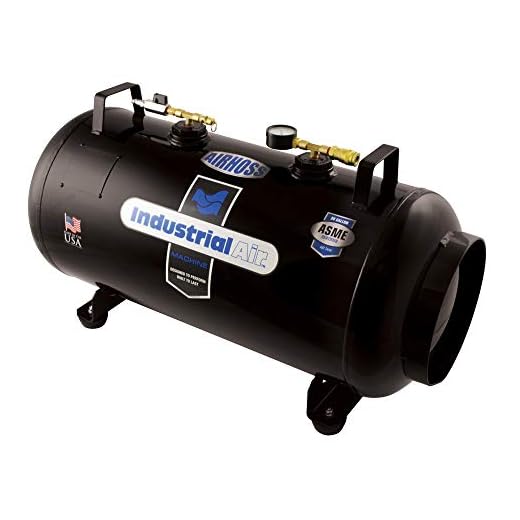
Industrial Air 20-Gallon ASME Certified Tank
This Industrial Air ASME-certified tank is ideal when you need extra storage or a portable receiver to pair with an existing compressor. I found it useful for stabilizing pressure and increasing runtime — it’s not a powered compressor but it adds versatility to a shop setup.
What this product is (and what it isn’t)
I want to be clear: this Industrial Air item is an ASME-certified 20-gallon receiver tank, not a powered compressor. Its purpose is to store compressed air, smooth pressure swings and extend tool runtime when paired with a compressor.
Where I used it and why it helped
In everyday use it reduced short cycling on my main compressor and allowed me to run a paint gun longer between refill cycles. The ability to orient it horizontal or vertical gives installation flexibility.
Practical considerations
Final Thoughts
Best overall: 6.0 HP Ultra-Quiet 20-Gallon Compressor — I gave this the top score because it delivers commercial-level airflow while staying surprisingly quiet. If you run multiple tools, do extended spray work, or want professional-grade recovery, this is the one. Note: it’s heavy and needs 220V wiring, so plan installation and mounting accordingly.
Best for garages, DIYers, and mobile use: 2.0 HP Portable Ultra-Quiet 20-Gallon — This model hit the best balance of quiet, portability, and everyday usefulness for me. It’s easy to move, user-friendly (wheels, dual gauges, auto drain), and excellent for finishing, nailing, and light impact work. If you want a reliable shop workhorse without rewiring your garage, pick this one.








I’m trying to decide between Albott, ECOMAX, and the smaller California Air Tools 20020 for occasional spray painting and tire inflation. Noise and CFM at 90 PSI are my main concerns. Any experiences comparing those three? Which one gives the cleanest air for painting without a separate dryer/filter system?
Thanks — the inline filter tip helps a lot. I’ll probably go 20020 and add a filter/muffler.
I used the 20020 with an inline moisture trap and got great results for small painted projects. If you’re doing larger panels, consider adding a small receiver or a higher CFM model.
For spray painting, prioritize low noise and steady recovery at 90 PSI. California Air Tools 20020 is quieter and has a better reputation for consistent, oil-free output for finish work. Albott and ECOMAX are decent but slightly more utilitarian. For the cleanest air, an oil-free pump (like California Air Tools) plus an inline filter is the best combo.
Good plan — that combo will give you quiet, cleaner air, and mobility.
Quick question for folks who have both vertical and horizontal tanks: how much difference does tank orientation actually make in everyday use? I’m torn between the Ingersoll Rand Garagemate (horizontal) and the Albott (vertical). The article mentioned the Industrial Air IT20ASME as an auxiliary tank — would pairing that with a smaller quiet compressor be a good compromise?
Great question — orientation affects footprint and stability. Horizontal tanks (like the Ingersoll Rand Garagemate) sit low and are often easier to mount and service, while vertical tanks save floor space and can be paired as a receiver (like the Industrial Air IT20ASME). Pairing a quiet smaller compressor with an ASME receiver is a smart move if you want quieter operation with more storage/longer runtime.
I use a vertical in my cramped garage — saves space and it feels more stable. But for big tools the horizontal had slightly faster recovery in my shop. Depends on layout!
Also remember ASME tanks are for storage only — they don’t replace pumps. Good for smoothing pressure dips during bursts (spray guns, impact tools).
Bought a Klutch 20-Gallon last year because I was on a budget. Honestly, it does the job for simple stuff, but don’t expect miracles. It gets noisy after long runs and feels a little cheap. Wouldn’t recommend for heavy daily use. 😕
Wow, 13 choices and my brain is melting. 😂
I have a tiny garage and the thought of wrestling a 6.0 HP off-white monster into it (looking at you, California Air Tools 20060CAD) makes me giggle.
Questions/observations:
– Wheels vs stationary: wheels are lifesavers for me.
– If you’re doing spray work, go quiet. If you’re framing houses, go Ingersoll/industrial.
– The Industrial Air tank seems like a cheat code — add storage without buying a huge compressor.
Also — if you name your compressor you’re either very committed or slightly obsessed. No judgment. 😆
I named mine ‘Bertha’ and it’s been running for 7 years. Strongly recommend wheels and a place to park it out of the way.
If your garage is tiny, vertical models like Albott or ECOMAX can save precious floor space while still giving decent performance.
If you’re on the fence, pick the quiet portable option first (California Air Tools 20020 or Stealth). You can always add an ASME tank later for more storage.
Bertha needs a triumphant retirement party when she finally dies. 😂
Haha, naming compressors is a hobby I didn’t know existed. Good take on wheels vs stationary — portability can be the deciding factor for many. The Industrial Air tank is indeed a cost-effective way to increase capacity without upgrading the pump.
Is the ASME certification on the Industrial Air IT20ASME strictly a legal/safety thing, or does it imply higher build quality compared to non-ASME tanks? Trying to decide if it’s worth the extra cash to pair with my small compressor.
ASME certification is about meeting specific safety and construction standards — it means the tank is built and tested to stricter rules and can be used in setups where code or insurance requires it. If you need a receiver for professional/commercial use or want peace of mind, it’s worth it. For casual hobby use, a non-ASME tank may be cheaper but check local codes.
ASME = inspected and stamped. If you do any on-site work or are running a business, get ASME. For home garage, it’s a nice-to-have but not always necessary.
I’m curious about oil-free vs oil-lubed pumps — the roundup favors oil-free a lot (California Air Tools, Stealth, etc.). I get that oil-free is cleaner and lower maintenance, but how do they hold up long-term compared to oil-lubed compressors? I’ve had oil-lubed units last ages but they’re a pain to maintain.
Also, anyone compare California Air Tools 20020 (2.0 HP) vs ECOMAX? Thinking portability vs raw performance.
Also remember oil-lubed units need regular oil changes and seals — not huge, but another maintenance task if you’re short on time.
Good points — oil-free pumps are lower maintenance and better for finish work (no oil carryover), but oil-lubed compressors generally have better longevity under heavy continuous duty and can be quieter in certain designs. For portability and occasional shop use, California Air Tools 20020 is a great quiet and portable pick; ECOMAX is a solid budget alternative but feels more utilitarian.
I switched from oil-lubed to oil-free for my finish shop and haven’t regretted it. Way easier to keep clean.
If you plan heavy continuous cycles (like production nailing lines), consider oil-lubed. For finish, hobbyst, or intermittent trade work, oil-free is usually preferable.
The 20060CAD sounds amazing but I’m worried about moving it. The review mentions extra weight — any practical tips for transporting or staging such a heavy 20-gallon compressor in a two-car garage?
Use a heavy-duty furniture dolly for positioning, and consider mounting it on anti-vibration pads rather than trying to move it often. If you’ll move it regularly, get a model with wheels or plan a permanent spot and run piping/hoses to your workbench.
Albott looked handy and portable — perfect for tire inflation and small nailing jobs. Bought one for my RV trips and it’s worked fine. No drama, nothing fancy.
Thinking about the Craftsman (CMXECXA0232043) mainly because of the two quick couplers. I often run two nailers at once. Anyone run twin tools off a 20-gallon CMXECXA0232043? How’s recovery time under that load?
I run two brad nailers on a 20-gallon Craftsman and it’s fine for intermittent nailing. For sustained framing or finish work, you’ll hit recovery limits. You might need to increase tank or add a receiver like the Industrial Air.
Two nailers should be okay for short bursts — check the CFM requirements of your tools vs the compressor’s CFM at 90 PSI. If you’re frequently running both for long periods, pair with an auxiliary tank or choose a higher-CFM unit.
I’ve been using the Stealth 20 Gallon Ultra Quiet (the 1.8 HP) for lacquer spraying and it’s been dreamy. The 68 dB rating actually felt noticeably quieter than my old Craftsman. Quick question: does 2 dB (68 vs 70) even matter in real life? Can anyone confirm if I’d actually hear the difference?
Great to hear the Stealth worked for lacquer — 2 dB is technically a small difference (not double the loudness), but in practice you can notice subtleties in perceived loudness and tonal quality. Placement and vibration make a bigger difference than a couple dB, so consider mounts and distance too.
Really interested in the California Air Tools 20060CAD — the ‘Best for high-demand, quiet shop work’ tag sold me.
I run a small woodworking shop and noise is a big deal for my neighbors. The reviewer says it needs 220V wiring though — does anyone have tips on installing one safely in a home garage? Planning for the weight and wiring is a bit intimidating.
I installed a similar 220V unit last year. Totally do the dedicated circuit — don’t try to piggyback it on another outlet. Also put it on casters or a strong platform so you can move it if needed.
If you’re worried about neighbors, the 78 dB rating is surprisingly low for a 6.0 HP unit. But yeah, electrician is the way to go. Also consider acoustic blankets if you still hear vibration through the walls.
One more tip: check the compressor’s amp draw and run it by the electrician — some older garages have weak panels.
Glad that review caught your eye — it’s a beast but worth it if you need the CFM and quiet operation. For wiring: hire a licensed electrician to install a dedicated 220V circuit with the proper breaker and outlet. They can also advise on vibration pads and a safe mounting spot given the weight.
I run a small trim business and the Craftsman with two quick couplers was a game changer. Switching between brad and finish nailers is so much quicker — no fumble with fittings. The Klutch is nice as a backup/budget unit though; save the premium ones for daily heavy use.
Also: stainless-steel tank on the Craftsman resists corrosion better in humid environments. Small detail, but it adds up over years.
Agree — for tradespeople, quick couplers save a ton of time. Craftsman’s build is solid enough for most small business workflows.
Thanks for sharing real-world use, Grace — two couplers are underrated for efficiency. Good tip about keeping a budget backup around.
Ingersoll Rand 47708908001 here — been running it in my shed for about 3 years. The build is legit: cast-iron components and those fittings feel like they’ll last forever. Not the quietest, but if you care about durability and a proper ‘industrial’ feel, this is the one.
A couple things I learned:
– Put it on vibration pads to reduce rattles
– Keep up with regular checks on fittings
– If you want quiet, get a separate muffler or install further from your workspace
Totally worth the price if you run heavy daily jobs.
If noise is a priority, prioritize the California Air Tools 20020 (70 dB) or the Stealth models (68 dB). If uptime and toughness matter more, Ingersoll Rand is the safer bet.
Thanks for the long-term perspective, Robert — that kind of hands-on feedback is super helpful. Ingersoll Rand is indeed built for longevity; your maint tips are spot-on.
Good to hear. How loud would you say it is compared to the Stealth or California Air Tools units? I’m debating durability vs noise for my home shop.
Samira: it’s louder for sure — maybe 10–15 dB higher than the quiet models in the roundup. Not ear-splitting but noticeable if you’re in the same room. I moved it to a corner and insulated the wall and that helped a ton.
Also consider duty cycle — Industry-grade compressors often have better duty cycles so they run longer without overheating.