

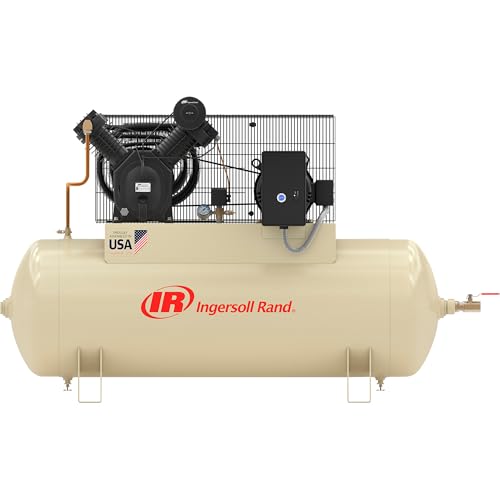
Which compressor will make your shop purr — and which will make it roar?
Compressed air is the unsung HERO of every shop. It quietly powers your grinders, nail guns, paint guns, and production lines. Miss it, and everything stops.
I dug through the usual suspects—Ingersoll Rand giants, vertical workhorses, and budget oil-free units—to find what really holds up day after day. I focused on durability, serviceability, and real-world flow. Short, practical takes. No fluff.
Our Top Picks
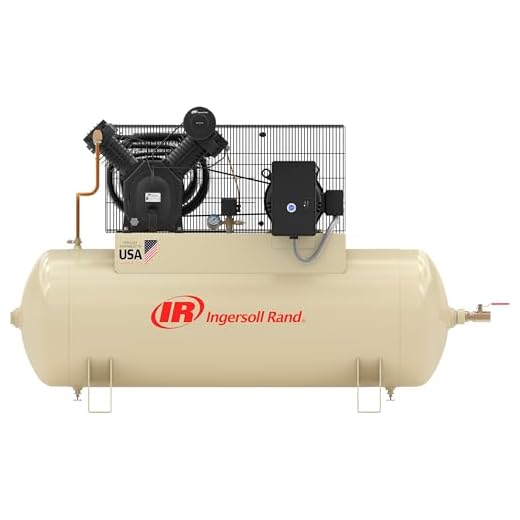
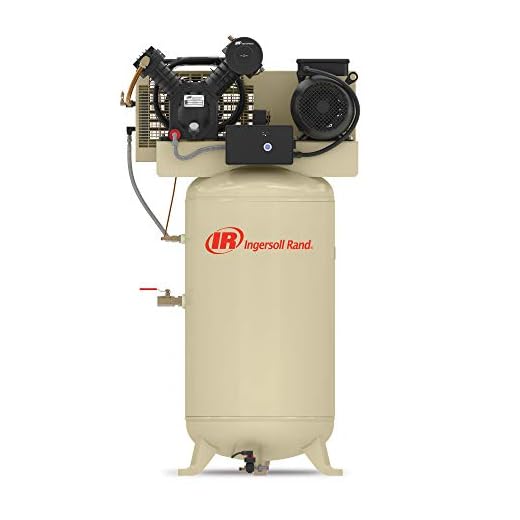
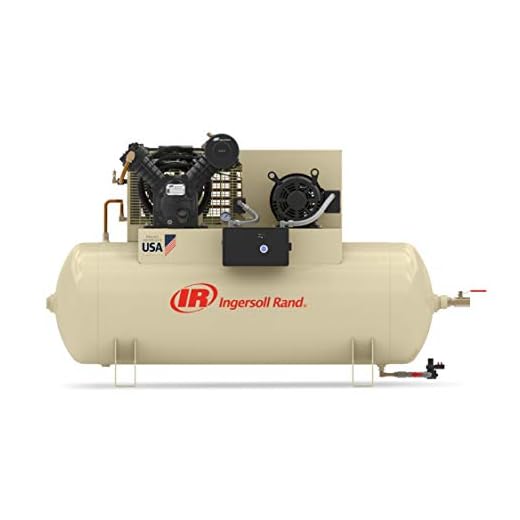



Ingersoll Rand Type-30 15 HP
This 15 HP Type-30 is built for continuous, heavy industrial use and delivers the durability and serviceability you expect from a premium compressor line. It’s an ideal centerpiece for larger shops and production lines requiring sustained airflow.
Overview
I consider the 15 HP Type-30 from Ingersoll Rand to be a top-tier choice for facilities that need reliable, continuous compressed air. Designed with 100% cast iron construction and a large 120-gallon tank, this model is purpose-built for industrial settings, manufacturing lines and fleet maintenance.
Key features and benefits
For shops running multiple large tools or continuous demand, the 15 HP model provides the pressure and airflow without excessive duty cycling. The extended warranty options on the pump give me confidence this is meant to be a long-term asset rather than a stopgap.
Practical considerations
If you run a mid-sized manufacturing operation or a busy repair facility, this is the kind of compressor I’d buy when uptime and longevity are priorities.
Ingersoll Rand Type-30 5 HP
I find this model to be one of the most dependable options for heavy shop duty — it balances durability and serviceability exceptionally well. The fully packaged features make it a practical, ready-to-run choice for most industrial needs.
Overview
I consider this Ingersoll Rand Type-30 to be a go-to when I need long-term, shop‑grade reliability. It’s a two-stage, electric-driven reciprocating compressor built with 100% cast iron components and a long history of field-proven performance. The fully packaged unit includes a low-oil level switch, aftercooler and automatic tank drain which means less setup and fewer accessories to hunt down.
Key features and benefits
I like that it’s designed for heavy shop use — auto body, machine shops and production lines — and that parts and service are widely available. The finned copper intercooler and one-piece connecting rod are small but meaningful design choices that extend pump life and performance.
Practical insights and limitations
In short, I recommend this Type-30 when longevity and proven field performance matter more than minimal upfront cost. It’s an investment that pays back through lower downtime and easier servicing in a busy workshop.
Ingersoll Rand Type-30 10 HP
This 10 HP Type-30 hits a sweet spot between capacity and footprint — powerful enough for multi-tool shops while still serviceable and proven. I appreciate the V-block configuration and splash lubrication for consistent performance.
Overview
I often recommend the 10 HP Type-30 when a shop needs more sustained air than a 5 HP unit but doesn’t want the footprint or cost of a 15 HP machine. It’s a versatile middle ground with the same robust pump architecture that defines the Type-30 family.
Key features and benefits
In practice, the 10 HP Type-30 is a great choice for medium production shops, collision centers, and maintenance facilities. The 35 CFM listing (depending on specific pump model) gives you enough headroom for several tools running together without excessive motor cycling.
Practical considerations
For many facilities I work with, this model becomes the long-term workhorse that minimizes downtime and keeps production steady.
Quincy QT-54 5 HP Vertical
This vertical Quincy is a solid choice for small shops and serious hobbyists who want long service life and steady performance. Users often highlight quiet, smooth operation and strong resale value.
Overview
I view the Quincy QT-54 as a dependable vertical work compressor that performs well in small to medium shop environments. The 5 HP splash-lubricated pump and vertical 60-gallon tank deliver strong recovery and steady pressure in a compact footprint.
Key features and benefits
Owners frequently tell me they’ve had QT-54 units humming for years with minimal problems; that real-world reliability and parts availability are a major advantage. A vertical layout also makes piping and floor planning easier in tight shops.
Practical considerations
For shops that need a compact, long-lived compressor and prefer simplicity over bells-and-whistles, the QT-54 is one of the safer choices I’d recommend.
IR Type-30 5 HP 460V
This variant gives you the trusted Type-30 pump in a 460V three-phase package, which is ideal for facilities with that supply. It delivers the same durability and serviceability I value in other Type-30 units.
Overview
I recommend this 460V Type-30 for shops already wired for three-phase power who want the proven performance of Ingersoll Rand’s Type-30 family. The familiar 100% cast-iron pump and accessory options make it a straightforward fit for established industrial environments.
Key features and benefits
Because it’s part of the Type-30 platform, I find it easy to integrate into existing maintenance plans and service schedules. The ability to source parts and consumables locally is a real operational advantage.
Practical notes
If your facility already uses 460V three-phase equipment, this model is often the exact compressor I’d recommend for its balance of reliability and familiar maintenance practices.
DEWALT 60 Gallon 5 HP Vertical
This DEWALT gives high flow in a vertical, space-saving package and is a practical upgrade for shops needing more CFM without taking a huge footprint. I like its ASME-certified tank and fairly quiet operation for the power level.
Overview
I see the DEWALT 60-gallon vertical as a practical choice when you need higher flow but have limited floor space. The 5 HP motor, paired with a vertical ASME tank, gives strong performance for mid-size shop duties while keeping the footprint compact.
Key features and benefits
Users I’ve spoken with appreciate how quickly the unit recovers and how it handles tasks like sandblasting, spray booths or multiple sanding stations. The quieter operation compared with some competitor models makes it more pleasant to be near the compressor during operation.
Practical advice
If you need high flow in a compact layout with factory safety and warranty support, this DEWALT model is one of the more balanced options I’d choose.
DEWALT 25 Gallon Portable 2 HP
This 25-gallon DEWALT is a solid portable compressor for contractors and mobile services who need reliable air on the go. It mixes mobility, decent CFM and oil-lubed longevity in a familiar, well-built package.
Overview
I recommend the DEWALT 25-gallon vertical when portability and dependable duty are important. The belt-driven, oil-lubed pump offers long-term reliability and quieter operation relative to direct-drive units, and the 2 HP motor delivers enough air for a broad set of jobsite tasks.
Key features and benefits
In my experience, this compressor is a good middle-ground: more capable than small shop compressors but still moveable enough to take to job sites. The oil-lubed pump reduces wear and tends to extend the life of the unit when properly maintained.
Practical points and limits
If you want a portable, durable compressor for contract work and moderate shop tasks, this DEWALT model is a dependable, relatively low-risk option.
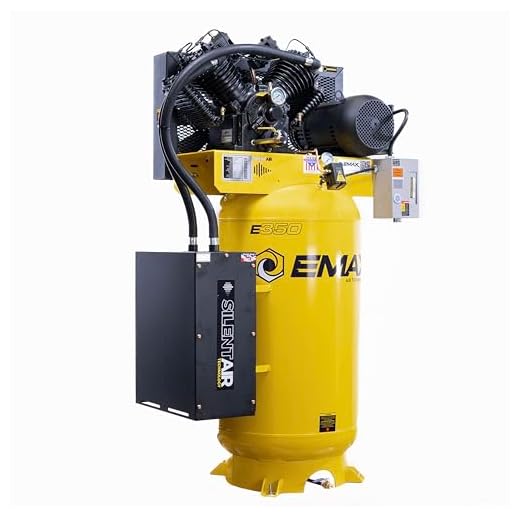
EMAX E350 7.5 HP Industrial
This 7.5 HP EMAX packs strong airflow and claims noise reduction tech that works well in many shop scenarios. It’s a practical pick if you want higher CFM in a single-phase configuration, but brand support and real-world durability are worth checking locally.
Overview
I see the EMAX E350 as a value-oriented way to get higher CFM in a single-phase package. With a 7.5 HP motor and a two-stage pressure-lubricated pump, it’s aimed at industrial applications where consistent airflow matters. The vendor highlights a “whisper quiet” system, which can be attractive if shop noise is a priority.
Key features and benefits
When I’ve examined similar machines, the combination of high CFM and a large tank is helpful for running sanders, grinders and spray operations without frequent motor cycling. That said, check the real-world noise numbers and ask for local references—some listings show conflicting dB ratings.
Practical tips and limitations
If you need serious airflow on a single-phase supply and you’re willing to validate local support, this model can deliver excellent performance for the price.
VEVOR 80 Gallon 6.5 HP Oil-Free
This VEVOR offers strong airflow and an oil-free design at a budget price, which can be attractive for workshops watching capital outlay. However, mixed user reports on noise increase and reliability mean I’d be cautious and plan for warranty follow-up.
Overview
I view the VEVOR 80-gallon oil-free compressor as a budget-focused option that gives a lot of airflow for the money. The 6.5 HP motor and two-stage oil-free pump promise quick recovery and fewer contamination concerns for applications sensitive to oil in the air lines.
Key features and benefits
From what owners share, the unit pumps up quickly and handles multi-tool situations surprisingly well. That oil-free aspect is a real advantage for painting or instrumentation work where oil in the lines is unacceptable.
Practical cautions
If you need strong airflow on a tight budget and can accept some warranty risk (or you have local service capability), this VEVOR can be a cost-effective choice. Otherwise, weigh the value of paying more for proven long-term reliability.
Final Thoughts
I recommend the Ingersoll Rand Type-30 15 HP as my top pick if you run a multi-shift facility or a production line that needs continuous, high-volume airflow. Strengths: industrial-grade durability, easy serviceability, and steady sustained CFM. Ideal use case: large shops, manufacturing cells, or any site that can't tolerate downtime.
For most shops that want a long-term, flexible centerpiece without going to the 15 HP class, I pick the Ingersoll Rand Type-30 10 HP. Strengths: balanced power-to-footprint, proven V-block pump design, and reliable splash lubrication. Ideal use case: mid-to-large shops running multiple tools, CNCs, or air-demanding fixtures where space and serviceability matter.
Quick note: if your facility runs on 460V three-phase, consider the IR Type-30 5 HP 460V or scale up within the Type-30 line to match your electrical supply. For tight footprints or quieter single-shop environments, Quincy QT-54 (5 HP vertical) or the DEWALT 60 Gallon vertical are solid backups—just expect lower sustained capacity than the Type-30 heavyweights.







I’m trying to decide between a single-stage DeWalt vertical and the Quincy 5 HP 60-gallon vertical. My shop needs quiet and reliability more than absolute max CFM. Does Quincy still outshine DeWalt for longevity?
I’ve resold Quincys for decent money — that resale value is real.
Quincy for quiet and resale value. DeWalt if you need more immediate flow and can live with slightly louder operation.
Generally Quincy has the reputation for durability and quiet operation, especially the vertical splash-lube models. DeWalt gives better flow in a compact footprint. If longevity and quiet are priorities, Quincy is a safe bet.
Anyone integrated multiple smaller compressors (like a couple of 5 HP units) instead of one big 15 HP? I’m weighing redundancy vs central power for a shop with variable load.
We run two 5 HP units staged — saved us during a failure and matched loads well. Higher maintenance count but better uptime.
Using multiple smaller compressors can give redundancy and flexibility (staging compressors to match load), but you lose some efficiency versus a single optimally-sized unit. For variable load and uptime needs, multiple smaller units often make sense.
I bought the Ingersoll Rand 5 HP fully packaged Type-30 (2475N5FP) last year and it’s been bulletproof. Quiet for a reciprocating unit, and the packaged setup made installation easy. Only gripe: the starter panel was a little confusing until the electrician sorted it. Highly recommend for shop reliability.
Thanks Jason — did you run into any vibration isolation issues? I’m in a retrofit space with sensitive equipment nearby.
Olivia — a simple neoprene pad under the feet and some flexible connections did the trick for me. No transferred vibration to nearby gear.
Appreciate the firsthand report Jason — good to hear the packaged unit simplified install. We try to highlight starter panel differences in the writeups because they can be a headache.
Funny: I read the whole article thinking about pumps and then realized I need better filtration for paint work. Any recommendations from the list for pairing with dryers/filters? The oil-free VEVOR sounds convenient, but I’m unsure about oil carryover on some Type-30s.
Also consider periodic oil sampling to monitor carryover and contamination.
Good point — oil carryover can be a concern with lubricated reciprocating pumps. For paint work, prefer oil-free or add a proper aftercooler + coalescing filter + refrigerated dryer. If you choose a Type-30, add a high-quality filter/dryer stack.
We use a refrigerated dryer and coalescing filters after our Type-30s for paint booths — it’s been reliable.
Curious about the DEWALT 60 gallon vertical — sounds like a good compromise for tighter floor plans. Anyone compared CFM at 90 psi vs the Quincy 60-gallon vertical? Trying to decide between quieter operation (Quincy) vs space savings (DEWALT).
I had a Quincy vertical and loved the quiet and longevity. Switched to a DEWALT in a smaller shop and got better flow for the footprint — tradeoffs as you noted.
Good question — the DEWALT tends to offer higher flow for its footprint but Quincy is often quieter and has longer-lived pumps. Check the CFM @90 PSI specs for the exact models you’re considering; real-world performance can differ from rating plate numbers.
Love the list, but small nit: the article title says ‘2026-2026’ — did you mean 2025-2026 or just 2026? 😄 Also, for people on job sites, the DEWALT 25 gallon portable looks great. Anyone used it full-time on a crew?
I’ve used the 25 gal on a roofing crew for a season — very reliable, just keep the oil and belts checked. It’s heavy but manageable with two people.
Sharp eye, Sarah — that was a typo, thanks for catching it! We meant 2026. And yes, the DEWALT 25 gal is popular on crews for durability and portability; check weight for lift planning.
Long post — hope it helps someone:
I’m considering the 10 HP Type-30 2545E10-VP for a medium shop. My main concerns are serviceability (we have in-house techs) and floor space. The V-block pump looks promising but any tips for shop-level maintenance would be appreciated. Also — is splash lubrication easy to top up or more involved?
If space is tight, plan access room for service panels. Even serviceable pumps need clearance.
We run a 10 HP Type-30 and keep a spare valve kit on the shelf — saves downtime. Oil checks weekly when it’s heavily used, monthly otherwise.
Nice detailed question. Splash lubrication is one of the simpler systems: top-ups are straightforward, and a good onsite preventive maintenance schedule with oil checks will keep it healthy. V-block pumps are service-friendly — valves and rings are standard service items.
Great roundup — thanks for putting this together! I’m leaning toward the Ingersoll Rand 15 HP Type-30 for a new production line. Can anyone share real-world notes on maintenance intervals? Also, does anyone regret choosing the 230V option over 460V?
I run the 15 HP on 230V in a smaller shop — more convenient to wire here. If you have long motor leads or higher power needs, 460V might be worth it. No major regrets on my end.
Thanks Emma — for heavy continuous duty the Type-30 15 HP is a solid pick. Maintenance typically means oil changes and valve checks every 500-1000 hours depending on load; check the manual for exact intervals. Regarding voltage: 460V is often better for lower current and long runs, but depends on site supply.
We switched to 460V for the reduced amperage and it simplified our panel upgrades. But if your facility is already 230V 3-phase, stick with it.
Has anyone compared the EMAX 7.5hp 80 gal (ES07V080V1) noise claims to real life? The ‘whisper quiet’ part made me smile — marketing, maybe? 😅 I’m all for quieter machines but skeptical.
I installed one in a garage and it was quieter than the old single-stage 5 HP we had. Not library quiet, but tolerable for indoor shops.
Marketing often stretches terms like ‘whisper quiet’, but EMAX’s noise-reduction features do tend to reduce harmonic noise vs some competitors. It won’t be silent — but it can be noticeably quieter than old single-stage pumps.
Quick tip for anyone buying the 80 gal IR 5 HP 460V model: verify your electrical service and panel entries first. We bought one and had a surprise panel upgrade cost that almost doubled install expenses. Learned the hard way.
Excellent practical advice — electrical prep is often overlooked. Always get a site survey if you’re unsure of panel capacity or conduit runs.
Also check motor starter specs and minimum circuit ampacity — saves headaches.
Anyone else skeptical about the VEVOR 80 gallon oil-free option? The price is tempting, but mixed reviews on reliability make me nervous for a production environment. Could be fine for backup or low-critical tasks though.
Agreed. I used a similar budget oil-free for paint booth prep and it worked ok for a season, but the noise climbed and bearings gave out sooner than expected.
Your skepticism is warranted — VEVOR’s value proposition is strong but warranty/support and long-term reliability are the usual caveats. Good for budget-conscious setups or non-critical use; I’d avoid it as the sole air source for mission-critical production.
For shops with compressed air for control systems, oil-free is tempting. But I’d rather invest in a known brand if uptime matters.