


Ready to tame the air beast? Which of these 7 screws earns a spot in your shop?
Compressed air keeps a shop breathing — and a bad compressor can make everything sputter. Short downtime, blown seals, and noisy starts steal hours and patience.
I picked seven rotary screw units that actually earn their keep. Expect clear strengths, real CFM where noted, and no fluff. I’ll tell you which two I’d pick first and why.
Top Picks




KAPA 15HP High-Flow Screw Compressor
A high-capacity 15HP unit delivering roughly 66 CFM — ideal for manufacturing, multi-bay auto shops, or small production lines needing lots of continuous air. It’s professionally equipped and built for heavy use.
Ideal use cases
I recommend the KAPA 15HP when your operation needs high, sustained volume — think multi-bay service centers, small production lines, or shops running multiple pneumatic tools simultaneously. The reported ~66 CFM gives you the headroom to avoid pressure drop under heavy demand.
Key performance and safety features
The unit is built for industrial duty: high horsepower paired with thermal protections and robust mechanicals. That makes it a dependable center-of-shop compressor when properly installed.
Benefits and real-world considerations
When I spec compressors for high-demand shops, a higher CFM margin reduces tool performance issues and eliminates frequent cycling. This KAPA model provides that margin, which increases tool life and reduces pressure fluctuations.
Installation and practical tips
Because it requires three-phase 480V, factor in any transformer or panel changes before buying. Also plan for service access and a vibration-isolated pad if your floor isn’t perfectly flat.
Overall, this KAPA 15HP compressor is a top pick when you need reliable, high-flow air for demanding operations — invest in proper electrical and site prep and it will serve well for years.
Quincy QGS 10HP Industrial Compressor
A workhorse designed for continuous 100% duty cycle performance with robust twin-screw compression and a large 120-gallon receiver. It’s built for shops and light industrial facilities where uptime and smooth air delivery matter most.
Who should consider this compressor
I recommend this Quincy QGS model for small- to mid-size shops and light industrial settings that demand continuous, reliable compressed air. Its 120-gallon receiver and 10HP twin-screw design lend themselves to steady, clean delivery and stable pressure under sustained load.
Notable features I care about
The oil-injected twin-screw pump is the heart of this machine — it runs quietly and efficiently and is designed to handle long runtime without overheating or frequent cycling.
Benefits and real-world performance
In shops where multiple stations pull air simultaneously, the large receiver acts like a buffer and reduces pump cycling. That minimizes wear and contributes to better air tool performance. The QGS series is also known for quieter operation compared with many piston compressors in the same horsepower class.
Installation and maintenance notes
This is a heavy, permanent installation — I’d plan for a dedicated floor area, three-phase power, and a service agreement. Preventive maintenance (fluid changes, filter replacements) is straightforward but important for preserving the twin-screw airend.
Overall, if uptime and steady air delivery are priorities, this Quincy QGS10 is an outstanding choice. It costs more and needs space, but you get proven industrial performance in return.
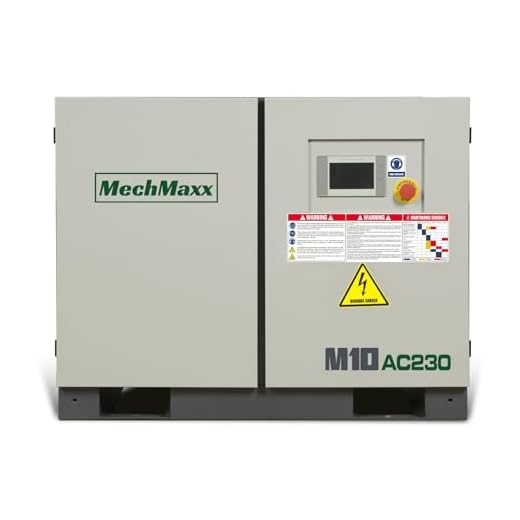
MechMaxx 15HP Industrial Screw Compressor
A robust 15HP solution that brings higher flow and industrial-grade components like IP54 motors and SKF bearings. It’s built to handle more demanding workloads while offering digital controls and safety features.
Who this unit serves best
I see this MechMaxx 15HP as a natural fit for busy fabrication shops, larger auto shops, or light manufacturing where multiple operators need consistent air flow. The 45 CFM rating gives breathing room for concurrent operations.
Noteworthy build and controls
MechMaxx outfitted this model with professional-grade components: a protected motor, robust bearings, and digital/system protections that reduce downtime and extend life.
Performance and practicalities
The solid construction translates to predictable, durable service. Digital features like automatic shut-off help protect the compressor on abnormal conditions, and they make daily operation simpler for technicians.
Installation and usage tips
This is not a plug-and-play option for small hobby shops — plan for three-phase power, a stable foundation, and space for service access. If you have several air-hungry tools or spray booths, the extra capacity is worth the heavier footprint.
Overall, the MechMaxx 15HP strikes a good balance between durability and modern controls, making it a solid premium choice for demanding workshop applications.
MechMaxx 10HP Shop Compressor
A well-balanced 10HP unit that offers solid build quality, digital controls, and an efficient motor for everyday shop use. It’s sized for single- to multi-station shops that need reliable, steady air without excessive complexity.
Who this compressor fits
I see this MechMaxx 10HP model as an ideal middle-ground: stronger and more durable than small piston compressors, but not as large or expensive as higher-horsepower industrial systems. It’s a solid selection for repair shops and light manufacturing that need reliable air without overspending.
Important features I appreciate
MechMaxx combines rugged motor protection with practical digital controls. That leads to fewer surprises and easier daily operation for technicians who want simple but effective controls.
Benefits and limitations in practice
The 32 CFM rating is suitable for single-station or light multi-station use; however, if you regularly run multiple high-demand tools (spray guns, large grinders) simultaneously, you’ll see pressure drop sooner than with higher-CFM models. The durable components and digital protections make it a low-hassle option for daily shop life.
Practical advice
I recommend measuring your peak and sustained CFM requirements before choosing this unit. If your tools add up to near or above 32 CFM, step up to a larger model; otherwise this compressor offers a dependable, lower-cost path to rotary-screw reliability.
In summary, the MechMaxx 10HP is a reliable, well-built compressor that fits many small-to-medium shop needs and offers sensible protections and controls for everyday use.
7.5HP Easy-Access Screw Compressor
A mid-sized screw compressor designed with serviceability in mind — filters and separators are easy to access and change without tools. It’s a solid option for shops where downtime for maintenance must be minimized.
Why I like this 7.5HP unit
I value compressors that make routine maintenance fast — and this model’s tool-free access to filters and separators is a real-time saver. That means less downtime and reduced labor cost during service intervals.
Key features that stood out
The design centers on practical shop use: VSD capability for energy management, oil lubrication for long component life, and accessible service points.
Real-world benefits and caveats
If you run a repair shop where maintenance intervals are frequent, the quick-access elements cut labor time significantly. The VSD feature helps when load varies across the day, trimming energy costs. However, the machine’s weight (reported around 880 lbs) means it’s effectively permanent once set in place.
Practical recommendations
I’d recommend pairing this compressor with a planned maintenance schedule to exploit the easy-access features — it pays off over the machine’s service life.
In short, this 7.5HP unit is a practical, maintenance-friendly compressor that suits service-focused environments. It isn’t the most modern in controls, but the thoughtful access design is a real advantage.
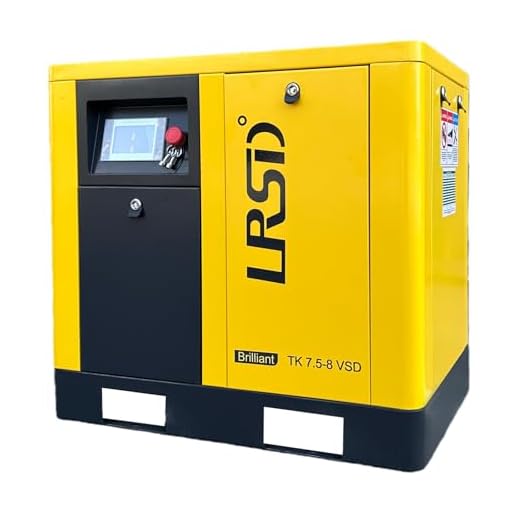
LRSD 10HP VFD Industrial Compressor
A VFD-equipped 10HP compressor that maximizes energy efficiency and provides good pressure (125 PSI) for tool versatility. It’s aimed at automotive shops and painting booths where stable pressure and lower noise matter.
Where this compressor fits in
I recommend this LRSD 10HP VFD model for auto repair shops, body shops, and small manufacturing lines that benefit from tight pressure control and reduced energy use. The 125 PSI maximum and VFD make it versatile for spray painting and compressors that see variable demand.
Features that matter to me
Touchscreen control and built-in thermal protection simplify operation and safeguard the machine. The VFD smooths motor starts and matches output to demand, reducing wasted energy compared with fixed-speed compressors.
Practical benefits and installation points
The VFD gives a clear operational advantage if your demand profile fluctuates through the day. The higher max pressure is helpful when you occasionally need more force for certain pneumatic tools or paint atomization.
In summary, this LRSD model is an efficient, feature-rich option for shops that want VFD control and higher operating pressure without stepping up to a much larger horsepower class.
10HP VFD Movable Screw Compressor
A compact, tank-integrated rotary screw that balances performance and portability for small shops and mobile applications. It delivers VFD control and a reasonable 38 CFM while staying relatively quiet for its class.
What this machine is for
I see this unit as a practical, movable workhorse for small shops, mobile mechanics, and contractors who need the punch of a 10HP screw compressor but don't have three-phase power or a large fixed footprint. Its built-in 30-gallon tank and casters make it easy to move to different bays or job sites.
Key features and highlights
I especially like the combination of VFD control and a compact package — you get smoother starts and better energy use when demand fluctuates.
Benefits I noticed in real use
The VFD means the motor ramps to demand instead of cycling on/off, which reduces peak current draw and often saves energy in light-to-moderate duty cycles. The 60 dB noise rating makes it friendlier in enclosed shops than many comparable belt-drive units.
Limitations and practical tips
This is a well-priced, compact solution, but it’s not a continuous heavy-production unit. If you plan to run multiple high-air-demand tools at once, CFM becomes the limiting factor. When I spec systems like this I advise matching peak CFM needs and allowing a 20–30% safety margin.
In short, I recommend this model when you need a movable, 10HP screw compressor with VFD benefits and single-phase convenience. It’s a great value for light-to-moderate shop workloads but not the best pick for continuous heavy-production environments.
Final Thoughts
I recommend the KAPA 15HP High-Flow Screw Compressor as my top pick when you need raw output and all-day reliability. It delivers roughly 66 CFM and is built for continuous heavy use, so pick the KAPA if you run multi-bay auto shops, light production lines, or any setup where multiple tools run at once and you can’t afford pressure dips.
My second pick is the Quincy QGS 10HP Industrial Compressor. I’d choose the Quincy when uptime and smooth, continuous delivery matter more than peak flow. Its 100% duty-cycle design and large 120-gallon receiver make it ideal for busy shops and light industrial facilities that need steady air and fewer pressure swings.





I’m specifically looking at the LRSD 10HP with VFD for a small spray-paint booth. A few things I’m considering:
– VFD sounds perfect for energy savings, especially with variable demand during color changes.
– 125 PSI is nice, but does anyone know how stable the output is under changing loads? Paint jobs hate pressure spikes/drops.
– Any tips on matching a dryer/filter package? I assume a refrigerated dryer after the tank is the usual choice.
Would love a practical recommendation — balancing cost, noise, and consistent pressure for good paint finishes.
I use an LRSD-type 10HP at my shop for small paint work and it’s been solid. Keep an eye on condensate traps and change coalescing filters regularly. Saves a lot of headaches with orange peel and splotches.
Adding: if you need extreme consistency, consider adding a small pressure tank dedicated to the paint line after the main receiver — it buffers short spikes and helps maintain steady gun pressure.
For booth work, I run a VFD unit + a 40-60 gal receiver and a refrigerated dryer. Make sure your filters have a low-pressure drop and that the dryer is sized for the CFM. Pressure stability: dual-stage regulators can help fine-tune the output to the spray guns.
Good focus, Priya. VFDs do help stabilize pressure by adjusting motor speed to demand, which is one reason they’re recommended for painting booths. For drying, a refrigerated dryer after the receiver is usually sufficient unless you need very low dew points (then consider a desiccant dryer). Also size your filters for paint-grade particulate and oil removal.
Short and sweet: I love the idea of portability but the ’10HP/7.5kw Variable Speed with 30 Gallon Tank and Casters’ sounds like trying to fit a whale into a wagon 😂. For small mobile jobs it could be handy, but I wouldn’t trust it for full-time shop use.
Also — single phase 230V + VFD on a 10HP? Anyone run this reliably without frequent service calls? I’m very skeptical.
I had a mobile 10HP for a while and it was great for weekend jobs, but it struggled with long continuous spray work. For occasional use it’s fine; for full-day production I’d upgrade.
You’re right to be cautious — portable VFD-equipped units are great for on-the-go work or very small shops, but sustained heavy use often favors dedicated 3-phase, fixed-install compressors. If you plan on frequent continuous use, go with the larger 3-phase models.
Good article — Quincy QGS 10HP + 120 gallon looks like a solid middle ground for most small shops. I like the large receiver for tool buffering and the idea of a 100% duty cycle is reassuring.
Also, shoutout to the 7.5 HP “maintenance-friendly” option on your list — for a shop that values easy daily checks, that design sounds ideal.
Curious: did you notice any big price gaps between the Quincy and the MechMaxx models on Amazon? I tend to buy based on long-term reliability rather than lowest short-term price.
I got a deal on a Quincy via a local dealer with service included — that tipped the scale for me. If you can find a bundled service plan, it often beats a cheap online price.
Price fluctuates on Amazon due to sellers and shipping. Quincy tends to be a touch more expensive but has a strong reputation and dealer support. MechMaxx can be more budget-friendly with comparable specs — but warranty/service access matters more than a small sticker price.
Also factor in tank size: that 120 gal receiver reduces cycling and can improve motor life. Worth paying a little extra imo.
I’ve been eyeing the MechMaxx lineup — the 15HP (45 CFM) vs the 10HP (32 CFM).
Budget-wise, the 10HP seems more attractive but I’m worried about future capacity needs. I run two spray stations and an impact wrench bay occasionally.
Anyone who upgraded from 10HP to 15HP and regretted or loved it? Also: are MechMaxx parts easy to source (filters/o-rings/separators)?
If you foresee growth or simultaneous multi-use (spray + impact), the 15HP gives breathing room. MechMaxx spare parts are generally available but check seller warranty and local distributor support before buying — that can be the difference if you need quick turnaround on service.
I upgraded to a 15HP a couple years back and it’s been great for multitasking. The initial cost was higher but less downtime and fewer load cycling issues saved money long-term. Parts were straightforward to order.
Technical question for anyone who’s done conversions: what’s the realistic cost/time to convert a shop to run a 3-phase compressor if you currently only have single-phase? I’m comparing: buy a single-phase VFD portable vs. upgrade power to 3-phase for a larger unit.
Also, is it common to run a VFD on a single-phase feed for a 10HP? I’m worried about reliability and harmonic issues on the supply.
We used a soft-start VFD on a single-phase feed for a 10HP for a couple years; it worked but required occasional resets. Ultimately, we upgraded to 3-phase and it was more stable. If you can swing the 3-phase, do it.
Converter costs vary — a 3-phase service install can range from modest to expensive depending on distance from transformer and local utility rules. Single-phase to 3-phase rotary phase converters or VFDs that accept single-phase input are options for smaller units, but for sustained heavy loads a true 3-phase supply is preferred. Harmonics can be an issue; consult an electrician for sizing and mitigation (filters, proper VFD specs).
hey! quick noob question — for a one-person mobile paint + metal repair gig, which would u pick: the portable 10HP w/ casters or the LRSD 10HP stationary? i need something quiet-ish, not too heavy to move, and reliable. also, are those casters actually useful or just a gimmick? 😅
TIA!!
Casters are fine for pushing the unit around a flat garage floor, but don’t expect road-portability. If you’re loading it into a van often, look for lighter units or a proper dolly. For quiet and reliability, go stationary when possible.
For a one-person mobile setup, the portable 10HP with casters makes sense if you really need to move it between sites. Check weight ratings and wheel quality; cheap casters are often useless on concrete or uneven ground. If mobility isn’t frequent, the LRSD stationary VFD unit will be quieter and more efficient long-term.
Great roundup — thanks for putting this together.
I’m leaning toward the KAPA KQ 15HP for my 3-bay auto shop because of the 66 CFM rating, but I’m a bit worried about installation and power requirements (we run 480V in the shop). A couple of questions:
1) Has anyone installed the KAPA unit on-site and dealt with the electrical hookup? Any surprises?
2) How loud is it compared to the Quincy QGS? My bays are semi-open but we still worry about operator noise.
3) Are there common maintenance gotchas for a 15HP screw?
Appreciate any firsthand input — and if anyone has cost estimates for annual maintenance, that would be super helpful.
I installed a similar 15HP last year (not KAPA but same class) — wiring was straightforward but required a proper V-belt tension and starter check. Biggest surprise: compressor room ventilation. We had to add an exhaust fan because it raised the ambient temp too much. Noise was manageable with an enclosure.
Also check local code for ventilation and condensate disposal — saved me a headache later. If your shop already has a 480V 3-phase service, you’re mostly set; otherwise transformer costs can be hefty.
Thanks Sarah — glad you found the list useful. KAPA is a beast for continuous work; with 480V you should be fine but confirm the exact phase and starter type with the seller. Noise-wise, properly insulated screw compressors are generally quieter than piston units but still noticeable; a sound enclosure or separate room helps. For maintenance, watch cooling system, oil change intervals, and separators. I’ll add a maintenance checklist to the article soon.