

Whisper or roar? Pick the piston that breathes life into your shop.
Compressed air is the unsung workhorse of every shop. One right compressor keeps tools humming, projects moving, and deadlines from turning into all-nighters.
I pulled together ten top electric reciprocating compressors and a couple of must-have extras. Short, straight takes — from whisper-quiet finishers to two-stage beasts built for daily production.
Top Picks


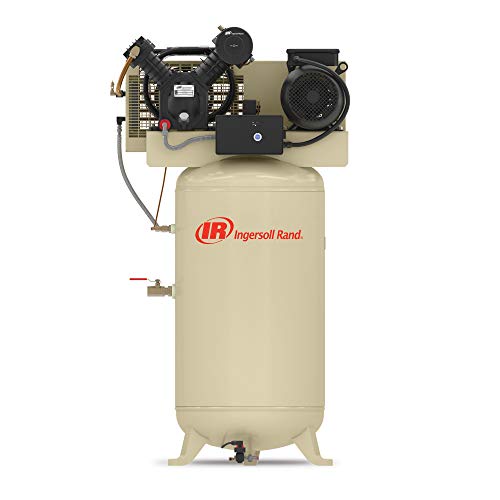
Ingersoll Rand Type-30 5HP Packaged
I trust this unit for demanding, continuous workshop work thanks to its cast-iron construction and two-stage design. It’s built to last and delivers strong CFM and tank capacity for production tasks.
Purpose and real-world fit
I see this as a workhorse for heavy shops, body shops, and light industrial settings where uptime and longevity matter. With a two-stage, cast-iron pump and an 80-gallon receiver, it’s designed to feed multiple tools or continuous processes without frequent cycling.
Key features I notice and why they matter
These features mean less routine maintenance hassle and better temperature management under heavy duty. The included safety and convenience items (like the auto drain) help avoid common shop headaches.
Benefits, limitations, and practical advice
I appreciate the solid performance and how it keeps tools running with minimal pressure drop. Practical tips I share with small-business owners: plan the electrical supply and a permanent location (unit weighs ~597 lb), and consider the manufacturer’s startup/warranty kit to extend pump protection. The main limitation is cost and physical footprint — this isn’t for casual weekend users, but for shops that need dependable, continuous compressed air.
Ingersoll Rand Type-30 7.5HP Packaged
I value the higher horsepower and airflow for busy shops that need fast recovery and multiple tools running. It’s rugged and comes fully packaged, though buyers should verify delivery condition and electrical setup.
Who this is for
I recommend this model for production shops, high-volume auto body, and fleet maintenance where a steady, high-volume supply of air is needed. The 7.5 HP motor and 80-gallon receiver make it suitable for continuous or bursty high-demand tasks.
Standout features and practical impact
From my perspective, the combination of packaging and airflow reduces the number of aftermarket add-ons you’ll need. However, because some users reported DOA or electrical contactor issues, I advise inspecting the unit on delivery and planning for a local tech to help commission it if you’re not comfortable with wiring.
Usage tips and limitations
I’d set this on a dedicated circuit and plan for sound isolation in a smaller shop — it’s powerful and built for duty, not quiet operation. Also, purchase or install the manufacturer’s start-up kit and follow the break-in procedures to secure pump warranty and long-term performance.
DEWALT 60-Gallon Vertical 5HP Compressor
I rely on its strong airflow at both 40 and 90 PSI to keep demanding tools running without long recovery times. It’s a solid mid-sized industrial option when you need consistent CFM and efficiency.
Who should consider this model
I recommend this DEWALT to professionals and serious hobbyists who need high CFM for tools like sanders, grinders, and larger spray rigs. The vertical 60-gallon design keeps a smaller footprint while delivering robust performance.
Key performance characteristics
Those numbers translate into fewer pauses during work and better tool consistency when you’ve got multiple stations or continuous tasks.
Practical considerations and tips
I always advise a dedicated 240V circuit and a professional electrician for installation. The unit is costlier than consumer models, but the performance and durability justify it for professional applications. If you’re running high-demand air tools regularly, this model significantly reduces workflow interruptions.
Makita MAC100Q Quiet 1-Gallon Compressor
I enjoy using this for indoor trim and finish carpentry because it’s exceptionally quiet and portable. It won’t run heavy tools but excels at low-noise, intermittent tasks like brad nailing and touch-up spraying.
Best fit and user profile
I consider this Makita a top pick for finish carpenters, cabinetmakers, and anyone working indoors where noise matters. The low dB rating and compact design make it comfortable to use in occupied spaces.
Why it stands out technically
Those details add up to a tool that won’t disturb clients or coworkers, while still providing reliable short bursts of air.
How I use it and its limits
I use this for nail guns, brad nailers, airbrushes, and quick inflation tasks. If you need continuous high-volume air for prolonged spray or large pneumatic impact tools, I’d choose a larger machine, but for quiet, portable finishing tasks, this is excellent.
Ingersoll Rand Twin-Stack 2HP 4-Gallon
I appreciate the twin-stack design for portability with better flow than single-cylinder small units. It’s a rugged portable option that fills quickly and stands up to framing and finishing tasks around job sites.
Compact power for jobsite and shop
I view this Ingersoll Rand twin-stack as a go-to portable compressor when you want more capability than a tiny pancake without losing mobility. The 4-gallon tank with oil-lubricated twin-stack pump delivers respectable flow and fast recovery for a broad set of tasks.
Notable design points and benefits
Those features make it a favorite for pro users who need portability but demand better airflow than the smallest units provide.
Usage guidance and realistic expectations
From my experience, it’s excellent for roofing, trim, and moderate framing — you’ll get solid run times with common nailers and impact wrenches. Expect some noise and vibration; if you need silent operation, look to noise-rated models, but if durability and flow-per-pound are priorities, this unit performs admirably.
DEWALT 6-Gallon Pancake 165 PSI Compressor
I appreciate the quick recovery and rugged build for jobsite work; it balances portability and runtime very well. It’s a dependable go-to for finish carpentry, trim, and light framing when you need frequent mobility.
Why pros lean on this model
I often recommend this DEWALT for contractors and serious DIYers because it strikes a smart balance between portability and usable airflow. The 6-gallon pancake delivers consistent performance for finish work and common pneumatic tools.
Notable specs and practical benefits
Because it is designed for the field, it’s built to take abuse and still get the job done.
Realistic expectations and usage tips
In my experience, it’s a dependable daily driver for trim, brad nailing, and inflating tires. For heavy-duty framing or long continuous spray sessions you’ll want a larger tank or higher-CFM shop compressor, but for many tradespeople this is a compact, durable, and frequently used tool.
Klutch 20-Gallon 2HP Portable Compressor
I like this as a practical middle ground: larger tank and better CFM than pancake compressors at a friendly price. It’s dependable for woodworking and general shop use, though you may need a quick inspection out of the box.
Where this fits in my toolbox
I consider this an excellent value for a home woodshop or small professional bench. The 20-gallon tank with a 2 HP motor offers a usable balance of portability, runtime, and airflow for nail guns, sanders, and hobby spray work.
Features I appreciate and why
Those features mean I can run a framing or finish nailer and not panic about constant oil checks or complicated servicing schedules.
Real-world tips and limitations
From user accounts I’ve read and my experience, check fittings and fasteners right after unboxing — loose compression fittings have been reported but are easy to fix. If you need quieter operation or heavier continuous duty, step up to a two-stage or larger machine; for many hobbyists and small shops, this is a very capable unit.
Quiet 5-Gallon Oil-Free Ultra-Quiet Kit
I like how quiet and versatile this package is — it ships with accessories and a long hose making it user-ready. It’s well-suited for home repairs, tire inflation, and light pneumatic tools, though it’s not for continuous heavy-duty use.
Best use cases and portability
I find this compressor especially useful for homeowners, hobbyists, and small shops that value low noise. The 5-gallon tank and included accessories make it great for inflating, cleaning, and powering brad/finish nailers with minimal fuss.
Features I value
This combination makes it simple to move around a garage or jobsite without hauling extra accessories.
Practical tips and caveats
I recommend using it for intermittent tasks and understanding its duty cycle: long, continuous spray painting or heavy framing nailers will overwhelm the unit. For quiet, reliable utility around the house and light professional tasks, it’s an excellent, budget-friendly choice.
Milton ISO-100 Compressor Oil, 1 Gallon
I consider this a reliable, non-synthetic compressor oil that protects pumps from wear, oxidation, and sludge. It’s a cost-effective maintenance item that helps extend the life of oil-lubricated machines.
Purpose and when to choose this oil
I keep Milton ISO-100 on hand for routine maintenance of oil-lubricated reciprocating compressors. It’s formulated as a conventional SAE 30/ISO 100 oil that’s intended to protect bearings and cylinder walls in pumps where a non-detergent oil is specified.
Why it matters for reciprocating pumps
Using the recommended oil reduces long-term wear and helps ensure optimal operation between service intervals.
Practical notes and handling
From my perspective, follow the pump manufacturer’s spec: if the compressor calls for ISO-100 non-synthetic oil, this is a good, budget-friendly choice. Dispose of used oil responsibly and store it in a cool, dry place away from ignition sources.
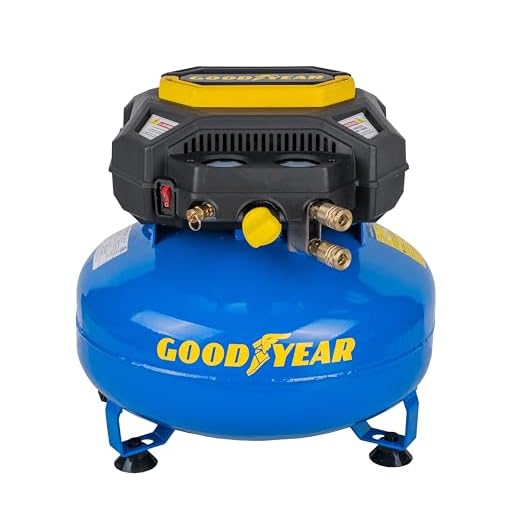
Goodyear 6-Gallon Oil-Free Pancake
I find this pancake compressor convenient for hobbyists and light trade work — oil-free simplicity and a small footprint make it easy to store. It’s not built for prolonged heavy use, but it handles inflating, brad nailing, and small spray jobs well.
Ideal users and typical tasks
I see this as a practical choice for DIYers, small garage tasks, and occasional tool use. The 6-gallon pancake-style tank is great when space matters and you need portability for inflating, stapling, and light nailing.
Technical highlights and what they mean
These specs make it a low-effort tool for users who want something that works out of the box without oil-service routines.
Practical advice and limitations
In my experience, this kind of compressor is best for intermittent duty. If you plan long paint sessions or heavy pneumatic tool use, you’ll want a larger tank or higher-CFM unit. For occasional projects and easy transport, though, it’s hard to beat on price and simplicity.
Final Thoughts
My top pick is the Ingersoll Rand Type-30 5HP Packaged. I trust it for demanding, continuous shop use because the cast-iron, two-stage pump delivers strong CFM, excellent tank capacity, and long-term durability. If you run multiple tools or need reliable recovery under production loads, this is the safe, tough choice.
If your shop is a step up from 'busy' to 'production line,' consider the Ingersoll Rand Type-30 7.5HP Packaged as the upgrade. It gives noticeably more horsepower and airflow for fast recovery and simultaneous tool use — ideal for very high-volume shops. Just double-check delivery and your electrical setup (voltage/phase) before you buy.







I’m torn between the Ingersoll Rand 7.5 HP and the DEWALT 60-gallon vertical. My shop does a mix of heavy production and some finish work.
The roundup seems to push the IR for heavy-duty continuous work, which makes sense, but the Dewalt’s single-stage vertical design sounds attractive for space and flow at both 40 and 90 PSI.
Questions:
1) Is the IR overkill if I’m running 2-3 tools mostly, but not constantly?
2) Noise – will the DEWALT be noticeably quieter because it’s vertical?
3) Any one here run quick recovery testing with both? I’d appreciate real-world numbers if possible.
Thanks — trying to avoid buying something too big or too small.
If you add future tools, the IR gives headroom — but that means dealing with heavier electrical and install cost. If you don’t plan to scale up, save cash with the Dewalt and upgrade later.
Good questions. IR 7.5 HP is meant for continuous heavy production; if your shop only runs 2–3 tools intermittently a high-flow 5 HP or the DEWALT 5 HP 60 gal might be a better balance. The vertical Dewalt isn’t inherently quieter — sound depends more on pump design and dampening — but it’s typically a touch less intrusive than large two-stage cast-iron units. For recovery, expect the 7.5HP to recover much faster under load; the DEWALT will do fine for intermittent multi-tool use.
I run a 5 HP Dewalt 60 gal and it keeps two finish nailers and a grinder pretty happy with short recovery times. It’s not whisper quiet but tolerable compared to my shop’s lugging welder noise 😂.
I did stopwatch tests: DEWALT takes ~90–120s to recover from 40→120 psi under light load; a 7.5HP IR was ~30–45s under similar drain. YMMV based on piping and fittings.
Budget hunters — listen up. I compared the Klutch 20 gal, Goodyear pancake, and a used DEWALT pancake. TL;DR: Klutch = best value for shop use, Goodyear = best for storage/occasional use, used Dewalt = gamble but often worth it.
The Klutch got me through sanding, brad nailing, and inflating with no hiccups. The Goodyear is tiny and handy but runs out faster. If you’re on a tight budget, Klutch or used is the way to go. 🙂
Good comparisons. For anyone buying used, inspect the pump, check for oil leaks (if oil-lubricated), and run a pressure test before committing.
Also watch for missing safety valves on used units — those are sometimes removed and you don’t want that risk.
Used Dewalt can be a steal if the pump’s sound and oil look normal. I bought one that way and it’s been solid.
Maintenance question for the crowd (long post, sorry):
I have a small shop with a 5 HP oil-lubed reciprocating compressor (not Ingersoll Rand, similar class). I want to set up a maintenance log and be proactive. What are the must-do routine items and suggested frequencies? I’m thinking:
– Daily: drain tank, visual check
– Weekly: check belts, listen for odd sounds
– Monthly: oil level and filter check
– Every 3–6 months: oil change (depending on hours)
– Yearly: replace intake filter and inspect valves
Anything missing? Also, are there good brands of replacement parts (filters/valves) folks recommend? I’d like to avoid killing the compressor by missing something small.
If you’re in a dusty environment, move the intake or add better filtration — dust is the silent killer of compressors.
I also clean the condensate separator monthly and check the drip pan. If you have an auto drain, test it monthly to ensure it opens.
Small tip: mark dates on the tank with a permanent marker for oil changes/inspections. Hard to forget then.
That schedule looks solid. Add: inspect safety relief valve operation quarterly, and log running hours so oil changes align with actual use. For parts, OEM filters are best; for replacements, Baldwin and Donaldson make good aftermarket filters. Keep spare belts and a rebuild kit handy if you rely on the compressor daily.
Great roundup — thanks! I’ve got a small fabrication shop and the Ingersoll Rand Type-30 (5 HP) caught my eye. Does anyone know if the 230V single-phase setup will require a dedicated circuit or special electrician work for a typical garage? Also curious about delivery — the fully packaged units look huge, any tips on unboxing and moving them safely?
If your garage is on standard residential wiring, call an electrician. I tried to use an adapter once and it was a mess. Safety first 👍
You’ll almost certainly need a dedicated 230V circuit sized for the motor (check the nameplate amps). Get an electrician to verify wire size and breaker. For delivery, plan for a pallet jack and at least two strong helpers — it’s heavy and awkward.
Had the 5 HP Type-30 in my shop last year. Yes, dedicated circuit and a hardwired disconnect is best. For moving: we used a forklift at delivery and then a pallet jack to position. Worth the planned extra cost rather than trying to wrestle it solo.
I’ve been using the Ingersoll-Rand Twin-Stack P1IU-A9 2 HP 4 gallon on job sites for framing and finish. It’s compact but surprisingly durable. What I like:
– Quick fill for brad guns
– Twin-stack helps with flow vs single cylinder
– Easy to toss in a truck
A couple notes: it’s not a substitute for a full shop compressor, but for mobile crews it’s awesome. Curious if anyone’s used it with framing nailers all day long and what the recovery looked like.
Agreed. It’s great for portability. Don’t expect sustained CFM for long continuous loads, though.
I used one for a day crew — it handled brad guns and small framing well, but for full-size framing nailers a 5–6 gal pancake or 20 gal unit was a smoother experience.
Good summary. For all-day framing, you’ll notice more frequent cycling but it should handle bursts well. If two crew members are nailing nonstop, consider a larger tank or a dedicated jobsite unit with higher CFM.
Pro tip: keep the compressor shaded and off hot tailgates — overheating cuts recovery and shortens life on long days.
Haha, I’m that person who keeps a pancake compressor in the trunk “just in case.” The DEWALT pancake and the Goodyear 6 gal both feel like tiny, reliable lifesavers when you need a quick brad nail or to fix a flat.
Also: why do they make pancake compressors so cute? Like, functional AND adorable. 😂
Pancakes are designed for quick mobility and convenience. Cute is marketing, but they do fill a practical niche — light-duty, easy to store, no oil maintenance for many models.
They’re the croissants of compressors — small and flaky but gets the job done 😆
Bought the Klutch 20-gallon as a budget option for my garage shop. Pros: decent tank size and it was cheap. Cons: mine arrived with a loose fitting and I had to tighten a few unions and check for leaks out of the box. If you buy one, inspect everything and be ready to spend an hour on assembly/QA.
Ditto. I also added thread sealant on fittings and it tracked fine since. For the price, it’s a solid home-shop workhorse.
I’d also recommend swapping the intake filter for a higher-quality one if you can. Cheap filters let dust in and shorten life.
Good tip — budget brands sometimes need a pre-use check. Tighten fittings, test pressure relief valves, and run it under supervision for the first few cycles.
Quick question: the “Quiet Air Compressor” in the list says it includes 11 accessories and a long hose. Does anyone know the hose length and whether the accessories are usable quality or just filler items? Considering it for home auto work and nailing.
Mine had a 20ft hose and the accessories were fine for tire inflation and casual use. Don’t expect pro-grade couplers though.
Accessory quality varies—usually you get a mix of usable items (inflator, blow gun) and a few low-cost fittings. Hose length often runs ~15–25 feet on these packages; check the product page for specs before buying.
Short and sweet: the Makita MAC100Q is actually as quiet as they claim. I use it for trim and small spray jobs indoors — my wife doesn’t complain when I bring it into the house for touch-ups. Question though: anyone run it with a small HVLP sprayer? Is the 1/2 HP enough for decent pressure consistency?
It’ll power small HVLP setups for short bursts, but you’ll likely see slower recovery and more cycling. Good for touch-ups, not long paint runs.
I used the Makita with an HVLP for cabinet touch-ups — worked fine for short runs. If you’re doing whole cabinets, get something with a larger tank or a continuous air source.
I appreciated the inclusion of Milton 1002 oil in the roundup — people forget compressor maintenance. A couple of thoughts/questions:
– Oil vs oil-free: for a shop compressor like the IR or DEWALT, oil-lubricated pumps run cooler and last longer under heavy duty. Milton ISO-100 is a conventional choice, not synthetic — good but schedule changes if you work in extreme temps.
– How often do folks change oil on a 5 HP cast-iron two-stage under daily use? I’ve seen recommendations from 3 months to 6 months depending on runtime.
Any maintenance schedules or horror stories to share? I want to avoid a piston seizure because I skimped on oil changes.
Horror story: ignored a slow leak and starved the pump for oil — had to rebuild pistons. Don’t let small leaks go.
Minor correction: the admin here — yes, also remember to use the right viscosity for ambient temp. Milton ISO-100 is fine for typical shop temps, but in cold environments you may want lower-viscosity start-up oil.
For heavy daily use, a 5 HP two-stage often uses oil change intervals of 3 months or 500–1000 hours, whichever comes first. Check the manufacturer manual. Also monitor oil color, metal particles, and breathers — those are early warning signs.
I run Milton ISO-100 in my older compressor — change every 4 months on high use and flush yearly. Also replace the intake filter regularly; most failures come from contamination, not the oil alone.
If your unit has an automatic drain, use it. Water + oil contamination speeds wear. I log oil changes in a notebook — helps me keep the schedule.