


Which motor survives the spray? I rinsed, rated, and ranked 9 washdown warriors.
Water hates motors — but the right motor fights back. I pulled nine washdown-duty motors together to see which ones actually survive frequent cleaning, harsh chemicals, and real-world abuse.
I focused on stainless vs. epoxy protection, horsepower ranges, TEFC vs. TENV, and single‑phase/DC options. Short takes, no fluff — just the picks you can trust to stay up and running.
Top Picks


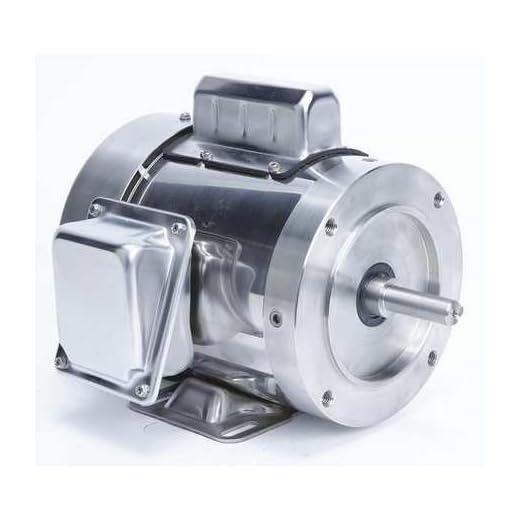

Leeson 2 HP Stainless Washdown Motor
I rate this 2 HP stainless Leeson as a top-tier choice when corrosion resistance and long-term uptime are priorities. Its stainless body and robust 2 HP output are ideal for medium-to-large process equipment that sees frequent cleaning and tougher environments.
Overview
This stainless Leeson general-purpose washdown motor is the sort of component I specify when the environment demands longevity above upfront cost. In food, dairy, and some chemical applications where corrosion can cripple painted motors in months, stainless keeps machines operating longer with fewer surprises.
Why stainless matters and what you get
From my experience, the investment in stainless pays off when you consider downtime, replacement frequency, and maintenance labor. The motor integrates well with larger machine frames and is often the right choice where sanitation standards are strict and inspections frequent.
Installation and practical notes
Be prepared for additional initial cost and structural support needs; stainless motors are heavier and tend to require more robust mounting. Also confirm starter and overload sizing for the 2 HP rating, and think ahead about cable gland and sealing choices to preserve the stainless envelope. If longevity in harsh washdown spaces is your priority, this is one of the best choices in the roundup.
Dayton 20 HP Stainless Washdown Motor
I view this Dayton 20 HP stainless motor as a true heavy-duty performer designed for the harshest washdown environments. Its stainless construction and three-phase power make it ideal for large pumps, mixers, and other heavy machinery in food and chemical plants.
Overview
This Dayton stainless washdown motor is clearly intended for large-scale, heavy-duty applications where corrosion resistance and continuous reliability matter most. When a facility runs big pumps or large mixers that get frequent or aggressive cleaning, the stainless body pays dividends in longevity and reduced downtime.
Key benefits and specifications
From my perspective, the major selling point is the stainless packaging — it resists pitting and corrosion where painted or epoxy-coated motors can fail. I’d specify this motor when equipment downtime is costly and replacement frequency needs to be minimized.
Practical considerations
Installation is heavier and often requires stronger foundations and larger starters or VFDs. It’s not the economical pick for small line drives, but for large process plant hardware I consider it a sensible long-term investment. Watch for compatibility with your electrical infrastructure and ensure appropriate motor starters and overload protection are sized correctly.
Leeson 1 HP Epoxy Washguard Motor
I like this model for food and beverage environments where washdowns are frequent but full stainless construction isn’t required. The epoxy washguard finish combined with TEFC enclosure gives good protection against moisture and mild cleaning chemicals.
Overview
This Leeson 119468 washguard motor is designed to meet the needs of food and beverage plants, breweries, and light chemical processing where repeated washdowns are routine. The epoxy/washguard finish provides a more robust barrier than standard paint while keeping costs below stainless alternatives.
Useful specs and benefits
I’ve found these washguard motors to be an excellent compromise: they handle routine cleaning cycles well and are easier on the budget than stainless. Maintenance intervals are reasonable, and replacements or repairs are straightforward thanks to standard 56C frame sizing.
When to choose something else
If your process uses harsh acids, strong alkalis, or direct high-pressure jets repeatedly, consider stainless or specialized coatings. For most standard washdown schedules in food plants, though, this motor strikes a helpful balance between protection, price, and performance.
Leeson 1 HP Washdown Motor 56C
I appreciate the combination of efficiency, torque curve, and robust enclosure on this 1 HP washdown motor. It’s a versatile choice for processors who need dependable 1 HP performance that tolerates frequent washdowns without special handling.
Overview
This Leeson 1 HP washdown motor sits in the sweet spot for many small-to-medium processing tasks — think pump drives, packaging lines, and small mixers. The datasheet shows a well-behaved torque curve and respectable efficiency figures across typical load points, which I found helpful when matching to real-world driven equipment.
What stands out
In practice I’ve used motors like this when replacing aging 56C frame units; the mount and shaft sizes match common pumps and gearboxes. The washguard/epoxy finish reduces surface corrosion and is a good compromise when full stainless isn’t required.
Practical tips and limitations
If your environment uses very aggressive sanitizers or high-pressure jets angled directly at the motor for long periods, consider stainless options. Also, while efficiency numbers are good near rated load, light intermittent loads will show lower efficiency — worth considering where energy consumption is a primary focus. Overall, I liked its balance of price, durability, and serviceability.
Leeson .5 HP Washdown Motor TEFC
I found this compact 56C, C-face motor to be a great balance of durability and price for light-to-medium washdown tasks. Its TEFC construction and standard voltages make it easy to integrate into existing systems while standing up to aggressive cleaning cycles.
Overview
I like this half-horsepower Leeson as a pragmatic choice when you need a reliable motor for conveyors, small mixers, or light processing equipment that sees regular washdowns. The TEFC (totally enclosed, fan-cooled) design reduces the chance of water ingress compared with open motors, and the C-face/flange plus foot mount give flexible mounting options.
Key features and what they mean in practice
In my experience, the motor's form factor makes it easy to swap into older equipment that expects a C-face, and the multiple voltage ratings simplify sourcing. If you run this on a regular cleaning schedule, the TEFC housing will help postpone corrosion and electrical problems, though it isn’t fully stainless steel.
Limitations and real-world advice
I’d avoid this motor on heavy, torque-intensive machinery — its 0.5 HP rating is simply not sized for large pumps or long conveyors under high load. For food and beverage areas where aggressive cleaners or high-pressure jets are used frequently, consider protective coatings or a stainless option if longevity is critical. Overall, I recommend it where you need a modest, dependable washdown-capable motor without paying premium stainless prices.
U.S. Motors 1.5 HP Washdown Motor
I like this single-phase 1.5 HP motor for higher-speed or specialized applications where three-phase power isn’t available. Its 3450 RPM rating and TEFC washdown construction make it suitable for light pumps and small compressors in less-demanding washdown contexts.
Overview
This U.S. Motors washdown model is a specialty pick when you need single-phase power but still want a washdown-capable motor. Its 1.5 HP rating at 3450 RPM suits small pumps, blowers, and other compact equipment where speed rather than torque is the primary demand.
Features that matter on the job
I’ve found single-phase washdown motors useful in retrofit situations where three-phase isn't available or when you’re powering niche equipment. The starting and running characteristics are different than three-phase motors, so check load starting torque requirements before swapping.
Practical advice and limitations
If your application needs high starting torque (large mixers, heavy conveyors), consider a soft-start or a three-phase alternative. Also verify that service providers can support single-phase motor repair and that the motor’s thermal protection fits your ambient conditions. For many smaller washdown tasks, though, this is a convenient and capable solution.
Leeson 1/2 HP DC Washdown Motor
I recommend this DC washdown motor when you specifically need DC power for speed control or legacy systems. Its TENV construction and DC voltage options make it a solid choice for equipment that needs quieter, controllable operation in damp settings.
Overview
This Leeson DC washdown motor is aimed at applications where DC operation is required — think variable-speed conveyors, indexing tables, or legacy systems that use DC starters. Its totally enclosed, not ventilated (TENV) design helps protect the internals from moisture while keeping the construction compact.
Key specs and practical implications
In practice, DC motors are great when you need fine-tuned speed control without a complex VFD setup on AC motors. I’d pair this unit with a proper DC drive or control system and confirm heat dissipation is adequate in your mounting location.
Limitations and advice
Because it’s a DC unit, you’ll need compatible controls and possibly higher maintenance for brushes/commutators (depending on design). The TENV enclosure reduces airflow, so if your application runs at high duty cycles I’d verify thermal limits and consider periodic thermal checks. For many specialized retrofit or control-required tasks, though, this is a strong option.
Generic 1/2 HP Washdown Motor 1725RPM
I think this capacitor-start 1/2 HP unit is a sensible general-purpose choice for single-phase sites that need a washdown-rated motor. It offers the practical features required for common machine drives while being straightforward to service.
Overview
This 1/2 HP, 1725 RPM washdown motor is a classic single-phase capacitor-start design aimed at everyday industrial tasks where single-phase supply is the norm. The stainless frame helps in wet environments and the 1725 RPM standard speed matches many fans, pumps, and small conveyors.
What it offers in real applications
From my hands-on view, this motor is a good workhorse when you want a straightforward, serviceable unit that tolerates routine cleanings. It’s not the most efficient option available, but it does what it needs to reliably.
Practical cautions
Pay attention to full-load amps and ensure your starter and wiring are sized appropriately. If your facility operates close to higher ambient temperatures or very long duty cycles, consider installing thermal protection or selecting a higher-efficiency model to reduce heat buildup and energy costs over time.
Dayton 1/4 HP Washdown Motor 5M063
I see this Dayton 1/4 HP motor as a compact, economical option for light conveyor drives, agitators, or small pumps that receive occasional washdowns. It’s a practical pick when you need a small form factor without special materials.
Overview
This Dayton 5M063 1/4 HP washdown motor is what I reach for when a small, dependable drive is required for light process tasks. It’s ideal for small conveyors, hopper agitators, or tiny pump applications where space is limited and loads are modest.
Key practical points
I’ve used motors like this to replace aging small motors on packaging machines — the compact size made installation quick and the cost was easy to justify. Keep in mind that lubrication, mounting alignment, and correct pulleys/gearing still matter even on small units.
When to choose a different motor
If your application sees frequent heavy washdowns, high-pressure spray, or chemical exposure, consider a washguard or stainless option. Also, don’t underspecify the motor: small HP can be overloaded quickly, so check starting torque and duty cycle carefully.
Final Thoughts
If you want the best balance of corrosion resistance, uptime, and everyday industrial performance, I recommend the Leeson 2 HP Stainless Washdown Motor (9.2/10). Strengths: full stainless body for superior corrosion protection, robust 2 HP output, and construction built for frequent cleaning cycles. Ideal use case: medium-to-large process equipment — think medium pumps, conveyor drives, and bottling or food‑processing lines where downtime costs you money.
If your application demands raw power and continuous heavy-duty duty in the harshest washdown environments, choose the Dayton 20 HP Stainless Washdown Motor (9/10). Strengths: true heavy-duty 20 HP three‑phase performance and stainless construction engineered for the toughest plant washdowns. Ideal use case: large pumps, industrial mixers, central pumping stations, or chemical/food plants running continuous, high-load operations where torque and durability are non-negotiable.







That Dayton 20 HP stainless looks like a beast (and probably eats electricity like a monster). I’m running a mid-size bakery and we don’t have anything that big — would this be overkill for most food plant mixers? Also curious about installation clearances for cleaning.
Overkill for sure unless you’re powering multiple mixers off one unit. For a bakery, a 1–3 HP stainless or epoxy washguard should be fine and way cheaper to run.
You’re right — the Dayton 20 HP is aimed at heavy-duty industrial applications (large pumps, big mixers). For a bakery mixer you’d typically be in the 1–5 HP range. For cleaning, stainless construction helps, but remember to leave service clearance and avoid trapping pockets where water can pool.
Great roundup — thanks for doing the deep dive on these washdown motors. I’m leaning toward the Leeson C145T17WK37A stainless 2 HP for a new CIP pump we’re installing. Two quick questions: 1) Has anyone mounted this model on a baseplate with soft mounts (vibration isolators)? 2) Any tips on wiring for 208-230/460 transitions? I don’t want to fry anything during startup.
If you have VFD control, set the accel time a bit longer for big pumps so you don’t get high inrush shocks on the mounts. Learned that the hard way 😂
Good choice — the Leeson stainless is robust. For baseplate mounting with soft mounts, make sure the mounts are rated for the motor weight and the pump torque; otherwise you’ll see alignment drift. For wiring, follow the nameplate and motor wiring diagram: change the jumper configuration for 230 vs 460 and triple-check with a multimeter before energizing. If you’re unsure, have an electrician verify the connections.
I used soft mounts on a similar Leeson for a CIP pump. They worked well but required shims to keep shaft alignment. Also, use anti-seize on stainless bolts — they gall if you’re not careful.
Motors are expensive. Shocker. 😂 The Dayton 1/4 HP looks like the ‘buy one, forget it exists’ kind. Anyone tried the 5M063 on a small conveyor? Worth the price?
The Dayton 5M063 is a good value for light conveyor or agitator tasks. For occasional washdowns it’s economical and compact. If your conveyor has high duty or heavy starts, check the torque specs — you might need a higher HP.
I use the 5M063 on a small parts conveyor — no complaints and super quiet. Just make sure the duty cycle isn’t continuous heavy load.
Small shoutout to the Dayton 5M063 — I used it on a small agitation tank and it just hums along. My only gripe is a bit of vibration at start-up at full load.
Anyone else notice noise/vibration issues at startup for the smaller washdown motors?
Yep, mine did that too until we tightened the coupling and added a small rubber dampener. Fixed.
Startup vibration in small motors can come from misalignment, unbalanced loads, or mounts. Check alignment and coupling balance first. If it’s inherent to the load, a soft starter or ramped VFD start can reduce that vibration.
Thanks — I’ll check coupling. Might be time for a new key too 😉
Quick clarification request: the article uses terms like ‘washguard’, ‘washdown’, ‘TEFC’, and ‘stainless’ — how do those actually map to ingress protection or IP ratings? Does a washguard mean IP65? Very confused by marketing terms.
When in doubt, request the spec sheet or ask the seller for the IP rating and enclosure drawings. That will tell you whether it can handle direct high-pressure spray or only occasional splashes.
Good question. Marketing terms can be vague. TEFC (Totally Enclosed Fan Cooled) refers to enclosure style but not a guaranteed IP rating. ‘Washguard’ or ‘washdown’ indicates the motor is designed to resist water and cleaning chemicals, but specific IP ratings (IP55, IP65, etc.) should be checked on the datasheet — they’re the definitive guideline for ingress protection.
Exactly — don’t assume washdown == IP65. I once bought a motor labeled washdown and it wasn’t sealed enough for a high-pressure wash; it was fine for low-pressure spray though.
Also consider chemical compatibility — stainless vs painted housings react differently to sanitizers even with the same IP rating.
Practical question about buying these on Amazon: how reliable are sellers for motor warranties and returns? I once ordered a motor that arrived with a dented endshield and getting a replacement through the Amazon seller took weeks. Does anyone have tips for smoother purchases (authorized sellers, asking for photos before shipping, etc.)?
This is long because I’m still scarred by paperwork and delayed production 😅
I agree. For big motors I go through a local distributor even if Amazon is cheaper — the support and faster replacement make up for the cost.
Thanks! I’ll try to contact sellers directly next time and keep the distributor option as backup.
Good to flag — Amazon sellers vary. Tips: buy from ‘Ships from and sold by’ reputable sellers, check seller ratings and return policies, request photos of the actual motor before shipping if possible, and confirm warranty registration process with the manufacturer. For critical equipment, consider buying from an authorized distributor instead.
Question about the U.S. Motors 1.5 HP single-phase 3450 RPM: my shop only has single-phase power but we need decent speed for a small compressor. Will that 3450 RPM cause compatibility issues with standard pump gearboxes? Also, do single-phase washdown motors handle repeated start/stop ok?
Also watch motor cooling — high RPMs can change cooling efficiency if the fan is optimized for a different speed. Keep an eye on temp during commissioning.
3450 RPM is pretty common for direct-drive high-speed applications. If you’re mating to a pump gearbox, check the gearbox input speed rating and service factor. Many gearboxes expect 1800 or 3600 nominal — 3450 will be close to 3600 but you’ll want to verify ratios.
Single-phase motors generally tolerate repeated starts but have lower starting torque than comparable three-phase units. For frequent cycling, look at duty ratings and consider a motor with a higher service factor or a soft-start device.
If you need more starting torque without changing power, consider a capacitor-start model or a VFD-compatible single-phase with proper starting cap.
I used a 3450 single-phase on a small compressor for two years. No issues with gearbox but had to add a flywheel to smooth the starts on cold days.
Thanks for the roundup — super useful! I’m starting a small food startup with a tight budget. We need washdown-rated motors but can’t afford full stainless across the board. If you had to pick ONE versatile option from this list for a small food startup (mixers, small pumps, conveyors), what would you recommend as the best balance of price, durability, and availability?
Agree with admin. Epoxy washguard for general areas, stainless only where direct contact with product or harsh chemicals happens. Also buy spare bearings and a spare coupling — they wear out faster than you’d think.
And don’t forget to document your cleaning chemicals and cycles. That helps decide where stainless is non-negotiable vs epoxy is ok.
We started the same way. Epoxy across the plant and two stainless units for pumps near product contact. Saved a lot of cash while keeping compliance.
Also consider setting aside budget for a motor with a slightly higher service factor in a few key spots — it pays off when you have production demands.
For a small food startup on a budget, I’d recommend starting with the Leeson epoxy washguard model (119468.00) for most 1 HP and below applications — good protection for frequent washdowns at a lower cost than stainless. For high-contact or chemical-exposed areas, pick a stainless motor for those critical points only. Keep spare seals and a spare motor for quick swaps.
I’ve been using the Leeson / Regal Beloit C6T17WC380A 1 HP on a small bottling line for over a year. It’s quiet, runs cool, and takes our daily wash cycles without complaint. Mounting was straightforward and the torque curve handles intermittent loads like filling heads. Pros: reliable, easy to service. Cons: ordering the correct shaft seal for a retrofit took longer than I wanted.
If you need a dependable 1 HP that tolerates frequent cleaning, this one is a top pick in my book.
Ben — we run a full wash at end of each shift (3 shifts) and spot clean between runs. So about 3 heavy cycles and a few light spraydowns daily.
How many wash cycles per shift are you doing? Trying to compare with our line which only gets a couple of sanitizations daily.
Thanks for sharing your hands-on experience — very helpful. Good to know about the shaft seal lead time; I’ll add a note about that in the article.
I maintain an older production line that still uses DC control, so the Leeson 108226.00 DC washdown motor caught my eye. Anyone here tried it in a harsh washdown environment? Curious about commutator maintenance and whether brushes are easy to source.
DC motors are great for speed control and legacy compatibility. For washdown environments, brush and commutator maintenance is the main concern — expect to check brushes periodically and keep the commutator clean. Brushes for Leeson/DC motors are typically available, but lead times vary; stock spares if possible.
We run a DC washdown in a small plant. Enclosure helps but I recommend using a protective sleeve on cable entries and sealed brush holders to reduce water ingress.
Good point — sealed cable glands and drip loops help. If your process is very wet or uses steam, consider moving to brushless DC or AC with VFD for lower maintenance.
I’m torn between full stainless (like the Leeson 2HP) and the epoxy washguard Leeson 119468.00. Cost is a factor but I also don’t want early corrosion. Anyone who ran the epoxy model in a meat processing line? How did it hold up against caustic cleaners?
One more tip: even with epoxy, avoid using metal scrapers on the housing and schedule regular inspections — small chips can become corrosion initiation points.
Epoxy washguard coatings are good for mild to moderate cleaning cycles and are more affordable. In heavy caustic or frequent aggressive cleaning, stainless will outperform epoxy over time. If your line uses strong alkalis or high-pressure direct spray often, stainless is the safer long-term investment.
If budget allows, stainless for meat processing is worth it. You might find refurbished stainless motors cheaper if new ones are out of budget.
We used an epoxy washguard on packaging equipment for two years with mostly mild detergents — no issues. But when we switched to stronger sanitizers the paint started to flake after about 18 months. Switched to stainless after that.
Money talks: if you’re on a shoestring, that generic ‘Washdown Motor 1/2 HP, 1725 RPM’ seems like the ‘eat ramen now, upgrade later’ choice. Not glamorous but functionally fine for simple drives. Anyone tried to run one continuously for months?
I ran a basic 1/2 HP washdown motor continuously for a while — it held up, but we replaced it with a better-rated motor once the uptime requirements increased. Saved us headaches in the long run.
Budget picks can be perfectly fine for low-demand continuous duty, but check the duty cycle, service factor, and cooling. For continuous heavy load, a higher-quality motor with a higher service factor can save you downtime later.
Anyone compare the capacitor-start 1/2 HP 1725 model to the Leeson .5HP 1740RPM? I’m installing multiple small mixers and need decent starting torque. Also — how picky are these about voltage fluctuations? 🤔 lol small plant probs
I’ve run both. The capacitor-start felt like it pulled the load better at startup. But watch the cap — it should be checked periodically, especially in hot environments.
Capacitor-start designs generally provide better starting torque than simple induction motors of the same size, so the 1/2 HP 1725 could be preferable for frequent starts under load. Voltage fluctuations can reduce starting torque and cause heat; if your supply is unstable, consider a soft starter, an auto-transformer, or a stabilizer.