

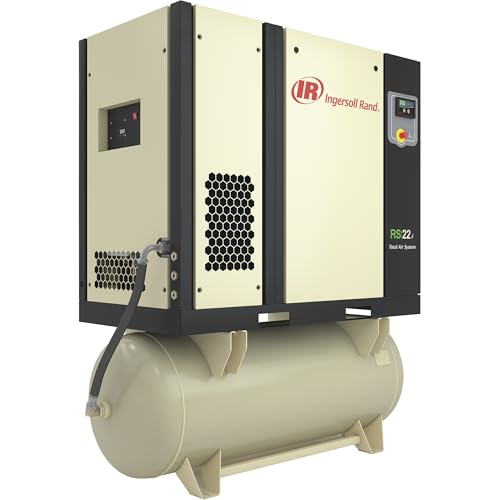
Which screw compressor would you invite to your shop party? (I already have favorites.)
Compressed air is the invisible workhorse of every shop. I’ve spent hours listening to motors, checking dew points, and chasing leaks — these seven Ingersoll Rand screws kept standing out.
Whether you’re running a full production line or tinkering in a weekend garage, the right compressor saves time, money, and sanity. I’ll keep this short, practical, and slightly opinionated.
Our Top Picks
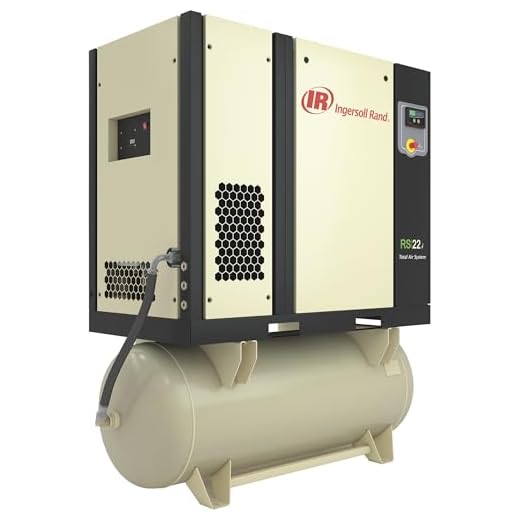


RS18i 25 HP TAS 120-Gallon System
I rate this unit highly for combining industry-leading energy efficiency with an integrated dryer and filtration. It’s built to lower total cost of ownership for busy production environments.
Overview
The RS18i-A115-TAS is a 25 HP, oil-flooded rotary screw compressor packaged with a Total Air System (TAS) that includes dryer and filtration. I consider it an excellent choice for production shops that need high-volume, quality air with an eye on operating costs.
Capabilities that stand out
For shops with continuous demand, the integrated TAS saves space and simplifies installation while delivering reliably dry, filtered air to downstream equipment.
Why I recommend it
If you’re running manufacturing lines or multiple heavy pneumatic stations, the RS18i delivers the scale and air quality control you need. The built-in energy efficiency features mean I expect meaningful savings over the lifetime compared to older, less efficient compressors.
Considerations and setup notes
This is a heavy, professional-grade system — coordinate rigging, appropriate electrical service, and scheduled maintenance with certified technicians. The up-front investment is higher, but the lower total cost of ownership and reduced downtime often justify it for production-focused buyers.
RS15i 20 HP Rotary Screw With Dryer
I value that this package includes an air dryer and filtration for cleaner compressed air right at delivery. It’s aimed at shops where air quality and uptime are equally important.
Overview
The RS15I-A115-TAS is a 20 HP rotary screw system that ships as a more complete compressed-air solution by including dryer functionality. I recommend it for shops where air quality (painting, instrument air, or sensitive tooling) matters as much as raw volume.
What’s included and why it helps
Including the dryer reduces the need for aftermarket add-ons and lowers the risk of moisture-related issues like rust in pipes or problems with paint finishes.
Practical benefits and user scenarios
If you run a paint booth, pneumatic controls, or any moisture-sensitive tools, having a dryer built into the package is a major time-saver. I’ve found that an integrated TAS (Total Air System) cuts installation complexity and delivers cleaner air to tools immediately.
Drawbacks and logistics
This is a premium-capability unit and the price and size reflect that. You’ll need adequate electrical capacity and a plan for handling a heavy, sizable machine during placement and commissioning.
R11i 15 HP 120-Gallon Rotary Screw
I consider this 15 HP unit an excellent balance of raw airflow and practical install features for serious shops. It’s well-suited for continuous or near-continuous use across multiple stations.
Overview
The R11i-A145 is a robust 15 HP rotary screw compressor tailored for production environments that demand consistent air delivery. I see it as the practical step into true production-capable equipment without jumping to extremely large industrial systems.
Core features
That 120-gallon tank smooths out pressure drops during peak demand and reduces short-cycling, which improves longevity and energy usage.
Real-world benefits
In my experience, shops running multiple grinders, sanders, painting rigs, or automated equipment will appreciate the consistent pressure and fewer interruptions. The unit is engineered for serviceability, meaning scheduled maintenance is more straightforward and predictable.
Considerations before buying
This model requires adequate floor space, proper electrical service, and professional delivery/installation because of its size and weight. If your usage is intermittent or very light, the capacity might exceed your needs and increase ownership cost unnecessarily.
R-Series 10 HP 80-Gallon Compressor
I like its jump up in airflow while keeping a compact footprint, making it suitable for busier shops. The combination of a mature airend design and service-minded layout is a practical advantage.
Overview
This R5.5i-A145 10 HP unit bridges the gap between small shop compressors and larger production-grade machines. I recommend it when your operation needs a clear step up in airflow without moving into industrial-sized systems.
Features that matter
Those design choices translate into less downtime and easier servicing, which I value in a shop environment where every hour matters.
Who benefits most
If your shop runs multiple tools concurrently or you have a couple of high-demand stations, the 36.7 CFM output gives you breathing room compared to 7.5 HP models. It’s a pragmatic middle-ground for growing workshops.
Practical limitations
For heavy continuous production where multiple large compressors typically run in parallel, you might eventually move up to a larger unit or multiple compressors. Also, ensure floor loading and transport are addressed given the weight.
UP6 10 HP 80-Gallon Rotary Screw
I appreciate its compact package and solid 10 HP performance for medium shops. It’s a pragmatic choice when you want reliable output without an oversized footprint.
Overview
I see this UP6-10-125 as a practical workhorse for a busy small-to-medium shop. It pairs a 10 HP motor with an 80-gallon receiver and an oil-flooded rotary screw airend, designed to deliver steady compressed air for common shop duties like sanding, grinding, and pneumatic tooling.
Key features and what they mean to you
Having the starter and aftercooler built-in means simpler installation and fewer surprises at setup. The low-sound enclosure makes it possible to install closer to the point of use without disrupting the workspace.
Benefits and practical notes
I like that the UP6 balances accessibility and performance: maintenance points are straightforward and the overall package is compact enough for shops with limited floor space. For everyday pneumatic tasks it delivers consistent pressure and reasonable run times without excessive complexity.
Limitations and user insight
If your operation needs sustained high CFM for multiple large tools running simultaneously, the 38 CFM rating can be a limiting factor; you may have to stagger tool use or look at a larger unit. Also, at 925 pounds, plan logistics for placement and mounting carefully before delivery.
UP6 7.5 HP 80-Gallon Quiet Compressor
I appreciate the low 65 dB noise level that allows installation closer to work areas. It’s a great match for small shops and garage operations that need usable CFM without the noise penalty.
Overview
The UP6-7.5-125 is my pick when low noise and close-to-point installation are priorities. With 7.5 HP and an 80-gallon tank, it’s targeted at shops that need reliable compressed air but don’t want a loud monster in the workspace.
Key features I noticed
The quiet operation stands out — one reviewer even noted you can "whisper over it running." That makes a real difference if you have a customer-facing area or shared workspace.
Practical use cases
This unit is ideal for a woodworking shop, body shop, or a busy garage where noise is a concern. Its 125 PSI capability is useful for tools that need higher pressure while the 80-gallon tank helps reduce short cycling.
Limitations and buyer tips
If you intend to run multiple heavy tools at once (e.g., several sustained sanders or pneumatic presses), expect the CFM to be the limiting factor. Also, coordinate delivery and placement — the unit’s mass requires the right equipment and planning for installation.
R-Series 7.5 HP 80-Gallon Compressor
I find this 7.5 HP R-Series model well-suited for smaller production environments and maintenance shops. It emphasizes easier maintenance and leak-resistant components for long-term reliability.
Overview
This R-Series R5.5i-A125 (7.5 HP) is built with maintenance and uptime in mind. I consider it a dependable option when you need a compact package that still delivers dependable flow for smaller to mid-sized operations.
Notable features
The upgraded hose and seal design reduces common leak points, which I appreciate because leaks are a silent operating cost over time.
Practical benefits
In day-to-day use I value how the R-Series minimizes fuss during routine maintenance. The 27.5 CFM at 115 PSI is sufficient for vectoring work across a few concurrent small tools or powering intermittent heavy tools.
Limitations and who should skip it
If you run several large grinders, sanders, or production lines simultaneously, this model may fall short on continuous CFM. Also, you’ll still need to plan for the transport and placement of a nearly 900-pound machine.
Final Thoughts
If I had to pick only one, I’d go with the RS18i 25 HP TAS 120-Gallon System. It’s my top pick for heavy production because it pairs industry-leading energy efficiency with an integrated dryer and filtration—meaning lower operating costs and cleaner air right at the source. Choose this if you run continuous shifts, have multiple air tools or stations, and want to cut utility bills while minimizing downstream filtration upgrades.
My second pick is the RS15i 20 HP Rotary Screw With Dryer. It’s the best all-around option for medium-sized shops that need robust 20 HP output plus built-in drying and filtration for consistent air quality and uptime. If you need cleaner air delivered reliably without adding external equipment, this is the sweet spot.
If space or noise is a real constraint (near-point use or a home shop), keep the UP6 7.5 HP Quiet Compressor on your short list: very low noise and sensible CFM for smaller operations.
FAQ
I look at two things first: required airflow (CFM) and air quality needs. RS-series (like the RS18i/RS15i) are designed with integrated dryers and filtration and are aimed at higher duty cycles and cleaner air. R- and UP6-series are great where you want solid airflow in a smaller footprint or quieter operation. If you need built-in drying and the shop runs long cycles, pick an RS.
A lot. I’ve seen shops spend months troubleshooting tool and paint issues caused by moisture. An integrated dryer protects downstream tools and processes immediately, reduces the need for extra after-market dryers, and simplifies plumbing. If your process is sensitive to moisture (spray booths, instrumentation, pneumatic valves), get a unit with a dryer.
Plan routine checks every month (drain traps, belt/tension if applicable, visible leaks), and a preventive service every 6–12 months (oil/filter change, cooler clean, control checks). For high-duty shops I recommend a scheduled service contract—regular maintenance keeps efficiency up and prevents costly downtime.
Noise matters when the compressor sits near people or workstations. I prioritize quiet models like the UP6 7.5 HP for near-point use or small garages. For a separate mechanical room or plant floor, noise is less critical than efficiency and flow.
I usually size by peak simultaneous demand. Add up the CFM of the tools you’ll run at once, add a safety margin (20–30%), then match a compressor that delivers that CFM at your required pressure. Tank size smooths short spikes—120-gallon tanks (like on the RS18i/R11i) help stabilize pressure for multi-station use; 80-gallon tanks work well for single to small multi-station setups.
Yes—especially with the RS18i. Modern screw compressors with efficient airends and proper controls run fewer hours at partial load and waste less energy. I always check the unit’s control strategy (variable speed drives, load/unload efficiency) and match it to your duty cycle for real savings.





Nice list. Quick question: between the INGERSOLL RAND RS15I-A115-TAS-230 (20 HP) and the 48670731 (15 HP), how much real-world difference is there for a shop running 3 nailers, a couple of grinders, and an impact wrench station? The 20 HP seems overkill but I don’t want pressure drop during busy hours.
Good question — the RS15I-TAS (20 HP) gives you more headroom and the integrated dryer/filtration helps with tool life. The 15 HP (48670731) at ~53.9 CFM is solid for multiple stations, but if your usage is bursty (many tools starting at once) the 20 HP will reduce pressure sag. Consider duty cycle and whether you’ll expand; 20 HP is more future-proof.
One more tip: check the control strategy (lead/lag or variable speed drive options). Some 15 HP units with VSDs can perform like larger systems during peaks while saving energy.
Also factor in the cost to run — 20 HP eats more power but saves you from buying a second compressor later. Balance CAPEX vs OPEX.
I run two grinders + one spray booth (light) on a 15 HP unit and occasionally see pressure dips when everyone’s on. If your shop has bursts, go 20 HP. Also check receiver tank sizing — a bigger tank smooths short bursts.
Great roundup — I was mostly eyeing the RS18i-A115-TAS (the “Top choice for energy efficiency”).
My shop runs 3 shifts so energy savings is a big deal, but I’m worried about the electrical hookup and space.
Does anyone know if the integrated dryer makes the footprint much larger? Also, will a standard shop panel handle a 25 HP, or do I need a service upgrade?
Appreciate any installation tips. I’m trying not to accidentally order half the utility company’s transformers 😂
P.S. love that you included expert ratings — super helpful.
If you can, get the vendor to provide dimensions beforehand and mark out the floor space. Also leave room for service access on the panels — not just the footprint. Learned that the hard way when we blocked the control side with shelving 😅
I’ve got a 20 HP RS15I in my metal shop. The integrated dryer doesn’t add too much to footprint compared to separate components, and maintenance is easier. But yes — check your main lugs. We had to up our service from 200A to 400A when we added other heavy equipment later.
Thanks, Claire. The RS18i is definitely larger than the smaller units due to the TAS (Total Air System) cabinet — it includes the dryer and filters so plan for extra width/depth. For power: 25 HP 3-phase at 230V usually needs a dedicated 100A+ breaker depending on motor service factor and startup current. I recommend having an electrician size the feeder; many shops do need a service upgrade for that class of machine.
Really appreciated the practical notes on noise and installation. A few thoughts from my small woodworking shop:
1) I went with the 7.5 HP R-Series (48670681) and it’s been rock-solid for sanding, nailers, and a small spray gun.
2) Parts availability in my area is decent — my local dealer stocks filters and oils for the common models, but some electronic modules have a wait.
3) Warranty questions: does the TAS-integrated system change warranty terms? I couldn’t find a clear answer on Amazon listing.
Would love to hear if anyone else queried warranty/service coverage for TAS vs plain units.
When I bought a TAS unit the dealer clarified that the dryer had a 1-year parts warranty while the compressor had 2 years. Documentation was key. Ask for the service manual and warranty sheet before purchase.
If you buy through a local distributor, they can sometimes extend service packages. Worth asking if you want onsite support.
Glad it worked out, Olivia. Warranty typically covers the compressor package per manufacturer terms regardless of TAS, but integrated systems can involve more components (dryer, filters) with separate warranties or serviceables. Always check the full warranty docs and ask the seller if the TAS components are covered under the main unit warranty or have separate terms.
I owned the 48670889 (10 HP, 80 gallon) for a couple years. Pros: compact and reliable, good CFM for small production runs. Cons: make sure you change the airend oil and filters on schedule — had a nasty downtime once because I skipped a service. Also, the control panel is straightforward but the replacement parts (solenoids, sensors) can have lead times.
Anyone else had parts delays? And is the UP6-10-125 a drop-in replacement in most installs?
We’ve kept spare filters and a pressure sensor on the shelf — saved us a full day of downtime once. Also document your vendor’s recommended service intervals in your shop calendar so maintenance doesn’t fall through the cracks.
Thanks for sharing, Derek. Parts lead time can happen with OEM components — keeping a small stock of common consumables (filters, belts, oils) is wise. As for UP6-10-125, it’s often similar in footprint and electrical, but verify mounting points and air connections before assuming it’s drop-in. Some vendors offer retrofit kits.
If your shop can’t afford downtime, consider a maintenance contract with fast parts SLA. It costs more but pays off when production doesn’t stop.
Good point on backups — even a small portable unit can keep essential tools running during a main compressor outage.
I actually like to keep an old piston compressor as a backup for emergency low-demand tasks. Not ideal, but it buys time while waiting for parts 😬
So the UP6-7.5-125 is “whisper-quiet” at 65 dB — hmm 🤨
I’ve had compressors that call themselves quiet and still startle me. Anyone actually use the 80-gallon 230-1-60 in a garage workshop? How close can you really put it to a workbench?
65 dB is about the sound of a normal conversation — you’ll notice it much less than older piston units. You can usually place it closer to the bench (a few feet) but avoid enclosed small rooms; allow ventilation for cooling and service access.
I have the UP6-7.5 in my garage and it’s surprisingly unobtrusive. Still wakes the cat sometimes, but I can stand next to my workbench and chat while it’s running. Just don’t put it against a thin drywall partition — vibration transmits noise.