

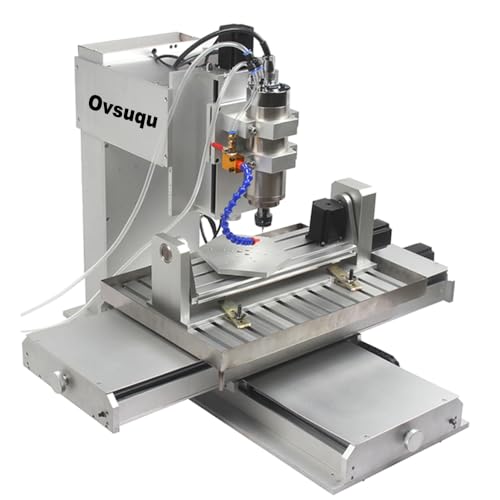
Are you looking to streamline your machining process and boost productivity in your workshop? Dive into the world of multi-tasking 5-axis milling machines with our latest blog post! In this article, we will explore how these cutting-edge machines can revolutionize your manufacturing operations by increasing efficiency, accuracy, and flexibility. Discover the power of 5-axis milling machines and unlock new possibilities for your business.


What are 5-Axis Milling Machines?
5-Axis milling machines are advanced machining centers that offer a higher level of precision and versatility compared to traditional 3-axis or 4-axis machines. These machines can move a cutting tool along five different axes simultaneously, allowing for complex and intricate part geometries to be produced with incredible accuracy.
Capabilities of 5-Axis Milling Machines
- Multi-Axis Machining: 5-Axis machines can perform cutting operations on five different sides of a workpiece without the need for repositioning, resulting in faster cycle times and increased efficiency.
- Improved Surface Finish: By allowing the cutting tool to approach the workpiece from multiple angles, 5-Axis machines can achieve superior surface finishes on intricate parts.
- Enhanced Tool Access: The additional axes of movement enable better access to difficult-to-reach areas of the workpiece, reducing the need for manual repositioning and minimizing setup times.
- Optimized Tool Paths: 5-Axis machines can utilize shorter cutting paths, reducing vibration and tool wear, resulting in longer tool life and improved overall machining quality.
How 5-Axis Milling Machines Differ from Traditional Machining Centers
- Additional Axes of Movement: Traditional machining centers typically have 3 or 4 axes of movement, limiting the machine’s ability to approach the workpiece from different angles.
- Complex Part Machining: 5-Axis machines excel at producing intricate and complex parts that would be challenging or impossible to machine using traditional methods.
- Increased Accuracy: The simultaneous movement along five axes allows for precise control over the cutting tool’s orientation, resulting in higher accuracy and tighter tolerances.
- Versatility: 5-Axis machines can handle a wide range of materials and part geometries, making them ideal for industries such as aerospace, automotive, and medical devices.
Practical Examples
- Haas UMC-750: This 5-Axis milling machine from Haas Automation offers advanced capabilities for precision machining, making it a popular choice among manufacturers looking to enhance their production processes.
- DMG MORI NMV 3000 DCG: Known for its innovative design and cutting-edge technology, this 5-Axis machine from DMG MORI delivers exceptional performance and superior surface finishes, making it a top choice for high-precision machining applications.
By leveraging the capabilities of 5-Axis milling machines, manufacturers can achieve higher productivity, improved quality, and enhanced competitiveness in today’s demanding market.
Benefits of Multi-Tasking 5-Axis Milling Machines
Multi-tasking 5-axis milling machines have revolutionized the manufacturing industry by offering a wide range of benefits that lead to increased efficiency, accuracy, and versatility. In this blog, we will delve into the advantages of using these advanced machines and how they can positively impact your production processes.
Increased Efficiency
- Simultaneous Machining: With multi-tasking capabilities, operators can perform multiple operations in one setup, reducing part handling time and increasing overall efficiency.
- Reduced Setup Time: Traditional machines require multiple setups for complex parts, whereas 5-axis machines can complete all operations in a single setup, saving time and improving throughput.
- Faster Cycle Times: The ability to approach the workpiece from multiple angles simultaneously allows for faster cutting speeds and reduced machining times.
Improved Accuracy
- Enhanced Surface Finish: 5-axis machines can reach surfaces that would be impossible to access with traditional 3-axis machines, resulting in superior surface finishes and part quality.
- Complex Geometries: The continuous 5-axis movement enables machining of intricate geometries with high precision, ensuring the accuracy and repeatability of finished parts.
- Tool Center Point Control (TCPC): Maintains consistent tool orientation throughout the machining process, minimizing errors and achieving precise results.
Enhanced Versatility
- Multi-Sided Machining: The ability to approach the part from various angles enables multi-sided machining without the need for repositioning, expanding the range of possible operations.
- Diverse Material Compatibility: 5-axis milling machines can handle a wide range of materials, including metals, plastics, composites, and exotic alloys, making them ideal for versatile manufacturing applications.
- Integration with Automation: Many 5-axis machines are compatible with automation solutions, such as robotic loaders, pallet changers, and tool changers, enhancing production flexibility and scalability.
Practical Examples
- Haas UMC-750: The Haas UMC-750 5-axis machine offers high-speed machining capabilities and a large work envelope, making it suitable for a variety of industries, from aerospace to medical device manufacturing.
- DMG MORI DMU 50: The DMU 50 5-axis machine by DMG MORI features advanced technology for complex machining tasks, ensuring precision and efficiency in production processes.
By investing in a multi-tasking 5-axis milling machine like the Haas UMC-750 or DMG MORI DMU 50, manufacturers can unlock a new level of efficiency, accuracy, and versatility in their machining operations. The benefits of these advanced machines extend beyond cost savings to improved quality, increased productivity, and enhanced competitiveness in today’s dynamic manufacturing landscape.
Applications in Various Industries
Multi-tasking 5-axis milling machines have emerged as indispensable tools across a wide range of industries. Let’s delve into the various sectors where these advanced machines are deployed, revolutionizing production processes and driving efficiency to new heights.
Aerospace Industry
- Example: Hurco VMX64i
- Benefit: Precision machining of complex aerospace components
- Impact: Reduced setup time, increased accuracy, and enhanced part quality
Automotive Sector
- Example: DMG MORI DMC 80 FD duoBLOCK
- Benefit: Simultaneous multi-sided machining for engine components
- Impact: Improved productivity, minimized cycle times, and enhanced surface finish
Medical Device Manufacturing
- Example: Haas UMC-750
- Benefit: Unmatched versatility for intricate medical implants
- Impact: Enhanced productivity, reduced tool changes, and minimized scrap rates
Mold and Die Industry
- Example: Makino D200Z
- Benefit: High-speed machining of intricate molds and dies
- Impact: Superior surface finish, extended tool life, and optimized machining times
Energy Sector
- Example: Okuma MU-8000V LASER EX
- Benefit: Complex part production for renewable energy components
- Impact: Streamlined operations, reduced downtime, and increased production capacity
Key Advantages of Multi-Tasking 5-Axis Milling Machines:
- Simultaneous machining on multiple axes
- Reduced setups and increased throughput
- Enhanced accuracy and improved surface finish
- Versatility in handling diverse workpieces
- Minimized tool changes and setup times
- Optimal chip control and improved tool life
In conclusion, the adoption of multi-tasking 5-axis milling machines continues to reshape modern manufacturing across industries, offering unparalleled precision, efficiency, and versatility. Stay tuned as we explore more cutting-edge technologies driving the future of production processes.
Considerations for Implementing 5-Axis Milling Machines
Implementing 5-axis milling machines can be a game-changer for manufacturers looking to enhance precision and efficiency in their operations. However, there are several key considerations that should be taken into account before making the investment. Let’s delve into some crucial factors to keep in mind when incorporating 5-axis milling machines into your workflow.
Cost Considerations
- The initial cost of purchasing a 5-axis milling machine can vary depending on the brand and model. For instance, the Haas UMC-750 offers a cost-effective entry point for smaller businesses, while the DMG Mori NVX 7000 provides high-end capabilities at a premium price.
- Consider additional costs for necessary accessories, tooling, and software upgrades.
- Compare total cost of ownership, including maintenance, energy consumption, and potential downtime.
Training and Skill Development
- Investing in comprehensive training for your operators is essential to maximize the potential of your 5-axis milling machine.
- Look for manufacturers such as FANUC or Siemens that offer training programs tailored to their specific machines.
- Consider the learning curve for your team and ensure sufficient time for skill development.
Maintenance Requirements
- Regular maintenance is crucial to ensure optimal performance and longevity of your 5-axis milling machine.
- Check for ease of access to critical components for maintenance tasks. For example, the Haas VF-2SS features a side-mount tool changer for simplified maintenance.
- Consider the availability of spare parts and technical support from the manufacturer.
Compatibility with Existing Systems
- Evaluate the compatibility of the 5-axis milling machine with your current CAD/CAM software and workflow.
- Popular software solutions such as Mastercam and HyperMill offer seamless integration with a wide range of 5-axis machines.
- Ensure that your machine is equipped with the necessary interfaces to connect to your existing systems.
Performance and Precision
- Consider the machining capabilities of the 5-axis milling machine, such as spindle speed, tool capacity, and positional accuracy.
- High-performance models like the Okuma MU-4000V offer rapid tool change and multi-axis machining for increased productivity.
- Look for machines with advanced features like thermal compensation to maintain precision during long machining operations.
Implementing a 5-axis milling machine requires careful evaluation of these key factors to ensure a successful integration into your manufacturing processes. By weighing the costs, training requirements, maintenance considerations, and compatibility with existing systems, you can make an informed decision that maximizes the benefits of this advanced technology.
Optimizing Production Through Advanced Machining Technology
In conclusion, multi-tasking 5-axis milling machines offer unparalleled efficiency by reducing setup times, enhancing precision, and optimizing production. To reap these benefits, it is crucial to conduct thorough research and evaluation before integrating these machines into your manufacturing processes. By doing so, you can maximize the impact of this cutting-edge technology on your operations and stay ahead of the competition.
FAQs About 5-Axis Milling Machines
Several industries and applications can benefit significantly from the use of 5-axis milling machines due to their advanced capabilities. Some of the industries that would see the most benefit include aerospace, automotive, medical, and mold-making industries.
More complex parts that require intricate detailing and multiple angles can be efficiently produced with 5-axis milling machines. The ability to maneuver the cutting tool in five different axes allows for improved efficiency, accuracy, and reduced setup times. Additionally, the machines can work on a variety of materials, including metals, plastics, and composites, making them versatile for a wide range of applications.
In conclusion, industries requiring complex and precise components with advanced geometries stand to benefit the most from the use of 5-axis milling machines.
The flexibility of 5-axis milling machines allows for complex geometries and parts to be produced more efficiently because they can move in five different axes simultaneously. This means that the cutting tool can access hard-to-reach areas and approach the workpiece from multiple angles without the need for repositioning or resetting. As a result, intricate shapes and contours can be machined in a single setup, reducing production time and increasing accuracy. This capability is especially beneficial for industries such as aerospace, automotive, and medical, where complex parts with tight tolerances are common.
One of the main benefits of using 5-axis milling machines over traditional 3-axis machines is the increased versatility and efficiency they provide. 5-axis machines allow for machining complex parts from multiple angles in a single setup, reducing the need for multiple operations and tool changes. This leads to higher precision, improved surface finishes, and overall faster machining times. Additionally, 5-axis machines are capable of producing more intricate and complicated geometries that may not be achievable with 3-axis machines.
Training and expertise are essential for maximizing the efficiency of 5-axis milling machines. Skilled operators can optimize tool paths, select appropriate cutting strategies, and adjust cutting parameters to achieve faster and more accurate machining. Proper training also ensures that operators can troubleshoot issues, perform preventive maintenance, and make timely adjustments that minimize downtime and maximize productivity. Expertise in programming, tool selection, machining techniques, and machine capabilities can significantly enhance the efficiency and performance of 5-axis milling machines.
When selecting a 5-axis milling machine for a specific manufacturing operation, there are several key features to consider:
- Axis Configurations: Ensure the machine offers simultaneous 5-axis capabilities for complex and multi-sided machining.
- Rigidity and Stability: Look for a machine with a sturdy construction that provides stability during high-speed cutting operations.
- Spindle Speed and Power: Consider the spindle speed and power requirements based on the materials you will be machining.
- Accuracy and Repeatability: Check the machine’s accuracy and repeatability specifications to ensure precise results.
- Tool Changer: Evaluate the tool changer capacity and speed to optimize production efficiency.
- Control System: Choose a machine with a user-friendly control interface and advanced programming capabilities to streamline operations.
By considering these features, you can select the right 5-axis milling machine to meet the demands of your specific manufacturing operation.
Certainly! Simultaneous 5-axis machining is a technique where the cutting tool can move across five different axes simultaneously. This allows for more complex and intricate parts to be machined in a single setup, as the tool can access hard-to-reach areas without repositioning the workpiece.
The advantages of simultaneous 5-axis machining include increased accuracy due to reduced setup time and fewer required workholding devices. It can also improve surface finish quality and reduce overall production time by minimizing tool changes. Additionally, this method can increase productivity by reducing the need for multiple setups and improving the efficiency of the manufacturing process.




I’d like to see a case study included to further illustrate the impact of these machines on efficiency.
The article successfully highlights the importance of investing in technology for improved manufacturing processes.
I found the section on reducing setup times particularly interesting and important for increasing efficiency.
The comparison between traditional machines and multi-tasking machines was well explained.
I wish there were more details about the cost implications of switching to multi-tasking machines.
Overall, a well-researched piece that showcases the advancements in machining technology.
The discussion on streamlining production workflows was very informative and practical.
This article provides great insight into the benefits of multi-tasking 5-axis milling machines.
The potential for increased precision with these machines is a compelling argument for their adoption.
It would have been helpful to have real-life examples of companies benefiting from using 5-axis milling machines.