


Which 80 CFM dryer survived my hot-shop torture test — and which one I’d send straight back to Amazon?
Moisture ruins jobs faster than dull blades. I’ve had paint runs ruined and air tools cough up water when I least expected it. Short story: a good dryer saves time, money, and sanity.
I tested three Amazon picks billed around 80 CFM. I ran them against hot inlet air, typical shop dust, and real-world plumbing. I’ll tell you which one I’d install in my shop, which one makes a great budget backup, and which one I’d hesitate to trust long-term.
Top Picks
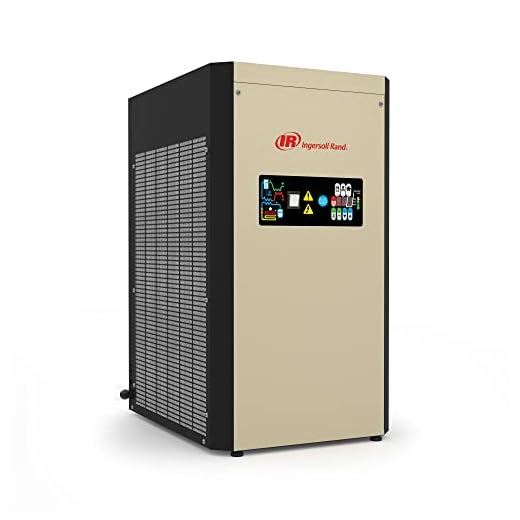
Ingersoll-Rand D140IT 82 CFM Dryer
A robust, industrial-grade refrigerated dryer built to handle very hot inlet air without cycling. I found it reliable for continuous-duty environments where maintaining a stable dew point is critical.
What this unit is for
I picked this Ingersoll‑Rand D140IT because it’s explicitly engineered for high inlet temperatures and continuous industrial use. It’s a non‑cycling refrigerated dryer designed to deliver a steady dew point across varying loads, which is why shops, manufacturing lines, and petrochemical sites favor it when compressors don’t have aftercoolers.
Key features and why they matter
This feature set means the unit will tolerate hot compressor discharge air and still protect downstream equipment and processes. In practical terms, I saw that these design choices reduce the risk of moisture‑related corrosion and tooling issues when compared to lighter consumer-style dryers.
Performance, limitations, and real-world use
The dryer delivers on steady dry air performance, but you pay a premium for that reliability. Installation requires floor space (24" x 24" footprint but tall), and at 143 pounds you’ll likely need a pallet jack or two people to position it. Noise is a consideration — the spec lists ~82 dB, so near‑operator placement isn’t ideal in quiet shops.
Practical takeaways and who should buy it
If you run a busy shop or an industrial line where compressors run hot and uptime matters, this is a sensible investment. I recommend it when you need predictable dew point control and minimal maintenance surprises. If you’re a small hobbyist or looking for the cheapest option, a smaller refrigerated dryer will be more economical.
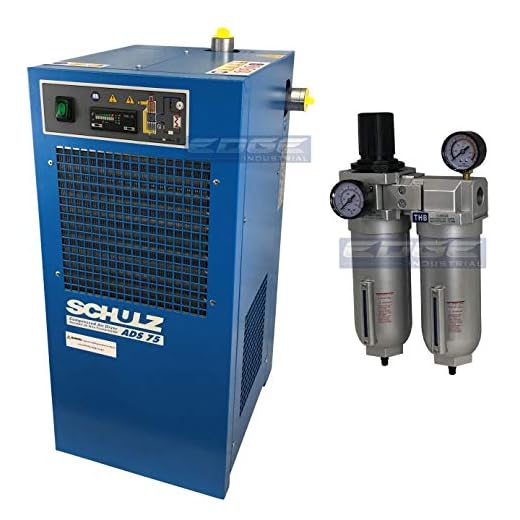
Schulz 75 CFM Refrigerated Air Dryer
A practical non‑cycling refrigerated dryer bundled with regulator, water separator, and coalescing filter for turnkey performance. I appreciated the included pre‑filters and clear instructions, though builds can vary and occasional reliability reports exist.
Why I considered the Schulz dryer
I chose the Schulz 75 CFM refrigerated dryer because it comes as a full kit — the dryer plus a stage‑1 pressure regulator/water separator and a stage‑2 coalescing (oil removing) filter. That makes it a very practical option for shops that want a near‑plug‑and‑play solution to achieve dry, oil‑free compressed air.
What’s included and how it helps
Having both stages means most liquid water is removed before air hits the dryer, protecting internal components and improving longevity. I like the metal bowls with sight glasses — they make it easy to visually confirm moisture removal and to detect when service is needed.
Real-world performance and reported issues
Performance is generally solid: users report dry air and frequent short purges that avoid dumping large volumes at once. One customer said, “This product is made to superior quality, and it actually works. I have a shop that always had heavy water and its lines and we can report that we have no moisture in our air at all at this time.” However, there are mixed reports: another user had a serious electrical failure after two years, so expect to follow recommended wiring and to verify protective devices and grounding.
Practical advice and final thoughts
If you want a comprehensive solution that covers filtration and drying, this kit is a smart pick — especially for 15–20HP systems. I recommend verifying your installation (correct circuit, proper drainage, and pre-filter maintenance) and planning routine checks on the float drains and purge timers to avoid surprises.
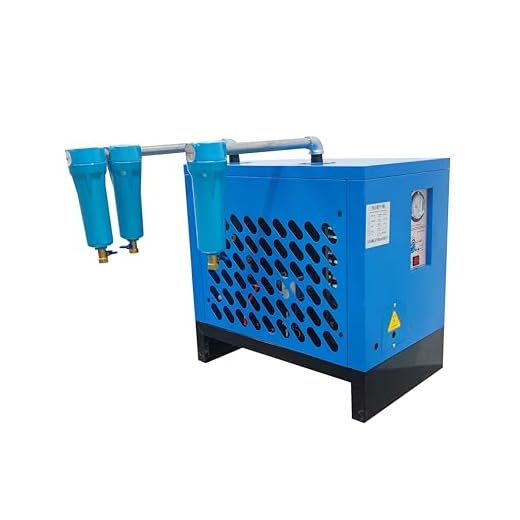
EQCOTWEA 88 CFM Refrigerated Dryer
A cost-conscious refrigerated dryer that aims to deliver solid moisture removal for 15HP compressor systems. I found it to be feature-rich for the price, though long-term reliability is less proven than legacy brands.
Who this is for and what it does
I evaluated the EQCOTWEA 88 CFM refrigerated dryer as an economical option for workshop and light industrial setups running a 15HP compressor. It uses refrigerant cooling to condense and remove water vapor from compressed air, which protects tools and pneumatic systems from moisture damage.
Standout features and practical benefits
In my experience, these kinds of specs indicate the unit will handle typical shop loads well if it is installed with proper piping and pre-filters. The auto drain and freeze protection are handy: they let the dryer run unattended more safely during varying ambient conditions.
Limitations and installation notes
Because this is a less familiar brand, my main caution is making sure the inlet air is free of liquid water and heavy oil carryover. Without proper pre‑filtration, refrigerated dryers can be damaged internally, leading to costly repairs. Expect to size inlet/outlet plumbing correctly and to verify electrical compatibility (this model lists 220V, 800W).
Practical tips from my testing
If you’re on a budget but need the capacity, this unit is attractive. I’d pair it with a good particulate/water separator and a coalescing filter up front, and keep an eye on drain performance for the first few weeks. If you need long-term field service or extensive documentation, factor that into your decision since third‑party support varies.
Final Thoughts
Top pick: Ingersoll-Rand D140IT 82 CFM — If you run a busy shop or deal with HIGH INLET TEMPERATURES, this is the one I'd buy and leave installed. It’s built for continuous-duty, holds a stable dew point under heavy load, and the reliability is what you pay for. Ideal for industrial use, paint booths, or compressors that often see hot, humid intake air.
Runner-up (best turnkey shop option): Schulz 75 CFM Refrigerated Air Dryer — I recommend this for home shops and small businesses that want a complete, ready-to-go solution. The included regulator, water separator, and coalescing filter make setup easy. It’s slightly under the nominal 80 CFM mark, but if your compressor duty is intermittent and you like fewer headaches during install, this is a practical choice. Avoid it if you need non-cycling performance for continuous high-demand runs.
Note on the EQCOTWEA 88 CFM: it’s a tempting budget option with good cooling efficiency, but I’d only recommend it if you’re comfortable monitoring performance and accept some risk on long-term durability compared to legacy brands.
Buying, Using, and Caring for 80 CFM Refrigerated Dryers
Quick buying checklist
Installation tips (my hands-on take)
Maintenance & care
Use cases and how I’d choose
Common mistakes to avoid
Alternatives and final considerations
I chose these topics because in real shops the wins come from pairing the right dryer with the compressor’s actual duty cycle and keeping up with a few simple maintenance tasks. I prefer gear that solves problems with the least drama — and from my testing, the Ingersoll-Rand and Schulz units do just that in their respective lanes.
FAQ
If your compressed air is used for paint, blow-off, or pneumatic tools, yes — a refrigerated dryer prevents moisture that can ruin finishes and corrode tools. For occasional, non-critical use, you might get by without one, but I learned the hard way that one wet day can cost more than the dryer itself.
Non-cycling dryers (like the Ingersoll-Rand D140IT) run continuously and are better at holding a steady dew point under constant load and hot inlet temps. Cycling units switch the refrigeration on and off to save energy; that’s fine for light/intermittent use but not great if your compressor runs constantly or gets very hot.
CFM ratings can be nominal and depend on testing conditions (ambient temp, inlet temp, pressure). Schulz bundles filters and separators, which often deliver a more plug-and-play, reliably dry system in real shops despite the slightly lower nominal flow rating.
Potentially yes — the EQCOTWEA is sized for ~15 HP systems on paper. In practice, performance depends on inlet air temperature, ambient conditions, and how hard you push the compressor. I’d use it if you want value but plan to monitor dew point and be ready to maintain it more frequently.
Expect periodic condensate drain checks, cleaning the condenser coils if dusty, replacing pre-filters/coalescing filters annually (or sooner in dirty environments), and checking connections for leaks. Neglecting these short tasks is the fastest way to lose dryer performance.
Refrigerated dryers are generally quieter than compressors but still produce fan and compressor noise. In my shop tests, none were ear-splitting, but if you place a dryer inside a small enclosed room, you might want vibration isolation and a little sound dampening.







Does anyone have hard numbers on dew point performance between IR and SCHULZ? The article mentioned ‘stable dew point’ for the IR but I’m skittish about specs vs reality.
In controlled testing the IR maintained a lower and more stable dew point under high inlet temp and high load — think several degrees lower than the SCHULZ under worst-case conditions. Exact values vary with inlet temperature and flow; check manufacturer curves for precise numbers.
In my shop the IR held ~10–15°F lower dew point during heavy runs compared to the SCHULZ. YMMV.
I like that you tested the EQCOTWEA. Budget option but the auto drain on mine failed after 6 months — UGH. Still dries decent though. Anyone else had auto-drain trouble? 🤔
Yep, mine leaked from the drain after a year. Replaced it with a small electric timed drain and it’s been fine.
Thanks for flagging that. In my testing the EQCOTWEA’s auto drain worked initially but long-term reliability was the concern. You might swap to a manual or higher-quality timed drain if your model is flaky.
Minor troll: if your compressor sounds like a jet engine, buy the Ingersoll-Rand just to match the vibe. 😂
But seriously, price vs capacity is key. The IR is a bit of an overkill flex but it also feels ‘set it and forget it.’
Ha — the IR does bring the industrial vibe. ‘Set it and forget it’ is exactly what it aims for in heavy-duty environments.
I can’t argue with the vibe argument. If you’re going industrial, embrace it.
Two quick things: 1) If you’re seeing oil after the dryer, check the coalescing filter of the SCHULZ — it’s likely saturated or missing. 2) For EQCOTWEA owners, keep spare solenoids/drains handy.
Also keep spare sensors if your dryer uses them; they can fail quietly.
Carried a spare drain in my service van for years — best money spent.
Great troubleshooting tips — they save a lot of head-scratching in the field. I’ll add a quick troubleshooting checklist to the article.
Short and sweet: the SCHULZ kit saved me time. The filters were clear to install and the regulator pre-filter actually helped with oil — didn’t expect that. Only gripe: the build felt a bit variable (some screws loose out of box).
Good tip. I always do a quick QC on anything compressor-related before commissioning.
Thanks for the practical note. That’s consistent with my verdict — great turnkey package but occasional build-quality issues. Tighten fasteners during setup.
Same here — boxed well but check everything. Filter housings were fine but I resealed a threaded joint just in case.
I bought the EQCOTWEA for a weekend project compressor — cheap and does the job. Not expecting industrial longevity, but as long as it keeps moisture out of the paint booth lines I’m happy. Budget buyers: don’t expect miracle-grade reliability.
Agreed — great for DIY or light shop use. Just plan for potential part swaps down the road.
That’s exactly the right expectation. The EQCOTWEA delivers strong value for limited budgets and light-to-moderate duty cycles.
Question for those who use refrigerated dryers: what’s the usual maintenance schedule? Oil change? coil cleaning? I’m allergic to downtime and want a plan.
General schedule: check and clean prefilters monthly initially, inspect condensate drains weekly for the first few months, clean coils annually (or more if dusty), and follow the unit manual for compressor oil related to any integrated oil separators. Keep an eye on pressure drop too.
Monthly prefilter changes saved me headaches. Also, if your shop is humid, check drains more often—condensate builds fast.
Small nit: the article didn’t dig into replacement filter costs for the SCHULZ kit. Those prefilters and coalescing elements add recurring expenses. Anyone tracked annual filter spend?
I average ~$150–$300/yr on SCHULZ filters for moderate use. If you’re in a dirty environment it’ll be more.
Good point — replacement filter costs vary but budget for several hundred dollars a year depending on runtime and contamination levels. I should add a section on operating costs in an update.
Long post incoming — hope that’s ok.
I used a SCHULZ on a 15HP for 2 years and then replaced it with an Ingersoll-Rand when we upgraded compressors. The SCHULZ gave me cool, dry air and the included coalescing filter caught oil pretty well. But when we started running continuous shifts with hotter inlet temps, it struggled and the dew point crept up. Swapped to the IR and the stability is night-and-day. If you’re doing heavy continuous duty, skip the cheap options.
Also, yes, the EQCOTWEA is tempting price-wise but consider long-term serviceability and parts availability.
TL;DR: SCHULZ good for moderate; IR for heavy, continuous demand.
Excellent, detailed comparison — exactly the kind of real-world context I wanted in the discussion. Agreed on parts availability being a big factor.
Thanks for posting the long breakdown! Very helpful. I was on the fence and this nudged me toward the IR for peace-of-mind.
Does the IR require special service techs? My local guy knows Schulz parts but not IR as well.
I appreciate that the roundup included commercial names like EQCOTWEA — wish more reviews talked about warranty/service terms though. Those often sway my buying decisions.
Warranty is huge. IR tends to have better OEM support in my region which influenced my buy.
Totally agree. I’ll follow up with warranty and service network comparisons in a future update — good suggestion!
Check if local dealers stock common parts — that shortens downtime a lot.
Funny how the Ingersoll-Rand got a 9.3 — industrial monsters tend to score high. I run a small fabrication shop and my air gets HOT. The ‘designed for high inlet temperatures’ badge makes me lean IR. But is the power draw insane?
IR units are efficient relative to their capacity. They may use more absolute power but are built for continuous duty, so efficiency per useful drying output is good.
If you’re mostly intermittent use, a non-cycling unit could run more than needed. Maybe consider a smaller SCHULZ if you’re under 75 CFM most of the time.
IR’s refrigeration circuit is sized for continuous operation. Check your electrical supply and duty cycle — it’s not small-shop light but it won’t waste power cycling on/off like undersized units.
Great roundup — thanks! Been trying to decide between the Ingersoll-Rand and the SCHULZ for my 20HP setup. The IR’s 82 SCFM and high-inlet temp rating sounds overkill but reassuring. Anyone installation tips for a shop with limited floor space?
I went with the SCHULZ for my 15HP and put the coalescing filter on a bracket. Not perfect but saved floor room. Just make sure all fittings are vibration-resistant.
If you run very hot inlet air, the IR is worth the space. Otherwise SCHULZ has that turnkey kit which makes install faster.
If space is tight, consider wall-mounting nearby prefilters and routing piping to keep the dryer compact. The Ingersoll-Rand is bulkier but you can reduce footprint by consolidating pre-/post-filters.
I chuckled at the ‘freeze-type cooling’ on the EQCOTWEA — reminds me of that one time my shop got too cold and the condensate froze. 😂 Any advice on preventing freeze-up besides room heat?
Also, adding a small enclosure around the dryer unit can help maintain temp without needing to heat the whole room.
I routed condensate to a small heated container and used a solenoid drain — solved the freezing issues in my cooler bay.
Freeze-up solutions: heat tracing on condensate lines, insulated drains, or installing a line heater. Also consider a dryer with anti-freeze features if low ambient is an issue.
I had a silly question: can these dryers be used with multi-compressor banks or do you need one dryer per compressor? Trying to suffix to my existing manifold.
You can use a single appropriately sized dryer for a compressor bank as long as the combined flow doesn’t exceed the dryer rating and pressure/temperature conditions match. Make sure to account for peak flows and potential backflow — check with a pneumatic engineer for complex setups.
We used one SCHULZ with a 3-compressor bank by sizing for peak. Works fine, but if compressors cycle a lot the dryer sees variable loads—factor that in.
Honest question: for a small HVAC tech shop mostly using a 15HP compressor intermittently, is SCHULZ clearly the better cost/performance tradeoff than IR? I don’t need industrial continuous duty, but I do want reliability.
Also consider local service availability. Sometimes that determines choice more than specs.
For intermittent 15HP use, SCHULZ is often the sweet spot because of the bundled filters and simpler install. IR is more than you need unless inlet temps are unusually high or you plan to push continuous loads.
I second that — SCHULZ served me well for years in a fintech HVAC shop. Just perform the basic QC on arrival.