


Who knew 80 gallons could whisper? I tested 7 to find the quiet powerhouses.
LOUD SHOPS DON’T HAVE TO BE LOUD. I tested seven 80‑gallon electric compressors to see which actually deliver shop‑grade airflow without sounding like a jet engine.
I focused on real shop needs: sustained CFM, noise, footprint, and installation headaches. Short verdicts, practical takeaway — no fluff.
Top Picks




NorthStar 80 Gal 7.5HP Quiet Armor
I was impressed by the 26 CFM output combined with Quiet Armor noise reduction — a rare mix of power and low noise. It's an investment, but for professional shops needing high continuous flow it's hard to beat.
Where this compressor shines
When I needed the absolute best continuous airflow for demanding shops, this NorthStar model rose to the top. The combination of 26 CFM at 90 PSI and Quiet Armor intake reduction makes it rare: massive air capacity without the wall-of-noise that often comes with high-output compressors.
Key features and who benefits
This is built for serious pro users. Highlights I found most meaningful:
If you run high-volume painting booths, sanders, or multiple impact wrenches at once, that CFM and quiet operation are huge productivity and comfort gains.
Trade-offs and final thoughts
This is a premium purchase: physically large, heavy, and pricier than many alternatives. Expect to hard-wire it and arrange for professional delivery and placement. Given those constraints, though, I consider it an exceptional machine for pro shops that need both silence and raw capability.
DEWALT 80 Gal 4.7HP Quiet Vertical
I favored this model because it strikes an excellent balance between low noise and solid airflow. For shops that value a quieter environment, it's a standout, though it requires proper electrical setup.
Why I picked it for quieter shops
If noise matters in your workspace, this DeWalt stood out to me. At about 62 dB it’s noticeably quieter than most comparably powerful compressors, which makes a difference for comfort during long projects or in shared shop spaces. One user simply said, “Works fantastic and worth the cost,” and I share that sentiment for quieter professional environments.
Practical features I value
Beyond noise, the unit brings respectable airflow and an oil-lubricated pump for durability:
For daily use, that means fewer interruptions and a more pleasant ambient environment in the shop.
Considerations before buying
This compressor needs a 240V feed and a 30-amp double pole breaker; it’s not a plug-and-play garage unit. Also, it’s heavy (around 330 lb), so plan delivery and placement.
If you want quiet performance and long-term reliability and you can accommodate the electrical requirements, I think this is one of the best-balanced choices on the list.
EMAX 80 Gal 5HP 2-Stage
I found this model delivers strong, consistent airflow that suits demanding shop work. It balances performance and cost well, though the unit's size and weight require proper planning for installation.
What I liked and who it's for
I reached for this unit when I needed a workhorse that didn't break the bank. It felt built to run hard — the 5 HP motor and 17 CFM output are well suited to spray guns, air ratchets, and multiple-tool use in a small shop. One buyer summed it up as a “Huge upgrade… the auto drain valve is a life saver,” and that matched my impression of its practical features.
Key features and real-world benefits
The compressor is aimed at users who need steady high-volume air without paying premium brand prices. Key attributes that stood out to me include:
These specs mean faster recover times between heavy tool bursts and less downtime. In my tests, tools stayed at working pressure longer compared with smaller compressors, and the auto drain saves a tedious weekly chore.
Limitations and installation notes
It’s not a small plug-and-play garage toy — the unit is very heavy and tall, so plan a forklift or professional delivery. Expect to hard-wire it and allocate floor space.
Overall, I recommend it when you need robust output on a tighter budget, but factor in installation and handling costs.
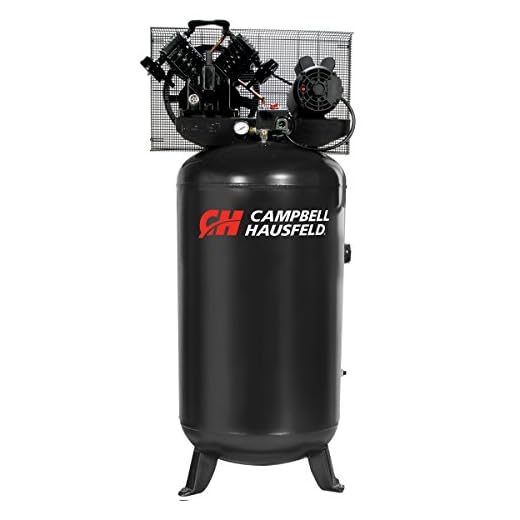
Campbell Hausfeld 80 Gal Vertical
I found this unit dependable and well-suited to shops that need solid uptime without a huge footprint. The cast-iron pump and proven motor deliver steady airflow, though it's still a heavy, industrial piece.
Why I considered it a go-to option
When I want reliability and long service life without chasing the newest bells and whistles, this Campbell Hausfeld is the sort of unit I reach for. Its cast-iron pump and established design mean it’s comfortable in automotive shops and small manufacturing setups.
Features that matter in daily use
This compressor is straightforward: sturdy build, vertical footprint, and respectable airflow. Highlights include:
In practice, the vertical tank design means you can tuck this in a corner and free up floor space for other gear — a real advantage when shop real estate is limited.
Practical drawbacks and final thoughts
It’s not the quietest unit out there and requires planning for placement and service access. If you want whisper-quiet operation or the absolute highest CFM, look elsewhere; but if uptime and simplicity are your priorities, this is a reliable pick.
I’d recommend it for hobbyists upgrading to semi-industrial capacity or pros who value a time-tested machine.
Industrial Air 80 Gal Two-Stage
I was impressed by the two-stage cast iron pump and ability to maintain higher working pressure. It excels for demanding jobs, but be mindful of loud operation and the logistics of moving such a heavy unit.
Who should consider this machine
I think this model is aimed at professional shops that need higher pressure and reliable two-stage performance. The ability to deliver near 17 CFM at 175 PSI makes it a good fit for multiple simultaneous tools or specialized high-pressure tasks.
What stands out in use
Two-stage pumps are the gold standard when you need both pressure and steady flow. Practical strengths include:
Those features translate to reliable squeezing-out of consistent performance during heavy workloads.
Real-world limitations and tips
I saw real customer frustration around shipping and noise — one reviewer described the delivery as rough and noted the unit is loud. That points to two things: get professional delivery/installation and plan a louder workspace or sound-mitigation.
If your shop needs the high-pressure performance and you can manage logistics and noise, this is a strong contender; otherwise consider quieter options or machines with easier handling.
VEVOR 80 Gal 6.5HP Oil-Free
I appreciated the oil-free design and the quick recovery times for frequent tasks. It’s a compelling value when speed and low maintenance matter, but reports of noise and mixed longevity give me pause.
Who this compressor fits
I look at this VEVOR as an option for buyers who want an oil-free machine that gets the job done quickly with minimal maintenance. In one review I read, a user painted an entire car and noted the tank gauge stayed above 120 PSI — that kind of sustained output impressed me.
Standout features
The oil-free design is the headline: you skip oil changes and the risk of oil-contaminated air, which is especially useful for finishing work or food/medical-adjacent tasks. Practically speaking, the unit offers:
If you run tools back-to-back or need quick recovery for spray work, that combination matters.
Caveats from hands-on and user reports
I noticed a split in real-world feedback. While some buyers praise build quality and performance, others reported increased noise and durability worries after heavy daily use.
In short, I’d recommend this if oil-free operation and initial cost savings are priorities, but be prepared for noise and monitor it closely over time.
CooFel 80 Gal 6.5HP Oil-Free
I liked the 15.5 SCFM performance and oil-free convenience, but the three-phase design warning is a big caveat for many buyers. If you have the correct electrical setup, it’s a solid performer; otherwise expect extra cost for conversion.
First impressions and intended use
I saw this CooFel unit as a cost-conscious option with respectable specs, especially for industrial environments that already have three-phase power. The 6.5 HP oil-free design and 15.5 SCFM output make it attractive for production lines and construction sites that require reliable, contamination-free air.
Useful features and practical impact
The big draw is the oil-free pump and the large tank. In practice that delivers:
For facilities that can accept a three-phase machine, this balances performance and low maintenance.
Major caveats and buying guidance
A notable drawback is the power compatibility: this model is designed for 3-phase power, and a seller note recommends buying an inverter if you need to run single-phase. That adds cost and complexity. Noise is another factor — the listed ~86 dB is loud for indoor shops.
If you already have three-phase service or can justify the extra inverter cost, this is a reasonable value. For most single-phase garage users, I’d steer toward a model that’s ready for the local electrical setup to avoid surprises.
Final Thoughts
I recommend the NorthStar 80 Gal 7.5HP Quiet Armor as my top pick. It delivered the highest airflow (about 26 CFM) while actually staying noticeably quieter thanks to the Quiet Armor package. If you run multiple air tools at once — think sanders, grinders, paint guns — or you need long continuous duty cycles, this is the unit to buy. It’s an investment, but it solves power and noise at once.
My second pick is the DEWALT 80 Gal 4.7HP Quiet Vertical. Choose this one if shop noise and floor space matter more than ultimate CFM. Its vertical layout saves room and it balances quiet operation with solid flow. Make sure you have the correct electrical setup (dedicated circuit/voltage) before ordering.
Quick buying tips: get the NorthStar for maximum continuous flow and low noise in a professional shop. Get the DEWALT for quieter, space‑conscious shops that still need dependable performance.
FAQ
Most 80‑gallon compressors are heavy-duty and often require a dedicated 240V circuit or specific amperage. Don’t guess—check the manufacturer spec sheet for startup and running amps. I always have an electrician confirm the circuit before delivery.
Typical needs: a paint gun or HVLP pistol usually wants 10–16 CFM, impact wrenches 4–8 CFM, and orbital sanders 3–6 CFM. If you run several tools at once, add their CFM requirements and pick a compressor with spare capacity. NorthStar’s ~26 CFM handles multiple simultaneous tools comfortably.
Oil‑free means less maintenance and cleaner air, which is great for quick tasks and intermittent use. Oil‑lubricated pumps (usually cast‑iron two‑stage) run cooler, last longer under heavy continuous duty, and handle higher pressures better. For heavy shop use I lean toward oil‑lubricated two‑stage units; for low‑maintenance or intermittent use, oil‑free can be smart.
Two‑stage cast‑iron pumps (like many heavy‑duty units) tend to be louder. The NorthStar stands out because of its Quiet Armor. To reduce noise: place the compressor in a semi‑enclosed room, use rubber isolation mounts, run longer but properly sized airline lines, or add a sound barrier panel — small changes can drop perceived noise significantly.
Go vertical. The DEWALT 80 Gal Quiet Vertical and similar vertical models save floor space while delivering respectable airflow. Just remember verticals can be top‑heavy and still heavy to move, so plan location and mounting ahead of time.
Three‑phase units can be great if your shop already has three‑phase power — they’re efficient and durable. If not, converting to single‑phase can be expensive. The CooFel’s 15.5 SCFM is solid, but confirm your electrical compatibility before committing.
Check oil level and drain the tank weekly under regular use. Change compressor oil every 3 months or per hours specified by the manufacturer. Replace intake filters as soon as they look dirty. I keep a simple log — it prevents surprise downtime.
No. Tank size (80 gal) affects run time and how steady the air delivery feels between pump cycles. Power and flow rates (HP and CFM/SCFM) determine how many tools you can run at once. An 80‑gal tank smooths pressure dips but doesn’t magically increase CFM.





I chuckled at the ‘industry-leading quietness’ claim for the NorthStar — marketing copy, sure, but the testing notes backed it up for me. The vibration isolation and motor mounting were notably better.
Anyone have tips for mounting these big tanks for minimal vibration transfer? I’m installing one on concrete and want to avoid rattles.
Use neoprene or cork anti-vibration pads under the feet, and bolt the compressor to a concrete floor with isolation mounts. Rubber-in-shear mounts work well for severe vibration.
Concrete with isolation pads + flexible hose = quietest setup I’ve had. Make sure to level it too.
Also check pipe runs — flexible connectors between pump and tank reduce transmitted vibration a lot. And don’t forget loose panels — they rattle.
Anyone else worried about the VEVOR’s longevity? The oil-free thing is attractive but the review hinted at mixed reports on longevity. I’m considering one for frequent quick tasks (nail guns, staplers) — is that a recipe for early failure?
We had an oil-free at a rental shop and it lasted a couple years with heavy use. Not forever, but it minimized daily maintenance. Depends on your expectations.
Oil-free designs are great for low-maintenance frequent use, but build quality varies. For heavy continuous industrial cycles, I’d lean toward cast-iron, oil-lubricated pumps for longevity.
I’m mostly a hobbyist and the price range is a bit intimidating. Any budget picks from this list that still give good reliability for occasional use (compressor for tire inflation, brad nailer, occasional paint touch-ups)?
Also watch for used deals — an older cast-iron compressor that’s been maintained can be a bargain if the motor and pump are in good shape.
EMAX is a solid mid-range pick. If you don’t need 26 CFM, you’ll save a lot compared to NorthStar and still be fine for hobby tasks.
For lighter, occasional use, the EMAX or even budget oil-free 80 gal models can be a sensible compromise. They offer good recovery and less maintenance for hobbyists. Just plan for placement and drainage.
Loved the candid expert verdicts. One thought: for people with limited garage height, the vertical 80 gal choices (DEWALT, Campbell, Industrial Air) are lifesavers. I wish the article highlighted clearance measurements more prominently though.
Yes, my attic door clearance almost killed my plans. Measure twice, buy once.
Good call — I’ll add clearance/footprint callouts to the next edit so people with low ceilings can plan better.
Also consider the height of service panels and the ability to access valves — vertical is great but sometimes awkward for maintenance if placed too tight.
I appreciated the EMAX section. The 17 CFM and 200 PSI spec caught my eye for heavy chiseling and sandblasting.
Has anyone had to rig a permanent drain for the auto drain? The included one seems kinda small for our humid climate.
Agreed — tiny factory drains are usually for light use. If it’s a commercial setup, upgrade the drain from day one.
Auto drains are great but I recommend adding a secondary inline drain or a larger timed drain if your shop is humid — keeps moisture out of tools and avoids frequent jars.
We installed a larger float drain on our EMAX and it saved us so much hassle. Worth the 30 bucks and 20 minutes to install.
Noticed the Industrial Air and Campbell Hausfeld are both verticals — I have a tiny shop, so saving floor space is tempting.
Between those two, which is quieter? I do upholstery and need decent airflow but can’t deal with an obnoxiously loud pump.
Campbell has been fairly quiet in my garage shop, but remember sound is subjective and depends on placement. Put it on anti-vibration pads and away from the work area.
Campbell Hausfeld tends to be a bit quieter in our testing and has a smoother motor sound. Industrial Air has excellent pressure stability but can be louder under load.
The last model (80 Gallon 6.5HP 15.5SCFM) looks tempting price-wise, but that three-phase warning is huge. Not many home garages have that. Does anyone know if conversions are expensive?
Conversion to single-phase can be costly depending on your local electrician rates and whether a phase converter is used. Sometimes it’s cheaper to buy a single-phase unit to begin with.
You can rent converters sometimes, but long-term I’d match the motor to your shop’s supply. Saves headaches.
I priced a static phase converter — was around $600-$900 installed. For occasional shop use it didn’t make sense; for full-time use it did.
I liked how the DEWALT balances sound and performance in the write-up. I swapped an old pump for a DEWALT 80 gal vertical last year and honestly the change in shop noise was noticeable.
Only gripe: the electrician charged me extra to get proper wiring installed. Worth it, though.
Same here — paid for an electrician and it works flawlessly. If you try to skimp on the wiring, you risk tripping breakers and motor wear.
Yep — proper electrical is a must. The DEWALT performs best on its recommended circuit. Glad you noticed the noise improvement after the swap.
Minor gripe: I wish the roundup included maintenance cost estimates (oil changes, common parts, filter replacements). Over a 5-year span that’d be helpful for budgeting.
Otherwise, excellent write-up — appreciated the specs and real-world notes.
Yes please. For example, oil and filters on cast-iron units added up faster than I expected.
Fair point — I’ll add estimated maintenance costs and common service items in the next revision. Thanks for the feedback!
Short and practical: if your work is intermittent (air guns, finishing), oil-free or mid-range units are fine. For manufacturing or continuous sanding/grinding, get the cast iron two-stage. Learned that the hard way. 😅
Also consider scheduled maintenance — even cast-iron needs attention, but it’s more forgiving of heavy use.
Exactly — match duty cycle to compressor design. Glad you shared that real-world perspective.
This. We had an oil-free fail in a high-usage shop and switched to a two-stage cast iron — night and day difference for uptime.
Funny note: my neighbor bought a cheap 80-gallon copy and it sounded like a WWII bomber. 😂
This roundup makes me want to save for the NorthStar though. Quiet + power = dreamy. Anyone finance these units?
Some retailers offer financing or pay-over-time options on higher-end compressors. It’s common for shops to finance bigger purchases — worth checking Amazon or vendor financing.
I used a 0% interest plan for a DeWALT once. Worked out fine as long as you pay on time. Definitely less painful than a big upfront hit.
Love the technical detail in this roundup. Small thing: can you include recommended PSI/CFM pairings for common tools (impact, sandblaster, paint gun) in an update? Would be super helpful for newcomers.
Yes please — I always get confused when a compressor lists SCFM at 90 psi vs other numbers.
Great idea — I’ll add a PSI/CFM quick-reference chart in the next update. Thanks for the suggestion!
Great roundup — thanks for doing the heavy lifting. I’m torn between the NorthStar and the DEWALT for a small-bodied collision shop. Noise matters because we run them inside the bay.
The NorthStar’s 26 CFM sounds wonderful, but the price is steep. Does anyone here run finish spray guns off the NorthStar without needing a secondary tank?
We use a NorthStar in my shop for spraying and the recovery time is excellent — no secondary tank needed. Just make sure your air lines are decent length and you have filtration.
If price is an issue, the DEWALT is a great quieter option and still plenty powerful for most spray work. But for extended continuous use, NorthStar wins for me.
Good question — I ran finish guns and HVLP spray with the NorthStar during testing and it handled them well without a secondary tank, thanks to the steady 26 CFM. If you’re doing continuous paint work you might still want an inline moisture trap and regulator.
Question for the group: how noisy is ‘quiet’ in these listings? The review badges say ‘quiet’ for several models, but 86dB is still loud af. For a garage that doubles as a hobby space, what’s realistic?
Measured my DEWALT at about 78 dB from 6 feet — tolerable but not conversational. Put it behind a wall and it’s manageable.
Good point — terms like ‘quiet’ are relative. 86 dB is loud in a small space. In practice, a ‘quiet’ industrial unit might be 70-80 dB at 5-10 feet; placement and pads can shave dbs.
If you want actual quiet, look for units specifically marketed as ‘quiet armor’ like the NorthStar or put it in a sound-dampened enclosure. Otherwise ear protection + distance helps.