
I’m Sharing My Top 4 Fork-Mounted Jib Cranes 2026-2027


Which fork-mounted jib turns your forklift into a mini-crane — and which one will get the job done without drama?
Forklifts can do more than move pallets. Attach the right jib and you can lift, reach, and precisely place loads—no full-size crane required.
I’ve tested the top fork-mounted jibs for 2026 so you don’t have to. Short, practical picks below—no fluff, just what works on real jobsites.
Top Picks

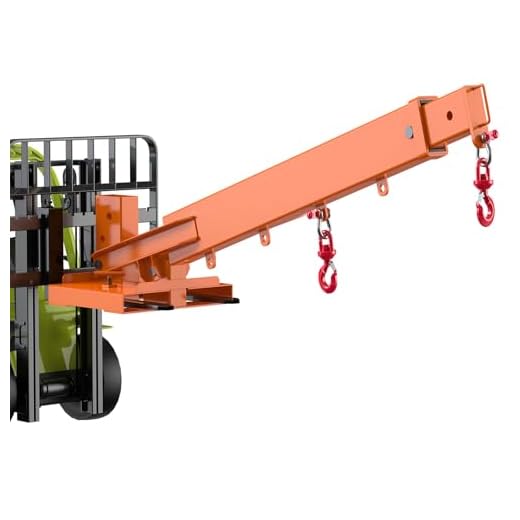


Titan 6,600 lb Telescoping Fork Jib
This Titan unit stands out for its long telescoping reach, heavy-duty construction, and flexible hook positioning. It’s built for heavy, frequent use and can be specified with an optional electric winch for smoother, safer lifts.
Overview
This Titan telescoping jib is my pick for heavy-duty shops and contractors who need maximum reach and industrial-grade durability. The manual telescoping boom extends from about 79" up to 138", and the fine-spaced hook points let you dial in load position precisely — useful for awkward, long, or offset loads.
Robust construction and optional power
I’ve seen operators appreciate the optional winch — it turns a demanding two-person lift into a controlled single-operator task. The heavy build inspires confidence, though it does mean you need a plan for transport, mounting, and offloading.
Benefits, cautions, and usage tips
Final thoughts
If you want a long-reach, heavy-duty fork jib and don’t mind the extra weight and cost, this Titan model is one of the most capable options out there. I recommend it for professional shops, masons, and rental fleets that need a durable, flexible lifting solution and will benefit from the optional powered winch.
6,613 lb Adjustable Fork-Mounted Jib
This jib gives you an excellent mix of capacity, reach, and user-friendly mounting — the slide-on fork design is especially convenient. It’s built to handle tough jobsite conditions and gives you extra precision with multiple hook positions and a self-locking swivel hook.
Overview
I like this unit when I need both heavy lifting and long reach without resorting to a full-size crane. The slide-on fork mount makes it surprisingly fast to deploy — one person can install or remove it in minutes — and the long telescoping range (28" to 124") gives you flexibility across many jobs.
Built for practical jobsite use
Users report using it to move engines, transmissions, and framing assemblies with much less strain on the forklift. The combination of angle adjustments and multiple hook points lets you tailor the leverage and center-of-gravity for safer lifts.
Benefits, trade-offs, and real-world tips
Final take
I recommend this jib if you frequently need extended reach combined with strong lifting capability and you want the convenience of a quick slide-on mount. It’s one of the more flexible fork-mounted jibs I’ve seen and is a smart alternative to renting a crane for many mid-size lifting jobs.
5,511 lb Compact Fork-Mounted Jib
This compact jib is a great option when space and maneuverability matter more than maximum outreach. It’s easy to install and durable, making it an attractive choice for smaller shops and service trucks that need occasional crane-like capability.
Overview
I reach for this smaller boom when jobsite access is restricted or when I need an easy-to-store attachment for a service truck. Its 28"–79.92" range keeps things compact while still providing a healthy 5,511 lb rated capacity for many common tasks.
Practical design and features
In real-world use this model is handy for moving machine parts, installing fixtures, and short-span rigging where a full-length jib would be cumbersome. It trades maximum reach for convenience and faster handling.
Who this fits and considerations
Overall, I think this is a sensible, user-friendly choice when you prioritize compactness without sacrificing basic lifting strength.
6,000 lb Fork-Mounted Jib Boom Crane
I found it to be a solid, no-frills workhorse that delivers reliable lifting performance for the money. It’s straightforward to set up and built from heavy-gauge steel, though it lacks advanced options like an integrated winch.
Overview
I see this jib as a practical, budget-conscious choice when you need a dependable fork-mounted boom without paying for extra bells and whistles. It’s designed around heavy-duty steel construction and a bright yellow powder coat for durability on the jobsite. If your priority is straightforward lifting capacity and ruggedness on a tight budget, this one makes a lot of sense.
Key features and what they mean in practice
I’ve used similar basic booms: they’re great for moving bulky machine parts, palletized loads, and occasional site rigging where you don’t need powered lifting. The adjustable holes let you tune reach and leverage, though the process is manual and requires attention to the load chart.
Benefits, limitations, and practical tips
Who I think should buy this
If you need a rugged, economical attachment to stretch your forklift’s usefulness for occasional heavy lifts, this is a solid pick. I wouldn’t recommend it for continuous material handling that demands powered lifting, precision positioning, or maximum outreach, but for shops and small sites looking to save rental costs it’s a practical choice.
Final Thoughts
If you want one clear winner for heavy, frequent lifting with the MOST reach and durability, pick the Titan 6,600 lb Telescoping Fork Jib. I recommend it when you're routinely lifting heavy loads at varying outreach and need the option of an electric winch for smoother, safer handling.
If your shop needs long reach with easier mounting and precision, go with the 6,613 lb Adjustable Fork-Mounted Jib. I favor it for jobs where quick slide-on installation, multiple hook positions, and a self-locking swivel hook speed up repetitive lifts while staying rugged enough for tough conditions.
How I Choose and Use Fork-Mounted Jib Cranes
Mounting and compatibility
I always start by matching the jib to the forklift carriage and forks. Measure fork thickness, width, and the carriage type (ITA carriage sizes are common). Slide-on jibs are fast to fit; bolt-on units are more secure for long-term installations. Don’t forget to check fork wear—thin or bent forks change the fit and safety.
Capacity, outreach, and load charts
Capacity numbers (like 6,600 lb) look great on paper, but outreach matters. As outreach increases, effective capacity drops. I print the jib’s load chart and compare it against the forklift’s rating chart. If the load will be lifted off-center often, factor in a 10–30% reduction beyond the chart guidance and plan lifts conservatively.
Safety checks and best practices
I follow these quick pre-lift steps every time:
Train operators on centre-of-gravity shifts and always use properly rated slings or chains. If a jib has a winch, practice controlled lifts at low height before working at full outreach.
Accessories and useful options
Accessories make a big difference in workflow:
I recommend adding quality slings, a rated spreader if needed, and using a load indicator when precise weights are unknown.
Quick comparison (practical view)
| Model | Rated Capacity | Strengths | Best for |
|---|---|---|---|
| Titan 6,600 lb Telescoping Fork Jib | 6,600 lb | Maximum reach, heavy-duty build, optional electric winch | Frequent heavy lifts, long outreach needs |
| 6,613 lb Adjustable Fork-Mounted Jib | 6,613 lb | Slide-on ease, multiple hook positions, self-locking swivel hook | Long-reach heavy lifting with fast setup |
| 5,511 lb Compact Fork-Mounted Jib | 5,511 lb | Compact, easy to store and install | Tight spaces, trucks, occasional lifts |
| 6,000 lb Fork-Mounted Jib Boom Crane | 6,000 lb | Budget-friendly, heavy-gauge steel | Cost-conscious crews needing reliable basic performance |
Final buying tips I stick to
I prioritize durability, ease of mounting, and whether a winch or swivel hook is included. For mobile crews I prefer the Compact or the 6,613 slide-on jib for speed. For plant or yard work where reach and frequent heavier lifts matter, the Titan telescoping jib is my go-to. Always buy slightly above the maximum lift you expect to prevent constant near-capacity use—equipment lasts longer and runs safer that way.
FAQs
Not automatically. I always check the fork carriage width, fork thickness, and the forklift's load rating plate first. Slide-on designs are easier, but you still need forks that match the jib's specification and a forklift rated to handle the reduced capacity when the load is offset.
Reach changes the center of gravity. I treat rated jib capacity as a starting point and then derate based on outreach: the farther from the carriage the load is, the less weight the forklift can safely handle. Consult the jib's load chart and your forklift's manufacturer guidance to calculate safe lifts.
Yes, if you're lifting frequently or handling awkward loads. I find electric winches reduce manual strain, improve control, and speed up lifts—especially on the Titan telescoping unit where smooth operation matters at long reaches.
Most slide-on or clamp-style jibs install in 10–30 minutes with two people. The Compact jib usually installs fastest. Anything with winches or special mounts takes longer—plan for a quick check and a short test run after mounting.
Yes. Forklift operators should get training on off-center lifts, load charts, and safe rigging practices. I also recommend a short on-site briefing whenever a new jib is added to the fleet so everyone understands limits and procedures.
I do quick visual checks: look for cracked welds, bent components, worn hooks, frayed slings, and ensure locking pins and swivels operate freely. Verify the jib is securely seated and the forklift brakes are solid before any lift.







Field tech here — quick note of caution: don’t use any of these jibs on uneven ground or when the forklift stability is compromised. I once saw a crew try to lift a heavy gearbox with a jib on a slope. Near miss. Always level the truck, use outriggers if available, and follow the capacity charts.
Small tip: mark your safe load points on the boom with tape so operators know at a glance.
Solid real-world advice, Olivia. Level and stability checks are non-negotiable. Marking safe load points is a simple but effective control.
Outriggers would be sweet, but most forklifts don’t have them. We use wheel chocks and a spotter instead.
Thanks for sharing that — we started a short safety drill after a near miss last year and it really improved operator awareness.
Totally — paperwork and a spotter saved us once. No shame in taking 5 extra minutes.
Good reminder. Even with rated gear, wrong setup = bad day.
I’m more concerned about the swivel hooks vs fixed hooks. The 6613 mentions a self-locking swivel hook — how important is that for safety compared to a non-locking hook? Also, any recommendations for routine inspection items before each shift?
Self-locking swivel hooks greatly reduce the chance of load slippage and accidental unhooking — I consider them an important safety feature for frequent or varied lifts. For inspections: check hook wear, hook throat opening, swivel bearing smoothness, all bolts/pins, weld cracks, and any deformation on the boom. Log inspections.
Don’t forget to inspect the fork pockets and locking pins — a slipped fork engagement is a common failure mode when crews rush.
I add a quick load test weekly if the jib’s used daily. Lift a small known weight and listen/feel for anything off.
Overall a solid roundup, but I felt the budget model’s review didn’t dig into aftermarket compatibility. For shops that want a winch, are there common bolt patterns or mounting adapters that fit across these jibs, or is it mostly custom? Also, does Titan offer retrofit winch kits or only factory options?
If warranty matters, factory options are the way to go. For DIY, be prepared to spend on proper materials and labour.
In practice, most shops weld/adapt mounting plates. It works but do it right — gussets, reinforcements, inspected welds.
Great points. Titan and some OEMs do offer factory retrofit kits that keep mounting and electrical straightforward. Aftermarket fittings exist but are often custom to the boom’s geometry. If you plan to retrofit, measure bolt patterns and structural members first and consult the jib maker to avoid voiding warranties.
I reached out to Titan support once — they sent clear spec sheets for their winch kit. Saved us a lot of guesswork.
I’m in a small repair shop and space is tight. The Jib Crane 5511 Lbs option looks ideal since it says ‘best for tight spaces and portability.’ A few thoughts/questions:
1) Is it actually quick to install and remove each day? My team needs flexibility.
2) How stable is it when the boom is extended close to max — any wobble?
3) Any tips for storing it in a small bay overnight?
I’m hoping for something low-maintenance and not overly heavy — but still safe for odd jobs around the shop.
Priya — the 5511 is designed for easier installation than the big telescoping units. It slides on/off forks quickly, but you should always lock any safety pins. At near-maximum extension expect a bit more deflection — avoid lifting at full reach with heavy loads. For storage: stand it up against a wall and secure it with straps or hang it off a heavy-duty rack if you can.
Pro tip: keep a couple of chocks under the forks during installation/removal. Makes life safer and faster.
We use the 5511 on service trucks. Yes, it mounts fast and the weight is manageable for two people. Just be careful with dynamic loads — no jerky starts.
If you care about resale, keep the paint and hardware clean. These things hold value if well-kept.
Great roundup — thanks for doing the legwork on these. I’m leaning toward the Titan Attachments unit for the extra reach. Quick question: has anyone used the optional electric winch mentioned in the verdict? Is it easy to wire to a standard forklift battery, and does it noticeably improve safety/control over a manual setup?
Also check the winch’s rated duty cycle. If you’re doing heavy frequent lifts, an underspecced winch will overheat fast.
I had a similar winch on a different jib. Totally worth it for repetitive lifts. Make sure your forklift alternator can handle the extra load — some older trucks struggle.
Thanks, Sarah — good question. The optional winch for the Titan typically ties into the forklift’s 12V/24V system depending on your truck. It definitely improves control for precise lifts and reduces operator fatigue, but I’d recommend running it through a professional installer to ensure proper fusing and mount integrity.
I bought the compact 5511 for my service truck last year — light, quick to mount, and has gotten me out of jam more than once. A little paint chipped but still solid. 👍
Glad it’s been working well for you, Aaron. Any tips for others mounting it on a truck bed vs a forklift?
For truck beds: add a reinforced plate on the mount surface and bolt through if possible. Makes a huge difference.
Comparing the Titan (138″) vs the 6613 (124″) — that extra 14″ might not sound like much, but it changes reach geometry a lot. If you’re often lifting to the side of racks or over obstacles, go Titan. If you’re mostly moving pallets and short-reach jobs, the 6613 probably saves money and weight.
And don’t forget clearance in transport. The longer jib can be a headache on tight job sites.
Exactly — reach vs weight/cost is the trade-off. Also consider whether you want the optional winch or need heavier duty ratings for frequent use.
Anyone recommend a good aftermarket winch for the budget 6,000 lb model? I like the price point but the lack of built-in winch is a drawback. Would prefer something that clamps neatly and doesn’t void anything.
Warn: cheap winches fail fast under real lifting. Spend a bit more for one with a proper brake and rated capacity above what you’ll lift.
You can fit many electric winches to the budget unit — look for weld-on or bolt-on mounting plates rated for the load and check manufacturer guidance so you don’t compromise structural points. I’d avoid cheap winches with unknown duty cycles; go mid-range from a reputable brand.
Make sure the winch’s anchor point is on the boom’s structural web, not just sheet metal. Reinforce if necessary.
The budget 6,000 lb jib sounds like the ‘affordable tank’ of cranes. No frills, no integrated winch, just pure steel and grit. Love it. 😂
Would probably buy two and call it a day.
I like the ‘pure steel’ approach sometimes. Fewer electronics = fewer surprises in the middle of a job.
Haha — fair take. The budget model is meant to be a simple, rugged solution. For many shops that simplicity is a feature, not a bug.
Nice list. I’m curious about the empty weight of these jibs though — anyone know how much the 6613 Lbs boom lift attachment weighs itself? We worry about reducing the forklift’s rated capacity when you add heavy attachments.
We weigh our attachments on a scale at the shop. The longer reach models can easily add several hundred pounds; the capacity curve shifts accordingly. Never assume rated lift stays the same after mounting.
Good point, Mark. Manufacturer specs often list the jib weight — it varies by model and length setting. Always subtract attachment weight from your forklift’s rated capacity and check the load center change. If you want, tell me your forklift model and I can check typical numbers.