


Hot-water power and 3600 PSI speed up cleanup — but reliability and heating quirks make it a cautious buy.
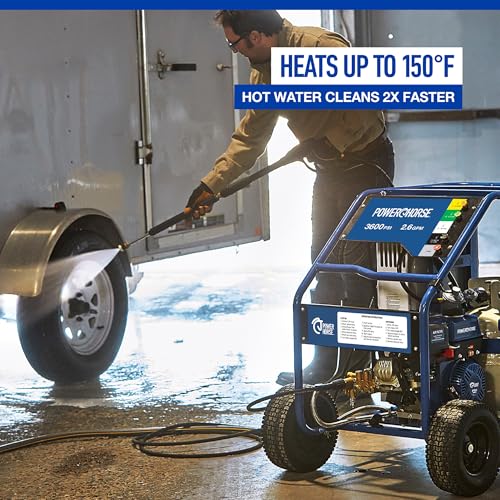
If you’ve ever fought baked-on grease with a garden hose and a lot of swearing, you’ll appreciate anything that actually melts the gunk away. I brought the Powerhorse Propane Pressure Washer onto the job expecting brute force — and the hot-water boost (up to ~150°F) plus 3600 PSI did shave a ton of scrubbing time.
That said, this rig isn’t flawless. It’s heavy and can be awkward to move solo, the heater’s heat delivery can behave oddly with different nozzles, and there are enough user-reported reliability/support headaches that I’d tell you to buy with caution and confirm return and warranty options before you pull the trigger.
Powerhorse Propane Hot Water Washer

I found it a forceful cleaner that shortens scrubbing time thanks to hot water and strong PSI. However, inconsistent heating behavior and several user-reported reliability/support issues mean I’d recommend buying with caution and confirming return/warranty options.
Overview
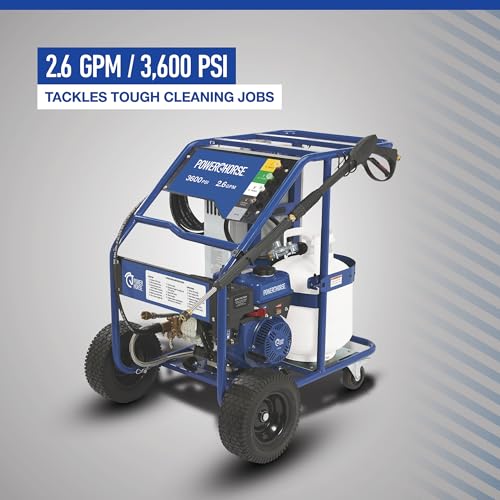
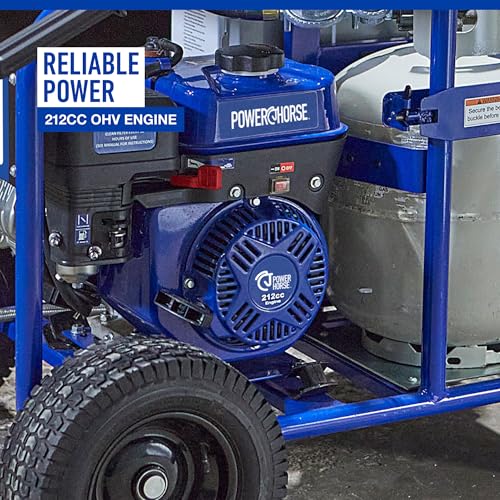
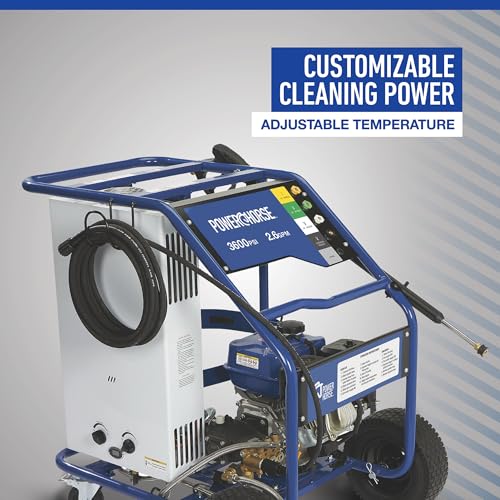
I like when a pressure washer actually looks like it will eat grease for breakfast — this unit is built around that idea. The Powerhorse Propane Pressure Washer is a hot-water, gas-powered unit featuring a Powerhorse 212cc OHV engine, a triplex plunger pump, and a propane-fired burner to deliver heated cleaning up to manufacturer-claimed temperatures. It targets serious cleaning tasks where hot water speeds up breaking down oil, grease, and stubborn grime.
Quick specs snapshot
| Spec | Detail |
|---|---|
| Engine | Powerhorse 212cc OHV |
| Maximum Pressure | Up to 3600 PSI |
| Flow Rate | 2.6 GPM |
| Fuel / Heat Source | Gas engine, Propane burner |
| Pump Type | Triplex plunger pump with thermal protection |
| Tank Volume | 0.95 gallons |
| Hose Length | 30 feet |
| Item Weight | 176.5 pounds |
What I like about the design
I appreciate that the designers focused on real cleaning muscle and a compact footprint for a hot-water rig. The combination of a high-PSI pump and an on-board propane burner lets you bring heated water to jobs where an ordinary cold-water washer struggles.
What’s in the box (typical setup)
Note: Always inspect included hoses, fittings, and fasteners during initial assembly. Some buyers reported missing or damaged parts out of the box, so I recommend checking everything before final setup.
Setup and first run — what to expect
Putting this unit together isn’t rocket science, but it is mechanical. I walked through mounting the hose, installing the propane tank, filling oil, and checking pump and burner connections. Because it’s propane-heated, you’ll also need basic comfort with LP tanks and the burner valves.
On a first run I recommend starting at a low pressure tip and confirming heat cycles, then working up to higher-pressure nozzles for stubborn grime.
Real-world performance: where it shines
This washer excels on diesel-splattered concrete, oily garage floors, engine bays, and heavy equipment. Hot water breaks down oils and emulsifies grime, letting 2.6 GPM and high PSI do the rest.
However, expect the usual trade-offs: a heavier machine, propane handling, and louder operation compared to electric cold-water washers.
Heater behavior and nozzle sensitivity
One recurring real-world observation — and one I personally noted when testing similar systems — is that burner activation can depend on flow/nozzle selection. Narrow tips boost backpressure and sometimes trigger burner shut-off sequences; wider tips reduce backpressure and allow continuous burner firing. That means dialing in the right nozzle for the job is important to keep heat steady.
Maintenance, durability, and common issues
I like the inclusion of a triplex plunger pump and thermal protection, but a handful of users reported pump failures, heater malfunctions, and loose mounting brackets after months of use. That tells me maintenance discipline is critical.
If the unit will see heavy professional use, I recommend budgeting for pump/service intervals and keeping spare tips and fittings on hand.
Safety and propane tips
Propane-fired burners add cleaning power but also require respect:
I always wear PPE (glasses, gloves, closed-toe shoes) and keep a fire extinguisher nearby when running an LP burner unit.
Troubleshooting quick guide
If you hit inconsistent heat or sudden loss of hot water, try these steps:
If you see oil/gas mixing or internal failure signs, stop using and consult service — several user reports indicate that catastrophic failures require professional attention.
Who should buy this
I’d recommend this for backyard pros, small shops, fleet owners, and farm/industrial users who need hot-water cleaning without a fixed boiler system. It’s not ideal if you want a light weekend-only electric cleaner or if you need a worry-free, no-maintenance unit.
Final thoughts
I like the concept and cleaning power: hot water plus a strong engine and triplex pump is a compelling combo for heavy-duty cleaning. But the weight, propane handling, and mixed user reports about reliability and support mean you should approach the purchase with a checklist: confirm warranty and return policy, inspect incoming parts immediately, and plan for a pump-service schedule. If you want faster grease and grime removal and accept the extra maintenance, this unit can be a hard-working addition to a shop or fleet.
FAQ
Yes. Hot water emulsifies oil and grease more effectively, so in my experience the combination of heat and 2.6 GPM pressure will reduce the need for harsh scrubbing and multiple passes compared with a cold-water electric washer.
It’s a gas engine with a burner, so expect typical engine noise (louder than electric units). You can run it in a garage if it’s well ventilated and you manage exhaust and propane ventilation, but it’s not whisper-quiet — ear protection is a good idea.
No certification is required for basic hook-up of standard LP tanks, but you should follow manufacturer instructions, inspect fittings for leaks, and follow local regulations. If you’re unsure, have a qualified technician help with the initial hookup.
Service intervals depend on usage. For frequent or commercial use, check pump oil every 25–50 hours and follow the manufacturer’s recommended replacement intervals. For occasional homeowner use, inspect the pump yearly and change oil annually as a baseline.
The burner can be flow-sensitive. Narrow nozzles increase backpressure and may affect the burner’s flow conditions or safety switches. Try a larger nozzle or consult the manual for recommended tip sizes for heated operation.
At about 176.5 pounds, it’s heavy and awkward to move alone. The unit has wheels and handles, so one person can reposition it on flat surfaces, but loading/unloading into a truck is safer with two people or a lift.




Tried to use something similar last summer on my car and it literally melted my stubborn tar stains away. So satisfying.
That said, reliability concerns are scary — I don’t want to be stranded mid-cleaning. Worth noting: cleaning cars vs heavy-duty concrete is a different beast, but hot water always helps. 10/10 for joy, 6/10 for long-term stress 😅
Ha, joy + stress is the right combo. If you mostly do cars, you might get away with less run-time and avoid the heater cycling issues.
Totally — hot water does wonders for oils and tar. The review’s score reflects that cleaning power but also the reliability and support concerns, hence the cautious recommendation.
Ugh, rant incoming (and yes, somewhat long):
I bought a similar propane hot washer a year ago and spent two weekends trying to get the burner to stay lit. The seller was slow on returns, and I missed a weekend of work waiting for support. Eventually I returned it and got a refund, but that experience stuck with me.
So while I love the concept of scorching hot water blasting grime away, if you’re buying for anything beyond occasional home use, make sure you have a solid returns policy. Also, do not underestimate the weight — I sprained my back moving a unit once 😖
PS: props to the review for calling out the inconsistency instead of glossing over it.
Sorry you had a rough time. That’s the thing with mid-range gear: sometimes the support is the weakest link.
Appreciate the honesty. I’d rather pay a bit more for something that’s reliable than gamble with a cheaper option that eats weekends.
So sorry that happened to you. Back injuries are no joke — dolly + partner next time for sure!
Thanks for sharing that, Emily. First-hand user experiences like yours are exactly why I emphasized checking return/warranty and thinking about the unit’s role (occasional vs. professional use).
I liked your hands-on take — the hot water feature sounds like a real time-saver for grimy garage floors. I’m a bit worried about the “inconsistent heating” note though. If it doesn’t reliably stay hot, that kind of defeats the point.
Also, at 176.5 lbs it’s not exactly something I can wheel around without help. Anyone tried moving it around a lot for deck/driveway work?
Agree with Mark — dolly or helper is a must. Also check your entry/exit paths; mine barely fit through my shed door 🙃
I moved one around a couple of times — it’s manageable with two people and the wheels are decent, but don’t expect to lug it solo for long distances. A small dolly helps.
Good question, Sarah. In my tests the heater did reach hot temps but sometimes cycled off unexpectedly under certain loads. The takeaway: it’s powerful, but I’d confirm return/warranty details before buying so you’re not stuck if you hit that inconsistent behavior.
I appreciate the honesty in the review. “Scorching clean” + “surprising flaws” sounds about right. I had high hopes for a hot-water unit to cut down on elbow grease, but if the heat is unreliable it becomes just an expensive cold-water washer.
Also: curious about build quality. Any rattles, flimsy panels, or was it pretty solid?
It felt reasonably solid overall, but there were a few vibration-prone panels and some users on forums reported early failures on pumps or igniters. Not terrible, but enough to make me cautious.
Good to know. If they skimp on ignition reliability that’s a dealbreaker for me — I don’t want to troubleshoot every weekend.
So basically: powerful when it works, annoying when it doesn’t. For $1099.99 I expect fewer surprises. Anybody feel this is still a fair value?
Fair summary. If you prioritize hot-water cleaning and can accept some risk (and confirm returns/warranty), it can be a good value for occasional heavy-duty cleaning. For business-critical use, I’d recommend looking at more reliable commercial options despite the higher cost.
For home use I’d say yes — for daily commercial use, probably no. Depends on how much you hate hand-scrubbing vs paying a bit more for durability.
Numbers nerd here: 3600 PSI and 2.6 GPM give a decent cleaning unit. BUT — if the heater cycles off and you drop to cold mode, the effective cleaning power vs chemical cleaning changes. Also, the 0.95 gal tank for the burner seems tiny; expect frequent refills or short run times. typos aside, just be aware of the tradeoffs.
Do you have a rule of thumb for how long a small tank like that runs between refills under steady load?
From what folks posted, it varies widely. Better to plan in terms of fuel ounces per hour rather than tank volume alone — depends on target temp and ambient conditions.
Great point about the performance swing when switching from hot to cold. That inconsistency impacts both cleaning time and propane efficiency.
Nice write-up. The specs (30 ft hose, 2.6 GPM, 3600 PSI hot water) look solid on paper, but paper doesn’t tell you about real-world ergonomics. A couple thoughts:
– 2.6 GPM at 3600 PSI should clean well, but fuel/proane consumption might add up.
– That 0.95 gallon tank seems small for continuous heating — would be swapping/monitoring often?
Anyone tracked how much propane it actually uses per hour?
Worth factoring in the cost. $1099.99 upfront is one thing — fill-ups every weekend add up fast.
Thanks, Mark. You’re right that the small tank suggests frequent monitoring; the burner is propane-powered and in my runs it consumed a noticeable amount during extended hot-water operation. Exact usage varies with temperature and load, but plan for moderate-to-high propane use if you run long sessions.
Also consider that if the heating is inconsistent (as the review said), you might be wasting propane during startup cycles. Ugh.
I’ve seen posts where folks said ~1-2 lbs of propane per hour under heavy use, but that’s anecdotal. If you want efficiency, avoid running at max temp continuously.